
What Is The Animation Process Like For Creating A Video?
Table of Contents
Do you want to learn about the animation process that’s used for creating custom animated videos? Video Igniter’s FAQ about the animated video production process answers all the most popular questions people have about how to create 2D animated videos and 3D animations.
In this article, we cover:
- The animation process for creating a custom animated video.
- Why it’s important to follow a process when creating an animated video.
- How long does animation take?
- Tips to save money during the animation process.
- …and more!

Do you have a question about the animation process that isn’t answered in this article? Use this form to get in touch with us to ask your question or click the image below to schedule a call with a member of our production team.
Examples of Videos You Can Get From Video Igniter’s Animation Production Process
Video Igniter can create any kind of 2D or 3D animated video for you. Check out our animation portfolio here. Request access to our demo reels and price sheet here.
Contact us or schedule a call to start making your video.
What is the animation process like for creating a custom animated video?
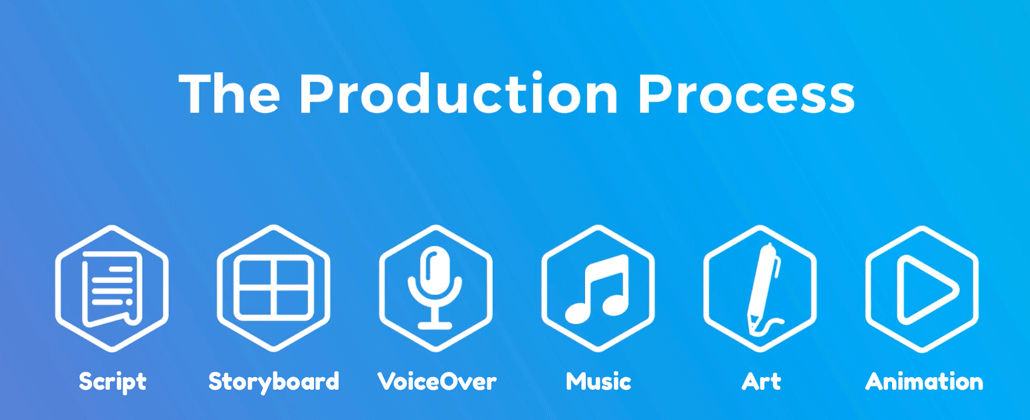
1). Get clear about what you want to create
Before you begin the animation process or think about about who is going to animate your video, you need to get clear about what you want to create in the first place! What visual style is your animation going to use? 2D animation or 3D animation? How long is your video going to be? Do you need help promoting your video? Who is going to create the script – you or them? What about the storyboard?
Once you’re clear about what you want to make, it’ll be easier for you to find the right kind of video animator for your project.

2). Hire an animated video production company
Now that you have a clear idea of what you want to create, the next step of the animation process is to find an animated video production company that can help you produce your style of video, on time and within your budget.

Linkedin, Fiverr, Craigslist, Google and Video Igniter are all great places to find talented animators for your project. Below are some video production resources that will help you figure out if the animators you found will be a good fit for your project:
- How do you hire an animator?
- 9 Things to Look For When Hiring An Animator to create an animation.
- How do you outsource an animated video project?
- What’s the difference between hiring an animation studio, a freelance animator and Video Igniter?
- What goes into production cost of an animated video?
- Learn the different types of online animated video makers.
- Interested in 3D animation? Read about 3D animation makers.
- What is Video Igniter Animation?
3). Collect your assets
Before production begins, take some time to organize the assets your production team may need during production. Here’s a list of things to dig up for your production team:
- Logo
- Fonts
- Icons
- Mascot
- Brand Guidelines
- Style References
- Optional: Script and Storyboard
4). Questionnaire

After you’ve paid the production team to produce your video, the animation process officially begins with a questionnaire or a phone call to learn more details about your project. This is your opportunity to explain in detail to the animation team:
- What key talking points you want to include in your video.
- What visual style you want to use.
- Any ideas you have for the visuals that you want to show during different parts of your video/script.
5). Script

Download Video Igniter’s Free Script Writing Template
Now that the production team has an in-depth understanding of what you want to create, the next step of the animation process is to create your script. Your script provides structure for the whole project. Whether you write the script or hire the animation team to create it for you, ensure that the script clearly articulates your key talking points. Make sure the wording used speaks to your target audience in the way they’re used to communicating about the topic.
6). Storyboard

Download Video Igniter’s Free Storyboard Template
After the script is approved, the next step of the animation process is creating the storyboard. The storyboard is the blueprint for your animated video. It tells the illustrators and animators what to create. Without this document, you’d be leaving too much up to interpretation during the animation process and expensive rework may be needed to redo parts of your animation that don’t turn out the way you want to. You can avoid this by providing simple, clear instructions for the illustrators and animators in the storyboard.
You can create the storyboard using our template or hire the animation team to produce it for you. If they produce the storyboard for you, you will get an opportunity to review your storyboard and request revisions before approving it for production.
7). VoiceOver

Once the storyboard is locked in, your production team will help you get voiceover(s) recorded for your animation. The process for getting voiceovers typically starts with recording auditions from multiple qualified VO talents. Then, you get a chance to review them and select your favorite option(s). Your production team will then oversee the recording of the full voiceover to ensure it uses the correct pacing, pronunciation, and energy. You will be given an opportunity to review the voiceover and request revisions before moving on to the next step of the animation process.
8). Soundtrack

While your animation team is getting the voiceover recorded, they will also help you select a soundtrack to enhance your animated video. This is an important step of the animation process because picking the right video soundtrack will set the emotional tone of your animation’s presentation; selecting the wrong track (or not using any music) will make your video feel flat and lifeless – or worse, the music could be off putting and make people stop watching. The right soundtrack will feel right. You’ll know it when you hear it and see the two playing together.
9). Illustration
The next step of the animation process is creating the art for your animated video. Illustrations begin as concept art. The art director will take a key scene from your storyboard, review your style references/brand guidelines, and design 1 or more pieces of custom concept art.

Review the concept(s) and let the art director know which one you prefer. You can also tell them that you want to refine the selected visual style first before approving the concept for production.
After the concept art is approved, the art team will follow your storyboard and design all of the custom art for your video based off of the approved concept art.

You get an opportunity to review all the illustrations and request revisions before moving on to the next stage of the animation process.
10). Animation
We’re getting close to the end of the animation process because it’s time to actually animate! After all the assets have been created and approved, it’s time to animate. It takes about 1 week to create a 60-second custom animation. 3D animations take 2-3x as much time.
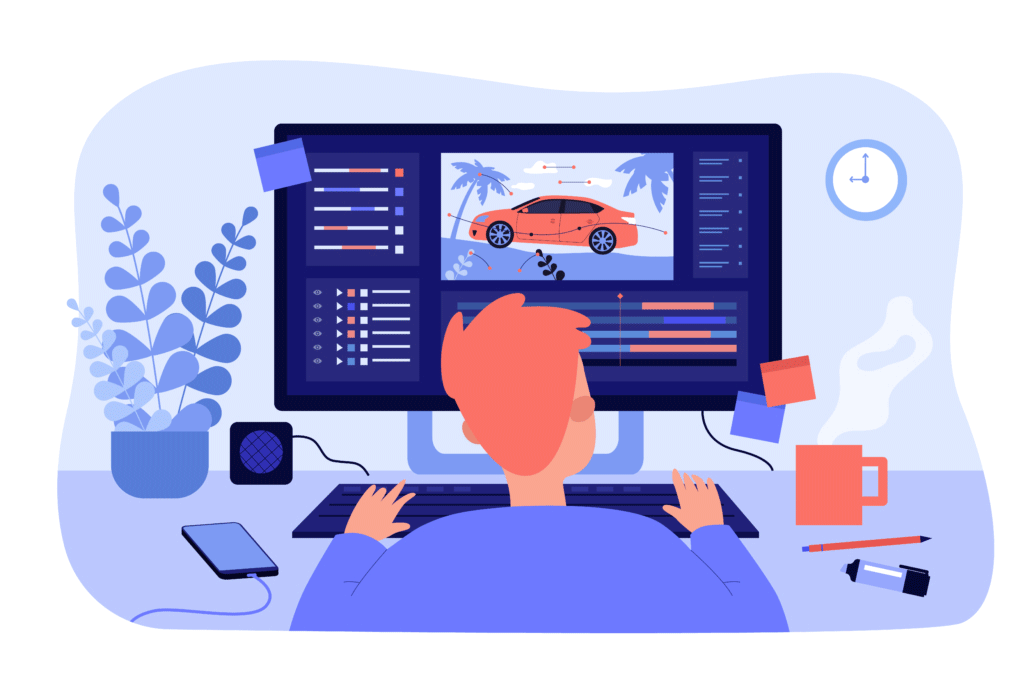
When the first draft is ready, give it a detailed review with your team and members of your target audience. Collect everyone’s feedback and share it with your production team so they can incorporate the edits and render out the final draft.
11). Wrapping Up The Animation Production Process: Post Production & Special Edits
After the final draft is approved, it’s time to handle any special edits or requests from the client including:
- Translating the video into another language
- Editing down a shorter version of the video
- Cropping the video for different aspect ratios (for social media)
Why is it important to follow a process when creating an animation?

The animated video production process is structured so that a production company can understand your vision for the video and then create a set of instructions for the illustrators and animators so that they know what to create. If you try and skip creating a storyboard for your video, the whole animation process gets thrown off. It would leave too much up for interpretation with your production team. Ultimately, this would lead to budget increases and more time in order to fix the animation to make it look more like what you were imagining.
How Long Does Animation Take?
The length of the animation process varies depending on the length of the video being created and the visual style of the video. Here is a typical production schedule for a 1-2 minute 2D animated video:
- Script Creation + Revisions: ~1 week
- Storyboard Creation + Revisions: ~1 week
- Concept Art, VoiceOver Auditions & Soundtrack Selection: 2 days – 1 week
- Illustration: 1 – 2 weeks
- Animation: 1 – 2 weeks
If you want to create a 3D animated video, expect production to take ~2-3x as much time.

How much does the animation production process cost?
The answer to this question also depends on the length and style of the video being created. Here are some data points to provide context:
- A custom 2D animated video that’s 1 minute long usually costs $1,000-$10,000 to produce.
- Fancier frame by frame 2D animation costs at least 2X as much.
- 3D animation costs +2-4x more than 2D animation to produce.
- A full Pixar movie costs $30,000,000-$150,000,000 to produce.

How to save money during the animation process?
- Use free legal music for your soundtrack.
- Consider using stock assets to reduce your design cost.
- Record the voiceover for your animated video.
- Download our free script writing template to help you write the script for your animated video.
- Download our free storyboard template to create the storyboard for your animated video.
- Choose a simple visual style for your animators to create.

For more tips on making your animated video more affordable, check out this companion article:

Different Types of Animation Processes Explained
The animation process isn’t one-size-fits-all. Depending on your video goals, audience, timeline, and budget, you may want to pursue a specific type of animation production workflow. Here are some common animation styles and how their processes differ:
2D Animation Process
The 2D animation process is commonly used for explainer videos, commercials, and educational content. It typically involves:
- Flat illustrations created in vector-based software like Adobe Illustrator.
- Rigged characters using tools like Adobe After Effects, Moho, or Toon Boom.
- Limited animation techniques to save time and budget while still producing high-quality visuals.
This process is ideal for fast turnarounds and clear communication, especially when working with abstract concepts or digital products.
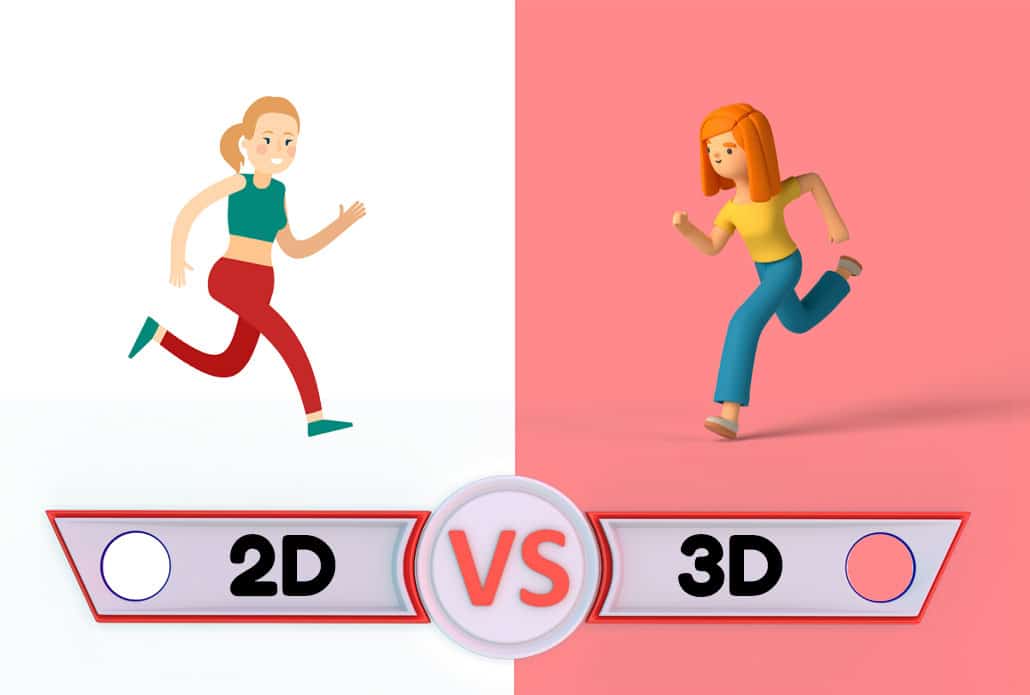
3D Animation Process
The 3D animation process is more complex and time-intensive. It includes:
- Modeling: Building three-dimensional characters and environments.
- Texturing: Applying surface details like skin, fabric, or metallic finishes.
- Rigging & Skinning: Creating a digital skeleton so characters can be animated.
- Lighting & Rendering: Setting up scene lighting and exporting high-quality visuals frame by frame.
Because of its realism and versatility, 3D animation is popular in architecture, gaming, product demos, and entertainment.
Motion Graphics Process
Motion graphics focus on animated text, shapes, and icons to convey messages quickly. The motion graphics animation process skips character rigging and focuses on timing, transitions, and visual storytelling. It’s often used for data visualization, logo reveals, and short-form social content.
Stop Motion Animation Process
Although less common in digital production pipelines, stop motion uses real-world models and physical props. The animation process involves taking thousands of photos, moving characters incrementally between each shot. This analog method requires intense planning, set design, and post-production editing, making it a labor of love with a unique aesthetic.
Pre-Production: The Most Crucial Stage in the Animation Process

Pre-production is the foundation of a successful animated video. While many clients are eager to dive into illustration and animation, this early stage is where most creative problems are solved before they cost time and money.
During pre-production, you should:
- Finalize your script to avoid last-minute rewrites that derail production.
- Align on a visual style to ensure consistent art direction.
- Confirm your core message and call to action.
- Approve a production schedule to manage timelines and stakeholder reviews.
The more effort you put into planning the animation process upfront, the smoother the rest of the journey will be.
Check out Video Igniter’s Pre-Production Checklist.
Animation Review Cycles and Feedback Best Practices
Revisions are a natural part of the animation process—but if not managed carefully, they can create delays and unnecessary costs. Here are a few tips for giving effective feedback during your animation project:
- Be specific: Instead of saying “make it pop,” explain what you want changed (e.g., “increase the contrast” or “use a bolder color for the call-to-action button”).
- Consolidate feedback: Gather all notes from your team before submitting them to the animation studio.
- Stick to the plan: Avoid making major changes to the script or visual direction once you’ve approved earlier stages like the storyboard or illustrations.
Staying organized during the review stages helps ensure a streamlined animation process from first draft to final delivery.
How to Make the Most of Your Animated Video After Production

The animation process doesn’t end when the video is delivered. To maximize ROI, you need a strong distribution strategy. Here are ways to get more value out of your animated video:
- Upload to YouTube and optimize your title, description, and tags for search.
- Embed the video on landing pages to increase conversion rates.
- Share it on social media with captions and hashtags to expand reach.
- Include it in email campaigns to improve open rates and click-throughs.
- Repurpose it into blog posts, GIFs, short social clips, or infographics.
Each additional use of your video adds value and helps reinforce your brand message across multiple touchpoints.
Animation Process for Businesses vs. Animation for Entertainment

It’s worth noting that the animation process differs depending on whether you’re producing content for marketing vs. entertainment:
- Business animation (e.g., explainer videos, product demos) is usually short-form, goal-driven, and designed to convert or inform. The process is streamlined with tight timelines and budgets.
- Entertainment animation (e.g., cartoons, web series) often involves episodic content, deeper character development, and extended timelines. The production pipeline may also include writing rooms, sound design teams, and more complex asset libraries.
Understanding your content’s purpose will help you choose the right animation process and team.
Tips for First-Time Clients Going Through the Animation Process

If this is your first time commissioning an animated video, here are a few things that will help you navigate the animation process more smoothly:
- Ask about the number of revision rounds included in the quote.
- Request a detailed timeline with production milestones.
- Clarify who is responsible for writing the script, sourcing music, and managing voiceover talent.
- Discuss licensing and ownership rights for final deliverables and raw assets.
Being proactive about communication and expectations will lead to a better experience for both you and your animation team.
What Happens Behind the Scenes During the Animation Process?

The animation process involves much more than moving illustrations across a screen. Once the creative direction, storyboard, artwork, and other major production elements have been approved, an animation team has to turn those static assets into a cohesive visual experience. This involves decisions about timing, movement, transitions, composition, sound synchronization, visual consistency, and technical quality.
Understanding what happens behind the scenes can help businesses make better decisions when planning an animated video and can also make it easier to communicate with an animation production team.
Creating an Animatic Before Full Animation
One useful part of an animation process is the creation of an animatic. An animatic is essentially a rough video version of the storyboard that gives the production team an opportunity to test the timing and overall flow before committing to full animation.
Instead of fully animating every scene, the team combines storyboard frames or simplified artwork with the voiceover to determine whether the sequence works. This can reveal problems that aren’t always obvious when looking at a static storyboard.
For example, an animatic can help answer questions such as:
- Does a particular scene stay on screen long enough to understand?
- Does the visual change at the right moment in the voiceover?
- Is there too much information being presented at once?
- Does the video feel too slow or too fast?
- Are important visual elements receiving enough attention?
- Does the transition from one scene to another feel natural?
Making changes at the animatic stage can be considerably easier than discovering the same problems after detailed animation has already been completed. For longer, more complicated projects, an animatic can therefore become an important checkpoint in the animation workflow.
Blocking and Timing the Animation
After the overall sequence has been established, animators begin determining exactly how objects and characters will move. One of the most important considerations here is timing.
Animation timing determines how long an action takes to occur. A character turning their head in half a second communicates something very different from a character turning their head over two seconds. Similarly, a logo that appears instantly creates a different impression from one that gradually builds onto the screen.
Animators may first create a rough version of each movement before adding additional detail. This process is often referred to as blocking. The animator establishes the major poses, positions, and moments of an action first, then refines the movement between those points.
This approach allows the animation team to concentrate on the overall performance before spending time polishing individual movements.
Applying the Principles of Animation
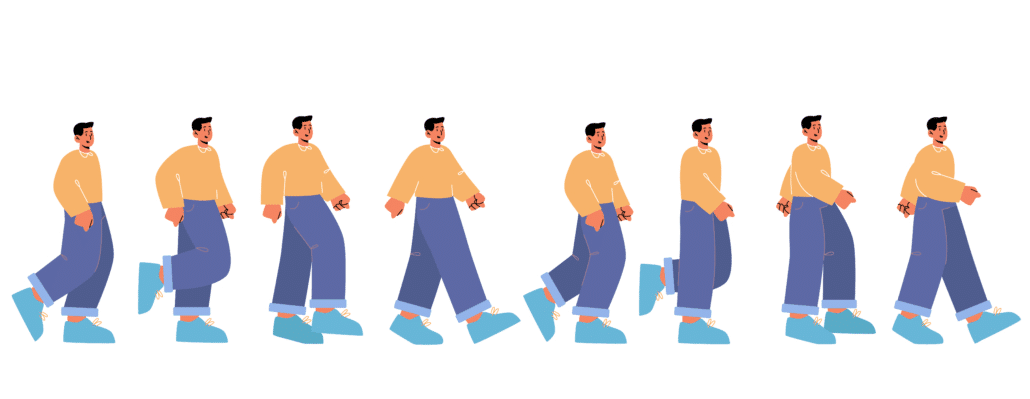
Professional animators also rely on established principles of animation to make movement feel natural and visually appealing. These principles originated in traditional animation but remain relevant to modern 2D animation, 3D animation, character animation, and motion graphics.
Some of the principles that can influence a modern animation process include:
Anticipation: A small movement can prepare the viewer for a larger action. For example, a character might pull their arm backward before throwing an object.
Ease in and ease out: Objects generally feel more natural when they gradually accelerate and decelerate rather than moving at a constant speed.
Squash and stretch: Changing the shape of an object during movement can communicate weight, flexibility, and impact.
Follow-through: Parts of an object or character may continue moving briefly after the primary action has stopped.
Timing: The duration and spacing of movements can change how an action feels and how easily the audience understands it.
Exaggeration: Increasing a movement or expression can make an important moment easier for the audience to notice.
Not every business animation needs exaggerated character movement or traditional cartoon techniques. However, understanding these principles allows animators to make even relatively simple motion graphics feel more polished.
Designing Movement Around the Message
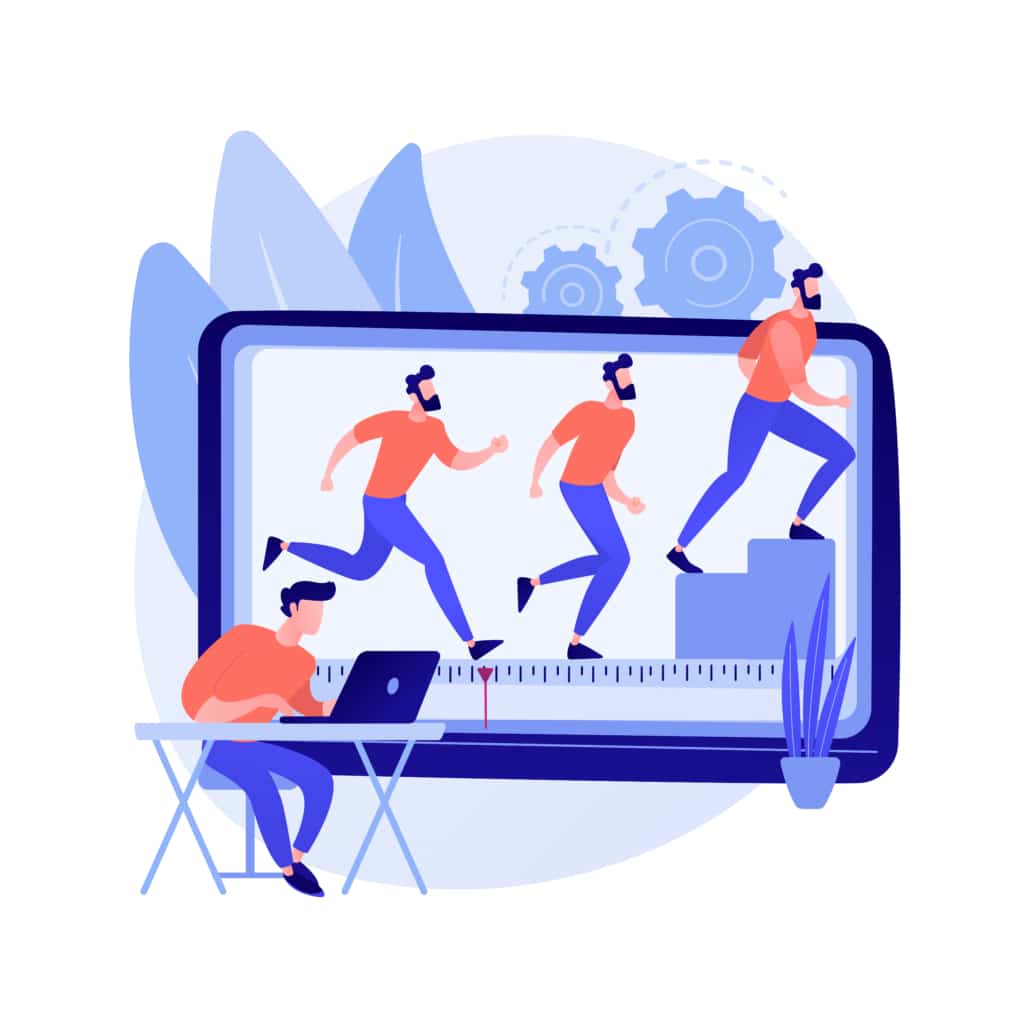
A strong animation process isn’t simply about making everything move. Movement should have a purpose.
For a business video, animation can direct attention toward the information the viewer needs to understand. A new graphic might enter the screen when the narrator introduces a concept. An important statistic might become larger or more prominent. An interface element might animate to demonstrate how a software product works.
This creates a visual hierarchy that helps viewers understand what matters most.
For example, if an animated explainer introduces three benefits of a product, the animation team might introduce each benefit separately rather than displaying all three simultaneously. The movement effectively guides the viewer through the information in the same way that typography, layout, and composition guide someone through a webpage.
The best animation process therefore considers why something should move before deciding how it should move.
Maintaining Consistency Across Every Scene
Another behind-the-scenes challenge is maintaining visual consistency throughout the entire video. This becomes especially important when a project contains multiple characters, locations, illustrations, icons, or user-interface elements.
An animation team may establish rules for things such as:
- Character proportions
- Facial features and expressions
- Line weights
- Typography
- Icon styles
- Object proportions
- Camera movement
- Transition styles
- Spacing and composition
- Repeated visual elements
These decisions create a visual system that allows individual scenes to feel as though they belong to the same video.
Without this consistency, a video can feel like a collection of unrelated illustrations rather than one cohesive production. This is particularly important for companies using animation to communicate their brand, because inconsistent visual treatment can weaken the professional appearance of the final piece.
Asset Organization During Animation Production
A large animation project can contain hundreds or even thousands of individual assets. These might include illustrations, character components, background elements, logos, photographs, icons, audio files, visual effects, and animation project files.
Keeping these assets organized is an important but often invisible part of the animation process.
Production teams may organize assets according to scene, character, file type, or production stage. Naming conventions and version control can also help prevent the team from accidentally using an outdated asset.
This becomes increasingly important when multiple artists are working on the same project. An organized production pipeline makes it easier for artists to locate the correct files and reduces the possibility of errors during production.
Compositing Brings the Animation Together
Once individual elements have been animated, they often need to be combined during a stage called compositing.
Compositing involves combining different visual layers into a finished shot. An individual scene may contain a background, characters, foreground objects, text, effects, lighting, shadows, and other elements on separate layers.
The compositor determines how those elements work together visually.
This can include adjusting transparency, adding effects, refining lighting, integrating shadows, creating depth, and making sure that the different elements appear to occupy the same visual environment.
In 3D production, compositing can also involve combining rendered passes and visual effects to create the final appearance of a shot. In 2D animation and motion graphics, compositing can be used to combine artwork, typography, effects, and backgrounds into a polished scene.
Color and Visual Quality Control
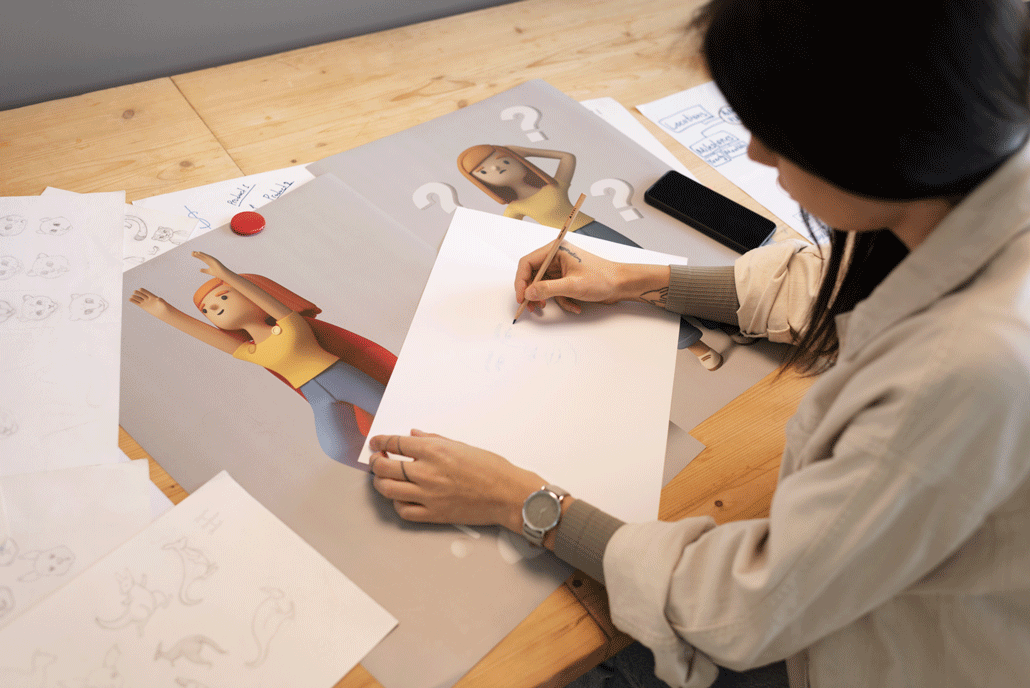
Color can have a significant effect on how an animated video feels. During production, the team may need to make sure that colors remain consistent between scenes and that important elements remain easy to see.
This is particularly important when animation incorporates a company’s existing brand identity. A color that looks correct in one context may become difficult to read when placed against a particular background.
Quality control can also involve checking typography, alignment, image quality, transitions, and other small details that viewers may not consciously notice but that contribute to the perceived quality of the finished video.
The animation process therefore includes a considerable amount of refinement that happens after the major creative decisions have already been made.
Synchronizing Animation With Voiceover and Sound
The relationship between animation and audio is another important part of the production workflow. Visual actions often need to happen at precise moments in relation to the voice over.
For instance, when a narrator introduces a specific feature, the corresponding graphic may appear immediately afterward. A character may react to a particular word or phrase. A transition may occur at the end of a sentence.
Sound effects can also reinforce visual actions. A button clicking, object appearing, notification arriving, or character moving can become more convincing when the appropriate sound accompanies the action.
This is why animation timing shouldn’t be considered independently from the audio track. The strongest results often come from treating the voiceover, music, sound effects, and visuals as parts of the same storytelling system.
Rendering the Final Animation
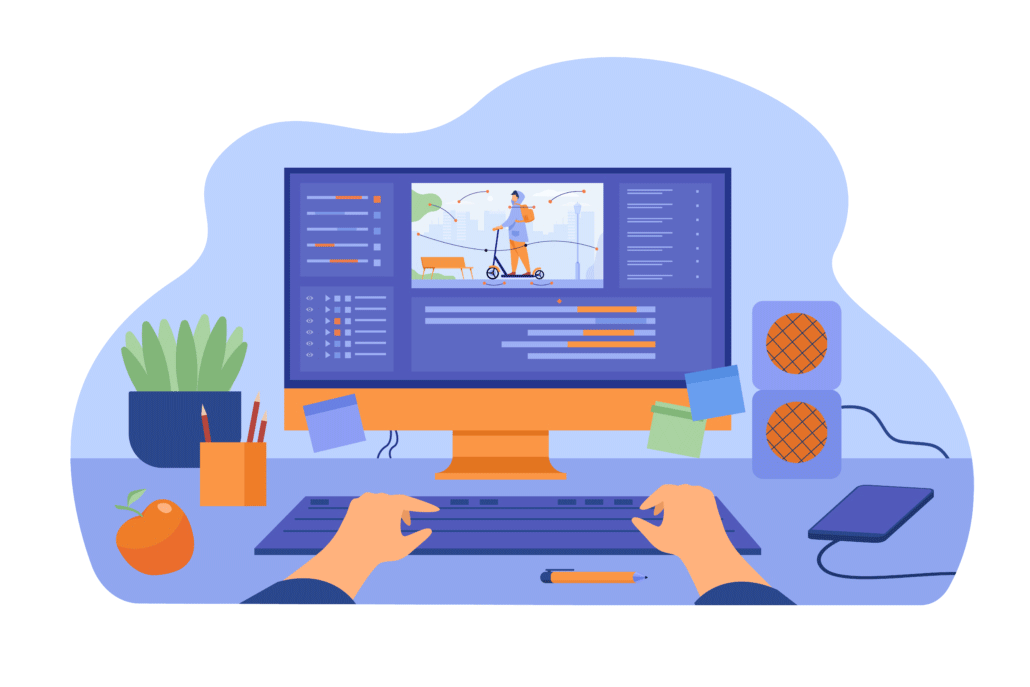
After the animation has been completed and composited, the project must be rendered into a video file.
Rendering converts the production team’s working project into individual frames that can ultimately be assembled into a playable video. Depending on the complexity of the project, resolution, frame rate, visual effects, and rendering method, this can require substantial processing time.
A simple 2D motion graphics project may render relatively quickly, while a complex 3D animation containing detailed models, lighting, reflections, shadows, and effects can require considerably more computing power.
The team may also produce test renders before generating the final version. Test renders allow artists to identify technical problems before spending additional time rendering the entire project at full quality.
Quality Assurance Before Final Delivery

A final quality-control pass is one of the last safeguards in the animation process. The completed video should be reviewed from beginning to end rather than simply checking individual scenes.
A quality-assurance review may look for:
- Spelling or grammatical errors
- Incorrect logos or brand elements
- Missing graphics
- Audio synchronization problems
- Abrupt or unintended transitions
- Visual glitches
- Incorrect colors
- Audio levels that are too loud or too quiet
- Missing frames or rendering errors
- Problems with the final video dimensions or format
Watching the entire video as a viewer is particularly important. A scene can look correct by itself while still feeling awkward when viewed in sequence with the scenes before and after it.
Why Every Animation Process Is Slightly Different

There is no single animation process that works perfectly for every project. A 30-second social media advertisement may require a very different workflow from a five-minute technical training video, product demonstration, or cinematic 3D animation.
The complexity of the subject matter, number of characters, amount of custom artwork, visual style, number of deliverables, and technical requirements can all affect the production workflow.
The most effective animation process is therefore one that is designed around the goals and constraints of the specific project rather than forcing every video through exactly the same pipeline.
For businesses, understanding these behind-the-scenes stages can make the production experience much easier. Instead of viewing animation as simply “making pictures move,” it becomes easier to understand why professional animated videos require planning, design, technical expertise, creative decision-making, and multiple layers of refinement.
Ultimately, a successful animation process connects all of these elements together. The script establishes what needs to be communicated, the visual direction determines how the message should look, animation determines how viewers experience the information over time, and sound helps reinforce the story. When each part works together, the finished video can communicate complex ideas clearly while keeping the viewer engaged.
Conclusion: Mastering the Animation Process Leads to Better Videos

The animation process is a structured, step-by-step journey that transforms a rough idea into a polished, professional video. Whether you’re creating a quick explainer or a full-blown 3D production, following the proper animation workflow ensures your project stays on budget, on time, and on brand.
By understanding each stage—from script and storyboard to animation and post-production—you can make smarter decisions, give better feedback, and ultimately get a video that delivers real results for your business or brand.
Need help getting started with your animation process? Contact Video Igniter today to speak with a production specialist, get a free quote, or access our downloadable templates to plan your next video like a pro.
Still have questions about the animation process?
Do you have a question about the animation process that wasn’t included in this FAQ? Use this form to contact us with your question. We will follow up with an answer and then we’ll post the question and answer to this page.

What is Video Igniter Animation?
Video Igniter Animation is an online animated video production service. By working with our team online, you can get your custom animated video produced faster and for less than hiring a brick and mortar animation studio.
We can help you create any kind of 2D animated video or 3D animation you can imagine. Check out our animated video portfolio!
Do you want to create an animated cryptocurrency video or an animated blockchain explainer video that explains how your technology works? We can help with that too.
Watch our explainer video to learn more about how we can help you create an animated video for your business.
Animation Success Stories & Testimonials
“I am beyond satisfied with my experience with Video Igniter. The first drafts of the work were almost exactly what I had in my head when developing the concept. After that each step along the way was seamless until arriving at a perfect finished product. And all this at a tremendous value. Anyone who has considered creating a marketing video should check out Video Igniter.”
Anonymous Customer Feedback
“Video Igniter offered us the critical combination of creative value, clear communication, and patience with stakeholder feedback. We ended up with truly high-quality design assets for our video series largely due to the extra level of commitment — and the right balance of efficiencies with flexibility in the process when called for.”
Larry Schlessinger – Sr. Creative Program Manager, Amazon Web Services
“Video Igniter came to us with a number of creative and engaging ideas and were able to create an exciting, impactful video in a short period of time. And the best part was that it cost much less than other options of similar quality. The video they made is a great marketing tool for us.”
Alex Raymond – Founder, Kapta Systems

Get In Touch!
Schedule a call with our production team to discuss your video project.
Get a quote for us to create your animated video project.
Request access to our newest price sheet.
Check out our animated video portfolio to see our latest and greatest creations.
Create your Video Igniter account, fill out a creative brief, and we’ll start your animation.


