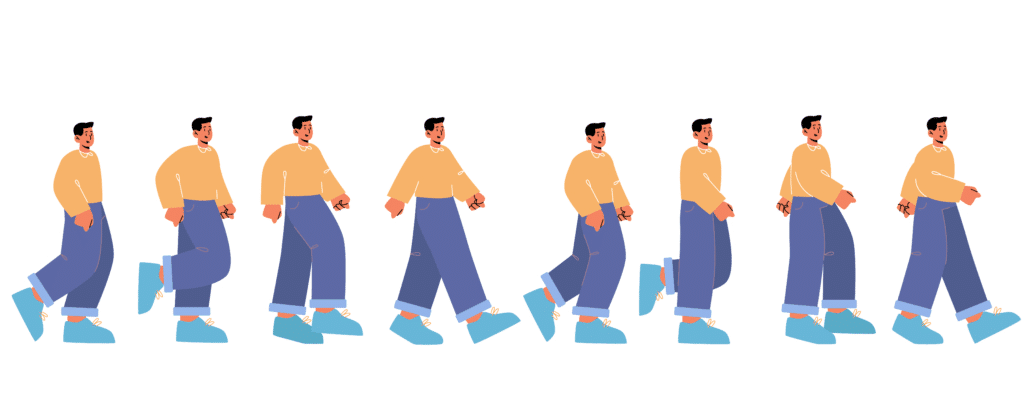
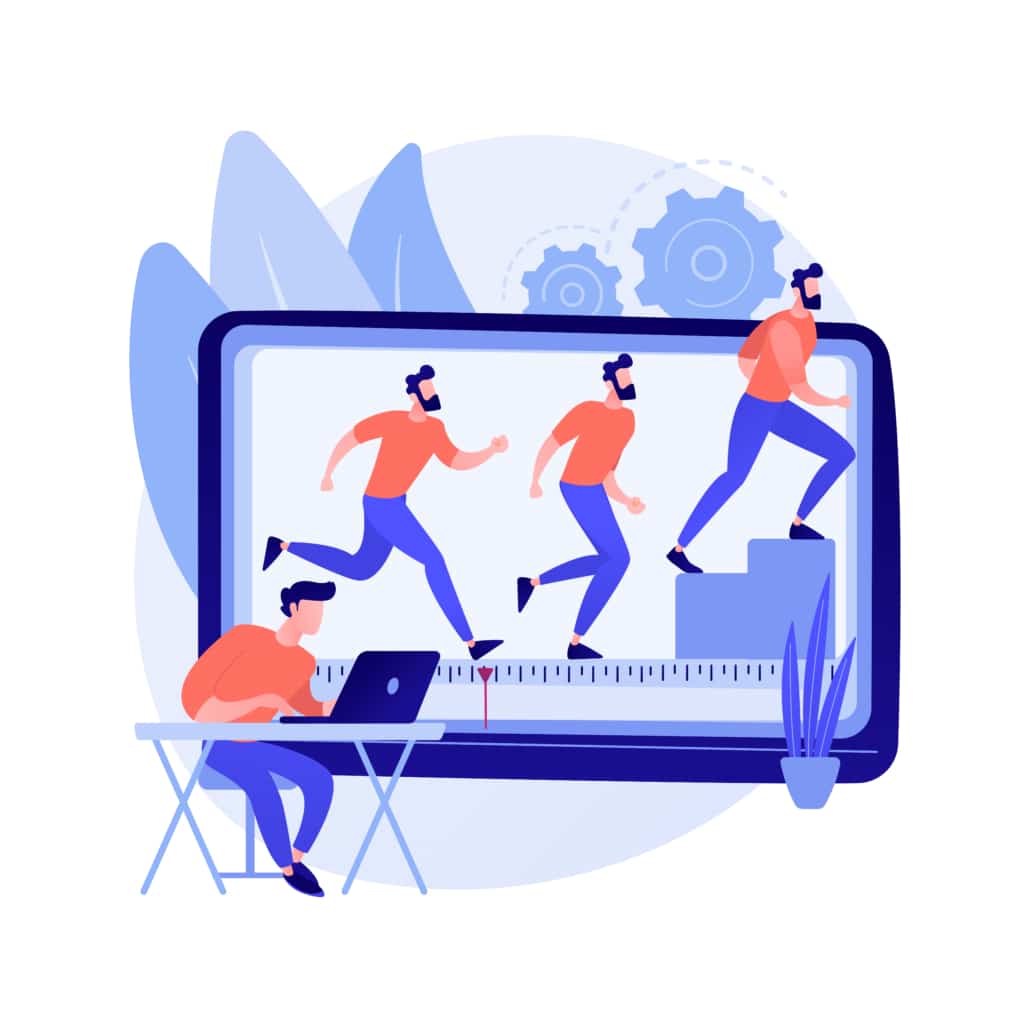
Do you want to make a custom animated video with animated characters in it? If so, you’re in the right place! Video Igniter’s guide to character animation teaches everything you need to know about how to work with professional animators to create an animated video with custom animated characters in it. We cover topics like:
✅ How To Create Custom Animated Characters?
✅ How Long Does It Take To Create A Video With Animated Characters?
✅ What Does It Cost To Make A Video Character Animation?
✅ How Can I Save Money When Making A Video With Animated Characters?
And more!
Character Animation Example Videos
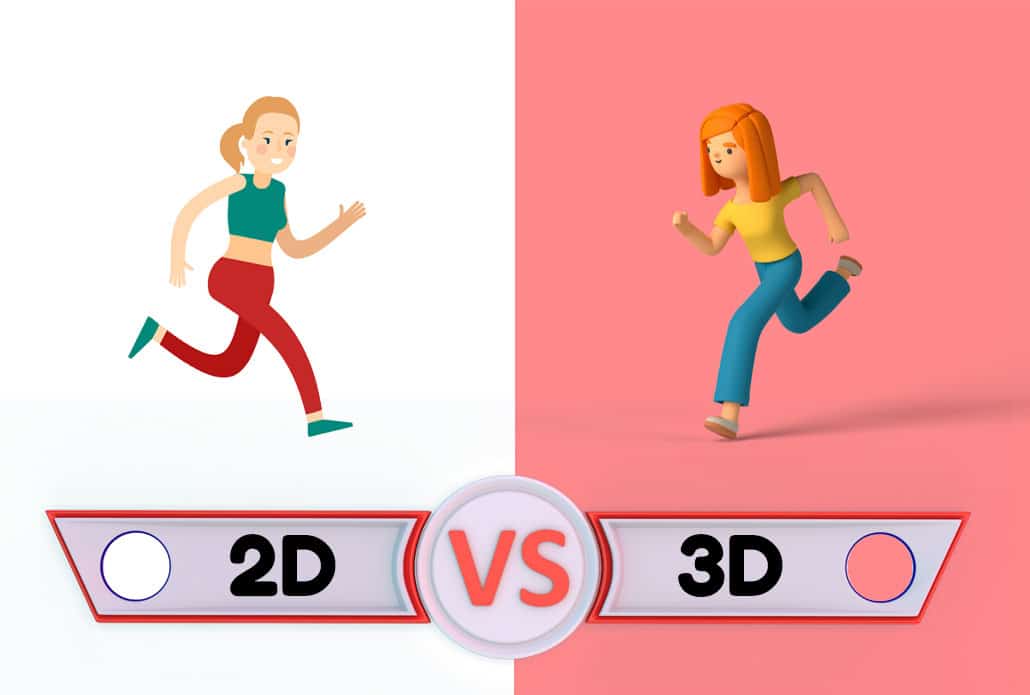
Video Igniter can create any kind of 2D or 3D animated video for you. Check out the example videos below.
Are you looking for an example of a different style of animation? Send us a message to let us know what kind of animation example you want to see and we will follow up with relevant production samples.
What is character animation?
Character animation plays a pivotal role in storytelling by giving characters a voice and enabling them to connect with the audience on an emotional level. Through the subtle nuances of movement, expressions, and interactions, characters come alive and become relatable, allowing viewers to immerse themselves in the narrative. Character animation adds depth and dimension to stories, making them more captivating and memorable.
Character Animation Across Industries
Character animation has found its relevance in a multitude of industries, including marketing, entertainment, and education. In marketing, animated characters can serve as brand mascots or spokespersons, to help convey brand messages and create a strong brand identity. In the entertainment industry, character animation brings fictional or historical figures to life, enhancing the storytelling experience in animated films, television shows, and video games. Character animation can also be a powerful educational tool to help make complex concepts more accessible and engaging for learners of all ages.
How To Create Custom Animated Characters?
Kick Off Call / Questionnaire
Production begins with a kick off call to learn more about:
✅ Who your target audience is?
✅ What you want to convey in your animation?
✅ What visual style you want to use for your animation?
✅ What do you want people to do when they’re done watching your animation?
✅ What do you want your character look like and act like?
Concept Art
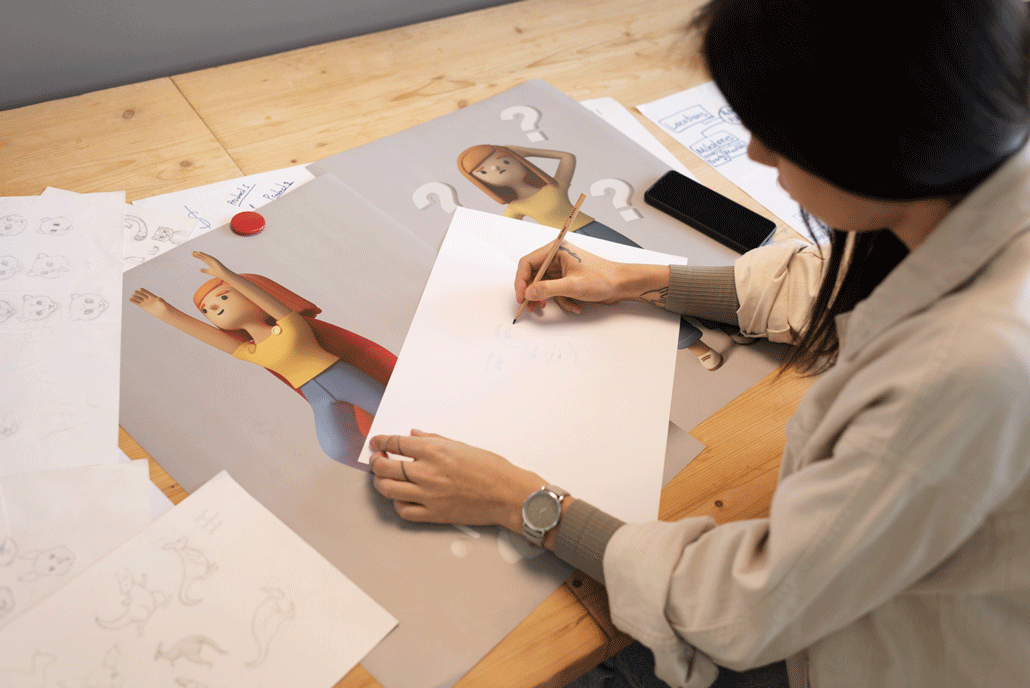
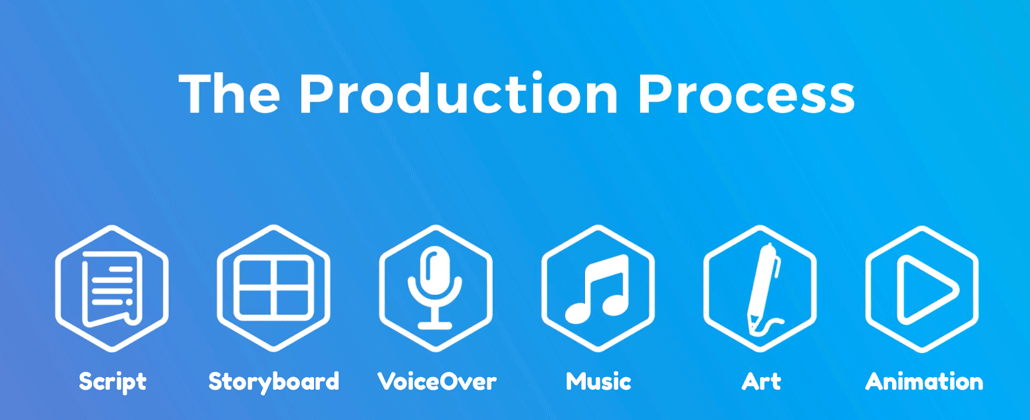
Now that we have a better understanding of the story you want to tell, our art director can develop custom art for your animation. This is an opportunity to develop the visual concept and character design for your video.
After you review the concepts, let the art director know which visual style you prefer. Then, you get an opportunity to collaborate with the art director to refine the visual style until you love it.
Our team will develop the script for your animation. We will share an early draft of the script with you to collect your feedback. Then, we’ll integrate your feedback into the script and send you a polished version of the script to review and approve for production.
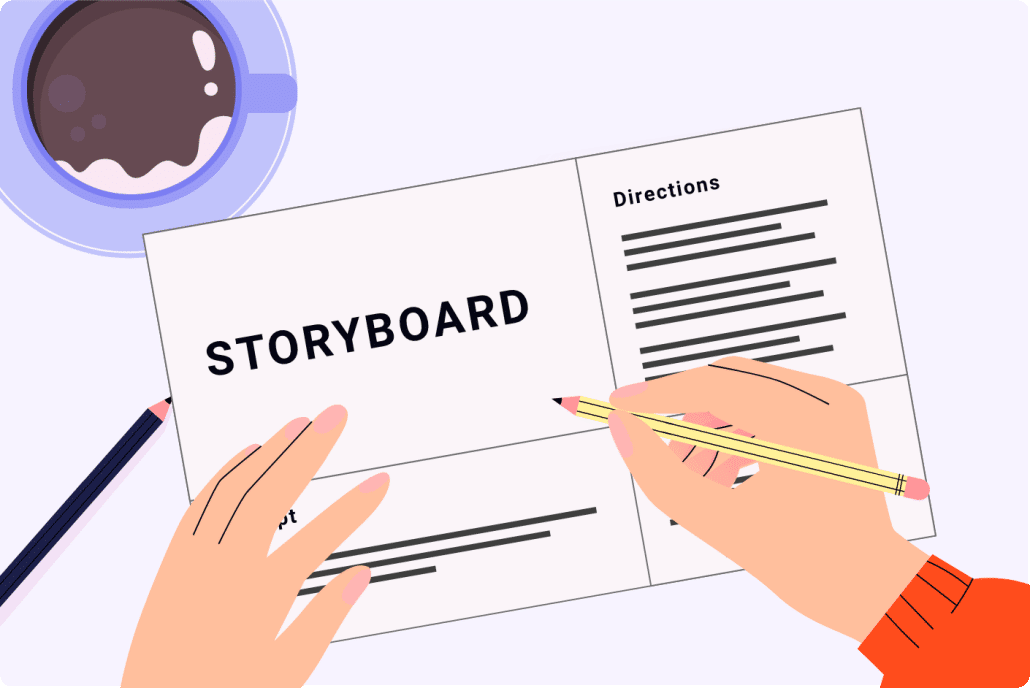
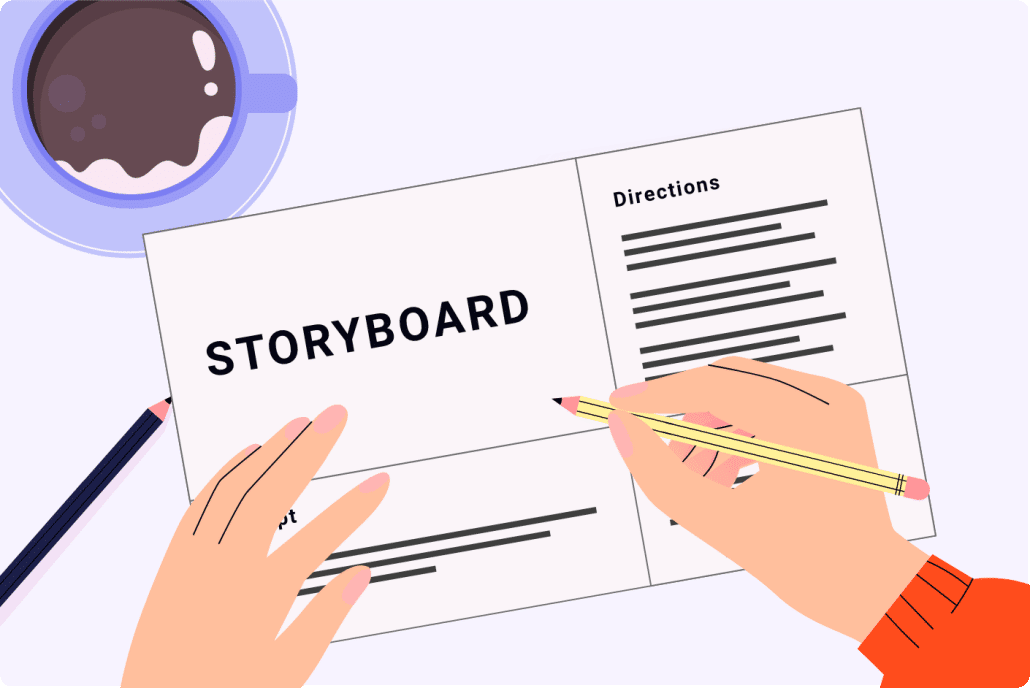
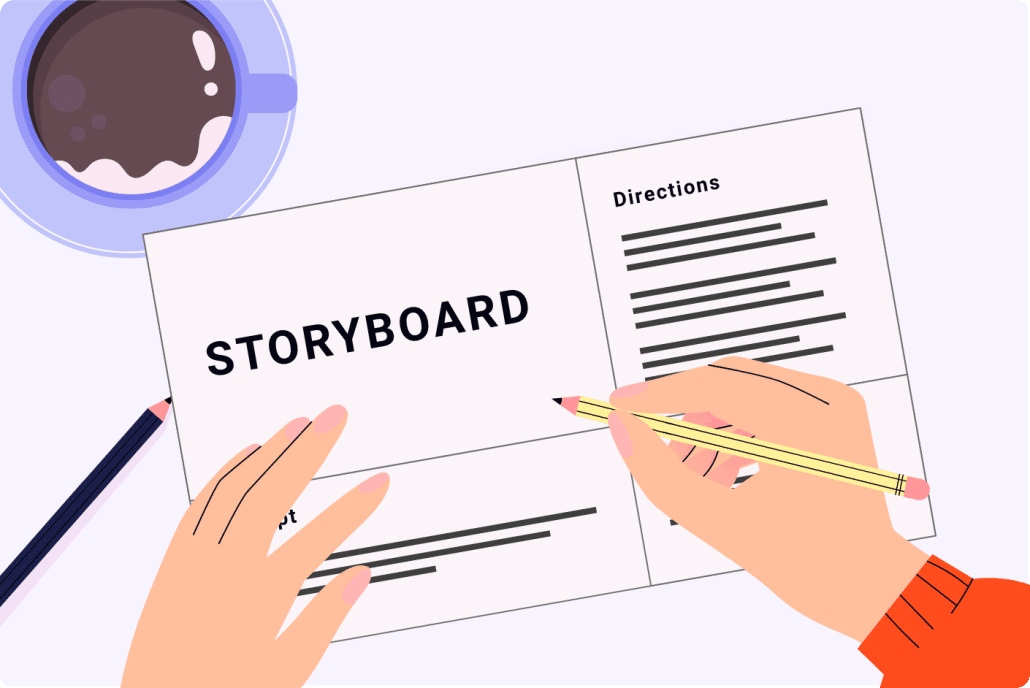
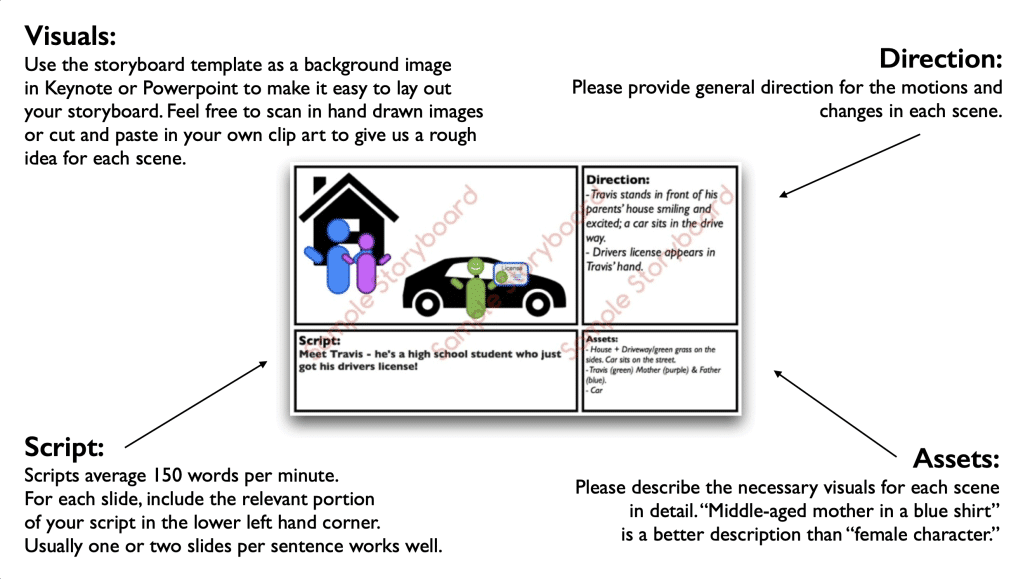
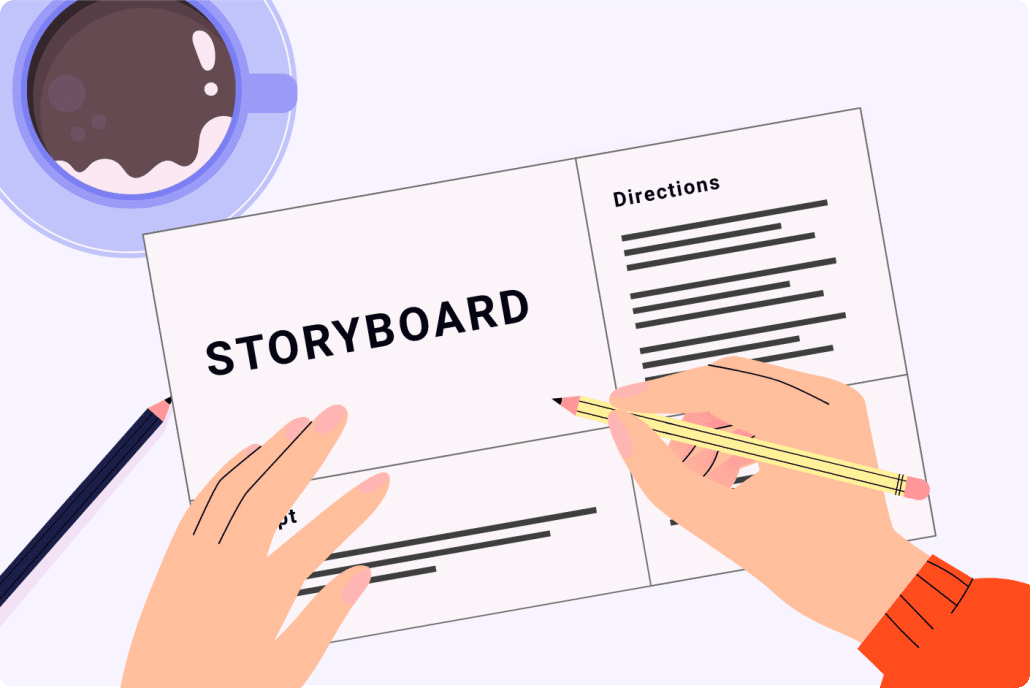
The next step is to turn your script into a storyboard. The storyboard is like the blueprint for your animated video. It provides specific instructions for the illustrators and animators so that they understand what to create and how to make it move in sync with your video script. We will share the first draft of the storyboard with you and give you time to review it and provide feedback. We will integrate your feedback and send the storyboard back to you to review and approve for production.
VoiceOver
You will receive multiple voiceover auditions to review. Give them a listen to hear how they lend their voice, emotion and energy to the words in your script. After you select the chosen voiceover talent, we will oversee the recording of the full voiceover and coach the voice talent through the pronunciation and energy needed for each scene of your animation. You get the opportunity to review the full voiceover and request revisions before approving the final draft for production.
Soundtrack
Our sound team will select several soundtracks that we feel will enhance the presentation of your animation. After you select your preferred soundtrack(s), we will purchase the broadcast rights so that you can legally use the music in your video.
Illustrations
After your concept art and storyboard are approved, our art team will create all of the illustrations for your video. You get the opportunity to review all of the art and request revisions before approving the art for production.
Animation
Now that the art is approved, our team can add rigging to the characters in your video and animate them in sync with the voiceover narration. As soon as the first draft is ready, we will render it out and share it with you to preview it with your team. After you collect everyone’s feedback, send us your revision requests. We will integrate your edits and send you the final draft of your character animation.
Tips for Creating Compelling Character Animation:
Creating compelling character animations requires a solid understanding of illustration and motion design. To create engaging character animations, focus on storytelling and character development. Craft relatable characters with consistent personalities and motivations. Align their design, behavior, and actions with the brand’s values for consistent branding.
What does it cost to create an animated video with characters?
Character animation contributes to a video’s production cost because of the extra time it takes to design and animate humans and other characters using realistic, smooth motion. As a general rule of thumb, a 60-second 2D video with character animation can usually be produced for $1,500-$10,000. Bare in mind, if the animation uses very intricate motion design, the cost can easily go over $10,000 per minute. 3D character animation costs 3-6x more for most projects. To put things in context, Pixar animated films cost over $1,000,000 to produce each minute of animation.
How long does it take to create a character animation?
It depends on the length of the animation and the complexity of the animation style. Short, simple 2D character animations (30 seconds-2 minutes) can be made in 2-8 weeks. Fancier 3D, Pixar-style character animation takes months or years to produce.
to discuss the project timeline for your character animation.
Types of Character Animation and When to Use Them
Character animation can take many different forms. The best approach depends on the goals of your project, the personality of the characters, the animated video style of your brand, and where the finished video will be used. Understanding the different types of character animation can help you choose an approach that looks professional while supporting your message.
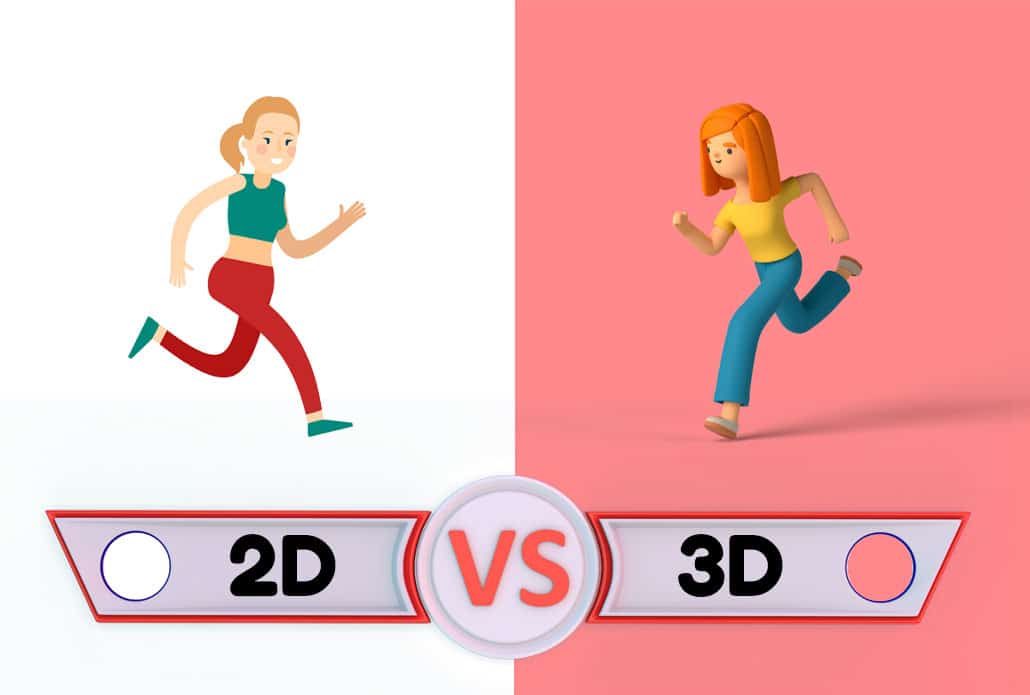
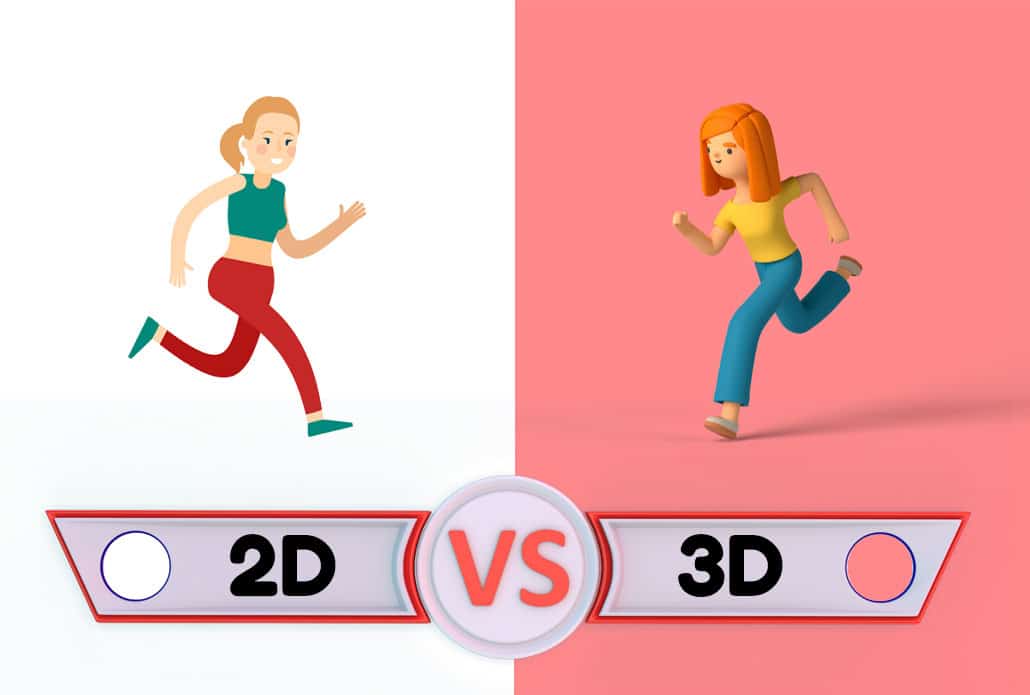
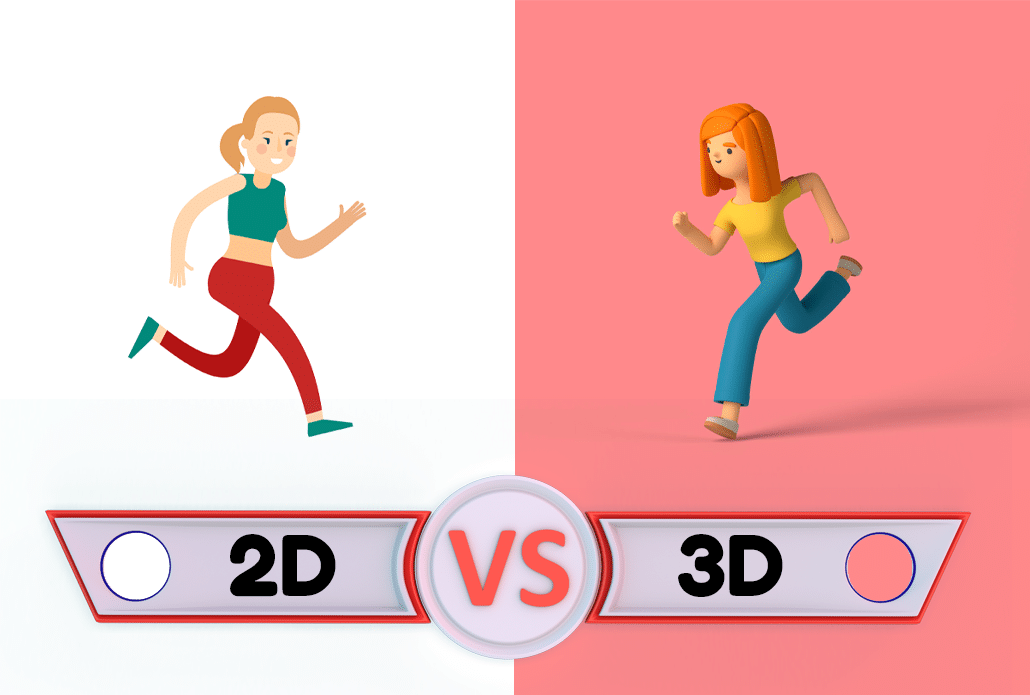
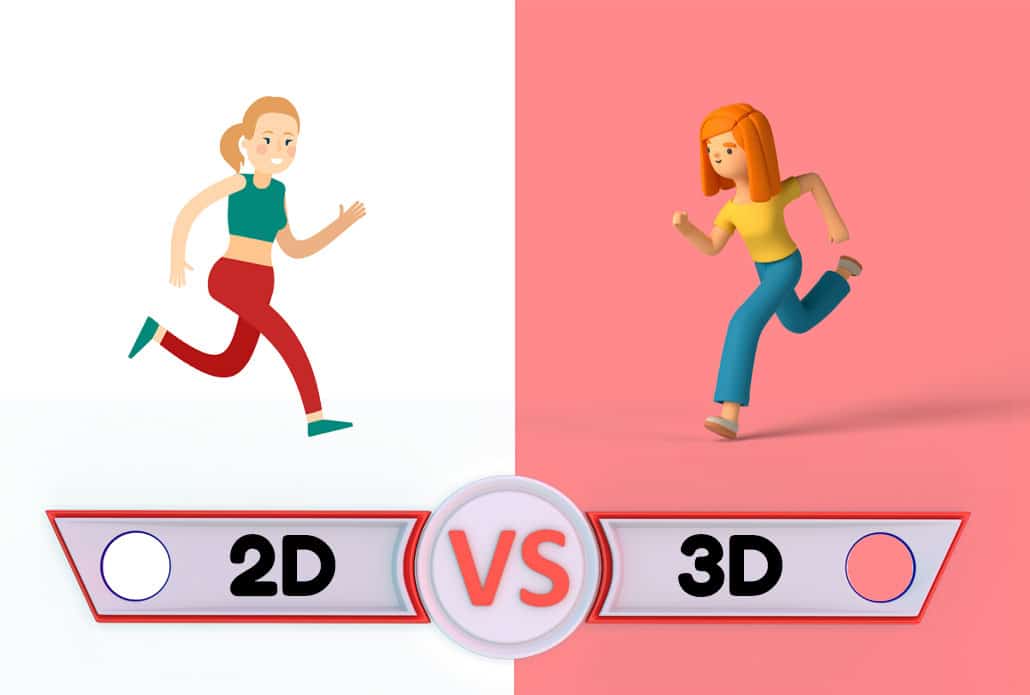
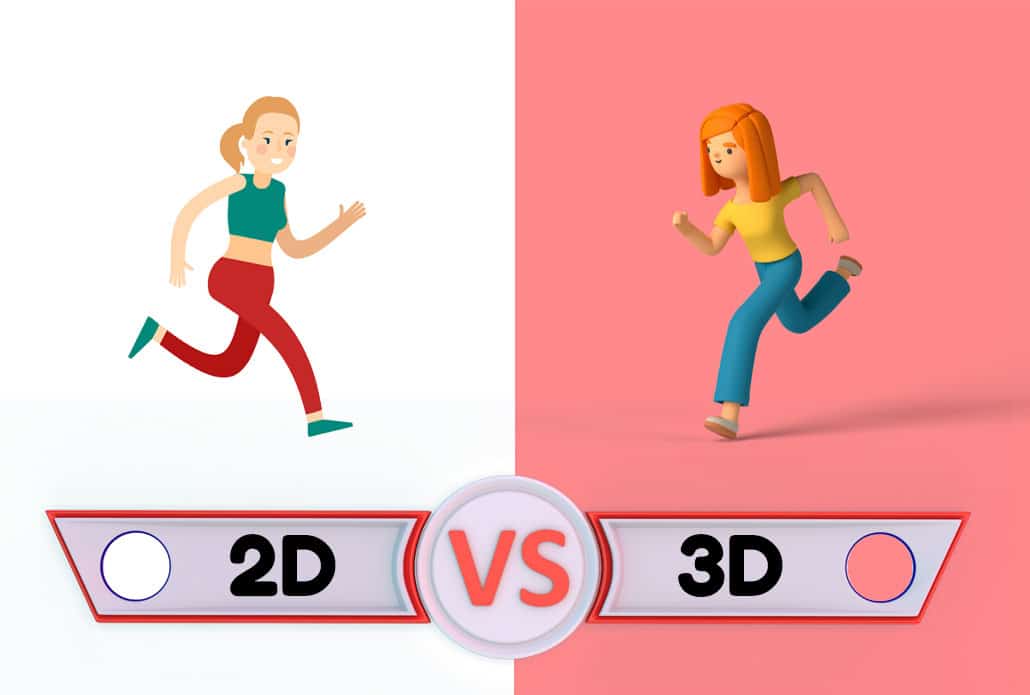
2D Character Animation
2D character animation is one of the most versatile options for marketing videos, explainer videos, advertisements, educational content, social media, and internal communications. Characters are created in a two-dimensional visual environment and can be designed in virtually any artistic style.
A 2D character might be simple and graphic, highly detailed and illustrated, cartoon-like, realistic, or somewhere in between. Because the artwork can be customized to match an existing brand identity, 2D character animation is a popular choice for companies that want something more distinctive than stock animation.
2D animation can also be particularly effective when the goal is to communicate an idea quickly. A character can demonstrate a product, react to a problem, interact with graphics, or guide viewers through a process without requiring a live actor or physical production location.
3D Character Animation
3D character animation creates characters that exist within a three-dimensional environment. Characters can be viewed from different angles and can interact with realistic lighting, environments, objects, and camera movements.
This type of animation is useful when a project requires a more dimensional or cinematic appearance. 3D characters can be particularly effective for product demonstrations, technology companies, games, entertainment projects, advertisements, and videos where the physical relationship between characters and objects is important.
One advantage of 3D character animation is that a character can potentially be reused in future scenes or productions. Once a character has been modeled, textured, rigged, and prepared for animation, the same underlying asset can be used to create additional content.
Motion Graphics With Character Elements
Not every character animation needs to look like a traditional cartoon. Characters can be incorporated into motion graphics using simplified illustrations, silhouettes, icons, geometric shapes, or other graphic elements.
This approach can be useful for businesses that want the personality of characters without making the characters the sole focus of the video. For example, an animated person could interact with charts, UI screens, product illustrations, text, or other visual elements.
Combining character animation with motion graphics can create a polished visual style that works especially well for corporate marketing, technology, SaaS, financial services, and educational content.
Common Character Animation Techniques
There are several different techniques animators can use to make characters move.
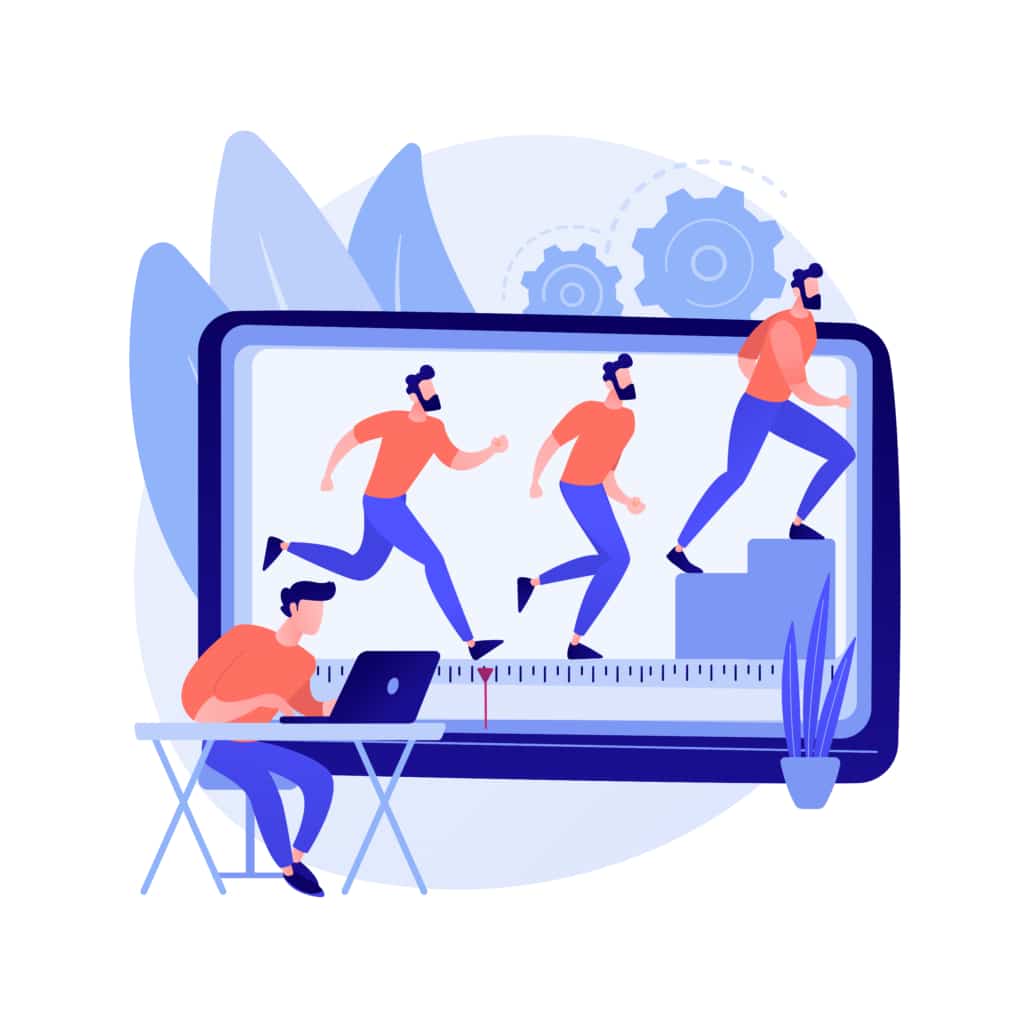
Rigged Character Animation
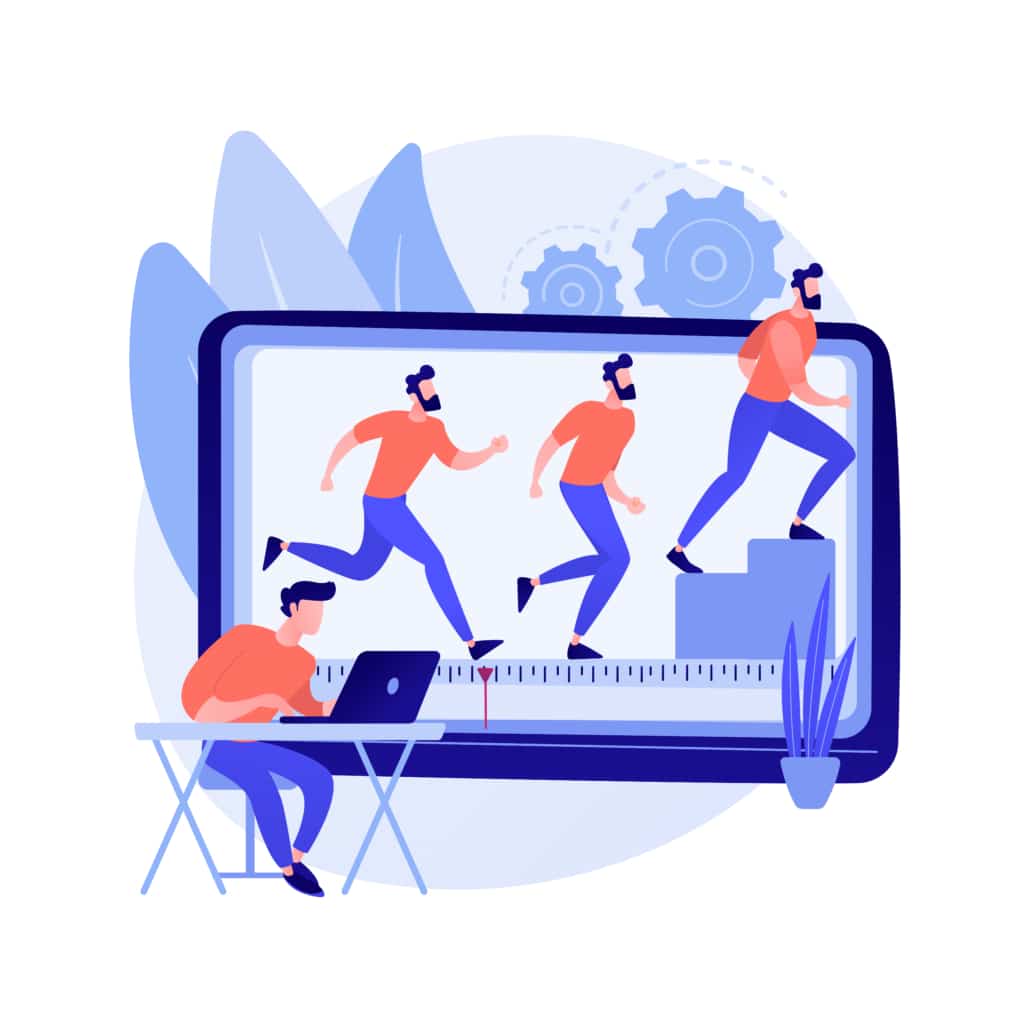
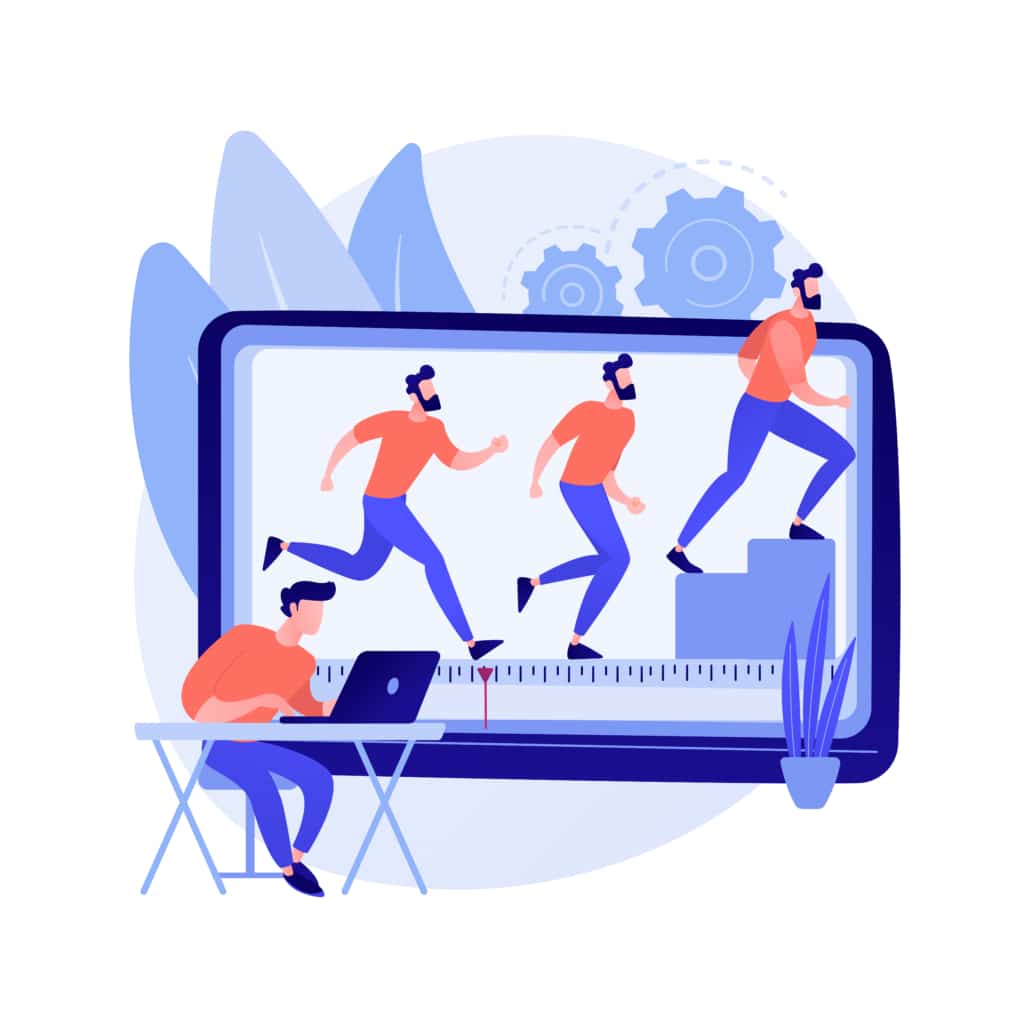
Rigged characters are constructed with a digital skeleton or control system that allows animators to manipulate different parts of the character. Instead of redrawing the character for every frame, an animator can control the arms, legs, head, body, and other elements using a rig.
Rigging is especially useful for projects that require repeated movements or multiple scenes featuring the same character. It can also make it easier to maintain visual consistency throughout a longer animation.
Frame-by-Frame Animation
Frame-by-frame animation involves creating individual poses or drawings that are played sequentially to produce movement. This technique provides animators with a high degree of artistic control and can produce distinctive movement that would be difficult to achieve with a standard character rig.
Frame-by-frame animation can be a good choice when a project calls for a hand-drawn appearance, exaggerated motion, unusual character behavior, or a highly customized animation style.
Facial Animation and Lip Sync
A character’s face can communicate information without dialogue. Changes in the eyes, eyebrows, mouth, and head position can make a character appear surprised, confused, excited, concerned, confident, or skeptical.
When characters speak, lip synchronization can also help make the animation feel more believable. The animator matches mouth shapes and facial movements to the recorded voiceover so the character appears to be naturally speaking the dialogue.
How to Design an Effective Animated Character
A successful character should be recognizable even before the viewer understands what the character is saying. Shape, proportions, color, clothing, facial features, and movement can all contribute to a character’s identity.
Consider what makes the character visually different from other characters in the same video. Distinctive silhouettes and exaggerated features can make characters easier to recognize, particularly when videos are viewed on mobile devices or at smaller sizes.
Character design should also reflect the character’s role. A customer, employee, doctor, teacher, executive, technician, or fictional mascot may each require a different visual treatment. The character’s appearance should support the message rather than distract from it.
For branded content, consistency is particularly important. Colors, clothing, accessories, logos, and other visual details can reinforce the company’s identity without turning the character into an advertisement.
Where Character Animation Can Be Used
Character animation is not limited to traditional animated videos. Businesses can use animated characters across a wide range of content formats.
Characters can also be designed as reusable brand assets. A company may develop a recurring character or mascot and use that character across multiple videos, campaigns, presentations, and digital channels. This can create greater visual consistency and help audiences become familiar with the brand over time.
How to Choose the Right Character Animation Style
There is no single character animation style that is right for every project. Start by considering the audience, message, distribution channel, and personality of the brand.
A simple 2D style may be appropriate when the priority is communicating information clearly and efficiently. A highly detailed 3D style may be better when realism, depth, or cinematic presentation is important. A stylized or unconventional approach may be more effective when the goal is to create something memorable or visually distinctive.
It is also important to consider how the animation will be used after the initial production. If a character will appear in multiple videos, choosing a style and production method that supports future reuse can provide additional value.
Ultimately, the strongest character animation is not necessarily the most complicated. The goal is to choose a visual approach that makes the message easier to understand, gives the audience a reason to pay attention, and creates a memorable connection between the viewer and the story.
Character Animation Production Resources
These articles are popular among people researching and reading about making videos with character animation:
Do you have a question about character animation that wasn’t addressed in this FAQ? Use this form to send us your question and we’ll follow up with an answer. We’ll also post the question and answer to this page so other people can benefit from the knowledge.
Watch our explainer video on our home page to learn more about how we can help you create an animated video. For examples of the kinds of animation our team can produce, check out the demo reel below:
Looking For An Animated Video Company In The U.S.?
Video Igniter is headquartered in Seattle, Washington.
Success Stories & Testimonials
Don’t just take our word for it – these testimonials highlight Video Igniter’s reliability, creativity, flexibility and ability to deliver animations that exceed expectations. When you choose Video Igniter Animation, you can rest assured that you are working with a trusted and reputable studio.
“Video Igniter were very easy to work with and the entire process for creating and suggesting edits was seamless and stress-free. I would work with them again and would recommend to others looking to create a modern and stylish explainer video.”
Clair Simpson – VP Marketing, Repool.com
“I run a video production company and outsource animation. The team at Video Igniter did a great job in taking the concept I very crudely drew out and making it into a beautiful animation. The review process was easy and their turnaround time was very quick. I’d def recommend them if you’re looking for an animation project.”
Pat Henderson – Founder, Path8 Productions
“Video Igniter offered us the critical combination of creative value, clear communication, and patience with stakeholder feedback. We ended up with truly high-quality design assets for our video series largely due to the extra level of commitment — and the right balance of efficiencies with flexibility in the process when called for.”
Larry Schlessinger – Sr. Creative Program Manager, Amazon Web Services
“Video Igniter came to us with a number of creative and engaging ideas and were able to create an exciting, impactful video in a short period of time. And the best part was that it cost much less than other options of similar quality. The video they made is a great marketing tool for us.”
https://videoigniter.com/wp-content/uploads/2023/11/Character-Animation.svg7787Video Igniter Animation/wp-content/uploads/2020/02/logo-v2.svgVideo Igniter Animation2026-10-05 13:48:292026-10-05 23:36:20The Power of Character Animation: Bringing Your Story to Life
If you want to learn how to create highly engaging video for Instagram, you’re in the right place! Video Igniter’s comprehensive guide to creating Instagram animations will teach you how to create custom animated videos that capture your audience’s attention and more!
✅ Learn how to make high converting animations for Instagram.
✅ Learn the benefits of using animation on Instagram
✅ Learn what the production process is like
✅ Learn much it costs to make animations for Instagram
✅ and more!
Let’s dive in…
Benefits of Using Animation on Instagram
Filming a video on your phone and posting it online has never been easier – so why do companies want to spend the time and money to create custom animated videos to post to their Instagram and social media channels?
Increased Engagement
Animated content achieves higher engagement rates compared to live action content. Social media content is primarily static images and live action videos. On the rare occasion an animated video enters your feed, it stands out visually. People are more likely to stop and watch the intro of your video to see if they’re interested – and for those who stick around, the eye-candy animated visuals make viewers more likely to keep people watching your video longer.
Increased Retention
Not only does animation help viewers stay engaged longer, it also helps viewers understand and retain the information longer. By displaying animated visual metaphors alongside a narrative voiceover, you can help viewers increase the comprehension and retention of your key message(s).
Enhanced Brand Identity
Animation enables brands to visually communicate in ways that photos, text and live action videos can not convey. Sophisticated motion design can be used to convey playfulness and different emotions that help convey the delivery of your brand’s key messages.
Types of Instagram Animation
There are many styles of animation that you can create to capture attention on Instagram. Here’s an overview of the top 3 most popular kinds of animations that are posted on Instagram:
2D Animation
2D animated videos can be used to bring illustrations, characters and ideas to life! Whether you’re using animation to explain something new or entertain your visitors, colorful 2D images in continuous motion stand out in the ocean of live action content and give your video a longer chance for viewers to stick around and watch the rest of your video.
Stop Motion Animation
Stop motion animations capture attention on Instagram because they bring inanimate objects to life in delightful and unique ways. Seeing objects move in playful ways is enough to get people to pause mid-scroll to engage and take in your creative content.
Stop motion animations are created by displaying a scene or an object, taking a photo, then moving the object slightly before taking another photo. This process is continued taking dozens of photos for each second of animation. Then, the images are stitched together into a video to create the illusion of an object in motion.
Cinemagraphs blend motion with static images. In most cases, a photo has animation applied to a few sections of an image to create the illusion that the image is a video. By blending beautiful static images with subtle motion, you create beautiful moving photographs.
Why Choose Video Igniter To Make Your Instagram Animation?
Video Igniter was established in 2011 and has worked with agencies, production companies, big names like T-Mobile, Amazon, Linkedin, & DocuSign and startups from around around the world to craft custom animated 2D and 3D videos to help support every business goal you can imagine. Here are the top reasons our customers love working with Video Igniter to create animations for their Instagram, their homepage, and beyond!
Customization and Originality
There’s a growing number of online animated video maker services out there but Video Igniter is the only online animated video maker that enables you to create 100% custom animated videos. Even if you have zero video production experience.
Simply explain what you want to create and Video Igniter’s online app walks you through the entire production process. You’ll receive notifications when it’s time for you to provide feedback on your script, storyboard, voiceover, illustrations and the animation.
Using original animated visual styles is going to help your Instagram animation stand out and deliver your key talking points in a captivating fashion.
Animation Expertise
After working with hundreds of agencies, production companies, startups & brands from every industry, we’ve crafted a well oiled animation production team capable of producing any kind of animated visual story you can imagine. Whether you’re looking to create a 2D animation or a 3D animation for your Instagram, we have the artistic and technical skillset on our team to bring your vision to life!
Need help crafting the story and visual branding for your Instagram animation? Video Igniter’s professional writing team is ready to help you create a fun or professional audio/visual narrative to convey your key talking points in a way that resonates with your target audience.
Streamlined Production Process
Video Igniter’s streamlined online project management system enables us to provide a smooth and organized production experience. That means you’ll get your video produced faster and for less than hiring a brick and mortar animation studio.
How To Make An Instagram Animation
Here’s a quick overview of the production process for an Instagram animation so that you can anticipate what’s coming up during each stage of the production process.
Kick Off / Questionnaire
Production starts with a kick off call and or a questionnaire to help us learn:
✅ What are your project goals?
✅ Who is the target audience for your Instagram animation?
✅ What visual style do you want to use for your animation?
Now that we understand what you want to communicate, our team will develop a script for your Instagram animation. If your animation isn’t going to include a voiceover, we will develop a brief outline of what we intend to show in your video. You get an opportunity to review the script/concept and provide feedback. We will integrate your notes and send you the updated script/concept to approve.
Next we will turn your script into a storyboard. A storyboard is a visual blueprint for your animation that includes instructions for the illustrators and animators so that they understand what to create for each section of your script.
We’ll share the first draft of the storyboard with you to get your feedback. We want to ensure the storyboard includes enough information so that the production team knows how much detail to include within their animation. Share your notes with us and we will incorporate your edits. You get final approval of the storyboard before we move forward with production.
VoiceOver (Optional)
Most Instagram animations include voiceovers – but not all of them. If your animation includes a voiceover we will send you several voiceover auditions to review. Let us know which one you prefer. Then we’ll oversee the recording of the full voiceover. You get an opportunity to review the audio and request edits before approving it for production.
Soundtrack
Music is a great way to add more energy and to frame the emotional tone of your animation. We’ll select a handful of soundtracks that will enhance the presentation of your Instagram animation and let you choose your favorite. Then we’ll purchase broadcast license so that you can legally use the music in your animation.
Side Note: facebook.com/sound provides a large library of free music that can be used in videos produced for Facebook and Instagram.
Illustrations
After your storyboard is approved, our art director will develop custom concept art for your Instagram animation.
Let us know which concept you prefer. You can also collaborate with our art director to refine your preferred concept until the details get dialed in.
Then, we’ll create the rest of the illustrations for your Instagram animation. You get the opportunity to review all the art and request revisions before approving the illustrations for production.
Animation
Now that everything is approved, we can animate your Instagram video. We’ll send you the first draft as soon as it’s ready to review. We recommend sharing it with your internal team and members of your target audience. Collect everyone’s feedback and send it to us. We’ll incorporate your edits and render out the final draft for you to use.
How to make an effective animation for Instagram
It’s easy to make pretty moving animations for Instagram – but if you want to ensure your Instagram animation helps support your business goals, we recommend you take the following tips into consideration:
1). Ensure the storytelling in your Instagram is tailored to speak directly to the needs of your target audience. Keep the message simple and clear to make it easier to convey.
2). Make sure your Instagram animation uses an animation style that is appropriate for your target audience. Childish-looking cartoons don’t play well for C-suite executives. If you want to explain how something mechanical operates, it might be worth while to create a detailed 3D animation to show what you really want to convey.
3). Optimize the design of your Instagram animation for mobile viewing. Do you anticipate most viewers will see your video in their Instagram feed or stories or reels? Pick your viewing experience and design your animation to fit within the square, horizontal or vertical window. One of the great strengths of animation is that it’s feasible to slightly redesign your Instagram animation so that you can have a version of your video that plays well in each of these aspect ratios.
4). Don’t forget to include a Call To Action (CTA) at the end of your animation. When people get drawn in to what you have to offer, be sure to provide them direction for what to do next to learn more or how they can get your product/service.
What does it cost to make an animation for Instagram?
60 seconds of custom animation tends to run between $1,500-$25,000 for most animated videos. If you want to produce shorter videos for Instagram, your production budget will be lower; however making a video that is half the length doesn’t automatically mean the cost will be 50% of the price of a 60 second video.
It’s worth mentioning that American animation studios are weary of taking on short animated content that’s 10 seconds or less because they still require a lot of time and attention so the production budget may feel outsized given the length of the content. That being said, if you want to make a bunch of short animated clips, can make the most of your production budget by bundling multiple videos together into a single video (i.e. make 6 videos that are 5 seconds each, 3 videos that are 10 seconds each, etc). When production wraps up, just slice the video file into separate video files. Producing content this way helps to streamline the project management aspects of your video project and can help lower production costs.
How long does it take to make an Instagram animation?
Most animated content for Instagram can be made in 2-6 weeks – depending on the complexity of the animation and whether or not script writing & storyboarding are factored into the project timeline. 3D animated videos may take a few more weeks to produce.
To get a production timeline for your Instagram animation, contact us with details about your project goals and deliverables.
Instagram Animation Best Practices for Brands
Creating an effective Instagram animation isn’t only about making something visually interesting. Brands also need to think about where the animation will appear, how viewers consume content, and what action they want people to take afterward. A well-designed animated video can become a reusable marketing asset that supports multiple stages of the customer journey.
Instagram Reels Animation
Instagram Reels are a natural format for animated content because they provide a large vertical viewing area and are designed around short-form video. Animated Reels can be used to introduce a product, explain a concept, showcase a new feature, promote an event, share educational information, or create entertaining branded content.
When creating animation for Reels, design the composition specifically for vertical viewing rather than simply placing a horizontal video inside a vertical frame. Important text, logos, characters, and other visual elements should remain comfortably inside the central viewing area.
The first few seconds are particularly important. Start with a visual or statement that immediately communicates why someone should keep watching. Instead of beginning with a long company introduction, consider starting with a question, surprising fact, problem, or visually compelling moment.
Animated Instagram Stories
Instagram Stories provide another opportunity to use animation for marketing. Because Stories are displayed vertically and are often consumed quickly, animated graphics can help communicate information without requiring a large amount of text.
Brands can use animated Stories to announce promotions, introduce new products, highlight customer testimonials, explain services, promote an upcoming event, or direct followers toward another destination.
Consider creating a series of short animated Story slides rather than trying to communicate an entire message in one screen. Each slide can introduce one idea and naturally lead the viewer to the next part of the story.
Animated text, transitions, illustrations, icons, and branded graphics can also make otherwise simple Story content more visually engaging.
Design Instagram Animations for Sound-Off Viewing
Not everyone will watch an Instagram video with the sound turned on. People may be scrolling in a public place, at work, or in another situation where they don’t want audio playing.
For this reason, an effective Instagram animation should still communicate its most important message visually. If the video contains narration, consider adding captions or incorporating important keywords into the animation itself.
This doesn’t mean every animated video needs to contain large amounts of text. In fact, too much text can make a video difficult to follow on a smartphone. Instead, identify the few words or ideas that are essential to understanding the message and emphasize those visually.
Music and sound effects can still play an important role in creating emotion and energy, but the animation shouldn’t completely depend on audio for the viewer to understand its purpose.
Maintain Consistent Branding Across Animated Content
One advantage of custom animation is the ability to build a recognizable visual language for your brand. Rather than treating every Instagram video as an isolated piece of content, establish visual elements that can be reused across multiple animations.
Your brand’s colors, typography, illustration style, character designs, transitions, icons, and other graphic elements can help viewers recognize your content as they scroll through their feeds.
Consistency is particularly useful when producing a series of Instagram animations. For example, a company could create a recurring educational video series where every episode uses the same general visual style while introducing a different topic.
This approach can make content production more efficient while creating a cohesive appearance across your Instagram profile.
Repurpose One Animation Into Multiple Instagram Assets
A single custom animation doesn’t necessarily have to become just one Instagram post. With some planning, you can create multiple pieces of social media content from the same production.
For example, a 60-second animated video could potentially be edited into several shorter clips. Individual scenes could become standalone posts, Story content, or short educational clips. A particularly useful section could also be turned into a short looping animation or GIF.
You can also create different versions of the same animation for different audiences or marketing campaigns. Changing the introduction, ending, branding, or CTA may allow an existing animation to serve a different purpose without requiring an entirely new production.
Planning for content repurposing before production begins can make your animation investment more valuable.
Use Animation to Explain Complex Products
Instagram is often associated with entertainment and lifestyle content, but animation can also be particularly useful for companies selling complex products and services.
Software companies, technology companies, financial services, healthcare organizations, manufacturers, and other businesses can use animation to simplify concepts that would be difficult to demonstrate with conventional video.
For example, an animated sequence can show what happens inside a software platform, illustrate an abstract process, visualize data, or demonstrate how a physical product works from an angle that would be difficult to film.
Instead of trying to explain every feature, focus each Instagram animation on one specific concept. A series of focused videos can often communicate complex information more effectively than one video attempting to explain everything at once.
Measure Your Instagram Animation Performance
After publishing an Instagram animation, use performance data to determine whether the content is accomplishing its intended purpose.
Useful metrics can include views, watch time, completion rate, shares, saves, comments, profile visits, link clicks, and conversions. The most useful metric depends on the objective of the animation.
For example, an educational animation may be successful if people save and share it, while a promotional animation may be intended to drive profile visits or website traffic.
Pay particular attention to audience retention. If viewers consistently stop watching near the beginning, the opening may need to be more compelling. If viewers watch most of the video but rarely take the desired action, the messaging or CTA may need to be revised.
Testing different versions of your Instagram animation can also provide useful insights. You could experiment with different opening hooks, visual styles, captions, video lengths, or calls to action to determine which approach resonates with your audience.
Create an Instagram Animation Series
Instead of relying on a single animated post, consider developing a recurring series. A consistent series gives your audience a reason to recognize and return to your content.
For example, a technology company could create weekly animated tips, while a software company could produce a series of short videos explaining individual features. A consumer brand might use animation to tell an ongoing story across multiple posts.
A series also gives your production team an opportunity to establish reusable characters, backgrounds, transitions, templates, and visual assets. Once the visual system has been established, producing additional episodes can become more efficient.
The most successful Instagram animation strategy doesn’t necessarily require every video to be completely different. A recognizable format combined with fresh topics can help a brand build consistency while continuing to provide new information to its audience.
Ultimately, the goal of Instagram animation should be to combine attention-grabbing visuals with useful messaging, recognizable branding, and a clear purpose. When animation is created specifically for the way people consume Instagram content, it can become much more than an attractive social media post—it can become a reusable marketing asset that helps educate, entertain, and move viewers toward the next step.
Animation Maker Production Resources
These articles are popular among people researching and reading about animation makers:
Still have questions about making animations for Instagram?
Do you have a question about Instagram animations that weren’t addressed in this FAQ? Use this form to send us your question and we’ll follow up with an answer. We’ll also post the question and answer to this page so other people can benefit from the knowledge.
Watch our explainer video on our home page to learn more about how we can help you create an animated video. For examples of the kinds of animation our team can produce, check out the demo reel below:
Looking For An Instagram Animation Company In The U.S.?
Video Igniter is headquartered in Seattle, Washington.
Success Stories & Testimonials
Don’t just take our word for it – these testimonials highlight Video Igniter’s reliability, creativity, flexibility and ability to deliver animations that exceed expectations. When you choose Video Igniter Animation, you can rest assured that you are working with a trusted and reputable studio.
“Video Igniter were very easy to work with and the entire process for creating and suggesting edits was seamless and stress-free. I would work with them again and would recommend to others looking to create a modern and stylish explainer video.”
Clair Simpson – VP Marketing, Repool.com
“I run a video production company and outsource animation. The team at Video Igniter did a great job in taking the concept I very crudely drew out and making it into a beautiful animation. The review process was easy and their turnaround time was very quick. I’d def recommend them if you’re looking for an animation project.”
Pat Henderson – Founder, Path8 Productions
“Video Igniter offered us the critical combination of creative value, clear communication, and patience with stakeholder feedback. We ended up with truly high-quality design assets for our video series largely due to the extra level of commitment — and the right balance of efficiencies with flexibility in the process when called for.”
Larry Schlessinger – Sr. Creative Program Manager, Amazon Web Services
“Video Igniter came to us with a number of creative and engaging ideas and were able to create an exciting, impactful video in a short period of time. And the best part was that it cost much less than other options of similar quality. The video they made is a great marketing tool for us.”
Alex Raymond – Founder, Kapta Systems
Get in touch about creating your Instagram animation!
If you want to learn how to make a high-converting animation for a website, Video Igniter’s comprehensive guide to website animations will teach you everything you need to know including:
✅ How to make an animation for a website
✅ What it costs to make an animation for a website
✅ How long it takes to make an animation for a website
✅ Tips for making sure your website’s animation convert users
✅ and more!
Examples of Animations Video Igniter Can Create For Your Website
Video Igniter can create any kind of 2D or 3D animated video for you. You can request access to our new production rates.
Are you looking for an example of a different style of animation? Send us a message to let us know what kind of animation example you want to see and we will follow up with relevant production samples.
What kinds of animations can you make for your website?
Animated Explainer Videos
The most popular kind of animation that companies make for websites are called “Animated Explainer Videos” or “Explainer Videos” for short. Explainer videos are designed to take a big, new or complicated idea and break it down into its individual components to make it easier to explain the new information to people. Using animated visuals to compliment a voiceover narration further simplifies the teaching process and helps people learn and retain the information longer.
Animated Videos For Your Homepage
Many companies create promotional and educational animated videos for their website’s homepage. Using animation on your homepage creates a colorful, engaging first impression to welcome visitors to your website and teach them what you have to offer.
Website Landing Page Animation Videos
Adding videos to your landing pages and sales pages helps increase conversions and sales. By providing rich media content on your sales pages, you empower leads and clients to educate themselves before making a purchasing decision or contacting your sales team.
Customer Service Animations
Creating animated customer service videos that answer common questions your leads and customers ask enables your company to provide high quality customer service while saving on customer support costs. Instead of answering the same questions again and again, creating and sharing concise educational videos that show customers how to address their questions ultimately enables them to solve problems faster with fewer customer support followups.
Animated Product Demos For Your Website
Including animated tutorial videos within the user experience of your website enables customers to learn how to use your service/app faster.
Animated GIFs
Including animated GIFs on your website delivers a polished visual flair that enhances the perception of your brand and helps keep people on your website longer.
How to make an animation for your website?
After you contact Video Igniter about your video project, here’s what you can expect during the production process:
Website Animation Kick Off Call / Questionnaire
Production begins with a kick off call and or a questionnaire to learn:
Once we understand who your target audience is and what sorts of problems they face, our team develops a script that is designed to communicate to your audience that you:
✅ Understand the problems they experience
✅ Understand how to solve the challenges they experience.
When the first draft of your script is ready, we will send it to you to review. We will incorporate your feedback and send the updated script back to you to review and approve.
Budget Saving Tip: Instead of hiring Video Igniter to write the script for your video, download our script writing template and draft it yourself! We’ll help you review your script before we proceed with production to ensure it follows all of our best practices for high-converting website videos.
The next step is to create the storyboard for your website animation. A storyboard is like a visual blueprint for your animation. Each page includes a sentence from your video’s script, a rough visual mockup of what the scene will look like, and instructions to explain how everything will move during that visual.
You get an opportunity to review the storyboard to ensure it contains enough detail for the illustration and animation teams to know what create in each scene. We’ll incorporate your revisions and send you an updated version of the storyboard to review and approve for production.
Budget Saving Tip: Instead of hiring Video Igniter to create your storyboard, download our storyboard creation template and guide and create the storyboard yourself. No artistic skills needed – we’ll take care of making sure your animation looks great!
VoiceOver
You will receive several voiceover auditions to consider for your project. Once you select your preferred voiceover talent, we will oversee the recording of the full voiceover. You get an opportunity to review the voiceover and request edits before approving the voiceover for production. After the voiceover is approved, we will secure the broadcast rights for you to use their voice in promotional media campaigns.
Soundtrack
You will also receive several soundtrack options for your video. Give them a listen and let us know which option you prefer. After you select a soundtrack for your website animation, we will procure the broadcast license so that you can legally use the music in your video.
Illustrations
Our team will develop custom concept art for your website’s animation. After you select your preferred visual concept, you have the opportunity to collaborate with our art director to refine the visual style until you absolutely love it! Then, we’ll create all of the illustrations for your animation. You get an opportunity to review them and request edits before approving the illustrations for production.
Creating Your Website’s Animation
Now that the storyboard, voiceovers, soundtrack and illustrations are approved, it’s time to animate! We’ll send you the first draft as soon as it’s ready to review. We recommend circulating the video among your marketing & leadership teams to collect everyone’s feedback. Bonus points if you can preview the video with members of your target audience to get their feedback as well! Once you’ve collected everyone’s feedback, send it to us. We will incorporate all of your edits and render out the final draft of your animated video.
Tips for creating a high-converting animation for your website
Compelling Intro + Hook
Your website’s animation should begin with a compelling intro or hook that is relevant and interesting for your target audience. Focus on the problem they experience and then introduce how your company can come in to solve their problem and make their life easier.
End with a call to action (CTA)
What do you want people to do when they’re done watching your website’s video? Contact your sales team? Download an app? Create a free account? What ever it is, say it! Your whole video should create interest within your target audience so that by the time they reach the end of your video, they want to know how they can get your product or service. When they get to that point, be specific and tell them what to do next!
Use a visual style that is relevant for your target audience
Aesthetics matter. If you’re developing a financial service product for Fortune 500 companies, use a sleek, clean & modern visual style for your video. Using a childish cartoon-style animation could decrease the perception of your product/service for your specific audience. When you hire Video Igniter to create your website’s animated video, we develop multiple custom art concepts and give you an opportunity to pick your favorite style. Then you get to refine the details with our art director to ensure the visual style is fine tuned for your target audience.
Test different thumbnails
The thumbnail for your website’s animation is the first impression people are going to get of your video. That’s why it’s important to develop multiple thumbnails for your video and test to see which one gets people to click play most often.
A/B Test different intros and Endings
In addition to testing different thumbnails, it’s worthwhile to test variations of your intro and the CTA at the end of your video. Testing different intros / hooks for your video enables you to see which messaging strategy gets people to watch your video longer. Testing different calls to action at the end of your video enables you to see which CTA is more likely to get people to take action when they’re done watching your video. By A/B testing different thumbnails, intros and endings for your video, you can dramatically increase the conversion rate of your website’s animated video.
What does it cost to make a website animation?
Production costs can range widely when you create an animation for a website. In general, expect to pay $1,500-$15,000 for a 60 second, 2D animated video. 3D animated videos tend to cost 2-4x more to produce.
How long does it take to make an animation for a website?
Most 2D website animations can be produced in 3-6 weeks – assuming your video is between 30 seconds and 2 minutes in length. 3D animated videos take 2-4x more time to produce. If you need to speed up production to finish your video before a deadline, we offer a rush delivery production option.
Website Animation Best Practices: Performance, SEO, Mobile & Accessibility
Creating an effective animation for your website involves more than producing an attractive video. You also need to consider how the animation will affect website speed, mobile users, accessibility, search visibility, and the overall user experience. A well-planned website animation should enhance your website rather than distract from its primary purpose.
Optimize Website Animation for Page Speed
One of the most important considerations when adding animation to a website is performance. Large video files, uncompressed GIFs, and complex animations can increase page load times, particularly for visitors using mobile devices or slower internet connections.
Whenever possible, optimize your website animation before publishing it. Compress video files while maintaining an acceptable level of visual quality, use modern video formats when appropriate, and avoid unnecessarily large files. You can also use a poster image or thumbnail so visitors see a visual preview before the video begins playing.
If an animation is not immediately visible when someone lands on the page, consider loading it only when it becomes relevant to the visitor. This can help prevent animations lower on the page from unnecessarily consuming resources before the visitor reaches them.
The goal isn’t simply to make your animation look good. Your animation for your website should load efficiently and work alongside the rest of the page without creating a frustrating experience.
Design Website Animations for Mobile Devices
A website animation that looks great on a desktop computer may not work as well on a smartphone. Mobile visitors have less screen space, may have slower connections, and often interact with websites using touch rather than a mouse.
Before publishing an animation, preview it on multiple screen sizes. Make sure text remains readable, important visual elements aren’t cropped, and the animation doesn’t require users to interact with tiny buttons or controls.
If your animation contains narration, remember that many mobile visitors may initially have their sound turned off. Adding captions or on-screen text can make the core message understandable even when the audio isn’t playing.
Shorter animations can also work particularly well on mobile landing pages. If visitors can understand the main value proposition in a few seconds, they are more likely to continue exploring the website.
Make Your Website Animation Accessible
Accessibility should be considered when creating any type of website content, including animated videos. Don’t assume that every visitor will be able to see, hear, or interact with your animation in the same way.
For videos containing important spoken information, provide captions or a transcript. Captions make your content accessible to people who are deaf or hard of hearing and also allow visitors to understand your video when they cannot listen to audio.
Avoid using animation as the only way to communicate critical information. Important pricing, product details, instructions, or calls to action should also be available as regular HTML text on the page.
It’s also worth being cautious with rapidly flashing or excessively distracting visual effects. Animation should support the user’s experience rather than make the page difficult or uncomfortable to navigate.
Use Animation Where It Supports the Customer Journey
Not every page on your website needs an animation. The most effective placement depends on what you want visitors to accomplish.
For example, an animation on a homepage can introduce your company and explain what you do. A product page animation can demonstrate how a product works. A landing page video can address objections and explain why someone should take the next step.
You can also use animation deeper in the customer journey. An animated tutorial can help a new customer learn how to use your product, while an animated FAQ video can answer common questions after someone becomes a customer.
Think about the question the visitor is trying to answer on each page. Then create an animation that helps answer that question as quickly and clearly as possible.
Choose the Right Type of Website Animation
There are several ways to add animation to a website, and the right approach depends on your objective.
An animated explainer video is useful when you need to explain a complicated product, service, process, or concept. A short product demonstration can show visitors how something works without requiring them to read a long explanation.
Motion graphics can be useful for presenting statistics, processes, timelines, or other information visually. Animated GIFs can work well for simple visual demonstrations or decorative elements, although large GIF files can create performance issues.
For some websites, interactive animation may make more sense than a traditional video. Interactive animations allow visitors to click, scroll, hover, or otherwise control what happens on screen. This can be particularly useful for product interfaces, software demonstrations, interactive infographics, and educational experiences.
The key is to select the animation format based on the communication goal rather than choosing a format simply because it looks impressive.
Measure the Performance of Your Website Animation
After publishing your animation, measure whether it is actually helping your website achieve its goals.
Depending on where the animation appears, useful metrics can include video plays, video completion rate, average watch time, click-through rate, conversions, form submissions, and sales. You can compare these results against pages or versions that don’t use animation to better understand its impact.
For example, if an animated video appears above a lead-generation form, you could measure whether visitors who watch the video are more likely to complete the form. If an animated product demonstration appears on a sales page, you could monitor whether visitors who engage with the animation are more likely to purchase or contact your sales team.
Analytics can also reveal where visitors stop watching. If a significant percentage of viewers leave during the first few seconds, your introduction may need improvement. If most viewers watch the entire video but don’t click your CTA, the problem may be with the offer or call to action rather than the animation itself.
Ultimately, the best animation for a website is one that combines strong visual communication with a fast, accessible, mobile-friendly user experience and a clear business objective.
Still have questions about making an animation for your website?
Do you have a question about creating an animation for your website that wasn’t addressed in this FAQ? Use this form to send us your question and we’ll follow up with an answer. We’ll also post the question and answer to this page so other people can benefit from the knowledge.
Watch our explainer video on our home page to learn more about how we can help you create an animated video. For examples of the kinds of animation our team can produce, check out the demo reel below:
Looking For A Website Animation Video Production Company In The U.S.?
Video Igniter is headquartered in Seattle, Washington.
Website Animation Success Stories & Testimonials
Don’t just take our word for it – these testimonials highlight Video Igniter’s reliability, creativity, flexibility and ability to deliver animations that exceed expectations. When you choose Video Igniter Animation, you can rest assured that you are working with a trusted and reputable studio.
“Video Igniter were very easy to work with and the entire process for creating and suggesting edits was seamless and stress-free. I would work with them again and would recommend to others looking to create a modern and stylish explainer video.”
Clair Simpson – VP Marketing, Repool.com
“I run a video production company and outsource animation. The team at Video Igniter did a great job in taking the concept I very crudely drew out and making it into a beautiful animation. The review process was easy and their turnaround time was very quick. I’d def recommend them if you’re looking for an animation project.”
Pat Henderson – Founder, Path8 Productions
“Video Igniter offered us the critical combination of creative value, clear communication, and patience with stakeholder feedback. We ended up with truly high-quality design assets for our video series largely due to the extra level of commitment — and the right balance of efficiencies with flexibility in the process when called for.”
Larry Schlessinger – Sr. Creative Program Manager, Amazon Web Services
“Video Igniter came to us with a number of creative and engaging ideas and were able to create an exciting, impactful video in a short period of time. And the best part was that it cost much less than other options of similar quality. The video they made is a great marketing tool for us.”
Alex Raymond – Founder, Kapta Systems
Get in touch about creating an animated video for your website!
https://videoigniter.com/wp-content/uploads/2023/11/Animation-For-Website.svg7787Video Igniter Animation/wp-content/uploads/2020/02/logo-v2.svgVideo Igniter Animation2026-09-29 13:02:522026-09-30 01:19:56Animation for Website: How To Create A High Converting Animated Video For Your Website
Do you want to hire a motion graphics designer but aren’t sure how to get started? You’re in the right place! Video Igniter produces animated videos and motion graphics and you can hire our professional motion design team to create custom motion graphics for your next video project. In this guide we’ll explain what the production process is like, how long it takes to create custom motion graphics, what to expect in terms of costs, and more!
Let’s dive in…
Examples Of Motion Graphics Video Igniter Can Create For You
Video Igniter can create any kind of 2D or 3D animation for you. Check out the example videos below.
Are you looking for an example of a different style of motion graphic? Send us a message to let us know what kind of animation example you want to see and we will follow up with relevant production samples.
Benefits of Hiring Video Igniter’s Motion Graphics Designers
Video Igniter’s production team is comprised of professional illustrators, animators, motion graphics designers, storytellers and sound engineers that collaborate to produce professional quality animations and motion graphics for startups, agencies, video production companies and big names like T-Mobile, Amazon, Linkedin and more!
Here are some of the benefits our clients get when they work with one of our motion graphics designers instead of hiring your own full time in-house motion graphics designer:
The right talent for the right project.
Our team of motion graphics designers can create any kind of 2D or 3D animated motion graphic you can imagine. The lone designer you hire for your team may not have all the skills necessary to produce all the types of content you want to create. When you start a project with Video Igniter, we ensure the motion designer assigned to your project has relevant design experience to craft the visual style you envision.
On-Demand-Talent = Annual Cost Savings
Rather than hiring a year-round motion graphics designer, you can collaborate with one (or more!) of our motion graphics designers on an as-needed basis. Whether you’re just creating one short animation or a library of hundreds of motion graphics, our team can scale to meet your production needs.
What does it cost to hire a motion graphics designer?
If you want to hire a full time or freelance motion graphics designer, expect to pay $35-$75+ per hour. When you hire Video Igniter’s motion graphic designers to help you create your video, we charge based on the length of the content we’re producing for you.
How long does it take to make a video with a motion graphics designer?
Simple motion graphics that are created and overlaid on top of existing video footage can be made in as little as a few hours or a few days. However, in many cases, it can take a week or two to do all the design and prep work to ensure the motion graphics designer is creating the right content and doing so in a way that visually compliments your brand.
If you want to hire a motion graphics designer to create a complete animated video, expect it to take 2-5 weeks to create a 60 second custom animated motion graphic. Motion graphics that include 3D animation can take 2-4x more time to produce.
What is the production process like working with a motion graphics designer?
Here’s a quick overview of the production process so that you can anticipate what’s involved with creating a custom animated motion graphic:
1). Kickoff Call / Questionnaire
Production begins with a phone call and or a questionnaire to help us learn:
✅ Who your target audience is?
✅ What visual style you want to use for your motion graphic?
✅ What do you want to convey with your motion graphic?
Now that we have a better understanding of the motion graphic you want us to create, our motion graphic designer will draft a script or an outline that describes what we’re going to create. If your motion graphic is purely visual, there will be no script, just visual descriptions of what we plan to create. If your motion graphic will also have a voiceover, we will draft a script for you to review.
Share your feedback with us and we will revise your script / outline until you are thrilled with it.
Once the script/outline is locked in, our motion graphics designer will create a storyboard. A storyboard is a visual blueprint for your motion graphic that explains to the illustrator and animator what they’re supposed to create.
Give the storyboard a detailed review and ensure it includes enough detail for the production team to understand what needs to be included in the visuals for each scene.
We’ll incorporate your feedback and continue to work with you to refine the storyboard until it’s perfect.
4). VoiceOver (Optional)
Not all motion graphics include a voiceover so this step may be omitted. If a voiceover is needed for your motion graphic, we will share some voiceover auditions for you to review. Let us know which voiceover artist resonates with you. Then we’ll oversee the recording of the full voiceover.
You get an opportunity to review the voiceover and request revisions until you love the recording.
5). Illustrations
Next, the motion graphics designer will develop custom concept art for you to review.
Let the motion graphics designer know which concept you like best. Then you can collaborate with them to refine the visual concept to dial in the details until they’re perfect.
Once the concept art is locked in, we will create all of the rest of the custom graphics for your motion graphic. You get an opportunity to review the graphics and request revisions before approving the art for production.
6). Soundtrack (Optional)
Not all motion graphics include soundtracks so this step may be omitted. If your motion graphic is going to include background music, we will select a few options and share them with you to review. Let us know which soundtrack you prefer and we’ll license it for use in your animated motion graphic. If you aren’t in love with any of the soundtrack options, let us know why and we’ll source new options for you to consider.
7). Animation
Now that everything is approved, the motion graphics designer can animate your project! You will receive the first draft as soon as it’s ready to review. Share the draft with members of your internal team (and ideally members of your target audience). Send everyone’s feedback to us. We’ll incorporate your revisions and render out the final draft of your motion graphic.
What Does a Motion Graphics Designer Do?
A motion graphics designer combines graphic design, animation, typography, visual storytelling, and video production to create moving visual content. Instead of designing graphics that remain static, a motion graphics designer considers how those graphics should move, change, transition, and interact with other elements over time.
Motion graphics can range from a few animated text elements added to existing footage to a completely custom animated video. Depending on the project, a motion graphics designer may animate logos, typography, illustrations, icons, charts, diagrams, interfaces, photographs, product imagery, or other visual assets.
The goal is not simply to make graphics move. Effective motion design uses movement to direct attention, establish visual hierarchy, communicate information, and make content easier to understand.
Common Uses for Motion Graphics Design
Businesses use motion graphics in many different types of video and digital content. A motion graphics designer can create visual content for marketing, advertising, presentations, social media, websites, internal communications, and other applications.
Animated Logos and Brand Elements
Motion graphics can turn a static logo or brand element into an animated visual. An animated logo can be used at the beginning or end of a video, in social media content, presentations, advertisements, websites, and other branded communications.
Motion designers can also create animated versions of other brand elements, such as typography, icons, patterns, transitions, and graphic layouts. Developing these elements as a cohesive system can help maintain consistency across multiple pieces of video content.
Data Visualization and Infographics
Motion graphics are particularly useful when a project needs to explain numbers, statistics, processes, or relationships between different pieces of information.
Instead of displaying a large amount of information on a static slide, an animated infographic can introduce information gradually. Charts can build over time, numbers can change on screen, and individual elements can be highlighted as the narration explains them.
This approach can make complex information easier for viewers to follow because the animation controls what information appears and when it appears.
Animated Presentations
A motion graphics designer can also transform traditional presentation content into animated video. Slides containing charts, diagrams, headlines, product information, or other graphics can be animated to create a more dynamic viewing experience.
This can be useful for companies that want to turn sales presentations, conference presentations, investor information, or educational material into videos that can be distributed beyond the original live presentation.
Social Media Motion Graphics
Social media platforms are another common application for motion graphics design. Short animated graphics can be used to introduce products, highlight statistics, promote announcements, explain concepts, or create branded content.
When creating motion graphics for social media, consider the way people consume content on mobile devices. Large visual elements, concise messaging, strong contrast, and movement that communicates quickly can help the video work effectively when viewers are scrolling through a feed.
It is also worth considering whether the content will be viewed with sound turned off. Captions and visual communication can help the message remain understandable without relying entirely on narration.
Motion Graphics Designer Skills to Look For
If you’re hiring a motion graphics designer, reviewing technical skills alone isn’t enough. Look for someone who combines design ability with an understanding of animation and communication.
Important skills can include graphic design, typography, composition, color theory, animation principles, visual storytelling, video editing, and timing.
Experience with software used for motion design can also be relevant. Depending on the project, a motion graphics designer may work with applications such as Adobe After Effects, Adobe Illustrator, Adobe Photoshop, Premiere Pro, Cinema 4D, Blender, or other specialized animation and video tools.
However, software proficiency doesn’t necessarily indicate whether a designer is right for a particular project. A strong portfolio can provide more useful evidence of whether a designer’s visual style and technical abilities match your requirements.
How to Evaluate a Motion Graphics Designer’s Portfolio
A portfolio should show more than visually impressive animation. When reviewing a motion graphics designer’s work, look at how effectively the designer communicates information through movement.
Pay attention to the relationship between typography, imagery, transitions, timing, and sound. Consider whether the animation feels intentional or whether elements are moving simply for the sake of movement.
It can also be helpful to look for examples similar to your own project. Someone may produce excellent character animation but have limited experience with corporate infographics, product demonstrations, UI animation, or data visualization.
Ask to see a variety of completed projects when possible. This can help you determine whether the designer can adapt their approach to different brands, audiences, and communication goals.
What to Give Your Motion Graphics Designer Before Production
Providing useful information at the beginning of a project can help your motion graphics designer understand what needs to be created.
Useful materials may include your brand guidelines, logo files, existing graphic assets, product screenshots, photographs, video footage, reference examples, campaign information, and any existing messaging.
It can also help to explain where the finished motion graphic will be used and who will watch it. A graphic designed for a conference presentation may have different requirements from one created for a mobile social media advertisement.
If you have examples of motion graphics you like, share them with the designer and explain what you like about them. Identifying specific characteristics—such as typography, pacing, transitions, color, or visual style—can be more useful than simply saying that you want the project to “look similar.”
Motion Graphics Design and Video Editing
Motion graphics design and video editing are related but distinct disciplines. A video editor primarily works with existing footage, arranging shots and audio into a finished sequence. A motion graphics designer creates or animates visual elements that may not exist as traditional camera footage.
Many projects require both skills. For example, a marketing video may combine live-action footage with animated titles, charts, product callouts, transitions, logos, and other graphic elements.
Understanding this distinction can help you determine what type of creative professional you need. If your project consists primarily of existing footage that needs to be assembled, a video editor may be appropriate. If the project requires custom animated graphics, typography, illustrations, or visual effects, a motion graphics designer may be an important part of the production team.
When Should You Hire a Motion Graphics Designer?
Consider hiring a motion graphics designer when static graphics are not enough to communicate your message or when you want to add movement and visual storytelling to existing content.
Motion graphics can be especially useful for explaining complicated information, presenting data, demonstrating software features, introducing a brand, creating advertising content, and producing short-form digital content.
The right motion graphics designer should be able to translate your message into visuals while making deliberate decisions about movement, timing, composition, and visual hierarchy. Rather than treating animation as decoration, an experienced motion designer can use movement as another tool for communicating your ideas.
Motion Graphic Designer Production Resources
These articles are popular among people researching and reading about motion graphics designers:
Still have questions about motion graphics designers?
Do you have a question about motion graphics designers that wasn’t addressed in this FAQ? Use this form to send us your question and we’ll follow up with an answer. We’ll also post the question and answer to this page so other people can benefit from the knowledge.
Watch our explainer video on our home page to learn more about how we can help you create an animated video. For examples of the kinds of animation our team can produce, check out the demo reel below:
Looking For An Motion Graphics Designer In The U.S.?
Video Igniter is headquartered in Seattle, Washington.
Success Stories & Testimonials
Don’t just take our word for it – these testimonials highlight Video Igniter’s reliability, creativity, flexibility and ability to deliver animations that exceed expectations. When you choose Video Igniter Animation, you can rest assured that you are working with a trusted and reputable studio.
“Video Igniter were very easy to work with and the entire process for creating and suggesting edits was seamless and stress-free. I would work with them again and would recommend to others looking to create a modern and stylish explainer video.”
Clair Simpson – VP Marketing, Repool.com
“I run a video production company and outsource animation. The team at Video Igniter did a great job in taking the concept I very crudely drew out and making it into a beautiful animation. The review process was easy and their turnaround time was very quick. I’d def recommend them if you’re looking for an animation project.”
Pat Henderson – Founder, Path8 Productions
“Video Igniter offered us the critical combination of creative value, clear communication, and patience with stakeholder feedback. We ended up with truly high-quality design assets for our video series largely due to the extra level of commitment — and the right balance of efficiencies with flexibility in the process when called for.”
Larry Schlessinger – Sr. Creative Program Manager, Amazon Web Services
“Video Igniter came to us with a number of creative and engaging ideas and were able to create an exciting, impactful video in a short period of time. And the best part was that it cost much less than other options of similar quality. The video they made is a great marketing tool for us.”
Alex Raymond – Founder, Kapta Systems
Get in touch about hiring a motion graphics designer!
Are you looking for an animation maker to help you create a custom animated video? You’re in the right place! Video Igniter is an online animated video production service that enables you to get your idea, script or storyboard turned into a custom animated 2D or 3D video. In this article we’ll explain what Video Igniter’s animation maker service is like, how to use it, what it costs to use, how long it takes to make a custom video and tips to help you save money on your production budget.
Let’s dive in!
Examples Of Videos You Can Make With Video Igniter’s Animation Maker?
Video Igniter can create any kind of 2D or 3D animated video for you. Check out the example videos below.
Are you looking for an example of a different style of animation? Send us a message to let us know what kind of animation example you want to see and we will follow up with relevant production samples.
What is Video Igniter’s Animation Maker Service?
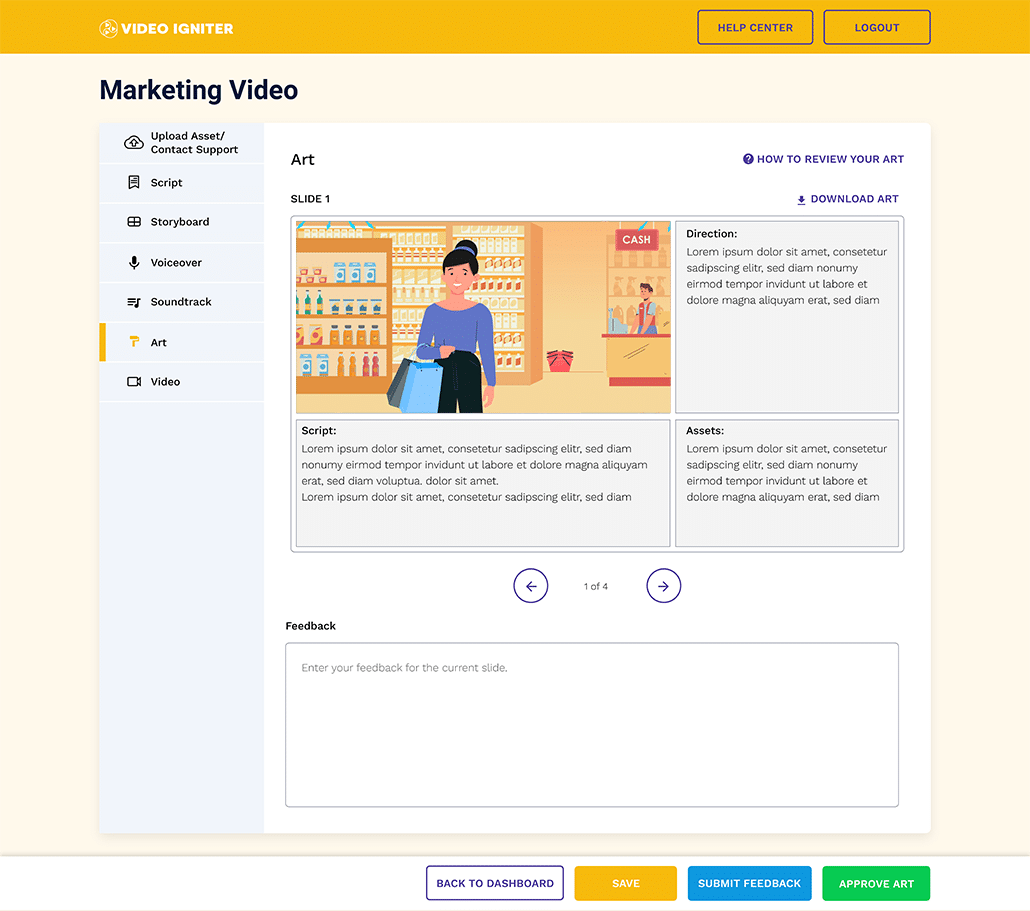
Video Igniter is a professional animation team that you work with online to make custom animated videos. Collaborating with our team to make a animation online enables us to provide faster service and reduce your production costs. Video Igniter’s online production dashboard streamlines your production experience and helps you keep production organized so that you always know what’s happening and what’s coming up next.
Benefits of Video Igniter’s Animation Maker Service
Faster Production
Video Igniter’s online animation maker platform streamlines your production experience by making it faster for you to review project assets and share feedback with our production team.
No video production experience needed
You don’t need to have any video production experience to use our animation maker to create custom animated videos. If you can describe the video you want, our team will guide you through the entire production experience and check in with you whenever we need your input.
Make any kind of video you can imagine (2D & 3D)
Video Igniter’s animation maker production team is capable of making any kind of custom animated video you can imagine. All you have to do is describe the video you want. We’ll assemble the ideal team to craft each part of your animated video. No need to shop around for different producers for different projects; we have all the talent you need under one roof.
We start where you are
Whether you have a script, storyboard or just the idea for an animated video, our team can pick up production wherever you are in the production process. We can help you turn your idea into a script and then a storyboard – or we can take your storyboard and immediately dive into production.
Want to make 1 video? How about 50? Regardless of how large or small your production needs are, Video Igniter’s animation maker can scale up to fit the demands of your project.
How to use Video Igniter’s Animation Maker Service to Create Custom Animated Videos
Here’s a brief overview of the production process so that you understand what to expect when you use Video Igniter’s animation maker to create your custom animated video:
Animation Maker Kickoff Call / Questionnaire
Production starts with a kickoff call and or a questionnaire to help us learn:
✅ Who the target audience is for your animation?
✅ What do you want to convey in your animation?
✅ What visual style do you want to use for your animation?
Now that we understand what you want to convey in your video, our animation maker’s script writing team will develop the script for your video. You will get an opportunity to review the script and request revisions before approving the script for production.
Next, our animation maker’s storyboard team will turn your script into a storyboard. A storyboard is like a blueprint for your video. It tells the illustrators and animators what to create for each sentence of your script. You will get an opportunity to review the storyboard and request edits before approving the storyboard for production.
VoiceOver
You will receive a notification from our animation maker with several voiceover auditions. Give them a listen and pick your favorite voice. We’ll then hire that voiceover artist to record the full audio for your animation. You will get an opportunity to review the complete voiceover and request edits before approving it for production.
Soundtrack
You will also receive several soundtrack options from our animation maker. Give them a listen and let us know which one is your favorite. Then, we’ll purchase the broadcast rights for that song so that we can legally use it in your animation.
Illustrations
Our animation maker will create several pieces of concept art for your animation.
After you review the concepts, let us know which concept you prefer. We can also work with you to refine your preferred visual concept until the details are perfectly dialed in. Then, we’ll make all of the illustrations for your animation. You get an opportunity to review all the art and request revisions before approving the art for production.
Animation
Now that everything has been approved, our animation makers can get started creating your video. We’ll send you the first draft as soon as it’s ready to review. Preview the video with your internal team (and, ideally, members of your target audience). Collect everyone’s feedback and send it to us to review. We’ll incorporate your revisions and render out the final draft for you to use.
What does it cost to use Video Igniter’s Animation Maker Service?
Video Igniter charges based off the length of the animation we make for you and the level of detail in your animation. To see our rates for 2D animation projects, you can request access to our current price sheet here. 3D animated videos require a custom quote.
How long does it take to use Video Igniter’s Animation Maker Service?
Using Video Igniter’s Animation Maker Production Service can enable you to create a 60 second 2D animated video in about 3-5 weeks. 3D animated videos can take 2-4x more time to produce. If you need to speed up production, we offer rush delivery animation. If you’re making a video longer than 60 seconds, contact us with details about your project and we’ll help you calculate the production timeline for your video.
How to Choose the Right Animation Maker for Your Project
Not every animation maker is designed for the same type of project. Some tools are built for creating simple animations yourself, while professional animation makers can develop completely custom videos around your brand, message, audience, and marketing goals. Understanding the difference can help you choose the right approach before production begins.
DIY Animation Maker vs. Professional Animation Service
One of the first decisions to make is whether you want to create the animation yourself or work with an experienced animation production team.
A DIY animation maker can be useful when you need a simple video, have a limited budget, or want to create content without outside assistance. These platforms often provide templates, pre-built characters, stock illustrations, animation presets, and drag-and-drop editing tools.
A professional animation maker takes a different approach. Instead of starting with a template, a production team can develop the video’s visual concept around your specific requirements. This can be especially useful when the animation represents a company’s brand, explains a complicated product, supports a major marketing campaign, or needs a distinctive visual style.
The right option depends on how much customization your project requires. A simple social media animation may not need the same level of production as a product launch video, sales presentation, training program, or national advertising campaign.
What Should an Animation Maker Create for Your Brand?
A good animation should do more than look interesting. Its visual elements should support the message you are trying to communicate.
Before choosing an animation maker, consider how the finished video should represent your organization. This may include your brand colors, typography, logo, visual identity, illustration style, photography, product interface, characters, or other recognizable design elements.
Providing brand guidelines at the beginning of a project can help an animation production team create visuals that feel consistent with your existing marketing materials. If your company already has established design standards, the animation can be developed to complement your website, presentations, advertisements, social media content, and other communications.
This is particularly important for businesses creating multiple animated videos. Establishing a consistent visual language can make a series of videos feel like part of the same campaign rather than unrelated productions.
Animation Makers for Different Marketing Goals
The best animation approach can also depend on what you want viewers to do after watching the video.
For example, a marketing animation may be designed to generate awareness, introduce a product, explain a service, demonstrate a feature, or encourage someone to contact your company. A sales video may focus on helping prospects understand a product’s value proposition. An internal training animation may prioritize clarity and information retention instead.
Consider the goal before deciding what the animation should look like. A visually impressive video is not necessarily effective if viewers do not understand its message or know what to do next.
For marketing videos, consider including a clear call to action. Depending on the purpose of the video, this could encourage viewers to visit a website, request a demo, download a resource, make a purchase, contact a sales team, or learn more about a product.
Where Can You Use an Animated Video?
Another factor to consider when working with an animation maker is where the finished video will be published.
The same animation may need to be adapted for multiple platforms. A company might use an animated video on its website, YouTube channel, LinkedIn page, paid advertising campaigns, sales presentations, trade show displays, email campaigns, or internal communications.
Different platforms can have different requirements for aspect ratio, resolution, duration, captions, and viewing environment. For example, a video intended for social media may need a vertical or square version in addition to a traditional widescreen version.
If you know where your animation will be used before production begins, tell your animation maker. This allows the production team to consider those requirements while developing the video rather than trying to adapt the finished project afterward.
Make Your Animation Accessible to More Viewers
Accessibility is another consideration when creating animated video content. Adding captions can make a video easier to understand for viewers who are watching without sound and for people who are deaf or hard of hearing.
On-screen text can also reinforce important information, but it should be used carefully. Too much text can make an animation difficult to follow, particularly when viewers are simultaneously trying to read and watch moving visuals.
Consider how the animation communicates information through narration, visual storytelling, on-screen text, and sound. A well-planned combination of these elements can make the content easier for different audiences to understand.
Plan for the Final Video Files
Before your animation maker begins production, think about how you will use the finished files.
You may need a high-resolution master file for your website or video library, compressed versions for online distribution, shorter versions for advertising, or alternate versions for different platforms. You may also want captions, subtitles, or versions with different calls to action.
Planning these requirements early can be more efficient than requesting substantial changes after the animation has already been completed.
If you expect to create additional videos in the future, you can also ask about maintaining editable project assets and reusable brand elements. Having access to consistent visual assets can make it easier to develop future videos that match the original animation.
Questions to Ask an Animation Maker Before Starting
Before hiring an animation maker, ask a few practical questions about the project:
Can the animation maker create a completely custom visual style?
Can the team work with existing brand guidelines and marketing assets?
What video formats and resolutions will be delivered?
Can the video be adapted for multiple platforms?
How will feedback and revisions be handled?
Can the animation maker produce additional videos in the same visual style?
Who owns the finished video and associated production assets?
Can the team help develop multiple versions of the video for different audiences or marketing channels?
Answering these questions before production starts can help prevent misunderstandings and ensure that the finished animation is useful beyond its initial publication.
When Should You Hire an Animation Maker?
An animation maker can be particularly valuable when the project requires more customization than a template-based animation tool can provide. This may include branded marketing videos, product demonstrations, software explainers, advertisements, educational content, training videos, social media campaigns, and other projects where the visuals need to be developed specifically for the organization.
If your project has a specific audience, message, visual identity, and business objective, communicate those requirements before production begins. The more clearly your animation maker understands what the video needs to accomplish, the easier it becomes to create an animation that supports your broader communication and marketing strategy.
How can I save money using Video Igniter’s Animation Maker Service?
Using these 5 tips, you can save over $1,000 off your animation’s production budget:
1). Make the script for your animation
Instead of hiring Video Igniter to make the script for your animation, you can download our free script writing template and write it yourself! Save $500 off your production budget for each minute of animation you want us to make.
2). Make the storyboard for your animation
You can save another $500+ off your production budget by making the storyboard for your animation. Download our free storyboard creation template. It includes a guide that explains how to create a storyboard that our production team will know how to work with. Don’t worry about making your storyboard pretty – no artistic experience required; we just need you to document your ideas and we’ll be in charge of making them look great!
3). Use free (legal) music for your animation
Facebook’s sound collection offers a wide library of free music that you can use in your video (if you plan on posting your video to Instagram or Facebook). Incompetech is another great site for finding royalty free music that you can legally use in your videos – no matter where you plan to publish them. Just be sure to credit the artist if you plan on using their music in your video for free.
4). Record the voiceover for your animation
Did you know you can record professional quality voiceovers at home for free – without having to buy any expensive equipment or fancy software!? Check out 1:31 in this video to learn how you can record your own voiceovers for free.
5). Use stock assets for your animation
Video Igniter’s animation maker production service prides itself on creating 100% custom animated videos. However, if you want to lower your production budget, we can explore the possibility of using stock assets like clip art, stock photos/videos, icons, fonts & 3D models to help shave a little money off of your video’s production budget.
Animation Maker Production Resources
These articles are popular among people researching and reading about animation makers:
Do you have a question about animation makers that wasn’t addressed in this FAQ? Use this form to send us your question and we’ll follow up with an answer. We’ll also post the question and answer to this page so other people can benefit from the knowledge.
Watch our explainer video on our home page to learn more about how we can help you create an animated video. For examples of the kinds of animation our team can produce, check out the demo reel below:
Looking For An Animated Video Maker In The U.S.?
Video Igniter is headquartered in Seattle, Washington.
Animation Maker Success Stories & Testimonials
Don’t just take our word for it – these testimonials highlight Video Igniter’s reliability, creativity, flexibility and ability to deliver animations that exceed expectations. When you choose Video Igniter Animation, you can rest assured that you are working with a trusted and reputable studio.
“Video Igniter were very easy to work with and the entire process for creating and suggesting edits was seamless and stress-free. I would work with them again and would recommend to others looking to create a modern and stylish explainer video.”
Clair Simpson – VP Marketing, Repool.com
“I run a video production company and outsource animation. The team at Video Igniter did a great job in taking the concept I very crudely drew out and making it into a beautiful animation. The review process was easy and their turnaround time was very quick. I’d def recommend them if you’re looking for an animation project.”
Pat Henderson – Founder, Path8 Productions
“Video Igniter offered us the critical combination of creative value, clear communication, and patience with stakeholder feedback. We ended up with truly high-quality design assets for our video series largely due to the extra level of commitment — and the right balance of efficiencies with flexibility in the process when called for.”
Larry Schlessinger – Sr. Creative Program Manager, Amazon Web Services
“Video Igniter came to us with a number of creative and engaging ideas and were able to create an exciting, impactful video in a short period of time. And the best part was that it cost much less than other options of similar quality. The video they made is a great marketing tool for us.”
https://videoigniter.com/wp-content/uploads/2023/11/Animation-Maker.svg7787Video Igniter Animation/wp-content/uploads/2020/02/logo-v2.svgVideo Igniter Animation2026-09-21 13:23:172026-09-21 20:23:23Animation Maker – How To Use Video Igniter To Create Custom Video Animations
Are you trying to figure out the 2D animation cost to make a custom animated video? If so, you’re in the right place!
In this guide, we explain what factors contribute to your 2D animation cost, how to figure out what it will cost to make your 2D animated video and tips to help keep your 2D animated video production cost low.
We also show some examples of what high cost, low cost and medium cost animations look like.
What does 2D animation cost?
TL;DR: $1,000-$25,000 per 60 seconds of animation.
That’s quite a wide range. Read on to understand what makes your video cost closer to $1k/min or $25k/min.
What contributes to the cost of a 2D animated video?
How detailed are the illustration?
The complexity of the illustrations in your animated video is one of the biggest determining factors of your 2D animation cost. The more detailed the illustrations are, the more time it will take to create quality custom visuals. This applies not only to the character design, it also applies to any objects in view and the background elements that make up the scene.
How much motion design is there?
The amount of motion detail also contributes to a higher or lower animation production cost.
A low cost way to make a character walk across screen would be to display a 2D image of a character and then tell the program to slide the character from left to right across the screen. It’s simple and conveys that the character is walking without having to spend all the time individually illustrating and animating the character’s arms, legs and head.
On the flip side, if you want to show realistic motion design, then the illustration team will need to create more images to show the natural movement of the character’s body and clothing as it walks across the screen.
Motion design extends beyond just character design. Your background can have moving elements (water, rain, snow, etc) and maybe even multiple characters or animals moving around simultaneously. The more detail you want to include, the more hours it takes our animation team to create.
How long is your 2D animation?
Kind of an obvious one but worth mentioning – the longer your animated video is, the longer your 2d animation cost will be. Many animation studios base their animation prices on the length of the video and the level of detail in the animation.
Are the character’s mouth’s synced to the voiceover?
This is a very specific motion design detail to call out. If your animated video includes characters that will be talking with their mouth’s synced up to the voiceover, it will increase your 2d animation cost. Syncing up mouth (and face) movements with your voiceover takes extra time to make the animation effect appear realistic.
How do I figure out my 2D animation cost?
So, how do you figure out the cost for your 2D animation? Here are a few options:
1). Use this form to get in touch with us about your 2D animation cost. Send us examples of the kind(s) of animated visual styles you’re interested in using for your video. Then, we’ll follow up with a quote for your 2D animated video.
5). You can estimate your 2D animation cost by looking at the 2D animation cost examples below. If you are providing the script, storyboard, voiceover or soundtrack for your video, your 2D animation cost can be lower than the animation costs listed next to each demo reel.
These demo reels feature examples of 2D animated videos that cost over $10,000 per 60 seconds of animation.
Medium Cost 2D Animation Examples
These demo reels show examples of 2D animated videos that cost between $3,000-$8,500 to create a one minute animated video.
Are you looking for an example of a different style of animation? Send us a message to let us know what kind of animation example you want to see and we will follow up with relevant production samples.
Low Cost 2D Animation Examples
This demo reel features examples of low cost 2D animations. >$2,500 to produce 60 seconds of animation.
Other costs associated with 2D animation
In addition to creating illustrations and animations for your 2D animated video, there are several other costs associated with animated video production. These pieces of the animated video production process can be handled by you or you can hire us to create them for you.
Script Writing
Script writing is the skeleton for your 2D animation. We start each project by developing a script so that we understand what we are going to communicate in your video.
For some projects, we will do extra research to test which message(s) resonate best with your target audience.
You can save money on your animation production cost by writing the script for your animated video.
Storyboard Creation
The storyboard is the blueprint for your animated video. It tells the illustrators and animators what they’re supposed to create and how the visuals will sync up with the voiceover.
We will identify several soundtrack options that will enhance the mood and presentation of your 2D animation. We’ll also ensure that the soundtrack is properly licensed for the platforms you plan to display your video on.
VoiceOver Recording
Our team will audition voiceover artists for your animated video. You get to pick your favorite option(s). Then, we’ll oversee the recording of the full voiceover.
If you want, you could record the voiceover yourself and send it to us to use in your 2D animation and get a slight reduction in your production cost.
6). Consider letting your animation team use some stock assets like images, icons, text and clip art to lower the illustration cost for your 2D animation.
How Much Does 2D Animation Cost Per Minute?
When most people ask “how much does 2D animation cost,” they’re often looking for a per-minute estimate. While the average price range of $1,000–$25,000 per 60 seconds of animation is a good starting point, your actual cost depends on multiple factors—such as the number of characters, the animation style, and the level of storytelling complexity.
For instance, a simple 2D explainer video with basic motion graphics might cost around $1,000–$2,500 per minute, while a professionally illustrated and fully animated marketing video with multiple characters and transitions could land between $7,000–$12,000 per minute. If your project includes advanced motion tracking, cinematic lighting, and lip-synced dialogue, it’s common to see costs exceed $15,000–$25,000 per minute.
When budgeting for your 2D animation, it’s important to balance your visual ambitions with your marketing goals. For example, if you’re producing a quick social media ad, a lightweight animation style can still be effective while keeping your 2D animation cost low. On the other hand, if you’re creating a broadcast-quality TV commercial or a long-form brand film, investing in high-end 2D animation ensures your visuals stand out and feel premium.
2D Animation Pricing by Style
The style of animation you choose has a major impact on your 2D animation cost. Here’s a breakdown of how common animation styles compare:
Whiteboard Animation: Often the most affordable option, starting around $1,000–$3,000 per minute. It features simple line drawings with minimal motion.
Cartoon Animation: A more character-driven style that typically costs $3,000–$8,000 per minute, depending on the number of characters and animation detail.
Motion Graphics: Sleek and professional, often used for corporate explainers or product demos. Expect $2,500–$10,000 per minute based on complexity.
Hand-Drawn Frame-by-Frame Animation: Labor-intensive but visually stunning. These projects usually cost $10,000–$25,000 per minute or more.
Cutout or Vector Animation: Ideal for app demos or explainer videos. These cost roughly $2,000–$6,000 per minute, depending on transitions and design style.
When requesting a quote, be sure to share example videos of the animation style you like. That helps your production team provide a more accurate 2D animation cost estimate.
Why 2D Animation Costs Vary Between Studios
It’s common to see different animation studios quote dramatically different prices for the same project. This doesn’t always mean one is overcharging—it usually reflects differences in experience, workflow, and production quality.
For example:
Freelancers often charge less because they have lower overhead but may take longer to deliver.
Mid-size studios balance cost and quality with a full creative team, offering smoother project management and faster turnaround.
Top-tier studios have award-winning art directors, animators, and voice actors, which drives up your 2D animation cost but ensures exceptional polish and storytelling.
When comparing quotes, look beyond price. Ask about revision rounds, creative direction, and who will actually be animating your video. A slightly higher cost can pay off with fewer headaches and a better final product.
How to Get the Most Value for Your 2D Animation Budget
If your 2D animation cost is higher than expected, there are smart ways to stretch your budget:
Repurpose animation assets. Ask your studio to deliver individual animated elements that can be reused in future videos or social media clips.
Batch production. Producing a series of short animations at once can reduce your per-minute cost, since characters and backgrounds only need to be created once.
Simplify transitions. Smooth camera movements and visual effects add time and cost. Using simpler transitions can keep the focus on your message without inflating your budget.
Use vector-based designs. These are faster to animate and more scalable than fully hand-drawn scenes.
Lock your script early. Revisions after animation begins can dramatically increase your total 2D animation cost.
By planning ahead and focusing on what truly matters to your audience, you can achieve great results even with a modest budget.
Average 2D Animation Cost by Purpose
Your intended use for the animation can also influence pricing. Here’s a general overview:
Animation Type
Average Cost per 60 Seconds
Notes
Explainer Video
$2,000–$7,000
Most popular format; cost depends on illustration detail and motion graphics.
Educational or Training Video
$2,500–$10,000
May include character animation, text overlays, and scene transitions.
Commercial or Ad Spot
$5,000–$20,000
Higher visual polish for brand storytelling and broadcast use.
Social Media Animation
$1,000–$4,000
Shorter videos; can use simpler styles and templates.
Animated Music Video
$8,000–$25,000
Complex character animation, synchronized with music.
Product Demo Animation
$2,000–$6,000
Clear visuals and motion design showing product use.
This table provides ballpark figures for budgeting your 2D animation cost. Actual pricing can vary depending on the studio’s expertise and production timeline.
How Revisions Affect 2D Animation Cost
Revisions are an often-overlooked factor in animation pricing. Most studios include one or two rounds of revisions in their base quote, but additional changes—especially after animation has started—can significantly raise costs.
If you anticipate multiple stakeholders reviewing the video, it’s wise to align everyone on the script, storyboard, and style before production begins. Every change after that point requires extra design and rendering time, which increases the total 2D animation cost.
Should You Choose 2D or 3D Animation?
Another consideration when planning your project is whether 2D animation or 3D animation is the right fit. Generally speaking, 2D animation costs less than 3D because it requires fewer technical steps and render times. However, 3D animation offers more visual depth and realism.
If your goal is to create a fun, stylized, and affordable video that clearly explains a concept, 2D animation is often the better choice. It’s flexible, faster to produce, and easier to adapt for different marketing channels—all while keeping your overall animation cost manageable.
Additional Factors That Can Affect 2D Animation Cost
When estimating 2D animation cost, it’s easy to focus exclusively on the visual style. However, several less obvious production requirements can also affect the final price of an animated video. These factors may not dramatically change the cost of a simple project, but they can become significant when producing a more complex commercial, training series, product launch, or multi-channel marketing campaign.
How Quickly Do You Need the Animation?
The production timeline can affect the cost of a 2D animated video. Animation requires multiple stages of creative and technical work, so compressing the normal production schedule may require additional resources or scheduling accommodations.
A standard production timeline gives the creative team time to develop the concept, script, storyboard, artwork, voiceover, animation, sound, and final edits in sequence. A rush project may require the studio to prioritize the project, allocate additional production resources, or rearrange other scheduled work.
If your project has a fixed launch date, mention the deadline when requesting a quote. Providing the required delivery date at the beginning of the project makes it easier for the animation company to determine the appropriate production schedule and pricing.
How Many Versions of the Video Do You Need?
Another factor that can influence 2D animation pricing is the number of versions you need.
For example, a company might need one primary 60-second video along with shorter versions for social media advertising. You may also need separate versions for a website, presentation, digital advertising campaign, or internal training platform.
Creating multiple versions can be relatively efficient when the same artwork and animation assets are reused. However, substantial changes between versions may require additional editing, animation, voiceover, and sound work.
When requesting an animation quote, provide the production team with a list of all required versions. Planning these deliverables from the beginning can make the overall project more efficient than creating the primary animation first and requesting additional versions later.
Does the Animation Need Multiple Aspect Ratios?
Modern video campaigns frequently require content in multiple dimensions. A single animated video might need to be delivered in:
16:9 for YouTube, websites, presentations, and traditional video players
1:1 for certain social media placements
9:16 for vertical platforms such as TikTok, Instagram Reels, and YouTube Shorts
4:5 for certain social advertising placements
Changing the dimensions of an animation is not always as simple as resizing the finished video. A composition designed for a wide screen may need to be rearranged for a vertical format so that text, characters, logos, and other important visual elements remain visible.
If you already know that your video will be used across multiple platforms, include those requirements when calculating your 2D animation cost.
Will Your Animation Need Localization?
Producing an animated video for an international audience can introduce additional production requirements.
A localized version may require translated on-screen text, new voiceover recordings, subtitle files, or adjustments to the timing of individual scenes. Some languages can also require more or fewer words than the original script, which can affect how much text fits on screen and how long certain scenes need to remain visible.
If an animated video will eventually be translated into several languages, it can be useful to plan for localization before production begins. Designing the original animation with localization in mind can make it easier to create additional versions without rebuilding the entire project.
What Happens to the Animation Assets After Production?
When comparing 2D animation costs, it is also worth asking what you receive when the project is completed.
Depending on the production agreement, a project may include the finished video file but not necessarily every editable production file. Businesses that anticipate creating future versions, advertisements, social media clips, or related videos may want to discuss access to project assets before production begins.
This can include editable artwork, illustrations, animation files, audio assets, and other production materials. Asset ownership and file delivery terms vary between animation companies, so they should be discussed as part of the original quote rather than assumed.
How Much Should You Budget for a 30-Second Animation?
The per-minute pricing of an animation does not always translate directly into a proportional price for shorter videos.
For example, a 30-second animation still requires many of the same initial production activities as a longer video. The project may still need creative planning, artwork, animation setup, voiceover, sound design, rendering, and quality control.
This means a 30-second animation may cost more than exactly half the price of a 60-second animation. Short videos can actually require a high concentration of creative work because every second needs to communicate information efficiently.
If your goal is to create a shorter video specifically to reduce your 2D animation cost, discuss the project with the production company before assuming that reducing the runtime will reduce the budget proportionally.
How Much Should You Budget for a Longer Animated Video?
Longer videos generally require more production work, but the relationship between runtime and cost depends on how the additional time is used.
A three-minute explainer composed primarily of simple motion graphics may have very different production requirements from a three-minute narrative animation containing numerous unique scenes, characters, environments, and complex movements.
For longer projects, it can therefore be useful to think about the animation in terms of the number and complexity of scenes rather than runtime alone. A production company can use the script and storyboard to determine how much artwork and animation will actually be required.
Build Your 2D Animation Budget Around Deliverables
The most useful way to estimate your 2D animation cost is to define the complete scope of the project before production begins. Instead of providing only a desired video length, identify the intended platforms, number of versions, languages, delivery formats, launch date, and any requirements for editable assets.
The more complete the project requirements are when you request a quote, the easier it is for an animation company to provide a realistic estimate. It also makes it easier to compare proposals because you can determine whether different studios are quoting on the same deliverables.
A clear production brief ultimately gives you a better understanding of where your animation budget is going and helps prevent unexpected costs caused by requirements that were not identified at the beginning of the project.
Final Thoughts on 2D Animation Cost
Understanding your 2D animation cost helps you make smarter creative and financial decisions. While prices can vary widely, knowing what drives those costs ensures you invest wisely. Whether you’re producing a 30-second ad or a 3-minute brand film, remember that quality storytelling, clear messaging, and consistent visuals deliver the biggest return on your animation budget.
If you’re ready to start planning your project, contact Video Igniter to request a personalized 2D animation quote. We’ll help you compare different visual styles and price points so you can create an animation that fits your goals and your budget.
Want to learn more about 2D animated videos?
We have a comprehensive guide that answers all the questions we receive about 2D animated videos. The guide answers popular questions like:
How do you make a 2D animated video?
How long does it take to make a 2D animated video?
Still have questions about your 2D animation cost?
Do you have a question about your 2D animation cost that wasn’t addressed in this FAQ? Use this form to send us your question and we’ll follow up with an answer. We’ll also post the question and answer to this page so other people can benefit from the knowledge.
Watch our explainer video on our home page to learn more about how we can help you create an animated video. For examples of the kinds of animation our team can produce, check out the demo reel below:
Looking For An 2D Animation Company In The U.S.?
Video Igniter is headquartered in Seattle, Washington.
Success Stories & Testimonials
“Video Igniter came to us with a number of creative and engaging ideas and were able to create an exciting, impactful video in a short period of time. And the best part was that it cost much less than other options of similar quality. The video they made is a great marketing tool for us.”
Alex Raymond – Founder, Kapta Systems
“I am beyond satisfied with my experience with Video Igniter. The first drafts of the work were almost exactly what I had in my head when developing the concept. After that each step along the way was seamless until arriving at a perfect finished product. And all this at a tremendous value. Anyone who has considered creating a marketing video should check out Video Igniter.”
Anonymous Customer Feedback
Get in touch to figure out your 2D animation cost!
Unlimited revisions for a custom animated video? Sounds too good to be true… Here’s what we mean by that:
What does the unlimited revisions policy mean?
Unlimited revisions means we will revise each major deliverable of your animated video an unlimited number of times until you mark it as approved. That includes the script, storyboard, voiceover (and auditions), soundtrack options, illustrations (and concept art) plus the final animation.
If you request a revision that was not previously specified earlier in the production process, your revision request may require a budget increase. A member of our production team will reach out and discuss options with you before proceeding.
Read this companion article to learn more about animated video payment terms and how production budget increases (or decreases) are assessed.
Why do we offer unlimited revisions?
Nobody likes getting nickel and dimed. We don’t want to have to bug you for more money if you keep asking for more edits. Unlimited revisions makes things work better for everyone.
By paying our animators and designers competitive market rates, it motivates our team to do their best work the first time. This minimizes the number of revisions and extra work we have to do. It’s about making a great production experience and having great production outcomes for everyone. By charging what we need to charge to a good job, we’re able to get your content produced and polished faster and for less than hiring a full animation studio.
Most importantly, we want to do everything we can to ensure your animated video project doesn’t go over budget.
How Unlimited Revisions Affect the Video Production Process
When comparing animated video production companies, an unlimited revisions policy can be an important consideration. However, the value of unlimited revisions extends beyond simply allowing a client to request additional edits. A well-structured revision policy can also affect project planning, communication, approvals, production schedules, and the overall client experience.
Unlimited Revisions vs. Unlimited Changes
One important distinction is that unlimited revisions do not necessarily mean unlimited changes to the project scope.
A revision typically involves refining something that has already been established as part of the project. For example, a client may want to adjust wording, modify a visual detail, change the timing of an animation, or refine a design.
A change in scope is different. It may involve adding new scenes, significantly increasing the video’s length, introducing new characters or environments, changing the project’s visual direction, or rewriting the concept after production has already progressed.
This distinction is important when evaluating an unlimited revisions policy. A production company can offer unlimited revisions while still maintaining a defined project scope. This allows clients to refine the agreed-upon production without creating an open-ended project with no defined requirements.
How Unlimited Revisions Can Reduce Approval Pressure
A revision limit can sometimes create pressure for clients to approve a deliverable before they are completely comfortable with it. If a client knows that additional revisions will incur another fee, they may feel compelled to accept a version that could benefit from additional refinement.
An unlimited revisions policy can remove some of that pressure.
Instead of asking, “Can we afford another round of edits?” the client can focus on a more useful question: “Does this deliverable accomplish what we need it to accomplish?”
This can be particularly valuable for marketing videos, explainer videos, training content, and other projects where multiple people may need to review the finished production before it is released.
Managing Feedback From Multiple Stakeholders
Animated video projects often involve more than one decision-maker. A marketing director, creative director, subject matter expert, executive, client, or legal team may all have feedback before a video receives final approval.
Without an organized review process, conflicting feedback can create unnecessary production delays.
One way to make unlimited revisions more efficient is to consolidate feedback from stakeholders before sending it to the production team. Instead of having several people send separate revision requests throughout the day, one designated project contact can collect the feedback and submit a single, organized list.
This approach makes it easier for the animation team to understand which changes are required and reduces the possibility of contradictory instructions.
Revision Tracking for Animated Video Projects
For longer or more complex productions, keeping track of revision requests can help prevent confusion. A simple revision log can record:
The date feedback was submitted
The scene, slide, or timestamp being referenced
The requested change
Who requested the change
Whether the change has been completed
Whether the updated version has been approved
Revision tracking can be especially useful when several versions of a script, storyboard, voiceover, or animation are being reviewed.
An organized process ensures that unlimited revisions remain manageable rather than turning into a series of disconnected requests.
Does Unlimited Revisions Make a Video Project Take Longer?
Not necessarily. The number of available revisions and the actual number of revisions requested are two different things.
An animation company may offer unlimited revisions while most projects require only a small number of changes. In fact, a clearly defined production process can help reduce unnecessary back-and-forth by establishing major creative decisions before the project reaches later production stages.
Clients can also help maintain momentum by providing consolidated feedback, identifying a primary decision-maker, and reviewing deliverables promptly.
For this reason, an unlimited revisions policy should not automatically be interpreted as an unlimited production timeline.
Questions to Ask About an Unlimited Revisions Policy
Before hiring an animation company, ask exactly what its unlimited revisions policy includes. Useful questions include:
Which production stages include unlimited revisions?
Are revisions included in the original project price?
What constitutes a revision versus a change in project scope?
Are there circumstances where additional production costs can apply?
Does the policy apply to voiceover and voiceover talent changes?
What happens if the video’s length changes?
Does the policy apply to premium or rush animation projects?
How are revisions submitted and tracked?
Who is responsible for approving each production stage?
Getting clear answers to these questions can help you compare animation production proposals more accurately. Two companies may both advertise “unlimited revisions” while defining the service very differently.
Why the Definition of Unlimited Revisions Matters
The phrase unlimited revisions can sound straightforward, but the details of the policy determine what it actually means for your project. A useful revision policy should provide creative flexibility while still establishing clear expectations around project scope, approvals, deadlines, and production costs.
When evaluating an animated video production company, look beyond the phrase “unlimited revisions.” Review the complete terms of the policy and make sure you understand when revisions are included, how feedback is handled, and what types of changes could require additional production work.
A transparent revision policy gives both the client and production team a clear framework for creating a finished animated video that meets the project’s original objectives.
Questions?
If you have a question about the unlimited revisions policy that isn’t answered in this article, you can use our contact form to ask your question or click the image below to with a member of our production team:
Which assets does Video Igniter allow unlimited revisions?
We will continue to revise your script until you love it. We can increase or decrease the length at your request and will notify you if these changes will result in a larger or smaller final budget. Even though we offer unlimited revisions, most scripts are reviewed and approved after 1-2 rounds of edits.
Just like the script, we will create and revise your storyboard as many times as you want until you mark it as approved. If you ask us to go back and rewrite the script at this phase of production, it may result in a budget increase. Otherwise, if you are sending edits for our storyboard artists to continue revising and refining what visuals we should show for each part of your animated video, we will continue to work with you to generate new original ideas for every part of your storyboard until you are completely satisfied with it.
How to send your storyboard revisions
It’s best to send feedback for each page of your storyboard, in order. If there’s no revisions needed for a particular page, you can leave it blank or say: “N/A.” Even though we offer unlimited revisions, most storyboards are reviewed and approved with 1-2 rounds of edits. Here’s some examples for how you can submit your storyboard revision requests:
“Slide 7: We want to see lots of characters in this scene. 7-8 is good but can we make it look like a whole crowd of people cheering?”
“Slides 9-13: We love the concept for this motion graphic. Can you add more design accents to it so that it will compliment our logo?”
VoiceOver
The first phase of getting voiceover(s) recorded for an animated video is to audition voiceover talent. When you hire an animator or Video Igniter we will identify multiple voiceover talents that will sound great for your animated video and have them record a few sentences from your script. This way, you can hear what kind of energy they will breathe into your script. This is better than relying on their demo reels. Let us know if you aren’t in love with any of the auditions. We’ll happily order up a new wave of auditions for you to review… and will continue to do so until we’ve nailed it!
After you select the voiceover artist of choice, we will hire them to record the full voiceover for your animated video. You will get a chance to review it and sign off on it before we move forward with production. If there are any parts of the voiceover you want to get rerecorded, let us know and we’ll get those parts rerecorded. We will continue to let you request revisions until you approve the voiceover.
What if you want to change voiceover artists after selecting one? This may incur a budget increase.
If we get beyond the VO phase of production and we receive a request to change part of the script or the voiceover, we will get in touch with a quote to cover the cost of re-hiring the voiceover artist to make the changes.
How to send your voiceover revisions
It helps if you send your voiceover revisions in chronological order and include the timestamp to indicate which part of the voiceover you are referring to. Even though we offer unlimited revisions, most voiceovers are reviewed and approved with 0-1 rounds of edits. Here are some example revisions you might send:
“0:09: The VO artist mispronounced the word ‘cacophony.’”
“0:58-1:10: Sounds like there is some background noise or the VO artist bumped something.Please have them rerecord this section. Otherwise it sounds perfect!”
Concept Art
After the storyboard is signed off, our design team reviews your brand guidelines & design inspiration for the animation and selects a key scene from your storyboard to create multiple pieces of concept art.
How to send revision notes for your concept art
When you review the concept art, it’s your job to tell the illustration team what you like and dislike about each piece of concept art. Maybe one of the designs is perfect and just needs a few refinements. Or maybe you like a few ideas from multiple pieces of concept art and want them pulled together. If you’re not in love with any of them, let us know what isn’t working for you and we’ll to discuss what you want. Either way, we’ll take your feedback and use it to refine the concept art as many times as it takes to nail the visual design. Normally concept art gets nailed down with 0-3 rounds of revisions.
Illustrations
Now that the concept art is approved, the illustration team will use it as a style reference and create all the remaining art for your animated video. You can request as many edits as you want for the illustrations as long as it’s within the scope of what was already agreed upon in the storyboard.
Suppose you request something simple – like changing a car’s design from red to black. That’s what we would consider a simple revision that doesn’t cost extra.
But what if you wanted to change that car into an airplane. That requires a bunch of redesigns. The airplane wouldn’t make sense driving on the ground so we’d need to redesign scenes showing the airplane in the sky. Or maybe you want to change the main character of your animation from a human to a dog. These types of edits are possible at this phase in the production process. However, they require additional rework outside the scope of what was defined in the storyboard. A member of our production team would reach out in a case like this to discuss how the production budget would need to be modified in order to address these types of revision requests.
How to send your revision notes for the art.
It’s best to send feedback for each slide in order. If no revisions are needed for a particular illustration, you can leave it blank or say: “N/A.” Even though we offer unlimited revisions, most illustrations are reviewed and approved with 0-2 rounds of edits. Here’s some examples showing how you can share your revision requests:
“Slide 3: Please change the color of the phone from red to black.”
“Slides 5-8: Can you add more clouds throughout this sequence?”
Animation
By this point, most revisions are related to the motion design since the voiceover and illustrations have already been signed off. If you want to make more substantial edits at this phase of production – something like adding a scene or changing the visuals or the voiceover – we would set up a discussion with our production team to figure out the minimum budget needed to address these particular requests.
How to send your animated video revision notes
It’s best if you organize your feedback in chronological order. This keeps everything organized and helps the animation team process your requests in chronological order. Even though we offer unlimited revisions, most animations are reviewed and revised just one time. Here are some examples of how to share your revision requests:
“0:11-0:14: Please speed up the appearance of the logo by ~1 second.”
“2:42: Looks like there’s a slight glitch that appears in the upper right corner.”
Good News!
Luckily, we almost never need to have a discussion with our clients about charging extra for their projects. As long as your project stays within the guidelines that were prescribed when the project started (namely: visual style, video length and deadline), you should not expect to receive a request for a budget increase just because you requested an edit to the video thanks to the unlimited revisions policy and our streamlined production process.
We designed the production process in a way that minimizes the odds we will need to revert back to a previous stage of the production process to address any revision requests that may come up.
Which types of projects does Video Igniter not allow unlimited revisions?
3D animation, hand drawn frame-by-frame animations, rush delivery animation, and high end 2D animations. Basically, anything that we consider a Premium Animation project, a rush delivery project, or a discounted project is not eligible for unlimited revisions.
What if my custom quoted project goes over the maximum number of revisions allowed?
If your project doesn’t include unlimited revisions and you request more than 2-3 rounds of revisions for your script, storyboard, voiceover, soundtrack selections, illustrations or animation, we will consider a few factors before discussing with you whether or not your particular revision requests requires a budget increase. If your project requires a budget increase we will discuss options with you before proceeding.
Exceptions:
– If you request an edit multiple times and for whatever reason it was overlooked… We will address it at no extra charge.
– If the animator or designer did not follow or understand the specific revision request you previously asked for.
Note: Not all projects include unlimited revisions. If you were issued a custom quote, offered a discount or you’re making a 2D or 3D premium animation, your project is capped at 2 – 3 rounds of revisions. Contact your project manager if you are unsure if your project has unlimited revisions. If your animated video is being created using the Simple Animation or Standard Animation production option and no discount was given, your project includes unlimited revisions.
Hire Video Igniter For Your Next Animated Video Project
In addition to getting unlimited revisions on your Simple Animation and Standard Animation projects, you get:
Are you looking for an example of a different style of animation? Send us a message to let us know what kind of animation example you want to see and we will follow up with relevant production samples.
Animated Video Success Stories & Testimonials
“Video Igniter came to us with a number of creative and engaging ideas and were able to create an exciting, impactful video in a short period of time. And the best part was that it cost much less than other options of similar quality. The video they made is a great marketing tool for us.”
Alex Raymond – Founder, Kapta Systems
“I run a video production company and outsource animation. The team at Video Igniter did a great job in taking the concept I very crudely drew out and made it into a beautiful animation. The review process was easy and their turnaround time was very quick. I’d def recommend them if you’re looking for an animation project.”
Pat Henderson – Founder,Path8 Productions
Animated Video Production Resources
These popular articles are recommended for people that have been reading about Video Igniter’s unlimited revision production policy:
Are you looking for an animator for hire? If so, you’re in the right place!
Animation is one of the most effective ways to convey complex ideas and messages to people in a fun and engaging way. As businesses continue to prioritize online marketing, the need for visual content has become increasingly important. Whether you’re creating an explainer video, a promotional video, or an animated series, hiring an animator can help you bring your ideas to life. Unfortunately, not all businesses have the resources to create their own animations in house. That’s where hiring an animator comes in.
In this FAQ, we’ll discuss why you should consider hiring an animator, what to look for when you hire an animator, and how to work with them effectively. We’ll also highlight why Video Igniter is a great option for businesses looking to create high-quality animations without having to hire an animator at all!
Examples of Videos You Can Get When You Hire Video Igniter’s Animators
Video Igniter can create any kind of 2D or 3D animated video for you. Check out the example videos below.
Are you looking for an example of a different style of animation? Send us a message to let us know what kind of animation example you want to see and we will follow up with relevant production samples.
Why Hire an Animator?
Hiring a professional animator can help ensure that your animation is of the highest quality, while also saving you time and effort. At VideoIgniter.com, we offer professional animation services that are tailored to the needs and budget of each client. Animated videos can help you stand out from your competitors and create a unique brand identity. Animation can be used for a variety of purposes, including explainer videos, promotional videos, and social media content. While animation can have a significant impact on your business, it can be expensive to produce. Hiring a freelance animator or VideoIgniter.com is a cost-effective way to bring your vision to life without the expenses of hiring a full time animator.
Additional benefits of hiring Video Igniter or an animator
✅ The ability to create custom branded video content that aligns with your brand identity.
✅ Time savings, allowing you to focus on other aspects of your business.
✅ Access to specialized animation production skills and software.
What to Look for When You Hire An Animator
When looking for an animator to hire, there are several factors to consider. First, you should look for an animator who has experience creating the type of animation you need. Bonus points if they have experience in your industry or niche. If you’re looking for a 2D animator, you should look for someone who specializes in 2D animation. You should also look for an animator who has a strong portfolio that showcases their work and style. Check out their testimonials and don’t hesitate to ask for references! In addition to technical skills, it’s important to look for an animator who has good communication skills and is easy to work with. The right animator will be able to understand your vision and work with you to bring it to life.
✅ Technical skills, such as proficiency in animation software
✅ Original artistic style and creative vision
✅ Excellent communication skills and ability to collaborate
✅ Project management skills and adherence to deadlines
✅ A problem-solving mindset and adaptability
At VideoIgniter.com, you’ll find a team of talented animators with a proven track record of creating high-quality, custom animations for businesses like yours.
Benefits of Hiring a Freelance Animator
Hiring a freelance animator is more affordable than hiring a full-time animator or an animation studio. Freelancers also have more flexibility in terms of their availability, you can often work with them on a project-by-project basis, and they can offer faster turnaround times. Additionally, freelance animators can bring a fresh perspective and new ideas to your project. However, working with a freelance animator can also have its challenges. Freelancers may not always be available when you need them, and you may need to manage multiple freelancers if you’re producing a large animation project (more than 1-2 minutes).
Advantages of hiring a freelance animator
✅ Cost savings compared to hiring a full-time employee
✅ Flexibility to work on a project-by-project basis
✅ Access to a diverse pool of talent with a range of skills and styles
✅ Faster turnaround times on projects
At VideoIgniter.com, we offer all these benefits and more – including our team of professional animators who can work together via our streamlined production process to produce high-quality animations that meet your business needs.
How to Find the Right Animator To Hire for Your Project
There are several ways to find animators for hire online. One way is to search for animators on freelance websites like Upwork and Fiverr. Another way is to search for animators on social media platforms like LinkedIn or Twitter. You can also check out online animation communities or forums to find animators who are looking for work. When searching for an animator, it’s important to review their portfolio and look for examples of work that are similar to the type of animation you need. You should also read reviews from past clients to get an idea of the animator’s work ethic and communication skills.
How To Find The Perfect Animator
✅ Define your project scope, including goals, target audience, and desired visual style
✅ Research and compile a list of potential animators based on skills, experience, and portfolios
✅ Conduct interviews to assess communication and collaboration skills
✅ Check references to gauge reliability and professionalism
Alternatively, save time and effort by choosing VideoIgniter.com, where you’ll have access to a vetted team of expert animators, ready to bring your vision to life.
Questions to Ask Before Hiring an Animator
Before you hire an animator, here’s a list of questions you should ask them to ensure they’re the right fit for your project:
✅ Ask about their experience creating the type of animation you need.
✅ Ask about their availability to work on your project.
✅ Ask about their process for creating animations
✅ How do they handle revisions?
✅ What is your experience with animation in my industry or niche?
✅ What is your timeline for completing the project?
✅ How do you manage project timelines and deadlines?
Tips for Hiring an Animator on a Budget
If you’re on a budget, there are several ways to hire an animator without breaking the bank. One way is to hire a student or recent graduate who is looking to build their portfolio. Another way is to hire a freelance animator who is just starting out and may be more affordable than more experienced animators. These animators are less experienced but hungry to build their portfolio to showcase their talents.
If you’re working with a limited budget, consider these tips for hiring an animator
✅ Clearly define your project scope to avoid unnecessary revisions
✅ Seek animators who offer competitive rates without sacrificing quality
✅ Consider hiring a less experienced animator with a strong portfolio
✅ Negotiate rates and payment terms to fit your budget
✅ Limit the complexity of your animation to reduce costs
✅ Write the script for your video instead of hiring the animator to do it for you.
With VideoIgniter.com, you’ll get competitive pricing without sacrificing the quality of your animation.
Where to Find Animators for Hire Online
As mentioned earlier, there are several places to find animators for hire online. Some of the best places to look include freelance websites like Upwork and Fiverr, social media platforms like LinkedIn and Twitter, online animation communities and forums, or you can ask for recommendations from other businesses in your industry.
Platforms where you can find animators you can hire
✅ Freelance job boards and marketplaces, such as Upwork or Fiverr
✅ Animation and design forums
✅ Social media platforms, like LinkedIn and Behance
✅ Industry-specific websites and job boards
VideoIgniter.com offers a convenient, one-stop solution for sourcing highly skilled animators who are ready to tackle your project.
How to Work with an Animator After You Hire Them
Once you’ve hired an animator, it’s important to establish clear communication and expectations from the outset. You should provide the animator with a detailed brief outlining your project goals and requirements. This brief should include information such as the animation style you’re looking for, the length of the animation, and any specific elements that need to be included. It’s also important to establish a timeline for the project and agree on a schedule for check-ins and revisions. This will help ensure that the project stays on track and that any issues are addressed in a timely manner.
✅ Establish clear communication channels and expectations
✅ Provide a detailed project brief, including goals, style, and target audience
✅ Set milestones and deadlines to track progress
✅ Offer constructive feedback and revisions as needed
✅ Celebrate successes and show appreciation for their hard work
Overview of the production process once you hire an animator:
Payment #1: 50% of the estimated project total is due before production begins. Check out this article for a deep dive on animated video payment terms.
Script: You or the animator write the script for your animated video. If you hire the animator to create the script, they will share it with you to get your feedback so that you can request revisions before approving it for production.
Storyboard: You or the animator can create the storyboard for your animated video. If you hire the animator to create the storyboard for you, you will get a chance to review it and request revisions before approving it for production.
VoiceOver: You can provide the voiceover for your video project. Otherwise, the animator will order up a voiceover recording from one of their voiceover talent partners. You get to review it and request edits before approving the final draft.
Illustrations: The animator will create concept art and request your feedback to help establish the visual design for your video. Then, they will create all of the illustrations and give you a chance to review them and request revisions.
Soundtrack: The animator will select several soundtrack options and let you pick out the one you feel is best for your target audience.
Animation: After everything has been approved, the animator will animate your video. Give the first draft of your video a detailed review and share your honest feedback with the animator. They will incorporate your revisions and render out the final draft for you to use.
Payment #2: The animator will send you the final invoice for your animated video. You will receive the unwatermarked version of the final draft of your video after payment has been completed.
Tips For Negotiating Rates with an Animator
When negotiating rates with an animator, it’s important to be transparent about your budget and project requirements. You should also be open to negotiating on the scope of the project or the timeline to help meet your budget constraints. It’s also important to clarify what the animator’s rates include. For example, do they include revisions, or will you need to pay extra for additional rounds of revisions? Will you be responsible for any additional fees, such as licensing fees for music or sound effects?
When negotiating rates with an animator, consider the following strategies:
✅ Be upfront about your budget limitations
✅ Offer a clear project scope to help the animator determine an accurate quote
✅ Ask about bundled services or package deals
✅ Inquire about discounts for long-term or repeat business
✅ Propose a payment schedule that aligns with project milestones
When hiring an animator, it’s important to have a contract in place that outlines the scope of the project, the timeline, and the payment terms. The contract should also include details about ownership of the animation and any copyright or licensing agreements. It’s important to review the contract carefully before signing it to ensure that you understand all of the terms and conditions. If you have any questions or concerns, be sure to address them before signing.
Key elements to include in the contract are
✅ Scope of work, including project goals, deliverables, and timelines
✅ Payment terms, such as rates, invoicing, and payment schedules
✅ Intellectual property rights and ownership
✅ Confidentiality and non-disclosure agreements
✅ Termination clauses and dispute resolution procedures
What does it cost to hire an animator?
The cost of hiring an animator can vary depending on several factors, such as the type of animation you need, the complexity of the project, the geographic location of the animator, and the experience of the animator. Freelance animators may charge anywhere from $25 to $150+ per hour, while American animation studios may charge anywhere from $5,000 to $50,000 or more for each minute of animation they create for you.
How long does it take for an animator to create a video?
That answer depends on:
The length of the video.
How detailed the animation is going to be.
Are you providing the script + storyboard or are you hiring the animator to create them for you?
2D or 3D animation?
How quickly you respond to feedback when the animator sends you project files to review.
To give you a ballpark range, it takes about 4-5 weeks for 1 animator to create a 60 second, 2D animated video. 3D animated videos take 2-4x more time to create.
What Type of Animator Should You Hire?
Before searching for an animator for hire, determine what type of animation your project actually requires. “Animator” is a broad term that can describe professionals with very different specialties.
Hiring someone with the right specialization can make a significant difference in both the quality of the finished video and the efficiency of the production process.
2D Animator
A 2D animator creates animation using two-dimensional artwork. This can include character animation, motion graphics, illustrated scenes, kinetic typography, explainer videos, advertisements, educational videos, and social media content.
A 2D animator may be the right choice if you want a stylized, illustrated, playful, or graphic look without the additional production requirements associated with 3D animation.
3D Animator
A 3D animator works with three-dimensional models, environments, lighting, cameras, textures, and visual effects.
Consider hiring a 3D animator if your project requires realistic product visualization, complex environments, simulations, realistic characters, architectural visualization, or a cinematic visual style.
3D animation can require significantly more production work because models, textures, lighting, rigs, and other assets may need to be created before animation can begin.
Motion Graphics Animator
Motion graphics animators specialize in animated graphic design elements such as text, logos, icons, charts, diagrams, shapes, and interfaces.
This type of animator can be a good fit for corporate videos, presentations, advertisements, product demonstrations, social media videos, and B2B marketing content.
Character Animator
If your project revolves around animated characters, look for an animator with demonstrated character animation experience.
Character animation requires more than simply moving an illustration around the screen. Good character animation involves posing, timing, facial expressions, body mechanics, gestures, and other details that make a character feel believable.
Explainer Video Animator
Some animators specialize in business and explainer videos. These projects typically combine scriptwriting, storyboarding, illustration, voiceover, sound design, and animation.
If your primary goal is to explain a product, service, process, or concept, finding an animator or animation team experienced in explainer videos can be more useful than simply hiring someone based on their general animation skills.
How to Evaluate an Animator’s Portfolio
An animator’s portfolio is one of the most important things to review before hiring them, but don’t judge a portfolio solely by whether you like the overall aesthetic.
Instead, look for evidence that the animator can solve the specific creative problem your project presents.
Start by asking whether the portfolio contains work similar to your project. If you need a 3D product animation, for example, a portfolio consisting entirely of 2D character animation may not tell you much about the animator’s ability to produce your project.
Pay attention to several areas:
Animation quality: Does movement look intentional and polished? Are transitions smooth? Do characters move naturally?
Design quality: Are the illustrations, environments, typography, and compositions professionally designed?
Storytelling: Does the animation communicate an idea clearly, or does it primarily showcase visual effects?
Consistency: Do visual elements maintain a consistent style throughout each project?
Range: Can the animator work in different visual styles when necessary?
Technical complexity: Does the portfolio demonstrate the level of technical ability your project requires?
You should also determine whether the person you’re considering actually produced the work shown in the portfolio. Larger projects may involve multiple artists, designers, animators, editors, and other specialists. If you’re hiring an individual animator, ask which parts of each example they personally handled.
How to Hire an Animator for a Specific Project
The process becomes much easier when you provide prospective animators with enough information to understand what you’re asking them to create.
Before contacting an animator for hire, prepare a basic project brief.
Any required characters, products, logos, or other assets
You don’t need to know exactly how the animation will be produced. That’s part of what you’re hiring the animator to determine.
However, giving the animator enough context allows them to provide a much more accurate estimate and identify potential problems before production begins.
What Should an Animator Deliver?
Before hiring an animator, clarify exactly what you will receive when the project is complete.
A basic animation project may include a finished video file, but more comprehensive animation production can involve many additional deliverables.
Depending on your project, you may want to receive:
A final high-resolution video
Versions optimized for social media
Vertical and horizontal versions
A version with captions
A version without captions
Individual animated clips
Thumbnail artwork
Source project files
Illustration or design assets
Audio stems
Voiceover files
Music and sound effects
Alternate versions with different CTAs
If you anticipate using the animation in multiple marketing campaigns, discuss those requirements before production starts.
For example, it may be considerably easier to create a vertical version while the animation is being produced than to redesign the entire video months later.
What Makes a Good Animator Easy to Work With?
Technical animation ability is only one part of the equation.
An animator can be extremely talented but still be difficult to work with if they consistently miss deadlines, communicate poorly, misunderstand feedback, or fail to manage project files properly.
Look for someone who can explain their process clearly and tell you what they need from you at each stage.
A good animator should also be comfortable receiving feedback.
Animation projects frequently involve subjective creative decisions. You may like a particular character design while another stakeholder prefers something completely different. The animator should be able to separate personal artistic preferences from the requirements of the project.
Responsiveness is also important. Delayed feedback from either side can cause an animation project to fall behind schedule.
For larger projects, project management becomes even more important. If your animation requires scriptwriting, storyboarding, illustration, voiceover, sound design, and animation, you may benefit from hiring an animation team that can coordinate those responsibilities instead of trying to manage every specialist yourself.
Red Flags When Hiring an Animator
There are many talented animators available, but there are also warning signs that should make you reconsider a potential hire.
No Relevant Portfolio Examples
If an animator cannot show examples that demonstrate the skills your project requires, ask them how they plan to approach the project before making a decision.
Extremely Low Quotes
Price should not be the only deciding factor.
An unusually low quote may mean that important services are excluded, the animator has limited experience, the production process is less comprehensive, or the final quality may not meet your expectations.
Ask exactly what is included before comparing quotes.
Unclear Revision Policy
Find out how many rounds of revisions are included and what qualifies as a revision.
It’s also useful to understand whether changes requested after a particular production stage can result in additional costs.
No Clear Timeline
A professional animator should be able to provide a reasonable estimate of how long the project will take.
The exact timeline may change as the scope develops, but there should be a general production schedule with milestones.
Poor Communication
If communication is already difficult before you hire the animator, the problem is unlikely to disappear after production begins.
Pay attention to how quickly they respond, whether they answer your questions directly, and whether they clearly explain what they need from you.
No Written Agreement
Always establish the project scope, pricing, deliverables, payment terms, revision policy, ownership, and timeline in writing before production begins.
Should You Hire One Animator or an Animation Team?
For a small project, hiring a single animator can make sense. A talented freelancer may be able to handle the entire project from start to finish, particularly if the script, storyboard, artwork, voiceover, and other assets are already available.
Larger or more complex projects can benefit from an animation team.
An animation production team may include:
Producer or project manager
Scriptwriter
Art director
Illustrator
Storyboard artist
Animator
Voiceover artist
Sound designer
Video editor
The advantage of a team is that each person can focus on their specialty. This can be especially useful when producing longer videos, multiple videos, sophisticated 3D animation, or an ongoing series of animated videos.
The disadvantage is that working with multiple specialists can increase project management requirements if you have to coordinate everyone yourself.
For businesses that don’t have an internal creative team, an animation studio can provide a middle ground: you get access to multiple specialists while communicating primarily with one production team.
How to Give Better Feedback to an Animator
The quality of your feedback can directly affect the efficiency of the animation project.
Instead of saying that a scene “doesn’t feel right,” explain what isn’t working and what outcome you want.
For example, instead of:
“I don’t like this scene.”
Try:
“The product isn’t clear enough in this scene. Can we make it larger and reduce the background elements so the viewer immediately understands what we’re showing?”
Specific feedback gives the animator something actionable to work with.
It’s also helpful to consolidate feedback whenever possible. If five people on your team review an animation independently and send separate emails containing conflicting changes, production can become unnecessarily complicated.
Designate one person to collect internal feedback and provide the animator with one organized list of revisions.
This approach reduces confusion and helps keep the project moving.
How to Prepare Before Hiring an Animator
You don’t need to have every detail figured out before contacting an animator, but preparing a few key pieces of information can make the hiring process much easier.
Start by identifying the purpose of the animation.
Ask yourself:
What do I want viewers to understand?
Who needs to understand it?
What should viewers do after watching?
Where will the animation be shown?
How long should the video be?
What visual style fits the brand?
When does the finished video need to be delivered?
What is the available production budget?
Once you have answers to these questions, you can provide potential animators with a much clearer project brief.
You should also collect a few examples of animation styles you like. These examples don’t need to come from the animator you’re considering. They can come from advertisements, explainer videos, films, websites, social media, or other sources.
Visual references are often much easier for an animator to interpret than descriptions such as “modern,” “professional,” or “fun.”
How to Compare Animator Quotes
When you receive several quotes from animators for hire, don’t automatically select the cheapest option.
Instead, compare what each quote actually includes.
For example, one animator might provide a low price for animation only while another quote includes scriptwriting, storyboarding, custom illustration, voiceover, music, sound effects, editing, and several rounds of revisions.
This gives you a better understanding of the actual value you’re receiving.
The cheapest animator for hire isn’t necessarily the least expensive option if poor communication, missed deadlines, or extensive rework ultimately increase the total cost of the project.
When Should You Hire an Animator?
It’s generally better to hire an animator before you have finalized every creative detail rather than waiting until the last minute.
An animator can often provide valuable input about what is realistic within your budget and timeline.
For example, you may have an idea that sounds simple but would require extensive character rigging, 3D modeling, or custom illustration. An experienced animator can identify those requirements early and suggest alternative approaches.
Similarly, if your budget is limited, an animator can help simplify the visual concept without eliminating the central message.
Give yourself enough time for the complete production process, including creative development, scriptwriting, storyboarding, illustration, animation, feedback, revisions, rendering, and final delivery.
Last-minute animation projects may be possible, but rush production can limit your creative options and potentially increase costs.
How to Get the Most Value From an Animator You Hire
The best way to get value from an animator isn’t necessarily to negotiate the lowest possible price. It’s to make sure the animator’s time is being spent on the work that has the greatest impact on your project.
Provide existing brand assets whenever possible. Give the animator access to your logo files, fonts, brand guidelines, product screenshots, photography, illustrations, and other assets that can be used in the project.
Have your internal stakeholders review the script and storyboard before animation begins. Changes are generally easier to make during the planning stages than after detailed animation has already been completed.
Think about future uses for the animation as well. If you know that you will need social media clips, advertisements, presentation graphics, or alternate versions, communicate those requirements upfront.
Most importantly, give the animator a clear objective.
A professional animator doesn’t simply move objects around a screen. They translate an idea into visual communication. The clearer the objective, audience, and desired outcome, the more effectively they can use animation to accomplish it.
1). Establish clear lines of communication and agree on a schedule for check-ins and updates.
2). Use project management tools to keep track of the project’s progress, such as Video Igniter, Frame.io, Asana or Trello.
3). Be flexible and open to feedback and revisions throughout the process.
Why Hire VideoIgniter.com?
While there are many animators for hire online, VideoIgniter.com stands out for several reasons. First and foremost, the team at VideoIgniter.com has extensive experience in creating high-quality animations for businesses of all sizes and industries.
Video Igniter has a proven track record of delivering exceptional results for clients ranging from small startups to Fortune 500 companies. Additionally, Video Igniter offers a wide range of animation services, including 2D and 3D animation, whiteboard animation, and explainer videos.
We also offer competitive pricing and work with clients to ensure that their animations are delivered on time and on budget.
Check out our demo reel!
Still have questions about hiring an animator?
Do you have a question about hiring an animator that wasn’t addressed in this FAQ? Use this form to send us your question and we’ll follow up with an answer. We’ll also post the question and answer to this page so other people can benefit from the knowledge.
Looking For An Animated Video Company In The U.S.?
Video Igniter is headquartered in Seattle, Washington.
Success Stories & Testimonials
“Video Igniter offered us the critical combination of creative value, clear communication, and patience with stakeholder feedback. We ended up with truly high-quality design assets for our video series largely due to the extra level of commitment — and the right balance of efficiencies with flexibility in the process when called for.”
Larry Schlessinger – Sr. Creative Program Manager, Amazon Web Services
“Video Igniter came to us with a number of creative and engaging ideas and were able to create an exciting, impactful video in a short period of time. And the best part was that it cost much less than other options of similar quality. The video they made is a great marketing tool for us.”
Alex Raymond – Founder, Kapta Systems
“I am beyond satisfied with my experience with Video Igniter. The first drafts of the work were almost exactly what I had in my head when developing the concept. After that each step along the way was seamless until arriving at a perfect finished product. And all this at a tremendous value. Anyone who has considered creating a marketing video should check out Video Igniter.”
https://videoigniter.com/wp-content/uploads/2023/06/Animator-For-Hire.svg7787Video Igniter Animation/wp-content/uploads/2020/02/logo-v2.svgVideo Igniter Animation2026-09-08 13:34:142026-10-03 04:53:26Animator for Hire: How to Find the Right Animator for Your Project
Do you want to create an animated ad for your business but aren’t sure how to get started? Video Igniter’s FAQ about animated ads answers everything wanted to know about how to make and use an animated ad.
Content:
1). How to make an animated ad?
2). What does it cost to make an animated ad?
3). How do I find an animator to help me create an animated ad?
4). How do I promote my business with an animated ad?
5). How do I save money on my animated advertisement production budget?
…And more!
Examples of Animated Ads You Can Get From Video Igniter
Are you looking for an example of a different style of animation? Send us a message to let us know what kind of animation example you want to see and we will follow up with relevant production samples.
How To Make An Animated Ad:
Let’s take a quick look at the production process so that you understand what happens during each phase of production.
1). Questionnaire
After you’ve selected an animated video production company for your animated ad, they will send you a questionnaire to learn more about the video you want them to create. This is an opportunity to explain to your animators:
What information you want to convey in your ad.
Who your target audience is, and how to speak to them.
What visual style to use for the ad.
What call to action you want to include at the end of your advertisement.
2. Script
Now that you’ve had a chance to describe the video you want to create, your animation team can write the script for your animated ad. For a ballpark estimate, if you’re creating a 30 second animated ad, your script will be about 75 words long.
When the first draft is ready, give it a detailed review focusing on the ideas being presented and the story that connects them together. Ensure the presentation is delivered in a way that speaks to your target audience.
Collect your feedback, send it to your production team and they’ll incorporate your edits. You’ll get an opportunity to review the updated script and approve it for production or you can send them another round of edits.
3. Storyboard
After your script is approved, it’s time to create your storyboard. The storyboard is the blueprint for your animated ad. It tells the illustrators and animators what to create.
Your production team will develop the first draft of the storyboard and send it to you to review. Each page includes a sentence from your script, a rough mockup of the scene, directions for the animators and a list of the assets that are needed to create the scene.
When you review the storyboard, focus on the visual ideas that are going to be used to bring your script to life. Do the visuals enhance or detract from the presentation of the key messages in your ad? If you want to make revisions, let the production team know. Otherwise, mark the storyboard as approved so that production can proceed.
4. VoiceOver
Your video animator will help you procure voiceover auditions for your animated ad. Typically, they will order up 1-3 voiceover auditions for each character/narrator in your video. You get a chance to review the auditions and select your favorite(s). Then, the production team will oversee the production of the full voiceover recording to guide the VO artist through the pacing, tone and energy they should use. You get an opportunity to review the full voiceover and request revisions before approving it for production.
5. Soundtrack
The animation studio you are working with will also help select some soundtracks that will enhance the presentation of your animated ad.
Give the soundtracks a listen and let your production team know which one you like best so they can purchase the license to use the music in your ad. Can’t decide which soundtrack you like best? Let them know and they will help you preview your favorite options when the first draft of your animated ad is ready to review.
6. Illustration
Creating illustrations for an animated ad happens in two phases:
Creation of the concept art
Creation of the rest of the art
Illustration begins with the creation of concept art. This way, the production team can develop and refine a unique visual style specifically for your animated ad. Once the concept art is fully developed and approved by your team, our animation studio will create all of the rest of the art for your video to match the style of the concept art.
You get an opportunity to review all the illustrations and request revisions before approving the art for animation.
7. Animation
Now that everything is approved, it’s time to animate your ad! 2D animation takes about 1 week for content under 60 seconds in length. When the first draft is ready, give it a detailed review with your team and members of your target audience. Then, collect everyone’s feedback and share it with your animation team so they can incorporate your edits and render out the final draft.
What does it cost to make an animated ad?
Ballpark budget range for a 30-second 2D animated ad: $1,000-$5,000+.
Ballpark budget range for a 30-second 3D animated ad: $3,000-$25,000+.
Check out this article for a more in depth look at animated video pricing.
How do I find an animator to help me make an animated ad?
Here are some resources to help you find the right animated video production company to produce your animation’s ideal visual style, on time and within your budget:
Let’s take a look at the tried and true methods you can use to promote your animated ad to your target audience.
1). SEO
The best way to leverage your animated ad is to get your video to appear at the top of Google and YouTube’s search results.
To learn more about Video SEO and how to optimize your videos to appear in search engines, check out our Video SEO guide!
2). Facebook/Instagram
Facebook and Instagram make it easy to create targeted video advertising campaigns to get your animated ad in front of your target audience. Their built in platform tools make it easy to guide viewers to your site or your social pages if they’re interested in learning more about your company and staying connected with your brand while they determine if they want to become a customer of yours.
3). TikTok & SnapChat
TikTok & SnapChat also offer self-service ad platforms like Facebook and Instagram. If you have developed your video to play in vertical mode and you want to reach a B2C audience, consider using TikTok or SnapChat to promote your ad.
4). YouTube Ads
Wanna reach almost any kind of person on the planet with your video message? YouTube is used around the world and offers self-service ad tools that let you promote your animated ad to specific members of your target audience.
5). LinkedIn
If you want to promote a B2B company, Linkedin is the best platform to reach your audience. CPMs and CPCs are higher on Linkedin compared to most platforms but it is one of the few places online that you can reach a business-specific audience with your animated ad at scale.
6). Traditional PR
If your animated ad can be used to explain and illustrate something that is new and topical, consider including it with your PR outreach. It’s a tall order to expect publications to promote your advertisement for free. However, if your video presents a novel idea or makes it possible for people to understand a new complicated idea, it will be easier for the publication to justify including your animated ad when they write an article about your company.
7). Honorable Mention: Hulu
Hulu also has a self-service ad platform that you can use to develop large scale TV advertising programs.
Why use animation to create an ad?
Why do people use animation to create animated promotional ads instead of using live action filmed content for their ad?
Get more awareness
Animated ads help marketers gain awareness better than live action videos. Animated ads use colorful thumbnails and eye candy visuals that make the viewer more likely to click play and give the video a few seconds of attention to see if they want to keep watching.
Makes it easy to understand new information
Animated ads visuals that focus the viewer’s attention and a voiceover to explain your key message(s). You could show a photorealistic 3D animated model of brain neurons firing, or you could break the process down into a simple 2D animated diagram that walks the viewer step by step through what is happening when neurons fire. In either case, the animated visuals make it easier to understand what is happening compared to trying to learn that information from a paper book.
Holds attention, boosts memory recall.
Animated ads introduce new colorful movements every few seconds. This appears to be enough to dramatically increase viewer retention rates throughout the course of the video. As a consequence of paying attention to the ‘user friendly’ visuals that make the information easy to understand, the viewer’s ability to retain information goes up.
Makes it easy to share important messages
There are many ways to promote your message to the world. Sharing a video via a link happens to be one of the most useful and scaleable ways to get a mass media message to large audiences or to a specific target market.
To learn more about the animated video production process and how long each stage of the production process takes, check out this companion article:
How long should my animated ad be?
That depends on what your goal is for your animated ad…
If your goal is to get awareness
Aim for a length of 5-60 seconds. Most awareness videos are in the 5-30 second range. The purpose isn’t to tell people your whole story. The goal is to get them intrigued enough to want to learn more and share your story. In many cases, the shorter the better.
If your goal is to educate your leads and prospective clients
For leads and prospects that have already heard about you and want to learn more, your videos should be about 1-2 minutes long.
Long videos are usually reserved for customer education and retention. Longer videos can be used to give an in depth look at your product/service to show how it works. You can also make longer, feature-length content (30-90+ minutes) that would be of interest to your target market. Consequently, this feature-length content could be repurposed to gain awareness among new potential customers as well as delighting your existing clients.
Animated ads are constantly evolving to match new technologies and consumer preferences. Staying up to date on the latest trends can help your brand stand out and resonate with your audience. Here are some of the most promising trends to consider:
Personalized animated ads
Dynamic personalization, powered by AI, enables brands to tailor animated ads to each viewer’s location, preferences, or recent behavior. Personalized animated ads can dramatically improve engagement rates and conversions by making viewers feel seen and understood.
Interactive animated ads
Interactivity is a major growth area. These ads invite viewers to engage with clickable hotspots, sliders, or quizzes inside the animation itself. Interactive elements increase the time viewers spend with your content and make them more likely to take action afterward.
Hybrid animation and live-action
Brands are experimenting with combining animated elements over live-action footage, creating a fresh and memorable look. This hybrid approach blends realism with the imaginative power of animation, offering the best of both worlds.
AR & VR animated ads
Augmented reality (AR) and virtual reality (VR) are introducing new ways to deliver immersive animated ads. For example, an AR-enabled ad could let someone scan a QR code and see an animated character pop up in their environment, making the ad more playful and shareable.
Social platform–driven styles
Short-form video platforms like TikTok and Instagram Reels are inspiring new visual styles in animated ads — including vertical formats, snappy edits, and stylized transitions. These social-first styles help your ad fit seamlessly into a user’s feed while still delivering a brand message.
By incorporating these trends, you’ll be able to keep your animated ad campaigns fresh, competitive, and highly relevant.
Optimizing Animated Ads for Conversion
Making a beautifully animated ad is only half the job — you also need it to drive results. Here are some best practices to optimize your animated ad for higher conversions:
Clear call to action (CTA)
Your CTA should be visible, memorable, and aligned with your campaign objective. Whether you want viewers to click a link, download an app, or sign up for a newsletter, make the CTA appear on screen clearly, both visually and through narration.
Keep your message focused
Avoid trying to say too much. Animated ads work best when they focus on one or two clear takeaways. Simplify your messaging so viewers instantly understand what you offer and what to do next.
Leverage emotional storytelling
Animation is an amazing storytelling medium. Use it to spark emotions — laughter, hope, curiosity — which will improve retention and make your message stick. Emotionally resonant ads also get shared more.
Test variations
Don’t settle on one version. A/B testing different scripts, visual styles, CTAs, or even voiceover tones can reveal what resonates best with your audience and drive higher conversion rates over time.
Optimize for silent playback
Many people watch ads on social platforms with the sound off. Ensure your animated ad still works visually without a voiceover by adding animated text captions and visual storytelling cues.
Measuring Animated Ad Performance
Once your animated ad is live, you’ll want to measure its performance. Here’s how to track success:
View-through rate (VTR)
This metric tells you what percentage of viewers watched your ad to completion. Higher VTRs suggest your animation is engaging and relevant.
Click-through rate (CTR)
If your ad includes a link, CTR will reveal how well it motivates people to take action.
Engagement rate
On platforms like TikTok or Instagram, this includes likes, comments, shares, and saves. High engagement is a strong signal of a compelling animated ad.
Conversion rate
Ultimately, you want to know how many viewers completed your desired action — for example, purchasing a product or signing up for a service.
Cost per acquisition (CPA)
Tracking CPA can help you understand how efficiently your animated ad is bringing in customers compared to other forms of advertising.
Heatmaps and viewer drop-off
If you’re running the ad on your website or through YouTube, consider heatmaps or retention graphs to see exactly where viewers drop off. That information can guide future improvements.
Advanced Animation Techniques to Consider
If you want your animated ad to stand out even more, you can explore these advanced techniques:
Parallax animation
This gives a subtle 3D depth to 2D scenes, creating a more immersive visual experience.
Frame-by-frame character animation
Rather than relying on software shortcuts, animators can handcraft each frame for more fluid and expressive characters, adding personality and charm.
Kinetic typography
Text can be animated in dynamic ways to become part of the storytelling. Kinetic typography is especially useful when you want to keep messages clear in silent playback environments.
Data-driven animation
For B2B brands, consider animations that visualize complex data in a compelling, understandable way. Animated data visualizations help you turn dry stats into stories that captivate audiences.
Procedural animation
This technique uses algorithms to generate motion dynamically, saving production time while creating mesmerizing patterns, transitions, or effects.
Legal Considerations for Animated Ads
It’s easy to forget that animated ads have legal requirements just like live-action spots. Here’s what to keep in mind:
Music licensing: Make sure you have commercial rights for your soundtrack.
Voiceover contracts: Confirm usage rights for the voiceover artist, including any international territories if you plan to distribute globally.
Intellectual property: Avoid using characters or assets that resemble copyrighted material.
Disclaimers: If your ad makes health or financial claims, check with your legal advisor to add disclaimers where required.
Accessibility in Animated Ads
Finally, remember accessibility. Making your animated ad inclusive helps you reach a broader audience:
Provide closed captions for voiceovers.
Use high-contrast color palettes to assist visually impaired viewers.
Avoid flashing animations that might trigger seizures.
Include clear on-screen CTAs instead of only audio-based instructions.
By designing your animated ad with accessibility in mind, you not only follow best practices but also strengthen your brand’s reputation for inclusivity.
Types of Animated Ads for Different Marketing Goals
Not every animated ad should be designed the same way. The best format depends on what you want the viewer to do after watching the advertisement. A brand awareness campaign, product launch, retargeting campaign, and direct-response advertisement can all use animation, but each requires a different creative approach.
Product Demonstration Ads
A product demonstration animated ad shows potential customers how a product works. This is particularly useful for software, technology, consumer products, medical devices, and products with features that are difficult to demonstrate with traditional photography.
For example, a software company could use animation to show a customer uploading a document, processing it through the platform, and receiving a finished result. Instead of simply telling viewers what the product does, the animation visually demonstrates the customer experience.
Product demonstration ads work particularly well when the product has an unfamiliar interface, complicated functionality, or an invisible process that would be difficult to film.
Problem-Solution Animated Ads
A problem-solution advertisement begins by identifying a problem experienced by the target audience and then introduces the advertised product or service as the solution.
This structure is especially effective for B2B companies and service businesses because it immediately establishes relevance. Instead of beginning with a company introduction, the advertisement begins with something the prospective customer already recognizes.
A simple structure might look like this:
Problem → Consequences → Solution → Benefits → Call to action
For example, an accounting software company might begin with a business owner struggling with spreadsheets, duplicate data entry, and missed deadlines. The animation can then introduce the software and visually demonstrate how it eliminates those problems.
Product Launch Animated Ads
Animation can also be an effective way to introduce a new product, feature, service, or company.
A product launch ad doesn’t necessarily need to explain every feature. Its primary purpose may be to generate curiosity and encourage viewers to visit a landing page, sign up for a demonstration, download an app, or learn more.
For a product launch, consider creating several versions of the animated ad rather than relying on one long video. A short teaser can generate awareness, while a longer advertisement can explain the product after viewers have expressed interest.
Testimonial-Style Animated Ads
Customer testimonials don’t always need to be filmed interviews. An animated advertisement can transform customer experiences, quotes, statistics, and success stories into visual narratives.
For example, an animation could introduce a fictionalized customer journey, show the problems the customer encountered, explain how the product helped, and finish with measurable results.
This approach can be particularly useful when customers are unwilling or unable to participate in filmed testimonials.
Educational Animated Ads
Some products require education before a customer can appreciate their value. An educational animated ad can introduce a complicated concept and then connect that concept to the company’s product or service.
This format is useful for industries such as healthcare, finance, technology, cybersecurity, insurance, education, and professional services.
The important distinction is that an educational ad should still function as an advertisement. Don’t overwhelm viewers with information simply because animation makes it possible to explain complex subjects. Choose the information that helps the viewer understand why the product or service matters.
How to Structure an Animated Ad
One of the most important decisions in animated ad production happens before any animation is created: determining what information belongs in the video.
A strong animated advertisement generally has a simple narrative structure. The exact structure can vary depending on the campaign, but the following framework provides a useful starting point.
1. Start With the Audience
The opening seconds should immediately establish relevance.
Rather than starting with a long company introduction, consider opening with a question, problem, surprising statement, visual situation, or recognizable customer experience.
The viewer should quickly understand that the advertisement is relevant to them.
2. Introduce the Problem or Opportunity
Once you’ve captured attention, explain the situation that your product or service addresses.
This section should be concise. The goal isn’t to describe every possible problem your customers encounter. Focus on the most important problem connected to the campaign.
3. Present the Solution
Introduce the product or service as the solution.
Animation provides an advantage here because virtually anything can be visualized. You can animate a product interface, create a diagram, visualize an invisible process, demonstrate a physical product, or represent an abstract concept.
4. Explain the Most Important Benefits
Focus on outcomes rather than simply listing features.
For example, instead of saying that software includes “automated reporting,” explain that automated reporting allows the customer to spend less time manually compiling reports.
The animation should reinforce these benefits visually.
5. End With One Clear Action
The final section should tell viewers what to do next.
Examples include:
Visit the website
Start a free trial
Request a demo
Download an app
Get a quote
Learn more
Sign up
Contact the company
Avoid giving viewers several competing instructions. One primary CTA usually makes the advertisement easier to understand.
Designing Animated Ads for Different Screen Sizes
An animated advertisement should be designed for the environment in which it will be viewed.
A video created for a television commercial doesn’t necessarily work well as a social media advertisement. Similarly, an animation designed for YouTube may need significant changes before it works effectively as a vertical mobile advertisement.
Horizontal Animated Ads
A 16:9 horizontal format remains useful for YouTube, websites, presentations, connected TV, and many traditional video advertising placements.
Horizontal videos provide substantial space for characters, environments, product interfaces, diagrams, and multiple visual elements.
Vertical Animated Ads
Vertical video is particularly useful for mobile-first platforms. A 9:16 composition allows the animation to occupy most of the viewer’s smartphone screen.
When creating vertical animated ads, don’t simply crop a horizontal video after production. Important characters, text, products, and other visual elements may end up outside the safe viewing area.
It is better to design the composition specifically for the vertical format.
Square Animated Ads
Square video can also be useful for social feeds and other environments where a traditional horizontal video doesn’t occupy enough screen space.
If you expect an animated ad to run across multiple platforms, discuss the required aspect ratios with your animation production company before production begins. Planning for multiple formats from the beginning can reduce the amount of work required later.
How to Create Animated Ads for a Full Marketing Funnel
An animated advertisement doesn’t have to perform every job in your marketing funnel.
In fact, creating several advertisements for different stages of the customer journey can be more effective than attempting to create one video that appeals to everyone.
Top-of-Funnel Animated Ads
At the awareness stage, viewers may know nothing about your company. The advertisement should therefore focus on generating attention and establishing a simple connection with the audience.
Short animations, humorous concepts, surprising visuals, memorable characters, and strong visual hooks can work well at this stage.
Middle-of-Funnel Animated Ads
People in the consideration stage need more information.
A longer animated ad can explain how the product works, demonstrate important features, compare different approaches, or address common objections.
At this stage, the viewer already has some interest, so the advertisement can provide more detail.
Bottom-of-Funnel Animated Ads
People close to making a purchase typically need reassurance rather than a broad introduction.
An animated advertisement at this stage could emphasize pricing, specific benefits, customer results, product differentiators, implementation, guarantees, or a particular offer.
The CTA should also be more direct.
Repurposing One Animated Ad Into Multiple Marketing Assets
A major advantage of investing in an animated advertisement is that the finished production can often become the source material for additional marketing content.
Instead of producing one video and using it only once, consider creating multiple versions during the production process.
A 60-second animated advertisement could potentially be adapted into:
This approach can make the original production investment more valuable because the same creative assets can support multiple marketing campaigns.
When planning the project, tell your animation team how you intend to distribute the content. They can design characters, illustrations, compositions, and scenes with future adaptations in mind.
Common Animated Ad Mistakes to Avoid
Even a technically impressive animation can fail if the creative strategy isn’t right. Avoid these common mistakes when developing an animated ad.
Trying to Explain Everything
One of the most common mistakes is attempting to fit an entire website’s worth of information into a short advertisement.
An animated ad isn’t supposed to answer every possible question. Its job is to communicate the most important message and encourage the viewer to take the next step.
Prioritizing Animation Over the Message
Visual effects should support the advertisement’s message rather than distract from it.
Complex transitions, elaborate camera movements, and impressive effects aren’t valuable if the audience doesn’t understand what they’re supposed to remember.
Making the Introduction Too Slow
The beginning of the video is critical. Spending the first several seconds on logos, company history, or generic introductions can give viewers a reason to leave before they hear the actual message.
Get to the point quickly.
Using Too Much On-Screen Text
Animation can communicate information visually, but excessive text can make the advertisement difficult to follow.
Use on-screen text strategically to reinforce important information, especially when the video may be viewed without sound.
Forgetting the Landing Page
The advertisement and the destination page should work together.
If an animated ad promises a specific offer, product feature, or benefit, the landing page should immediately reinforce that same message. A mismatch between the advertisement and landing page can create unnecessary friction after the viewer clicks.
Creating Only One Version
Marketing campaigns benefit from experimentation.
Instead of assuming you know which opening, CTA, visual style, or message will perform best, consider creating multiple variations that can be tested against one another.
How to Choose an Animation Style for an Advertisement
The visual style of an animated ad should be chosen based on the audience, brand, message, and distribution channel rather than personal preference alone.
Common approaches include:
2D character animation: Useful for storytelling, humor, emotional messaging, and human-centered advertisements.
Motion graphics: Effective for technology companies, B2B advertisements, statistics, product features, and typography-driven concepts.
3D animation: Useful when the advertisement needs to showcase physical products, realistic environments, product features, simulations, or premium visual presentation.
Kinetic typography: Useful when the message depends heavily on memorable statements, statistics, or short phrases.
Illustrated animation: Useful for brands looking for a distinctive visual identity that doesn’t rely on photorealism.
Hybrid animation: Combines live-action footage with animated characters, graphics, effects, or typography.
The right style is the one that makes the advertisement’s message easier to understand while reinforcing the brand.
Animated Ads vs. Live-Action Ads
Animation isn’t automatically better than live-action video. Each production method has different advantages.
Live-action can be particularly effective when the advertisement depends on real people, physical locations, product demonstrations, or authentic customer interactions.
Animation becomes especially valuable when the concept requires something that is difficult, expensive, dangerous, impossible, or impractical to film.
For example, an animated advertisement can visualize microscopic processes, futuristic technology, software systems, internal bodily processes, imaginary environments, abstract ideas, or highly stylized worlds.
Animation also provides greater control over the visual presentation. Once the artwork is created, elements can be changed, moved, recolored, or reused without needing to reshoot an entire scene.
The decision should therefore come down to the message you need to communicate rather than choosing animation simply because it looks interesting.
Creating an Animated Ad Campaign Instead of a Single Video
For companies running ongoing advertising campaigns, it can make sense to think beyond a single animated ad.
An animated campaign can use a consistent visual identity across multiple advertisements while changing the message for different audiences, products, offers, or stages of the customer journey.
For example, a company could create:
A short brand awareness advertisement
A product-focused advertisement
A customer problem-solution advertisement
A feature demonstration
A customer success story
A retargeting advertisement
A promotional advertisement
Using consistent characters, colors, illustration styles, animation techniques, and branding can make the individual advertisements feel like part of the same campaign.
This approach can also make future production more efficient because some visual assets can potentially be reused or adapted rather than recreated from scratch.
Animated Ad Production Checklist
Before sending an animated advertisement into production, make sure you can answer the following questions:
Who is the advertisement targeting?
What problem does the audience have?
What is the single most important message?
What action should viewers take?
Where will the advertisement be shown?
What aspect ratios are required?
Will viewers potentially watch without sound?
What brand guidelines need to be followed?
Are there legal disclaimers or required disclosures?
What visual style fits the campaign?
What length is appropriate for the placement?
Which metrics will determine success?
Will multiple versions be tested?
Can the finished animation be repurposed into additional marketing content?
Answering these questions before production begins can prevent expensive changes later.
The more clearly the creative team understands the advertisement’s objective, audience, distribution strategy, and success criteria, the easier it becomes to make production decisions that support the campaign.
How do I save money on my animated advertisement production budget?
For more tips on affordable animation and how to keep your production budget as low as possible, check out this companion article:
Final Thoughts on Creating an Animated Ad
An effective animated ad is more than a collection of attractive visuals. It combines strategy, writing, design, animation, sound, distribution, and measurement into a single marketing asset.
The most successful projects begin with a clear understanding of the audience and the action the advertiser wants that audience to take. From there, the script, visual style, animation techniques, aspect ratio, soundtrack, and CTA can all be selected to support that objective.
Animation gives businesses an enormous amount of creative flexibility. It can turn complicated products into simple visual explanations, transform abstract ideas into stories, demonstrate products that are difficult to film, and give brands a distinctive visual identity.
If you’re planning an animated ad, think about the entire campaign rather than only the video itself. Consider where the advertisement will appear, how viewers will encounter it, what they should do afterward, which variations you may want to test, and how the finished animation can be repurposed.
With that strategy in place, your animated advertisement can become more than a promotional video—it can become a reusable marketing asset that supports awareness, education, lead generation, and conversions across multiple channels.
Still have questions about animated ads?
Do you have a question about making or using an animated ad that wasn’t answered in this FAQ? Use this form to contact us with your question. We will follow up with an answer and then we’ll post the question and answer to this page.
Watch our explainer video to learn more about how we can help you create an animated ad for your business:
Looking For An Animated Ad Production Company In The U.S.A.?
Video Igniter is headquartered in Seattle, Washington.
Animated Ad Success Stories & Testimonials
“Video Igniter offered us the critical combination of creative value, clear communication, and patience with stakeholder feedback. We ended up with truly high-quality design assets for our video series largely due to the extra level of commitment — and the right balance of efficiencies with flexibility in the process when called for.”
Larry Schlessinger – Sr. Creative Program Manager, Amazon Web Services
“I am beyond satisfied with my experience with Video Igniter. The first drafts of the work were almost exactly what I had in my head when developing the concept. After that each step along the way was seamless until arriving at a perfect finished product. And all this at a tremendous value. Anyone who has considered creating a marketing video should check out Video Igniter.”
Anonymous Customer Feedback
“Video Igniter came to us with a number of creative and engaging ideas and were able to create an exciting, impactful video in a short period of time. And the best part was that it cost much less than other options of similar quality. The video they made is a great marketing tool for us.”
https://videoigniter.com/wp-content/uploads/2023/01/Animated-Ad.svg7787Video Igniter Animation/wp-content/uploads/2020/02/logo-v2.svgVideo Igniter Animation2026-09-08 11:14:432026-09-08 20:35:15How to create an animated ad to promote your business?
Looking for someone to help with video animated production? Video Igniter Animation is an online animated video production company that makes custom animated videos for businesses, brands, agencies, video production companies, startups, non profits and anyone that thinks it would be fun to see their idea turned into an animated video.
If you have a question about animated video production that isn’t answered in this article, you can use our contact form to ask your question or click the image below to with a member of our production team:
What is animated video production?
Animation – aka animated video production is the art of hand drawing images or using computers to create custom illustrations that create the illusion that the images are in motion. Movies are created by displaying 10-60 images per second in rapid succession to seemingly create a picture that looks like it is moving.
Hand drawn animations require large teams of talented illustrators to individually draw and add color and texture to every scene.
Modern computer animation dramatically simplifies the animated video production process by providing tools to animators so they can digitally manipulate a smaller number of images in order to create an animation – as opposed to hand drawing every single frame individually.
How do I find animated video producers
Websites like Upwork and Fiverr can help you find cheap freelance animators. YouTube, Behance, Vimeo, Instagram and Google are all great places to find beautiful animations and connect with studios and creatives.
The most important thing you can do when hiring an animator is to review samples of other videos they’ve created. Does their work demonstrate the ability to make good design decisions? Are they able to produce an animated video similar to the visual style you want for your video?
Project Availability
How many projects they take on at once and how your project will be prioritized relative to their other projects? Is there enough time to complete your animation on time before the deadline? Maybe you’ll need to explore rush delivery animation to speed up production.
Responsiveness
What are your expectations when it comes to customer service? Do you need the to collaborate with your animator in-person? Or can you work remotely? Are timezones going to be an issue? How quickly do you expect a response from your animator? Make sure to discuss responsiveness and estimated turnaround times for your project.
Storytelling Ability
When you hire an animator, you’ll want to make sure they’re a competent storyteller. There are a lot of amazing visual artists out there that haven’t connected the dots between the art of storytelling and the art of visual design. If you love their artistic ability but you aren’t a fan of their story telling skills, consider writing the script and making the storyboard for your animated video and just rely on them to create the animations for your video.
Revisions Policy
Check to see what kind of revision policy your video animator offers. If you aren’t paying your animator by the hour, make sure you check to see how many revisions are included in the flat rate you were quoted for the project. Most animators and studios only offer 1-3 rounds of revisions before they will need to charge you extra.
Audio
How’s the audio in their videos? Do the voiceovers sound clean and professional? Does the background music enhance the video or distract you?
How does the animated explainer video production process work?
If you’re like us and prefer learning by watching videos instead of reading, we created a video that explains what the animated video production process is like. Below is a more detailed writeup about what to expect during each stage of the production process:
Script
The first step of the production process is writing the script for your animated video. You can hire Video Igniter or your animated video producer to write the script for you. Or you can write the script yourself to speed up production and save money on your production budget.
If we’re writing your script, we’ll start by sending you a questionnaire to learn about what you want us to talk about in your video and who the intended audience is. We’ll use this information to draft a script that is designed to speak to your target audience.
We’ll send you the first draft so that you can review it and let us know if we need to make any changes to the script. If you love it as-is, we’ll proceed to creating the storyboard. Otherwise we’ll continue to work with you to revise the script until you are thrilled with it.
Script Writing Downloadable Resource
If you want to write the script yourself, check out our script writing resources and download our script writing template.
Now that your script is production-ready, it’s time to create the storyboard. The storyboard is like the blueprint for your animated video. It tells the illustrators what they are supposed to create and it explains to the animators how they are supposed to make the images move. Video Igniter (or your animated video creator) can help you develop the storyboard or you create it yourself to speed up production and save money on your production budget. Storyboards are important for production because if the production team doesn’t have consensus with you about what they’re supposed to create, it can lead to extra production costs and more time needed to finish your animated video.
Here’s a diagram of what each page of your storyboard will look like:
– a list of all the assets needed to create the scene (audio and visual)
After we create the first draft of your storyboard, you will get a chance to review it and send us feedback. We will continue to work with you to revise your storyboard until you are 100% satisfied with the direction of your animated video project.
Animated Video Production Budget Saver
Want to save hundreds of dollars off the cost of your production budget? Download our free storyboard creation template and storyboard creation guide.
VoiceOver
After your script and storyboard are locked in, we can audition voiceover talent for your animated video. For most projects, we’ll order auditions from multiple voiceover talents so that you can listen to what each of them sound like while they read a few sentences from your voiceover. If you love one of the auditions, we’ll hire them to record the full voiceover and coach them through the energy, pacing and pronunciation of your script. Not in love with any of the auditions? Let us know why and we’ll happily order up some new auditions for you to listen to.
Soundtrack
Our sound team will identify several soundtracks that we can license for your animated video and run them by you to review. If you’re in love with one of the options, we’ll procure the appropriate broadcast rights for the soundtrack. Not a fan of any of the soundtracks? Let us know what you’re feeling and we’ll select some new options for you to consider. Or, maybe you like several of the soundtrack options and can’t decide which one is best? In that case, we’ll help you preview each of your selected soundtracks alongside your animated video when the first draft is ready. This way, you can hear which soundtracks feels right within the context of your animated video.
As soon as your storyboard is approved, the art team will begin the process of creating the custom illustrations for your animated video. First, the art director will review your branding and any style references you provided. Then, they will select a key scene from your animated video and design that scene one or more times using a custom designed visual style. The art director will send the concept art to you and wait for your feedback.
If you love one of the pieces of concept art as-is, let the art director know and they will begin creating the rest of the art for your animated video using the approved concept art as a style reference.
If you love aspects of multiple pieces of concept art, let the art director know. They will use your feedback to integrate the best aspects of all the concept art you loved and create a new piece of concept art for you to approve or send additional feedback on.
Not in love with any of the concept art? That’s totally ok! Just let us know your honest feedback and we’ll continue working with you to create the perfect visual style for your animated video before we produce the rest of the art.
Once the illustration team has finished creating all the custom art for your video, they’ll send it over to you and give you a chance to send feedback and revision notes for each scene. We’ll review your notes, incorporate the revisions and send the art back to you to review and sign off before we move on to animation.
Animation
Finally – the art and voiceover are approved and we can dive into animation! It takes about a minute to animate each minute of video. If we’re making a longer video for you, we’ll discuss options for speeding up animation by adding additional animators to the project. When the first draft is ready, we recommend giving it a detailed internal review and previewing it with members of your target audience to ensure the content is easy to understand, memorable and relatable. Collect all your feedback, send us your revisions and we’ll incorporate them into the final draft of your custom animated video.
Examples of videos created with our animated video production services:
Are you looking for an example of a different style of animation? Send us a message to let us know what kind of animation example you want to see and we will follow up with relevant production samples.
How long does it take to make an animated video?
It takes 3-8 weeks to create a 1-2 minute 2D animated video. 3D animated videos take about twice as much time to produce. Want to learn more about what’s involved at each stage of the production process and how long each part of production takes? Check out this companion article.
Benefits of Video Animated Production for Businesses
Video animated production is more than just a creative process—it’s a strategic tool for businesses. Unlike traditional live-action video, animation gives brands the flexibility to explain complex topics in a simple, engaging way. Animated videos can condense technical processes, product demonstrations, or data-driven insights into easy-to-digest visuals that audiences actually enjoy watching.
For startups, animated production helps them look polished and professional without the heavy costs of a live-action shoot. Larger companies use animated video to maintain brand consistency across global markets, since visuals can be easily updated and localized. Nonprofits and educational organizations benefit from video animated production because it keeps audiences emotionally engaged and inspired to take action.
Types of Video Animated Production
Not all animated videos are created the same. Depending on your goals, different production styles may be more effective:
2D Animation – A cost-effective and versatile choice for explainer videos, tutorials, and storytelling.
3D Animation – Offers depth, realism, and cinematic quality for product demos, architectural walkthroughs, or immersive experiences.
Motion Graphics – Perfect for presenting data, infographics, and professional presentations.
Whiteboard Animation – Great for step-by-step explanations or educational content.
Cel Animation – A hand-drawn style that feels organic and artistic, ideal for brands seeking a unique identity.
When considering video animated production, it’s important to align the animation style with your message and target audience.
Why Video Animated Production Outperforms Static Content
In today’s crowded digital landscape, static content often gets ignored. Animated video, on the other hand, captures attention within the first few seconds. Eye-catching motion, vibrant colors, and dynamic storytelling keep viewers engaged longer than text or still images.
Studies show that people retain up to 95% of a message when it’s delivered through video, compared to just 10% from text. That makes animated video production one of the most powerful tools for boosting brand recall, driving conversions, and improving overall marketing ROI.
Video Animated Production for Marketing Campaigns
Animation isn’t just for explainer videos—it can power every stage of a marketing campaign. Brands use animated production for:
Social Media Ads – Short, punchy animated clips are perfect for TikTok, Instagram, and YouTube.
Website Landing Pages – An animated hero video immediately captures interest and reduces bounce rates.
Event Promotions – Animated teasers build hype for webinars, trade shows, or product launches.
With its adaptability, video animated production ensures that your content can be repurposed across multiple platforms without losing impact.
Common Mistakes to Avoid in Video Animated Production
Even with a talented team, animated video projects can go off track if you’re not careful. Here are common pitfalls to avoid:
Skipping Pre-Production Planning – Jumping into animation without a solid script and storyboard can lead to miscommunication and costly revisions.
Overcomplicating the Message – Too much detail can overwhelm viewers. Keep scripts simple and concise.
Ignoring the Target Audience – A highly polished animation is useless if it doesn’t connect with the people you’re trying to reach.
Underestimating Timelines – High-quality animated production takes time. Rushed deadlines often result in lower-quality output.
Neglecting Audio – Crisp voiceovers and carefully chosen music tracks make as much impact as the visuals.
How to Plan a Successful Video Animated Production Project
A successful video animated production project starts before an animator opens their software. While the creative production itself is important, the decisions made before and around production can have a major impact on how effective the finished video will be.
Businesses that approach animated video production as both a creative project and a communication strategy are more likely to end up with a video that serves a specific purpose rather than simply looking impressive.
Here are several additional factors to consider when planning your next video animated production project.
Define the Business Objective Before Starting Production
One of the first questions to answer is not “What should the animation look like?” but “What should this video accomplish?”
An animated video might be designed to generate leads, explain a product, introduce a company, increase product adoption, support a sales team, answer customer questions, or educate an audience. Each objective can require a different approach to the video’s structure and presentation.
For example, a product video designed for a landing page may need to move quickly toward a call to action. A sales enablement video may need to provide more detailed information that helps a salesperson explain a complicated product. An onboarding video may prioritize clarity and comprehension over entertainment.
Defining the objective early gives the video animated production team a standard against which creative decisions can be evaluated.
Identify the Viewer and Their Level of Knowledge
The same animated video can perform very differently depending on who watches it.
Before production begins, consider what your audience already knows about the subject. Are they seeing your product for the first time, or are they existing customers who already understand the basics?
This distinction is especially important for technical, financial, healthcare, software, and B2B animation.
If the audience is unfamiliar with the subject, the video may need to introduce basic concepts before presenting more complicated information. If the audience is highly knowledgeable, spending too much time explaining obvious concepts can make the video feel slow.
It can also help to consider the viewer’s job role, industry, age range, geographic market, and reason for watching the video. These details can influence vocabulary, examples, pacing, humor, visual references, and the overall tone of the production.
Create a Visual Hierarchy
An animated video can contain a tremendous amount of visual information. If every element receives the same amount of attention, however, the viewer may not know where to look.
A professional video animated production should establish a clear visual hierarchy. Important information should generally receive more visual emphasis than supporting information.
Animation can create this hierarchy through scale, movement, position, contrast, timing, and depth.
For example, when presenting an important statistic, the number itself might become the dominant visual element while secondary information remains smaller and less animated. When demonstrating software, the interface element being discussed can be emphasized while unrelated parts of the screen become visually subdued.
This approach makes animation more than decoration. Motion becomes a tool for directing the viewer’s attention.
Plan for Different Video Formats and Platforms
Another consideration that should be addressed before production is where the finished video will be used.
A video created exclusively for a website may have different requirements from one intended for YouTube, LinkedIn, television, digital advertising, presentations, or vertical social media platforms.
Think about the required:
Aspect ratio
Video resolution
Frame rate
Maximum file size
Caption requirements
Video length
Audio specifications
Platform-specific safe areas
Planning these requirements before production can prevent the team from having to redesign scenes later.
It can also be worthwhile to plan for multiple versions of the same production. For example, a company might produce a primary 90-second video while also creating 30-second, 15-second, square, and vertical versions. Designing the original animation with these future adaptations in mind can make the overall production more efficient.
Consider Accessibility During Video Animated Production
Accessibility should be considered during the creative process rather than added as an afterthought.
Captions are one of the most important accessibility features for animated videos. They allow people who are deaf or hard of hearing, as well as viewers watching without sound, to understand the narration.
Visual accessibility is also important. Text should have sufficient contrast against its background, important information should not be communicated exclusively through color, and on-screen text should remain readable at the size at which the video will actually be viewed.
Depending on the audience and distribution environment, a production may also benefit from audio descriptions, transcripts, accessible versions, or other accommodations.
Building accessibility into the video animated production workflow from the beginning can be considerably easier than trying to retrofit these elements after the video has already been completed.
Think About Localization Before Designing the Video
Companies operating internationally should consider localization before the animation is produced. Translating your video into other languages is a great way to extend your video’s reach.
Translating the voiceover isn’t always enough. Different languages can require significantly different amounts of screen space. A sentence that fits comfortably in English may become substantially longer after translation into another language.
On-screen text, graphics, character dialogue, typography, and timing may therefore need to be designed with localization in mind.
A production team can also structure the project so that certain text and graphics can be replaced without rebuilding an entire scene. This can make it much easier to create localized versions for different countries.
Planning localization during video animated production can save significant time when a company eventually expands the video’s use into additional markets.
Establish Ownership and Usage Rights
Businesses should also clarify intellectual property and usage rights before production begins.
An animated video can contain numerous creative components, including illustrations, music, voiceover recordings, fonts, stock assets, logos, sound effects, and original animation. The client should understand what rights they receive when the project is completed and whether any third-party assets have usage restrictions.
For example, licensing terms may differ depending on whether a soundtrack is being used in an internal training video, online advertisement, broadcast commercial, or worldwide marketing campaign.
It is also useful to clarify whether the client will receive only the finished video or whether editable project files and source assets are included.
Having these details documented before production helps prevent misunderstandings after the animation is finished.
Determine Who Needs to Approve the Video
Large organizations often have multiple people involved in approving creative work. Marketing may have one opinion, legal may have another, and product, sales, communications, or executive stakeholders may have additional requirements.
If everyone reviews the video independently and sends feedback at different times, production can become unnecessarily complicated.
Before video animated production begins, identify the people who have actual approval authority. Establish who provides feedback, who consolidates comments, and who gives final approval.
This creates a clear decision-making structure and prevents situations where a video is considered approved by one department only to be reopened by another stakeholder later.
Many businesses discover after completing an animated video that they need additional variations.
A single production might eventually need different versions for different audiences, products, regions, campaigns, or sales channels.
For this reason, it can be useful to think about versioning before production starts.
For example, a company could design a master animation that allows the team to easily replace:
Product names
Pricing information
Statistics
Calls to action
Website addresses
Voiceovers
Languages
Brand elements
This approach can turn one animation project into a reusable content asset rather than a one-time video.
Use a Review Process That Matches the Production Stage
Not every type of feedback is equally useful at every stage of production.
Early reviews are the appropriate time to discuss major creative decisions. Later reviews should generally focus on refinement and technical accuracy.
For example, changing the fundamental story after animation is complete can require substantially more work than changing a small visual detail. Likewise, discovering that the wrong product feature was demonstrated after a scene has been fully animated can create unnecessary production work.
A strong video animated production workflow therefore establishes clear approval milestones. The client should know what is being approved at each stage and what types of changes are still practical afterward.
Prepare the Video for Sales and Internal Teams
Animated videos aren’t necessarily limited to public marketing campaigns. They can become useful tools for employees and sales teams as well.
A product animation can help a salesperson demonstrate a complicated feature during a presentation. A company overview can help new employees understand the organization. A technical animation can give customer support representatives a visual resource to share with customers.
When planning video animated production, consider whether the finished asset could serve additional internal purposes.
A video originally created for marketing might also become part of a sales presentation, onboarding program, customer-support library, trade-show display, or internal communications campaign.
Measure More Than Views
Video views are useful, but they don’t necessarily tell you whether an animated video accomplished its business objective.
Depending on the purpose of the production, useful metrics may include:
Average watch time
Percentage of viewers who reach the end
Click-through rate
Conversion rate
Lead generation
Product sign-ups
Demo requests
Sales-assisted conversions
Engagement from specific audience segments
The right measurement strategy depends on where the video appears and what the business is trying to accomplish.
For example, an animated advertisement may be judged primarily on cost per acquisition, while an onboarding animation may be evaluated according to completion rate and subsequent product usage.
Treat Animated Video as a Reusable Business Asset
One of the biggest advantages of professional video animated production is that the finished video can potentially remain useful long after its initial launch.
Instead of thinking of an animation as a single marketing deliverable, consider how its underlying creative assets might be reused.
Individual scenes can potentially become short-form social content. Illustrations can be incorporated into presentations. Character artwork can be used in educational materials. Short clips can support email campaigns or paid advertisements.
A well-planned production can therefore create a library of visual assets that supports future marketing and communications efforts.
The Best Video Animated Production Combines Creativity and Strategy
The quality of an animated video isn’t determined solely by how sophisticated the animation looks. A visually impressive production can still fail if it communicates the wrong message, targets the wrong audience, uses an ineffective format, or doesn’t provide viewers with a clear next step.
Effective video animated production combines creative execution with strategic planning. The production team needs to understand not only how to animate the project, but also why the video is being created, who will watch it, where it will be distributed, and what the business hopes viewers will do afterward.
By considering audience, objectives, accessibility, distribution requirements, localization, rights management, approval structures, versioning, and measurement before production begins, businesses can get substantially more value from their investment in animated video.
Video Animated Production for Training and Education
Beyond marketing, animated videos are incredibly effective for learning and development. Training employees through animation increases engagement and reduces costs compared to traditional seminars or printed manuals.
E-learning platforms often rely on video animated production to simplify technical content and keep learners motivated. Complex concepts—such as compliance policies, software tutorials, or medical procedures—become easier to understand when paired with animated visuals and step-by-step narration.
Future Trends in Video Animated Production
The animation industry is constantly evolving, and businesses that stay ahead of trends can maximize their impact:
AI-Assisted Animation – Artificial intelligence is speeding up the production process while reducing costs.
Interactive Animated Videos – Viewers can now click, choose, and influence the story path.
AR and VR Integration – Animated production is expanding into immersive experiences for training, sales, and entertainment.
Personalized Animation – Custom-tailored animated content, such as videos that include a viewer’s name or industry, creates stronger emotional connections.
Hybrid Production – Combining live-action footage with animated elements is becoming increasingly popular for unique storytelling.
By embracing these trends, brands can future-proof their video marketing strategies.
How to Maximize ROI from Video Animated Production
Producing an animated video is just the first step. To maximize your investment, it’s essential to distribute your video strategically. Upload it to your website, share it on social platforms, include it in email campaigns, and consider running paid ads to extend its reach.
Additionally, track performance metrics such as watch time, click-through rates, and conversions. This data not only proves ROI but also provides insights for refining future animated video productions.
Looking for cheap animated video production?
Custom animated videos require many hours to produce by a talented of multiple designers, animators, story tellers, voiceover artists and project managers. This is the main reason animated videos cost a few thousand dollars to produce. That being said, if you are looking for a cheap way to make an animated video, there are a few options to consider. Check out this resource guide to learn about the different ways you can make cheap animated videos. There are even some ways to make animated videos for free!
What Is The Video Igniter Animated Video Production Site?
Video Igniter offers animated video production services online. We’re modernizing the experience of creating a custom animated video to help you create high quality original content quickly while helping you save $ on your production costs. We streamlined the complex production process for making an animated video and do all the work for you. All you need to do is tell us what you want us to create. We’ll make everything for your video and you tell us what you like and what you want us to revise.
If you’re looking for a website to make an animated video, Video Igniter is a new kind of custom animated video production service that enables you to create any kind of animated video you can imagine. Our talented staff collaborates behind the scenes to create custom 2D and 3D animated videos so you don’t have to figure out if you have the rightanimatoror studio for the kind of animation you want to get created. We handle all the technical and creative aspects of production for you including helping you develop your script and storyboard (if you haven’t already created them yourself).
Animated Video Production Success Stories and Testimonials
“I am beyond satisfied with my experience with Video Igniter. The first drafts of the work were almost exactly what I had in my head when developing the concept. After that each step along the way was seamless until arriving at a perfect finished product. And all this at a tremendous value. Anyone who has considered creating a marketing video should check out Video Igniter.”
Anonymous Customer Feedback
“Video Igniter came to us with a number of creative and engaging ideas and were able to create an exciting, impactful video in a short period of time. And the best part was that it cost much less than other options of similar quality. The video they made is a great marketing tool for us.”
Alex Raymond – Founder, Kapta Systems
“Video Igniter offered us the critical combination of creative value, clear communication, and patience with stakeholder feedback. We ended up with truly high-quality design assets for our video series largely due to the extra level of commitment — and the right balance of efficiencies with flexibility in the process when called for.”
Larry Schlessinger – Sr. Creative Program Manager, Amazon Web Services