
Tips and FAQ for Hiring an Animator
Table of Contents
Whether you’re looking to hire an animator or an animation studio, there’s a laundry list of things you should look for when selecting a producer for your animation. Take a look at our checklist of recommendations to help your animated video project get off to a strong start.

If you have a question about hiring an animator that isn’t answered in this article, you can use our contact form to ask your question or click the image below to with a member of our production team:

Hire Video Igniter’s Animators to Create Videos Like These
Video Igniter can create any kind of 2D or 3D animated video for you. Check out the example videos below.
To start your project contact us, schedule a call with our production team or request access to our new pricing page.
Are you looking for an example of a different style of animation? Send us a message to let us know what kind of animation example you want to see and we will follow up with relevant production samples.
Top Platforms to Hire an Animator
When you’re ready to hire an animator, knowing where to look can make all the difference. There are several popular platforms where clients can find freelance animators or animation studios, each with its own strengths and considerations.
- Video Igniter – For businesses seeking high-quality, custom animated videos with a streamlined production process, Video Igniter is a top choice. Our platform connects you directly with professional animators and manages the full animation workflow—from script to screen—so you don’t have to vet freelancers or juggle production details. If you want to hire an animator and get studio-quality results without the hassle, Video Igniter makes the process simple and effective.
- Upwork – This popular freelance platform allows you to browse animator profiles, view portfolios, and post your job for animators to apply. It’s great for hiring freelance animators with flexible pricing, but finding a quality match can take time.
- Fiverr – Ideal for small budgets, Fiverr lets you hire animators offering fixed-price services. However, while there are many talented animators, the quality can vary significantly, so it’s essential to vet portfolios carefully.
- Behance – A portfolio site where many professional animators showcase their work. While you can’t hire directly through Behance, it’s a great place to find animators whose style matches your vision and then reach out directly.
- Reddit (e.g., r/animationcareer) – Niche communities on Reddit can be helpful for finding emerging talent or getting honest feedback on where to hire an animator. Just be mindful that these forums are informal and require more manual vetting.
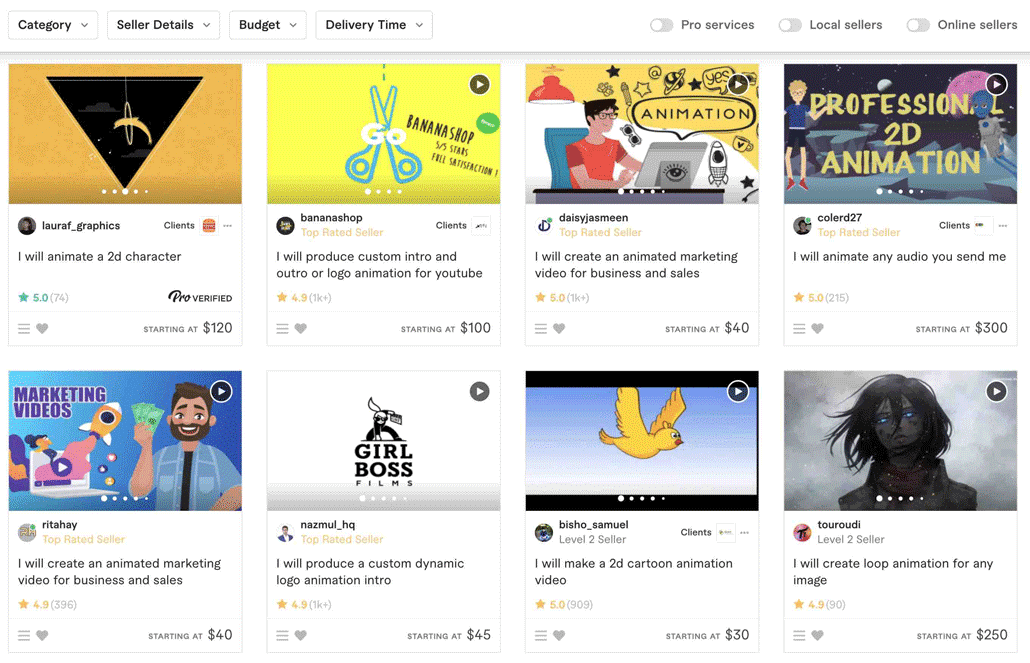
Each platform has its own strengths, but if you’re looking for an all-in-one solution to hire an animator without spending hours on research and project management, Video Igniter is one of the most efficient and reliable options available.
What to look for when hiring an animator?
Animation Style References
The most important thing you can do when looking to hire an animator is to check out examples of previous videos they’ve created. Does their work demonstrate their ability to make good design decisions? Are they able to produce an animation similar to the style you want for your video?
Project Availability
Check to see how many projects they take on at once and how your project will be prioritized relative to other projects. Will they have enough time to complete your video before your deadline?

Responsiveness
What are your expectations when it comes to customer service. Do you need the ability to collaborate with them in-person? Or can you work remotely? Are timezones going to be an issue? How quickly do you expect a response from your animator? Make sure to discuss responsiveness and estimated turnaround times for your project.
Storytelling Ability
When hiring an animator, you’ll want to make sure they’re a competent storyteller. There are a lot of amazing visual artists out there that haven’t connected the dots between the art of storytelling and the art of visual design. Make sure your animator of choice is able to make images that are appropriate for your story and enhances their presentation for the viewer.
Revisions Policy
Check to see what kind of revision policy your animator offers. If you aren’t paying your animator by the hour, make sure you check to see how many revisions are included in the flat rate you were quoted for the project.
Audio

How’s the audio in their videos? Do the voiceovers sound clean and professional? Does the background music enhance the video or distract you?
For more tips on what to look for when you want to hire an animator, check out this companion article:
https://videoigniter.com/9-things-to-look-for-when-hiring-an-animation-studio/
Essential Questions to Ask Before You Hire an Animator

Before you hire an animator, asking the right questions can save you time, money, and headaches. Whether you’re speaking to a freelancer or a studio, here are the key questions you should always ask:
- Can I see your animation portfolio?
Reviewing past work helps ensure the animator’s style matches your vision and quality expectations. - Have you worked on similar projects before?
Industry-specific experience (e.g., explainer videos, educational animations, app demos) ensures they understand your needs. - What is your revision policy?
Clarify how many rounds of revisions are included and whether additional changes cost extra. - How do you handle the script and voiceover?
Some animators only work with a finished script. If you need help with scripting or voice talent, confirm it’s part of the service. - What is your timeline and availability?
Always ask when they can start, how long the animation will take, and whether they can meet your deadline. - How do you communicate during the project?
Clear communication is critical. Ask how often you’ll receive updates and which tools they’ll use (email, Slack, Trello, etc.). - Who owns the final animation?
Confirm you’ll receive full rights to the finished video once payment is complete.
Asking these questions upfront helps ensure a smoother production experience and improves your chances of hiring the right animator for your project.
How to choose a producer for your custom animated video?

Looking for someone to make a custom animated video but not sure where to start? Whether you’re looking to hire an animation studio, a freelance animator, or a production service like Video Igniter Animation, there are many factors to consider including: pricing, visual style, storytelling, customer service, production timelines and more. Here are some resources to help you figure out the right production option for your custom animated video:
– Pros and Cons of Different Animation Styles
– What’s the difference between hiring an animation studio, vs a freelance animator vs Video Igniter?
– Considering making the animated video yourself? Learn about DIY options.
– What is Video Igniter Animation?
Difference between hiring a freelance animator vs an animation studio?
Cost

Freelance animators are often (but not always) cheaper to work with than a full animation studio. It all depends on the style and length of the animation you’re hiring them to create. That, and the timeline…
Speed
… speaking of timelines, how quickly do you need your animated video? If you’re looking for something relatively simple, a freelancer can create what you’re looking for in a few hours, days or weeks. Studios are typically reserved for longer projects that require multiple people illustrating and designing so that the project can be completed in a reasonable amount of time.
Customer Service
Animation studios have more staff to handle client reviews and address questions so their animators and designers can continue working with minimal interruption. Freelancers make money when they’re animating so they’re more likely to request you send your revision notes in text form so they can easily digest them and make fixes in your animation. Some freelancers are willing to get on calls with clients to have more in depth discussions about how to create specific parts of your animation.
Artistic and technical ability

Freelance animators typically specialize in a few styles of animation and get really good at those. Animation studios are staffed with art directors that can develop new unique visual styles and coordinate a team around them to help execute on that unique artistic vision.
How long does it take a freelance animator to make an animation?

Custom animated videos take a lot of time and attention to produce. It takes about 2-4 weeks for a freelance animator to produce a 60 second animated video. To learn more about the animated video production process and how long each stage of production takes, check out this companion article.
What does an animator cost per hour?
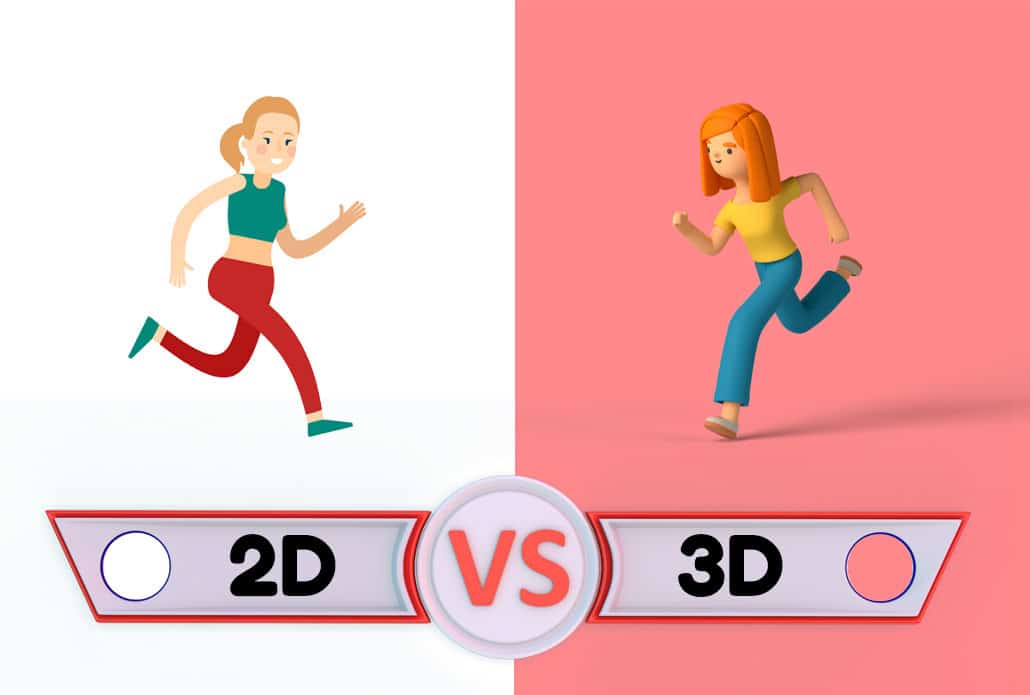
Animators earn between $10-$150+/hr depending on their experience and technical skillsets. For your average corporate/business/startup animated promo video, expect to spend $25-$50/hr for a quality 2D animator.
How much does a 2D animator cost per hour?
Usually $20-$60/hour.
How much is a 3D animator per hour?
$25-$75+/hour. 3D animators can get substantially more expensive. Highly technical, complicated and detailed animations can easily cost over $100/hour to produce.
How to pay an animator?
Payment Methods
Animators love receiving prompt payment for their hard work. But fast payments usually means they need to sacrifice 2.9%-5%+ of their earnings to cover transaction costs when they receive payment. Some animators may ask you to cover this expense. Others may be open to receiving payment via check, bank transfer or crypto to avoid losing their earnings to cover transaction costs.
Payment Terms
Most animators and animation studios use the same set of animated video payment terms: send an invoice for 50% of the estimated production cost to start production and the remainder of the project budget is due when the final draft is approved. The unwatermarked version of your animated video will be delivered after final payment is completed.
If you are hiring an animator for ongoing projects, have the animator log their hours and report them every two weeks for payment.

Flat rate vs Hourly
For shorter animated projects, it’s common in the animation world for freelancers and studios to quote a flat rate for a project and instead of charging by the hour. Animations longer than a few minutes will more than likely be billed by the hour because it’s too difficult to generate an accurate estimate for the number of labor hours required to create the video.
Extra Revisions
How many revisions does the animator allow for each phase of production? Most animators will cut you off at 1-2 revisions but some will be generous and allow a 3rd round of revisions for free. Whatever the situation is, make sure you two are in agreement about the production terms before you get started so that you don’t end up with unexpected costs at the end of production.
How much does it cost to hire an animator to make an animated video?
If you’re creating a 2D animated video, expect to spend between $1,000-$4,000 to cover the cost of animating a 60 second video. Illustration can add another $750-$2,000+ per minute of animation. 3D animated videos easily cost 2-3x as much because additional people are needed to create 3D models for characters, scenes and objects and make them look lifelike.
Tips to keep your animated video production budget low
Consider the following budget-saving tips to keep your animated video production cost down.
Create your script
You can save hundreds or thousands of dollars off your production budget by writing the script for your animated video. Freelance animators and animation studios are capable of helping you craft your script. However, as the originator of the idea for a video, the heart of the story is in your mind. You have the best chance of creating a first draft that will articulate the story you want to present. Don’t worry about making your script perfect. If you can provide the first draft of your script, your animation team can help you make it production-ready and you can still save some money on your production budget.

Here are a few resources to help you create a script for your animated video:
How To Write An Animated Video Script
7 Tips to Supercharge Your Video Script Writing
Examples Of Explainer Video Scripts + How To Write A Script
Get our free script writing template here.
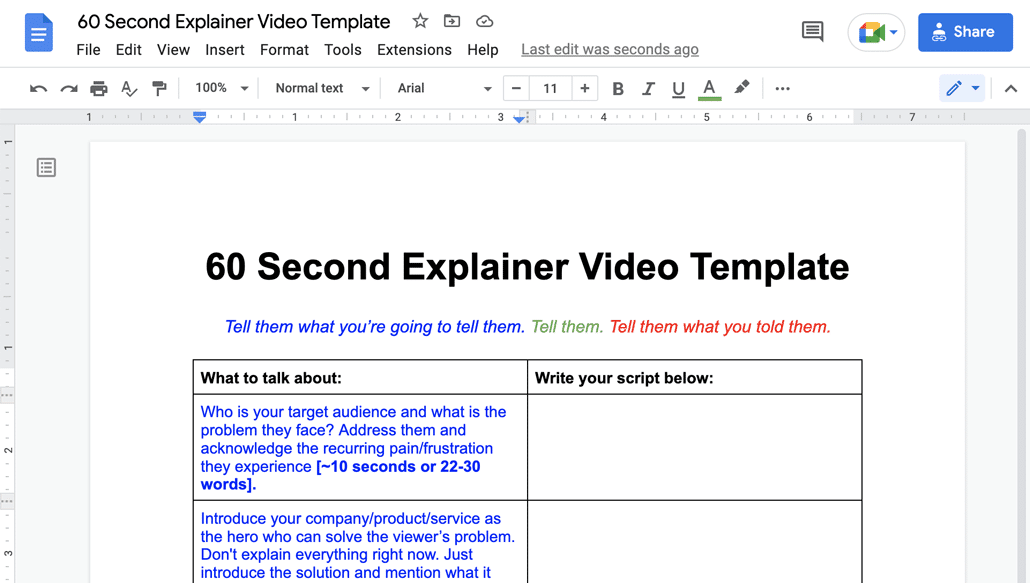
Download Video Igniter’s Free Script Writing Template
Download our free template to help you write the script for your animated video.
Create your storyboard
A storyboard is like a blueprint for an animated video. It tells the animators and illustrators what to create. By creating the storyboard for your custom animated video, you can save hundreds or thousands of dollars off your production budget. You don’t need any artistic ability to create a storyboard. Your job is to brainstorm visuals to correspond with each line of your script and then write simple instructions for the illustrators and animators so they understand what you want to show in each scene.
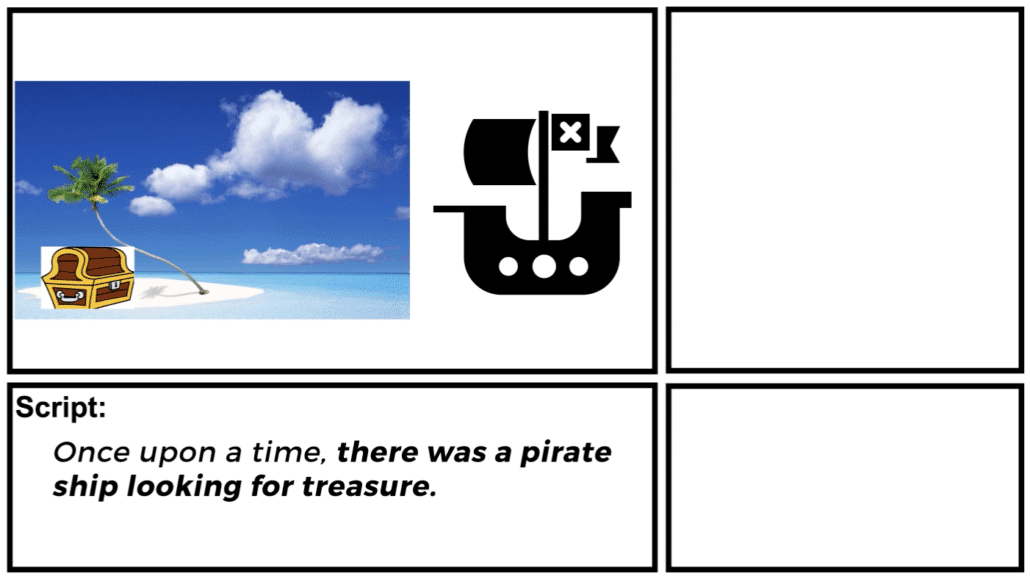
Examples of simple storyboards you can create for your animated video.
Free Download: Get our free storyboard creation template.
Deep Dive: Building a great storyboard for an animated explainer video.
Record the voiceover
You can try sourcing low cost voiceover talent from sites like Fiverr or VoiceBunny. English-speaking voiceover artists tend to charge $10-$199 for 1-2 minutes of recorded audio.
You can also record the voiceover yourself for free! Check out Episode 3 of The Video Igniter Show (at 1:31) to see how you can record the voiceover for your animated video for free without having to buy any expensive equipment or software.

Use stock assets
Using pre-created assets can help you keep your budget down because they usually cost less to buy or license than it would to create something comparable. Free (or low cost) icons, clip art, stock images, fonts, graphs and video clips are available on sites like Mixkit, TheNounProject, Google Font Library and Envato Elements.
Use free music
Soundtracks typically cost $10-$299 each. If you plan to promote your animation using paid media (TV and or Online), you may need to pay even more for the broadcast rights to use the soundtrack in paid promotional campaigns. Looking for free, legal music? Check out Incompetech and Facebook’s Sound Collection.
Why Businesses Choose to Hire an Animator

Whether you’re a startup, small business, educator, or enterprise marketing team, the decision to hire an animator can elevate your content and create a lasting impression on your audience. From explainer videos and app tutorials to brand intros and product demonstrations, animation offers a visually compelling way to simplify complex messages.
Many businesses choose to hire an animator because animated content is more engaging, memorable, and versatile compared to live-action videos. It’s also scalable: you can reuse and repurpose animated assets across social media, email marketing, websites, presentations, and more.
Hiring an animator ensures your video stands out from competitors and delivers a polished, professional finish that builds brand trust.
How to Hire an Animator for Your Specific Needs

When you’re ready to hire an animator, it’s essential to consider the type of animation that aligns with your goals. Some projects benefit from traditional 2D animation, while others require the depth and realism of 3D animation. Whiteboard animation, motion graphics, and character animation are also popular formats.
Before hiring an animator, identify your project’s goals:
- Are you trying to explain a product or service?
- Do you want to create branded entertainment or an educational series?
- Are you looking for an attention-grabbing ad for social media?
Different types of animation require different skill sets. Make sure to hire an animator who specializes in the kind of animation you need. You can mention your vision, brand tone, audience, and goals when reaching out to animators or filling out creative briefs.
How to Hire an Animator Without Risk

Hiring an animator online can involve risks if you’re not careful. To minimize potential issues, follow these steps:
- Review Their Portfolio
Always start by looking at the animator’s past work. Do they have experience creating the kind of video you want? Are their visuals polished and professionally produced? - Start with a Small Project or Test Sample
If you’re unsure, consider starting with a short 10-15 second animation. This gives you a preview of their communication, turnaround time, and quality. - Get Clear Terms in Writing
Before you hire an animator, define deliverables, deadlines, revision policies, and payment terms. Use contracts or detailed service agreements to avoid miscommunication. - Use a Secure Payment System
Whether you hire a freelance animator or an agency, use a platform that holds funds in escrow until milestones are delivered, such as Upwork or Fiverr. - Request Regular Updates
Ask for progress updates at key stages (e.g., script, storyboard, rough animation) so you can give feedback and keep the project on track.
Why You Should Hire an Animator Instead of DIY

There are many DIY animation tools available online, but hiring a professional animator delivers better results in most cases. Here’s why:
- Custom Design: Animators can create unique visuals tailored to your brand instead of relying on templates.
- Technical Expertise: Animation software has a learning curve. Professional animators know how to produce smooth, appealing motion and integrate audio correctly.
- Time Savings: Animation is time-consuming. Hiring an animator lets you focus on your business while a pro handles the creative work.
- Script & Storytelling Support: Many animators (especially through platforms like Video Igniter) can help you craft a compelling narrative that drives results.
If your goal is to create a video that builds trust, converts viewers, and looks polished across all devices, it’s smarter to hire an animator than try to do it all yourself.
How to Hire an Animator for a Long-Term Relationship

Many businesses benefit from developing an ongoing relationship with a trusted animator. When you find someone who understands your brand and communication style, they can quickly produce high-quality content for future campaigns.
To build a long-term working relationship when hiring an animator:
- Provide clear feedback and appreciation for good work.
- Be prompt with payments and responses.
- Discuss retainer agreements or ongoing projects.
- Introduce them to your broader marketing or creative team if you anticipate future projects.
Hiring an animator doesn’t have to be a one-time deal—it can be a strategic move that enhances your brand’s visual identity across all channels.
Common Mistakes to Avoid When Hiring an Animator

Many businesses run into preventable issues when they hire an animator. Here are some of the most common mistakes—and how to avoid them:
1. Skipping the Portfolio Review
Never hire an animator without thoroughly reviewing their portfolio. Make sure their animation style aligns with your brand and your project goals.
2. Providing a Vague Project Brief
Unclear direction leads to more revisions and misalignment. Always provide a detailed brief including your script (if available), visual preferences, goals, and target audience.
3. Ignoring the Revision Policy
Not all animators include unlimited revisions. Understand how many changes are allowed, what constitutes a revision, and whether changes after final delivery are permitted.
4. Hiring Based Solely on Price
While budget matters, choosing the cheapest option often results in lower quality. Look for value, not just price, when hiring an animator.
5. Overlooking Communication Skills
Great animation requires collaboration. If your animator is slow to respond or unclear in their communication, your project could suffer.
6. Rushing the Timeline
Animation is a craft that takes time. While rush delivery animation is possible, unrealistic deadlines can lead to rushed work or missed milestones. Plan ahead and allow for reasonable production time.
Avoiding these mistakes will help you hire an animator who delivers professional, impactful results—whether you’re producing a 2D explainer, product demo, or animated series.
What to Prepare Before You Hire an Animator

Knowing what you want to create before contacting an animator can make the hiring process substantially easier. You do not need to have every creative decision figured out, but you should be able to explain the problem the animation needs to solve.
A useful starting point is a short creative brief. Your brief can be as simple as one or two pages and should give the animator enough context to understand the project before discussing creative execution.
Include information such as:
- The purpose of the video: Explain what you want the animation to accomplish.
- The target audience: Identify who will watch the video and what they already know about the subject.
- The core message: State the single most important thing viewers should understand or remember.
- The distribution channels: Explain whether the animation will appear on a website, social media, YouTube, television, an internal presentation, a trade show display, or somewhere else.
- The approximate length: Even an estimated duration helps an animator determine the scope of the project.
- Brand requirements: Provide logos, brand guidelines, fonts, colors, existing illustrations, product screenshots, and other assets that need to appear in the animation.
- Required deadline: Identify when the final files need to be ready and whether there are important launch dates or marketing campaigns involved.
- Examples you like: Share several examples of animation, design, cinematography, or motion graphics that communicate the direction you have in mind.
The more useful information you provide at the beginning, the less time an animator has to spend trying to infer what you want. A strong brief also makes it easier for multiple animators or studios to provide comparable proposals.
Determine Who Needs to Be Involved in the Project

One issue that is frequently overlooked when businesses hire an animator is determining who has authority to approve the work.
Animation projects can involve multiple stakeholders. A marketing manager might oversee the project, while a brand manager, product specialist, legal department, executive, or client may also need to approve different aspects of the finished video.
If everyone is allowed to provide independent creative direction, production can become unnecessarily complicated.
Before production begins, identify:
- The primary project owner — the person responsible for communicating with the animator.
- The creative decision-maker — the person who has final authority over visual and storytelling decisions.
- Subject-matter experts — people responsible for verifying technical or industry-specific information.
- Legal or compliance reviewers — if the video contains regulated, proprietary, financial, medical, or other sensitive information.
- The final approver — the person who ultimately signs off on delivery.
Ideally, feedback should be consolidated before it reaches the animator. Instead of sending five separate emails containing contradictory comments, have the internal team agree on one set of notes.
This is particularly important for companies producing animation for clients. If you are an agency hiring an animator on behalf of a client, establish who on the client side has final approval before animation begins.
Ask an Animator to Explain Their Production Workflow
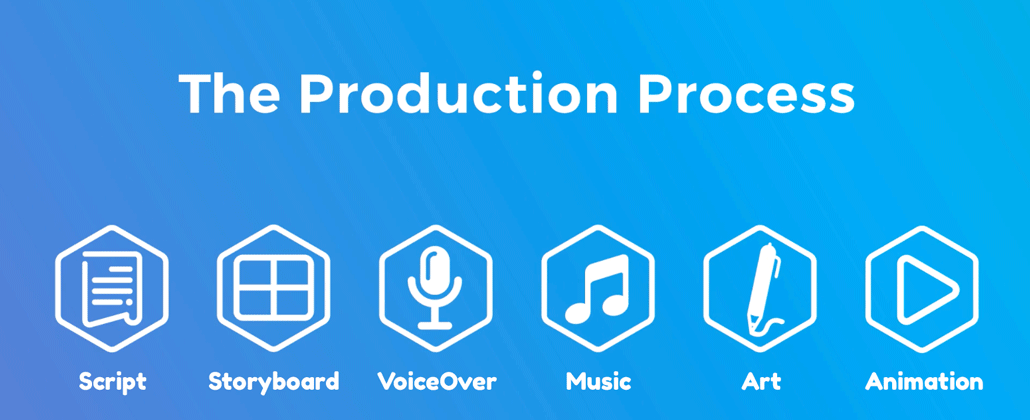
A portfolio shows you what an animator has produced, but it does not necessarily tell you how they work.
Before you hire an animator, ask them to walk you through what will happen after the contract is signed. A professional production workflow should have identifiable stages and approval points rather than simply progressing from “start” to “final video.”
Depending on the project, the process may include:
Creative brief → script → visual direction → storyboard → design → voiceover → animation → sound design → review → final delivery
The exact workflow will vary depending on the project, but the important thing is that you understand when major creative decisions will be made.
For example, it is much less expensive to discover that the visual concept is wrong during the storyboard stage than after an animator has already spent weeks animating the finished scenes.
Ask questions such as:
- What happens after I approve the proposal?
- When will I first see the visual direction?
- At what stage do I approve the storyboard?
- When will animation begin?
- Will I see a rough animation before the final version?
- How are technical issues discovered and corrected?
- When does the project enter final production?
- What happens immediately before delivery?
An animator who can clearly explain the workflow gives you a better understanding of how your project will be managed.
Establish Approval Milestones Before Production Starts

One of the best ways to keep an animation project under control is to establish formal approval milestones.
Rather than reviewing every detail continuously, divide the project into major stages. For example, you might approve the script first, then the storyboard, then the visual design, and finally the animation.
Once a stage is approved, the project moves forward.
This approach has an important advantage: it prevents major creative decisions from changing after they have already been incorporated into subsequent stages.
Imagine that you approve a finished animation and then decide that the entire visual concept should be different. The animator may need to redesign illustrations, rebuild scenes, change transitions, redo animation, and potentially re-record audio.
A milestone-based approval process reduces this risk.
Before hiring an animator, ask what constitutes approval at each stage and how feedback should be submitted. Establishing these expectations in advance can make the project significantly easier to manage.
Discuss Final File Formats and Technical Specifications

Another important consideration when you hire an animator is determining exactly what you will receive at the end of production.
A video may look excellent but still create problems if it is delivered in a format that does not work for your intended distribution channel.
Before production begins, identify where the video will be used and ask the animator what technical specifications are appropriate.
Depending on your project, you may need:
- 1920×1080 HD video
- 4K video
- Vertical video for mobile platforms
- Square video for social media
- Shorter cutdowns for advertisements
- Different aspect ratios for different platforms
- A version without captions
- A version with burned-in captions
- A clean version without text or graphics
- Still images extracted from the animation
- Short animated clips or GIFs
- Different language versions
If you know that the animation will be distributed across several platforms, mention this before production begins. Designing an animation with multiple formats in mind from the beginning is generally easier than trying to convert a finished video afterward.
Plan for Multiple Versions of the Animation

Businesses often discover after completing an animation that they need additional versions.
For example, a company may initially commission a 90-second explainer video and later realize that it needs a 30-second version for paid advertising, a 15-second version for social media, and several short clips for sales presentations.
If you anticipate needing multiple versions, tell the animator before production starts.
This can influence how scenes are designed, how text is presented, how voiceover is recorded, and how animation assets are organized.
You may also want versions aimed at different audiences. A technical product demonstration, for example, might require one version for engineers and another simplified version for prospective customers.
Thinking about repurposing during the initial production stage can make your animation library substantially more useful over time.
Consider Localization Before You Hire an Animator

If your company operates internationally, localization should be considered before animation begins rather than after the final video has already been completed.
Translation can affect considerably more than the voiceover. Different languages may require different amounts of screen space, which can affect typography, captions, layouts, timing, and animation.
For that reason, tell your animator if you expect the video to be translated into other languages.
You may need:
- Multiple voiceover recordings
- Translated on-screen text
- Subtitles
- Re-edited scenes
- Alternative graphics
- Right-to-left language support
- Different versions for regional markets
Designing the animation with localization in mind can make future versions easier and less expensive to produce.
Ask About Accessibility Requirements

Accessibility is another consideration that should be addressed before production.
If an animated video is being used for public-facing communication, education, training, government communication, or corporate communications, you may need to consider how viewers who are deaf, hard of hearing, blind, or have other accessibility needs will experience the content.
Depending on the application, accessibility considerations may include:
- Accurate captions
- Transcripts
- Descriptive audio or audio descriptions
- Readable typography
- Sufficient visual contrast
- Avoiding information that is communicated exclusively through color
- Clear pacing for viewers who need additional time to process information
Ask your animator what accessibility requirements they can support and determine which responsibilities belong to the production team versus your internal team.
Addressing accessibility during pre-production is generally more efficient than attempting to retrofit it after the animation has been completed.
Make Sure the Animation Can Work With Your Brand

Hiring an animator is not simply about finding someone who can make attractive visuals. The finished animation should feel like it belongs to your organization.
If your company has established brand guidelines, provide them before design begins. This may include your logo, color palette, typography, illustration guidelines, photography style, iconography, and examples of existing marketing materials.
You should also explain which brand elements are mandatory and which can be interpreted creatively.
For companies that produce videos regularly, it can be useful to develop a reusable visual system rather than treating every animation as an isolated project.
For example, an animator could establish a consistent approach to characters, icons, transitions, typography, backgrounds, and motion. Future videos can then build upon that system.
This creates greater visual consistency across your marketing materials and can make future production more efficient.
Ask What Happens to Your Project Files

When discussing ownership with an animator, it is worth going beyond the question of who owns the final video.
Ask what project files, source assets, and editable materials are included in the agreement.
For some projects, you may only need the finished video. In other situations, access to editable project files can be valuable if you anticipate creating future versions, changing text, updating product information, or working with another production team later.
Clarify whether the deliverables include:
- Final rendered video files
- Editable animation project files
- Original illustrations
- Character designs
- Audio files
- Voiceover recordings
- Fonts or licensed assets
- Music licenses
- Individual scene exports
Not every project requires every source file, and source files may involve additional costs or licensing restrictions. The important thing is to establish expectations before production begins rather than discovering limitations after delivery.
Evaluate the Animator Based on Problem-Solving Ability

When comparing animators, consider more than artistic ability.
A strong animator should be able to make creative decisions when the original concept does not translate perfectly into animation. They should be able to identify confusing ideas, simplify complicated information, and suggest visual solutions when something is not working.
During the hiring process, pay attention to the questions an animator asks you.
Someone who immediately says “yes” to every idea may not necessarily be the best creative partner. An experienced animator may occasionally challenge an idea because they recognize that a particular approach will be confusing, expensive, visually cluttered, or ineffective.
You want someone who can understand your objective and then determine the best way to achieve it visually.
The most valuable question is not simply, “Can this animator make the kind of animation I want?”
It is:
“Can this animator understand what I’m trying to accomplish and use animation to solve the communication problem?”
Think Beyond the First Video

If animation is going to become an ongoing part of your marketing, communications, training, or sales strategy, consider the first project an opportunity to establish a repeatable production system.
A successful first project can create reusable visual assets, templates, characters, animation conventions, and brand standards that make subsequent videos easier to produce.
For example, a company creating employee training videos could establish a consistent animated character library and visual language that can be reused across an entire training series.
A software company might develop reusable animated interface components, product illustrations, transitions, and motion graphics.
An agency might develop a reliable network of animators and production partners that can support different client projects as they arise.
When you hire an animator with this larger strategy in mind, the value of the relationship extends beyond a single finished video.
How to Measure Whether Your Animation Was Successful

The final animation should not be judged exclusively by whether it looks good.
If the video was created for a business purpose, determine how success will be measured before publishing it.
The appropriate metrics depend on the video’s purpose.
For a marketing video, you might monitor:
- Video views
- Average watch time
- Completion rate
- Click-through rate
- Conversion rate
- Leads generated
- Cost per conversion
- Engagement from different audience segments
For an educational or training animation, useful measures could include:
- Completion rate
- Quiz or assessment performance
- Knowledge retention
- Learner engagement
- Support requests
- Employee performance after training
For a product demonstration, you might evaluate whether the video helps prospects understand the product, increases demo requests, reduces repetitive sales questions, or improves conversions on a landing page.
Establishing these objectives before you hire an animator can influence creative decisions throughout production. The best animation is not necessarily the one with the most elaborate visuals. It is the one that effectively accomplishes the job it was created to do.
A Practical Pre-Hiring Checklist

Before you hire an animator, make sure you can answer the following questions:
- What is the primary purpose of the animation?
- Who is the intended audience?
- What is the single most important message?
- Where will the video be published?
- Approximately how long should it be?
- What brand assets need to be incorporated?
- Who is responsible for approving the project?
- What is the desired launch date?
- Will the animation need multiple versions?
- Will it need to be translated?
- Are there accessibility requirements?
- What video formats and resolutions are required?
- Do you need editable source files?
- Will the animation become part of a larger series?
- How will you determine whether the finished video was successful?
Having these answers prepared will make it easier to compare potential animators and receive accurate proposals. It also gives the animator the information they need to recommend an appropriate creative and production approach.
Ultimately, hiring an animator is not simply a matter of finding someone who can create attractive motion graphics. You are selecting a creative partner to transform information, ideas, products, or stories into a visual communication tool. The more clearly you define the problem, audience, distribution requirements, approval process, and desired outcome, the more likely you are to end up with an animation that provides lasting value.
How to get the most out of your animated video?

Animated videos aren’t cheap to produce. If you’re hiring someone to make one, here are some resources to help ensure your project goes as smooth as possible. Is your animated video being created to help serve a business objective or initiative? These resources will also help you improve the marketing impact of your animation.
– 7 Tips to help you write a great script for your animated video.
– Pick the right visual style for your animated video.
– 6 Tips To Increase Viewer Engagement for your animated video.
– Review the Do’s and Don’ts of Promotional Explainer Videos.
– 7 Tips For Using and Improving Your Businesses’s Video.
– Learn how to interpret your video’s viewer stats to see if it needs improvement.
– A/B Test variations of your animated video to improve its conversion rate.
Final Thoughts: Why Hiring an Animator Is a Smart Investment

The decision to hire an animator isn’t just about creating a cool video—it’s about creating a communication asset that drives engagement, builds authority, and tells your story in a memorable way.
With so many platforms and pricing tiers available, it’s easier than ever to hire an animator who fits your style, budget, and timeline. Whether you choose Video Igniter, a freelance platform, or a boutique animation studio, taking time to find the right animator will pay off in the form of better video performance and stronger brand impact.
Ready to hire an animator? Contact Video Igniter today to get started with your next animation project.
Hire Video Igniter to create your animation
World class design talent at prices small businesses can afford.
We can make any kind of 2D or 3D animated video you can imagine.
+20 reasons companies love hiring us to create animated videos.
Do you want to create an animated cryptocurrency video or an animated blockchain explainer video that explains how your technology works? We can help with that too.
Animation Video Reel
Animator Success Stories & Testimonials
“Video Igniter came to us with a number of creative and engaging ideas and were able to create an exciting, impactful video in a short period of time. And the best part was that it cost much less than other options of similar quality. The video they made is a great marketing tool for us.”
Alex Raymond – Founder, Kapta Systems
“Video Igniter offered us the critical combination of creative value, clear communication, and patience with stakeholder feedback. We ended up with truly high-quality design assets for our video series largely due to the extra level of commitment — and the right balance of efficiencies with flexibility in the process when called for.”
Larry Schlessinger – Sr. Creative Program Manager, Amazon Web Services
“I run a video production company and outsource animation. The team at Video Igniter did a great job in taking the concept I very crudely drew out and made it into a beautiful animation. The review process was easy and their turnaround time was very quick. I’d def recommend them if you’re looking for an animation project.”
Pat Henderson – Founder, Path8 Productions

Get in touch to hire an animator
Schedule a call to discuss your animated video.
Get a quote for your animated video.
Request access to our newest price sheet.
Check out our animated video portfolio to see our latest and greatest creations.
Create your Video Igniter account, fill out a creative brief, and then we’ll make an animated video for you.

What is Video Igniter Animation?
Resources For Hiring An Animator
We recommend these popular articles if you’re still looking for information about hiring animators:
Learn about animated video production.


