Choosing the Right Animation Company: A Comprehensive Guide

In today’s digital age, animation plays a pivotal role across various industries, from entertainment and advertising to education and healthcare. Hiring a professional animation company can dramatically enhance your visual content, making it more engaging, informative, and memorable. This article will guide you through the process of choosing the right animation company that can transform your ideas into captivating animations.

Animation Company Expertise and Experience

Animation Company

When selecting an animation company, the first criteria to consider is their expertise and experience. A seasoned animation company is likely to deliver high-quality work, understand your needs, and provide reliable customer service. Look for an animation company with a proven track record in your industry or project type. Review their past projects, ask about their experience with similar projects, and don’t hesitate to ask for references or case studies.

Animation Portfolio and Visual Styles

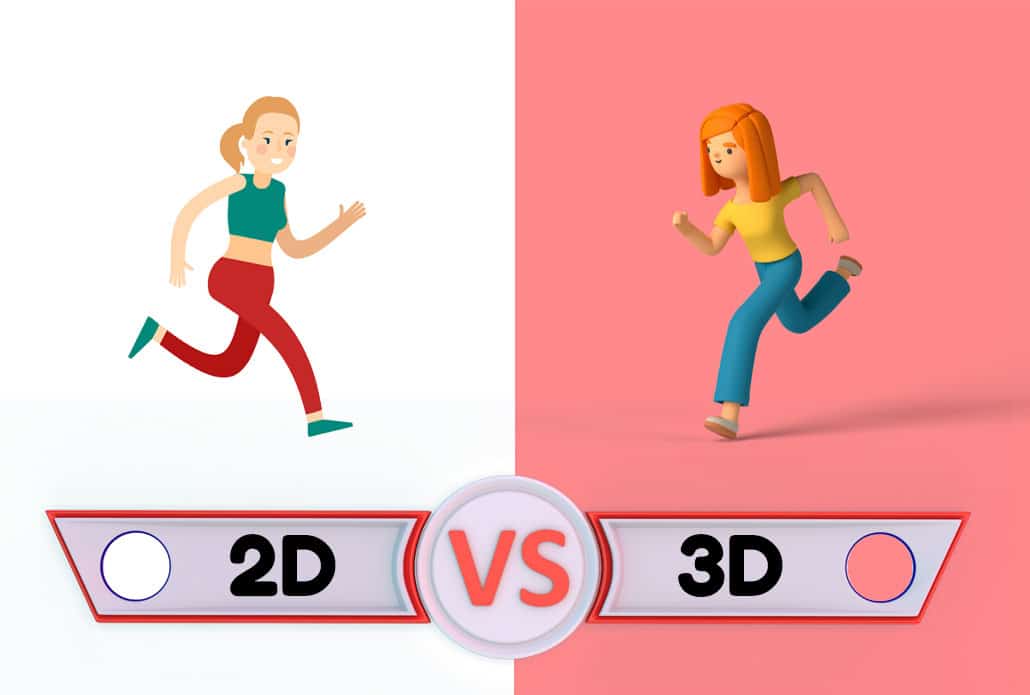
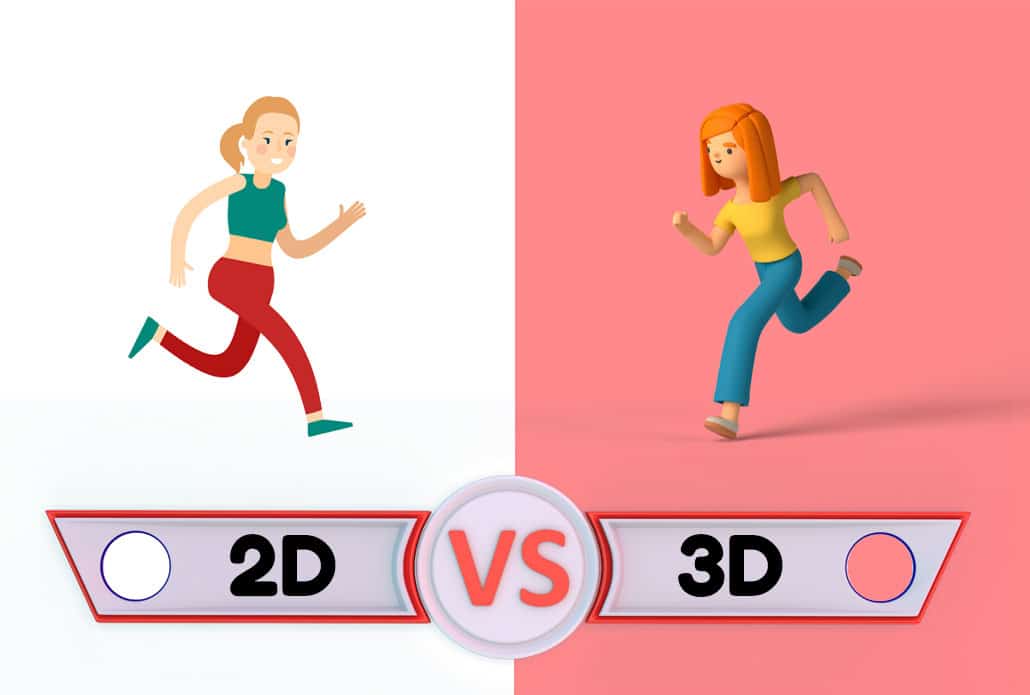
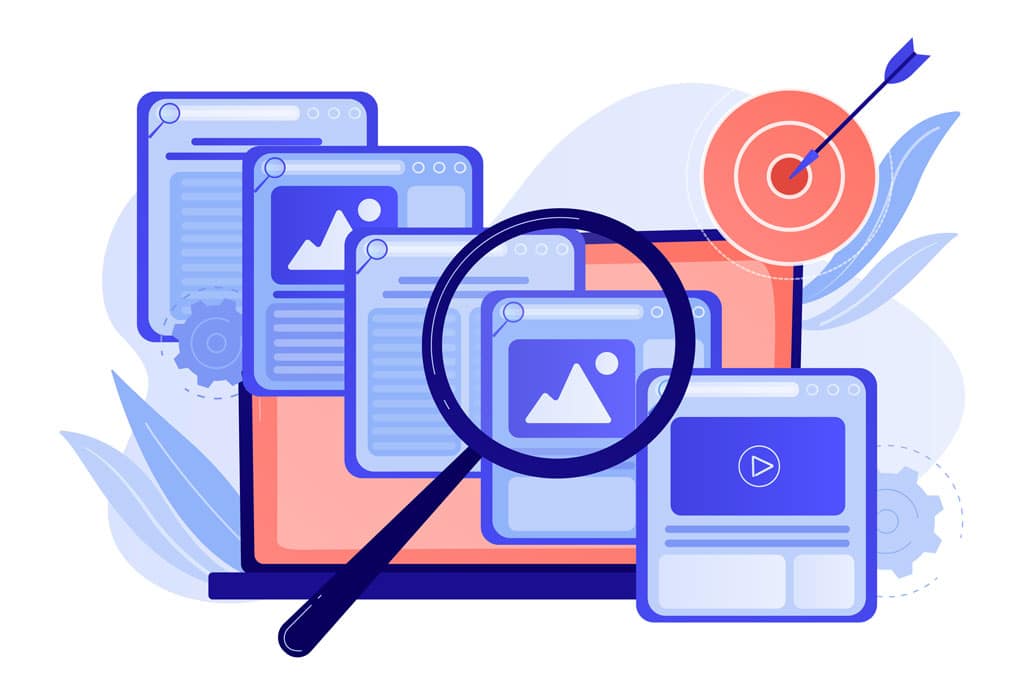
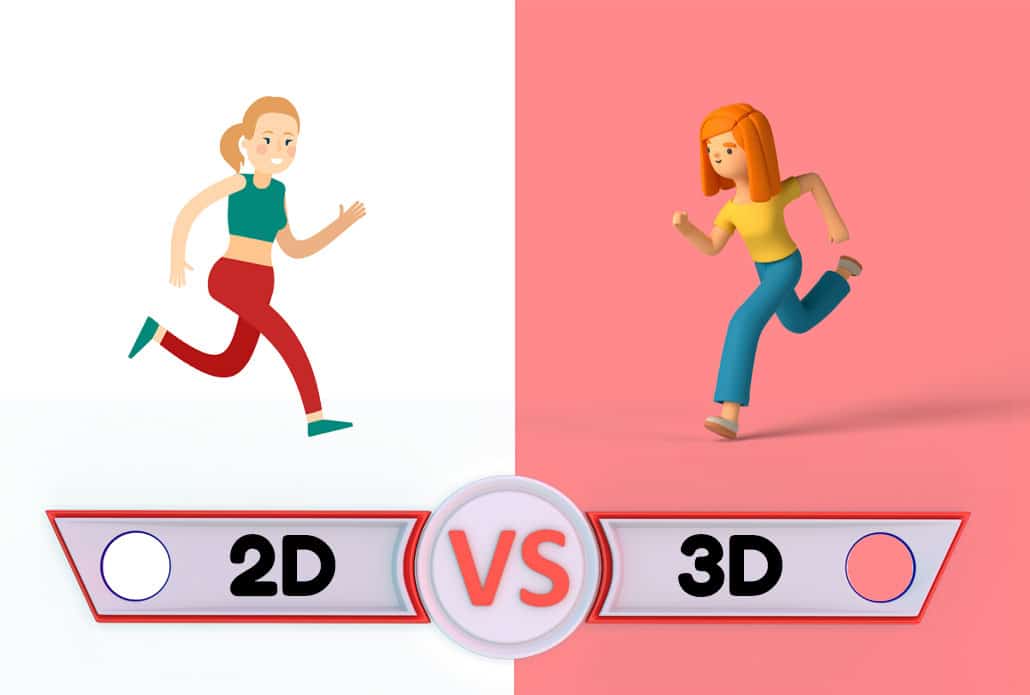
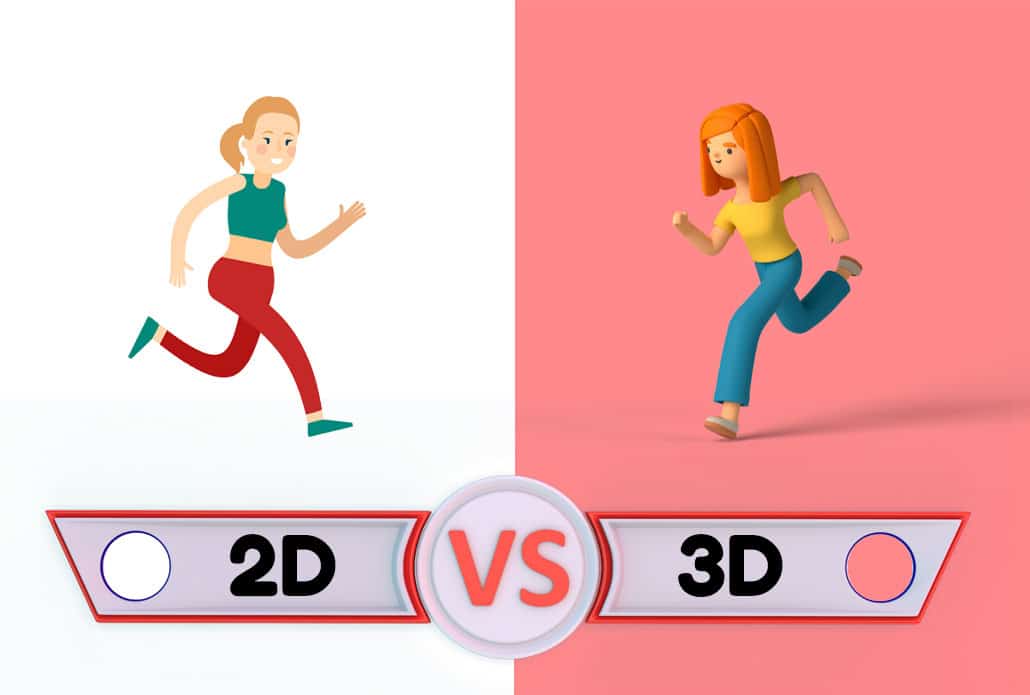
An animation company’s portfolio provides valuable insights into their creative capabilities, style, and quality of work. Different animation styles, such as 2D, 3D, motion graphics, kinetic typography or whiteboard animation, are suitable for different project types. For instance, a product-focused company might opt for 3D animation to demonstrate a new product, while an educational institution might prefer 2D animation for an explainer video. Choose an animation company whose style aligns with your project’s goals and your brand’s identity.

Video Igniter can create any kind of 2D or 3D animated video for you. Check out our animation portfolio here. Request access to our demo reels and price sheet here.

Contact us or schedule a call to start making your video.


Are you looking for an example of a different style of animation? Send us a message to let us know what kind of animation example you want to see and we will follow up with relevant production samples.


Animation Company Portfolio

Animation Company Testimonials and Reviews

Client testimonials and reviews are a reliable gauge of an animation company’s reputation and quality of work. You can find these on the company’s website, social media platforms, or third-party review sites. Positive feedback from past clients indicates the company’s commitment to delivering high-quality work and their ability to meet or exceed client expectations.

Scroll down to the bottom of this page to read testimonials from Video Igniter’s customers.

Animation Company Testimonials and Reviews

Collaboration and Communication

Effective collaboration and communication are critical to the successful execution of your animation project. The best animation companies often employ dedicated project managers or account executives to ensure seamless communication and project coordination. Evaluate how responsive and transparent the animation company is during your initial interactions. Their willingness to listen to your ideas and provide constructive feedback often indicates their approach to client collaboration.

Animation Company Collaboration and Communication

Technical Capabilities and Tools

The animation industry is constantly evolving, with new software, tools, and technologies emerging regularly. An animation company that stays abreast of the latest industry trends and uses cutting-edge tools is likely to deliver a superior final product. Ask about the software and technologies they use and how they ensure they’re up-to-date with industry advancements.

Animation Company Budget and Pricing

Animation Company Budget and Pricing

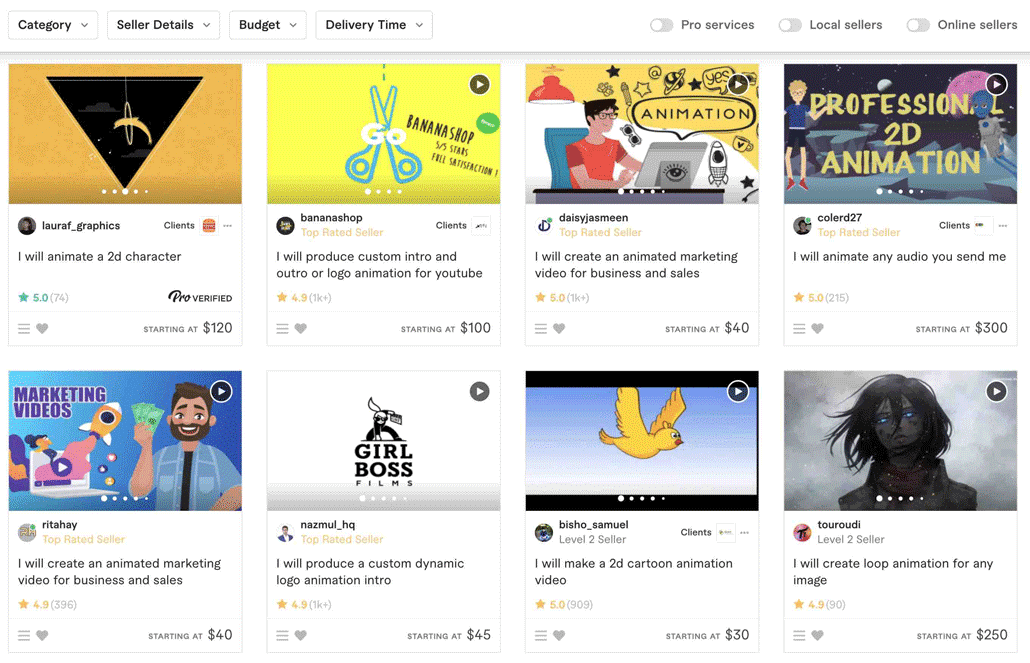
Your budget plays a significant role in determining the right animation company for your project. Different companies may offer different pricing models, such as per minute, per project, or hourly rates. While it’s essential to find a company that fits your budget, remember that quality shouldn’t be compromised for cost. It’s about finding the best value for your investment.

Access Video Igniter’s price sheet here.

How To Hire An Animation Company?

How To Hire An Animation Company

For a deep dive on hiring an animator or an animation studio, we recommend checking out this companion article: “Animator For Hire: How to Find and Hire the Right Animator for Your Video Project.”

How Do You Make A Video With An Animation Company?

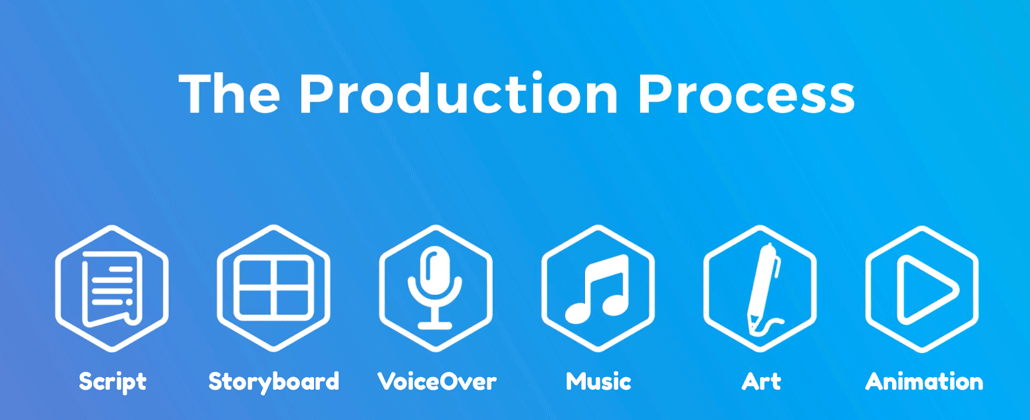
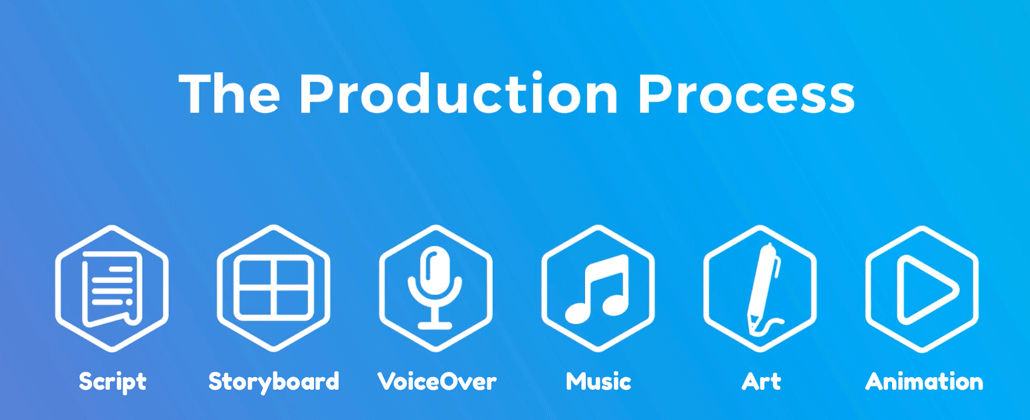
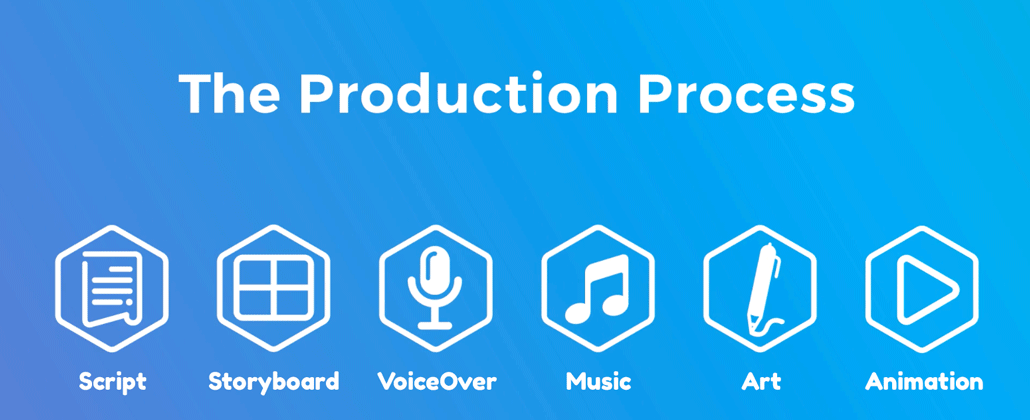
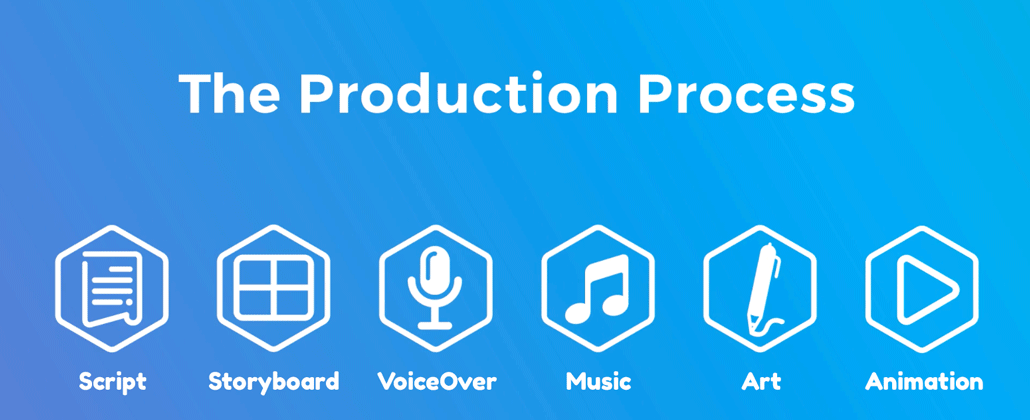
Wondering what the production experience is like when you hire an animation company? Here’s a quick overview of the production process:

1). Understanding Your Project and Goals

How Do You Make A Video With An Animation Company

Production typically begins with a questionnaire and or a to learn about your video project and goals. This is your opportunity to explain what you want to communicate in your video, share details about your target audience and the visual style you want to use for your animation.

2). Script Development

Animation Company Script Development

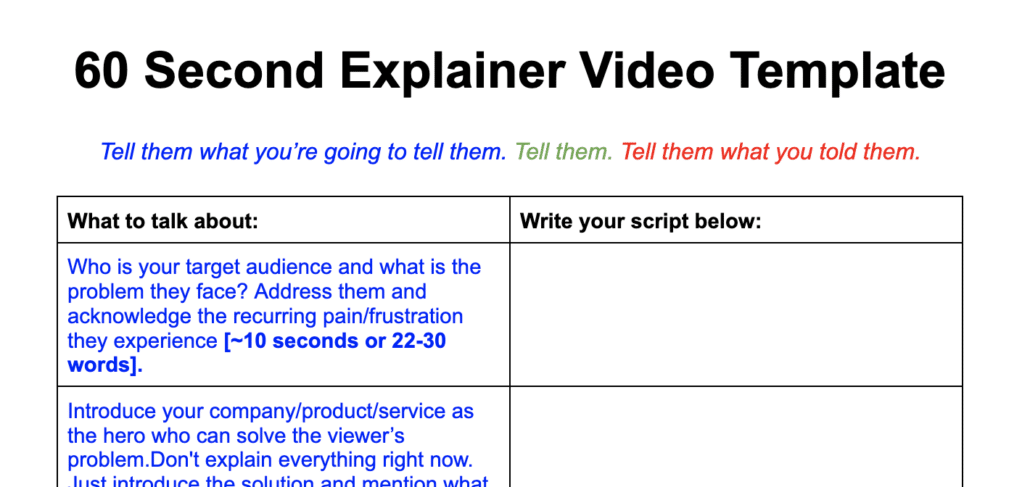
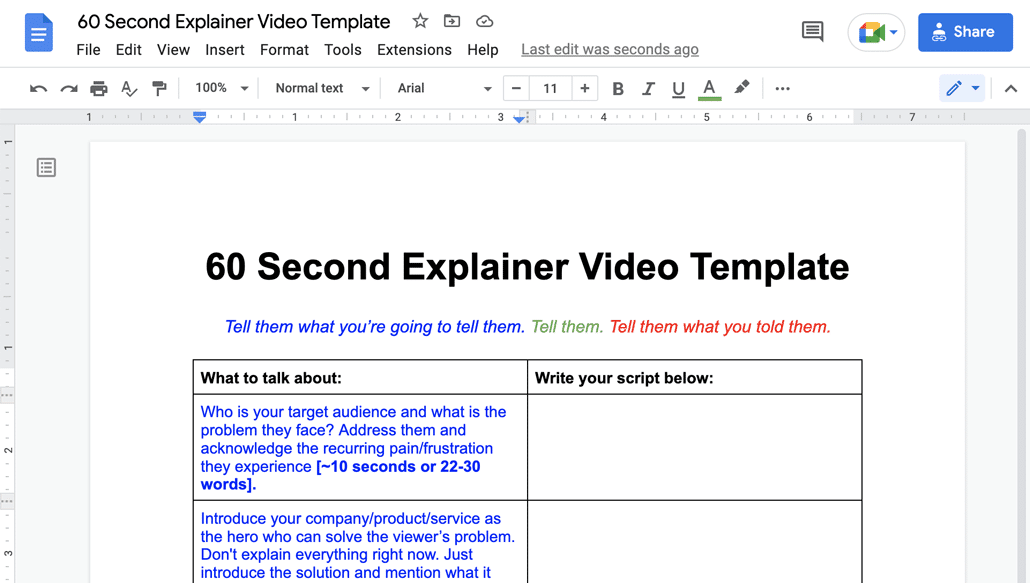
Download Video Igniter’s Free Script Writing Template

Our team digests your information and generates a script that is designed to convey your talking points to your target audience. You get to review the script and request revisions. We update your script and send it back to you for approval.

Budget Saving Tip: Write your script yourself using our free downloadable script writing template.

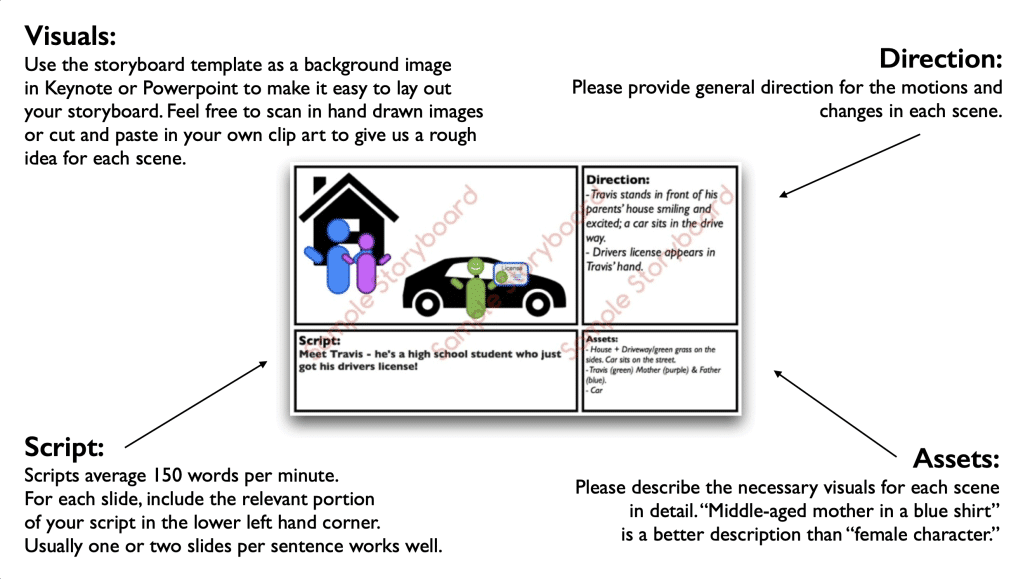
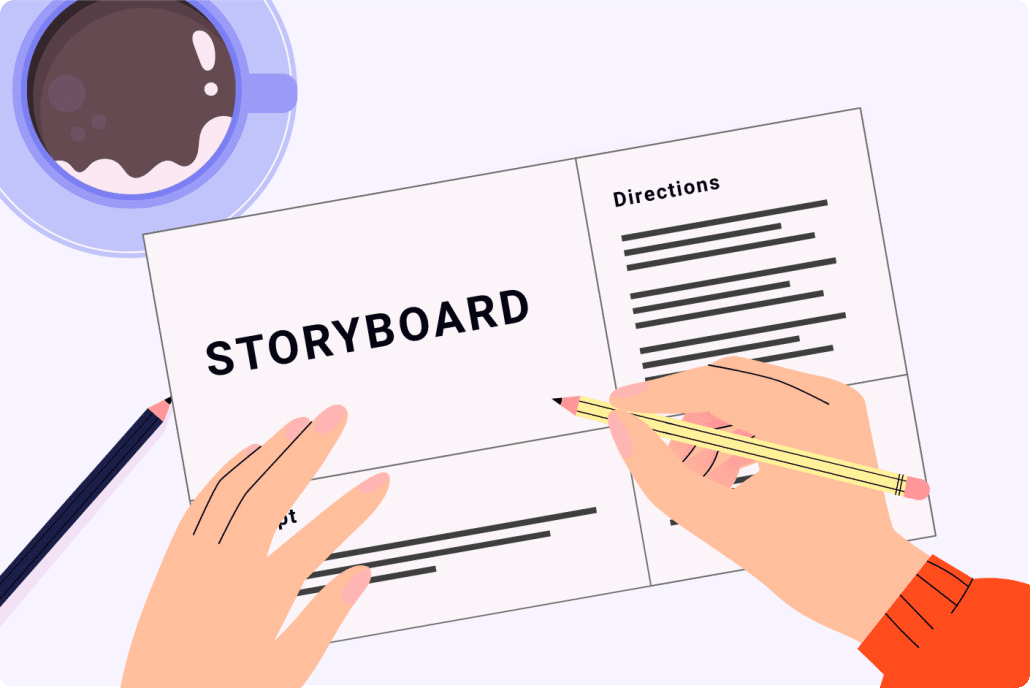
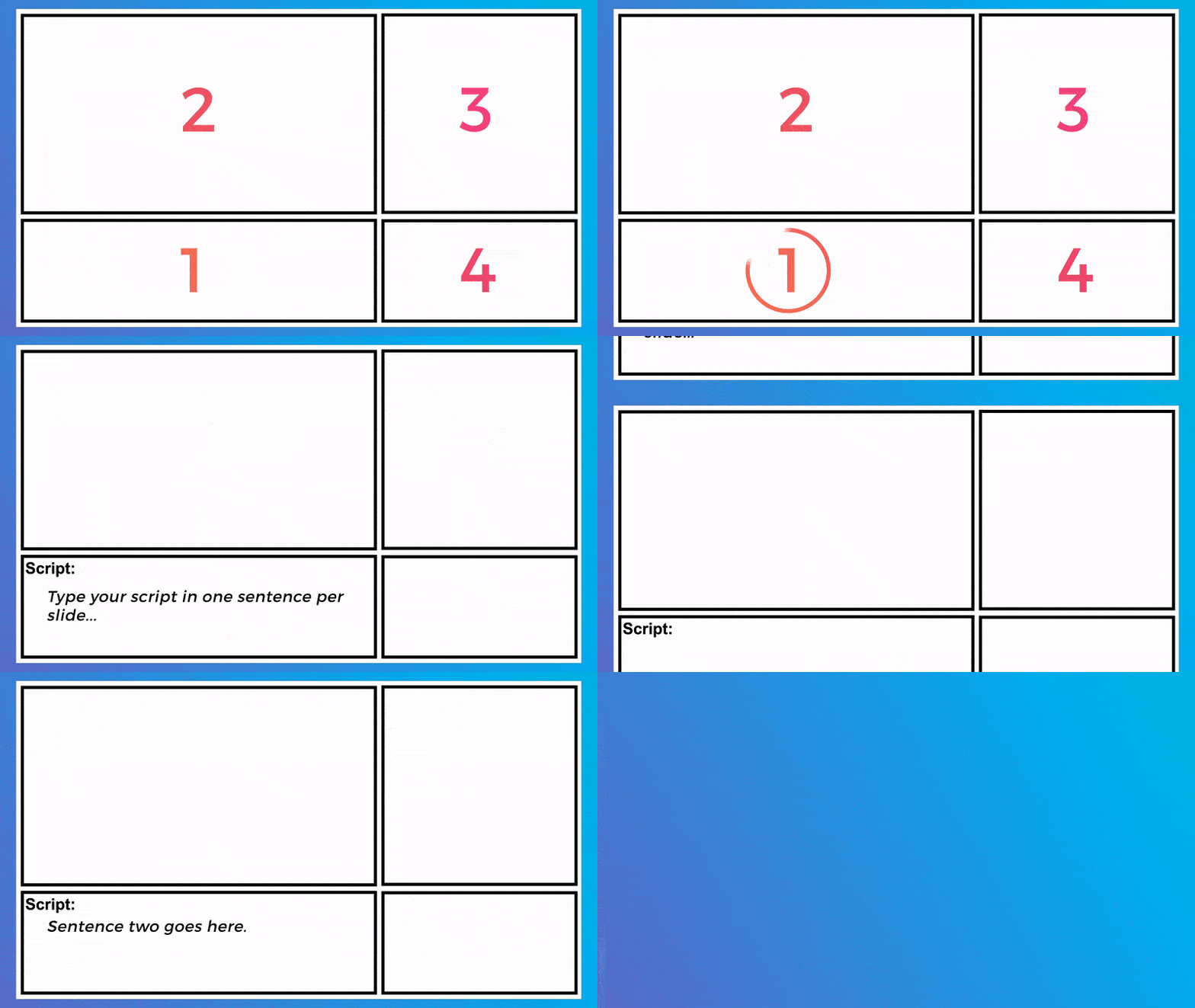
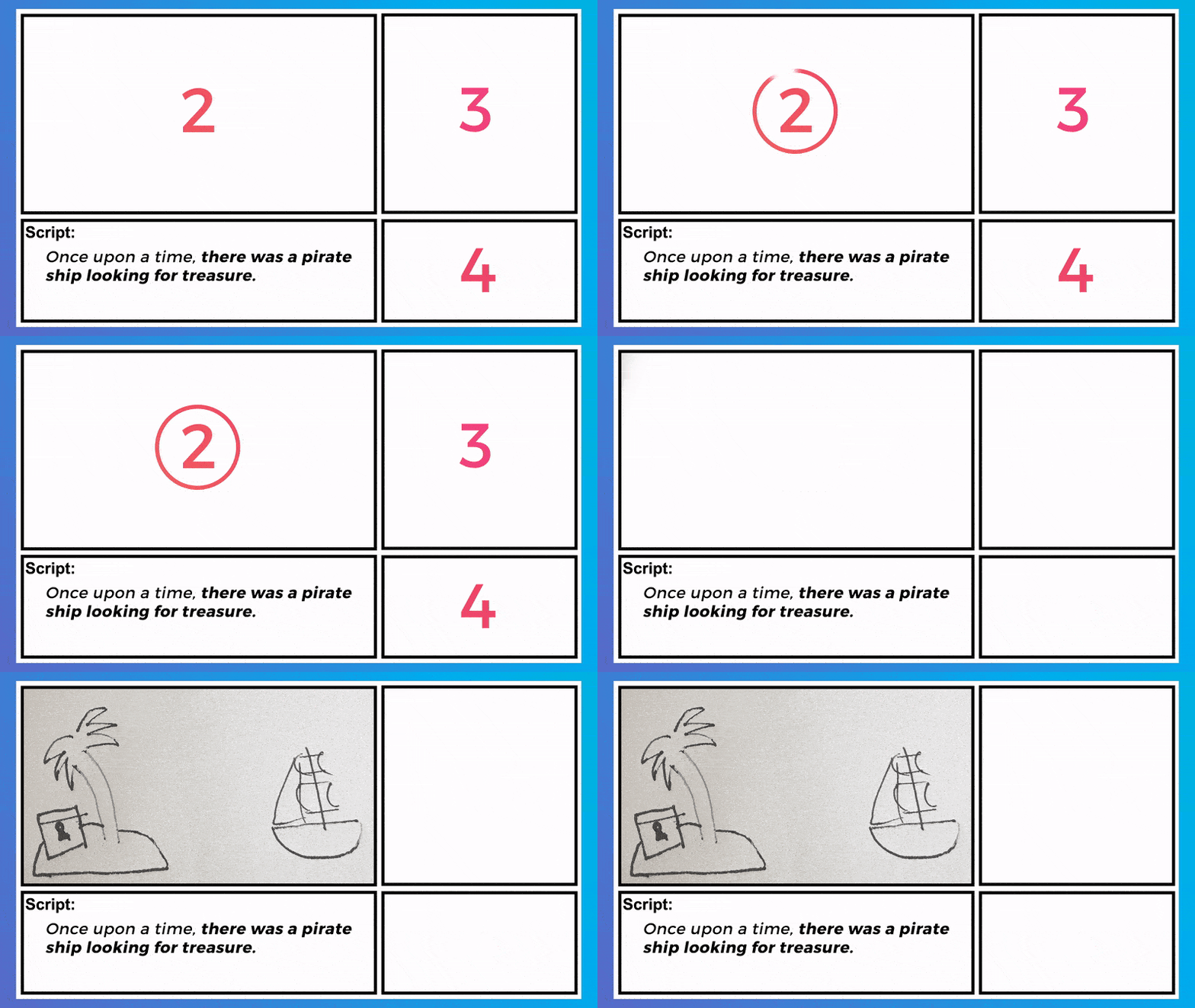
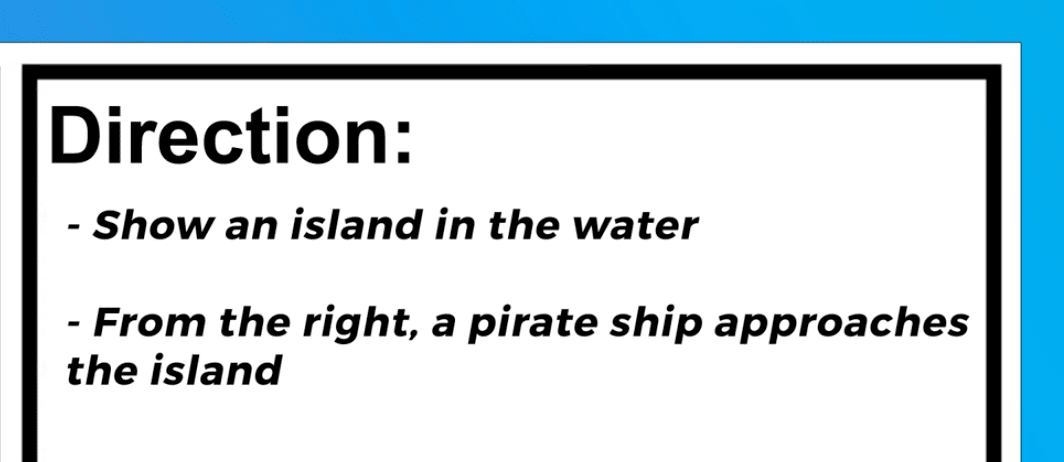
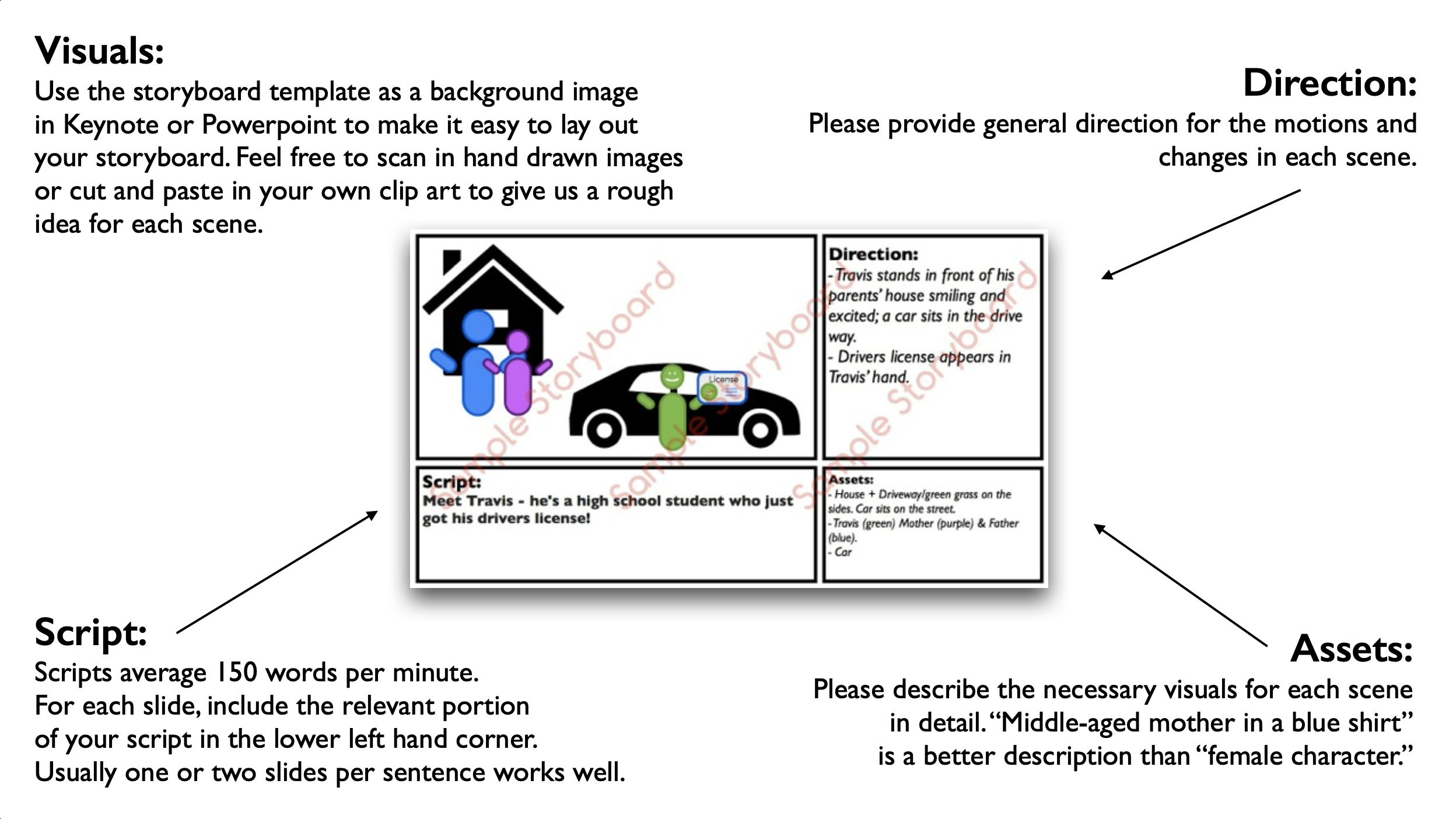
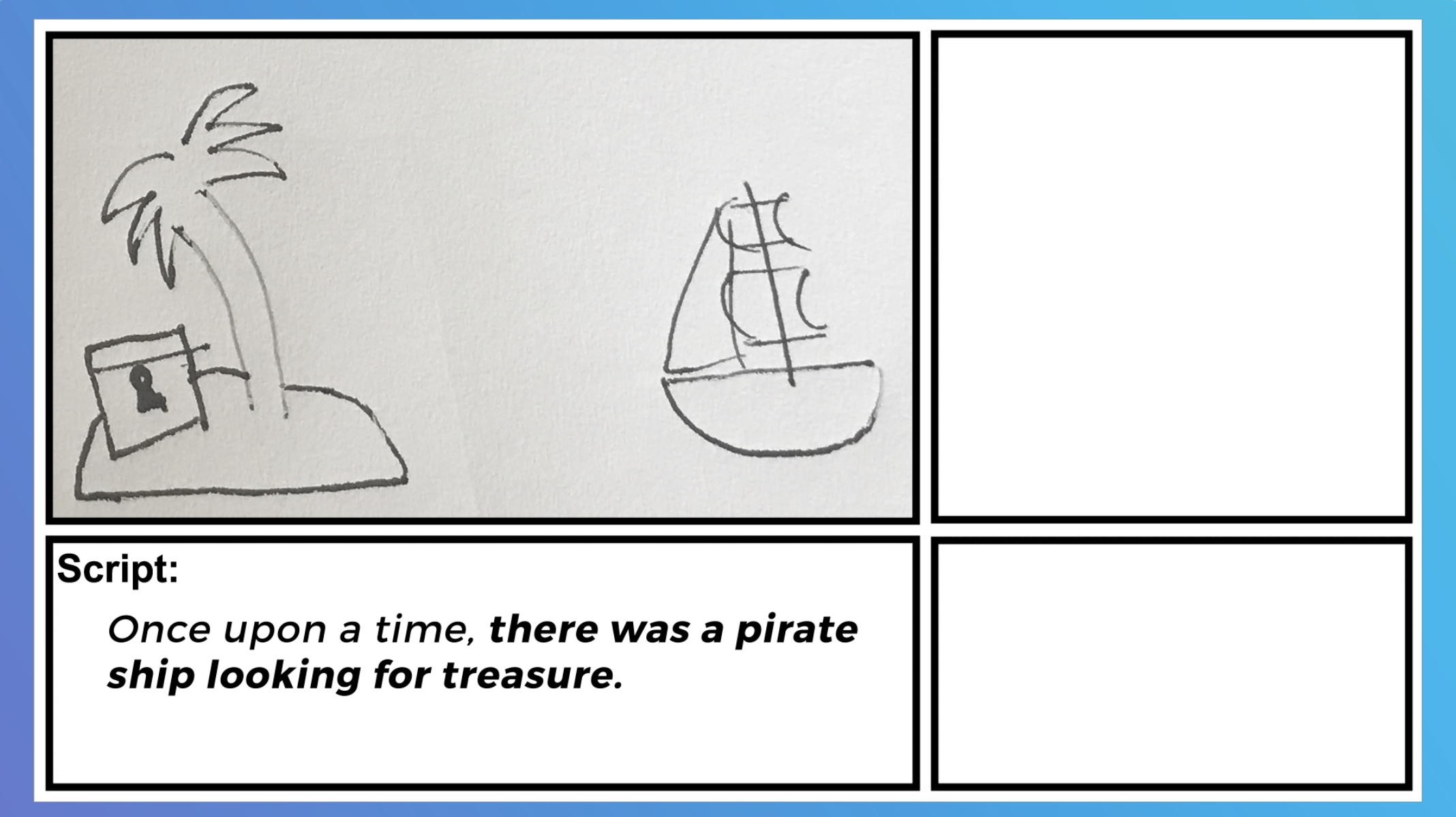
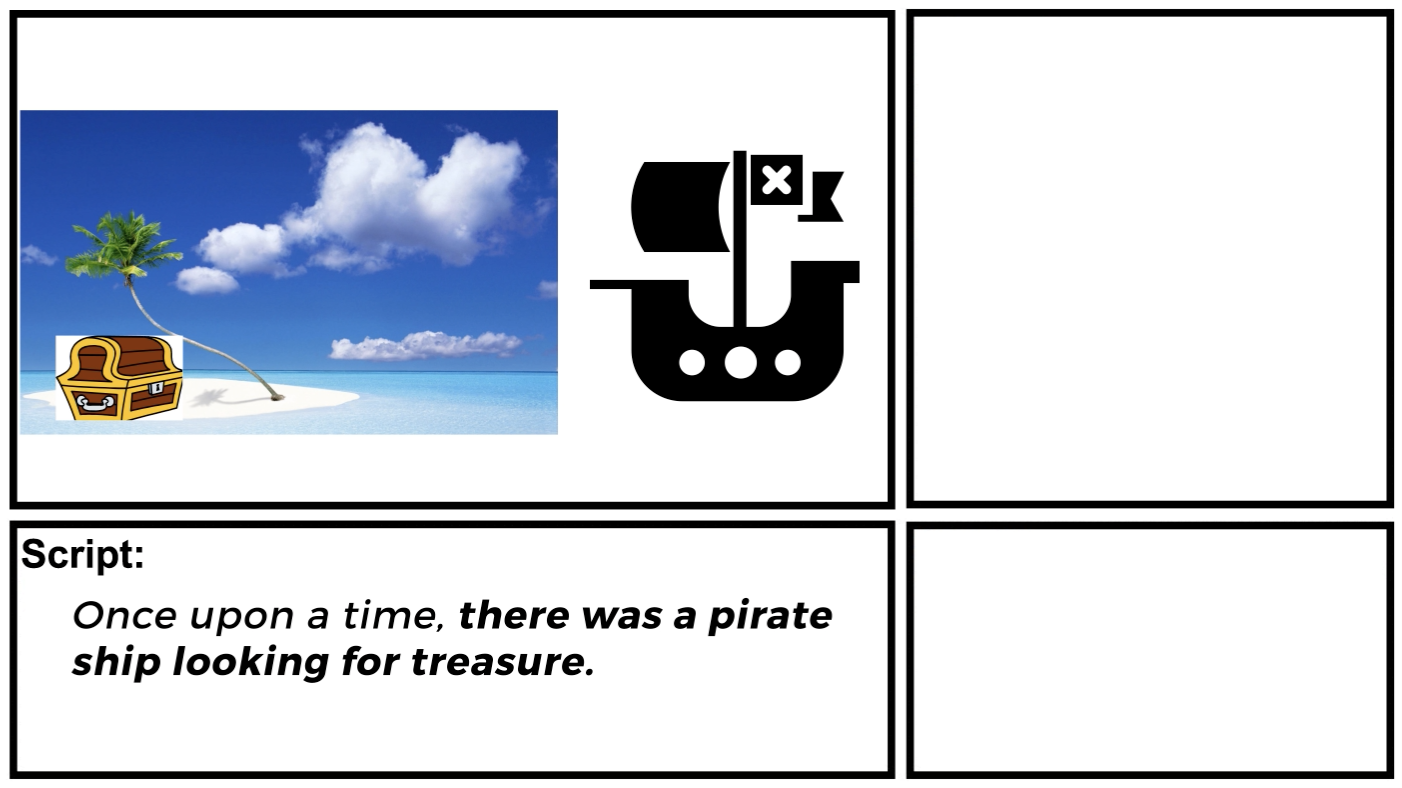
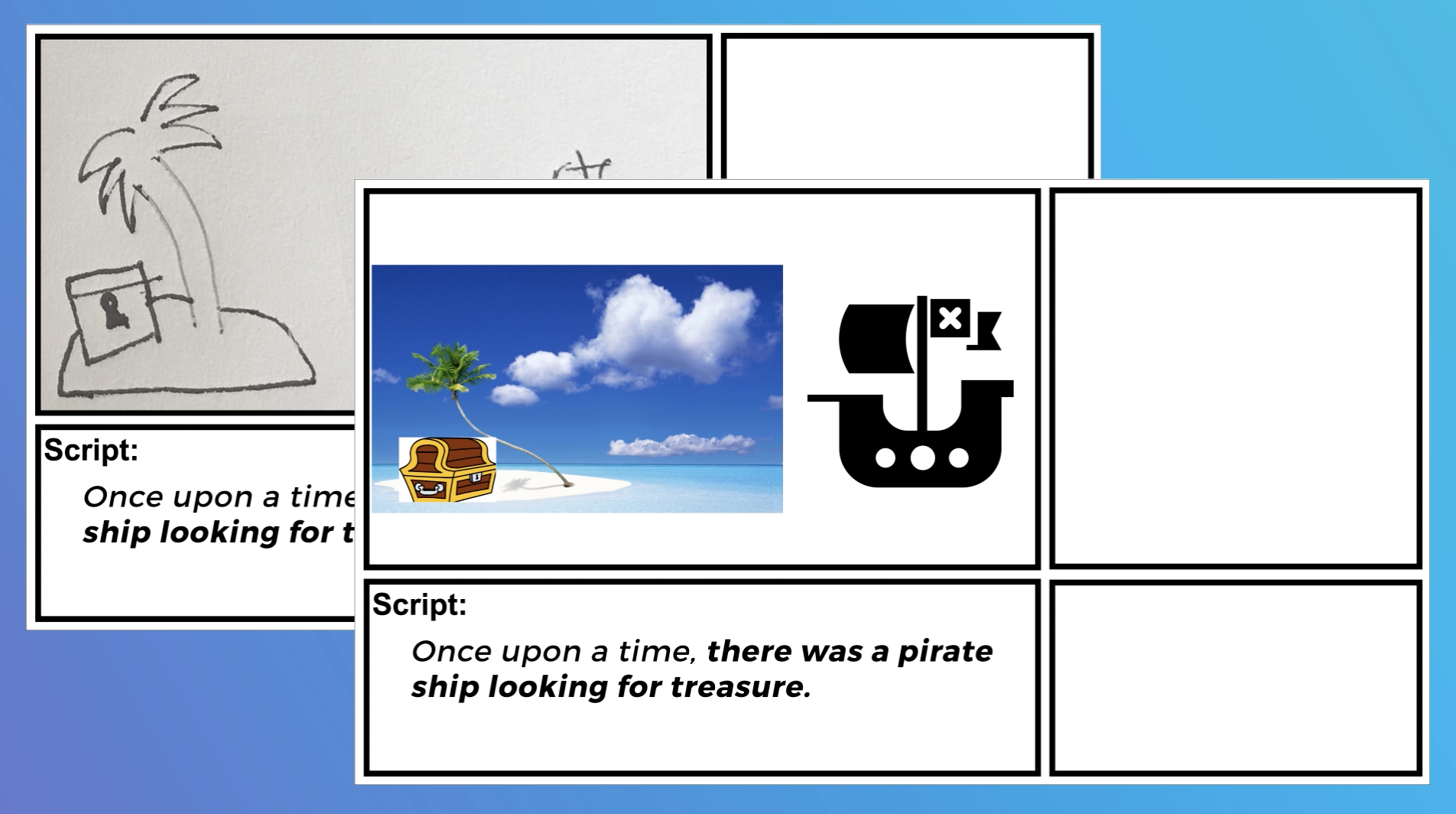
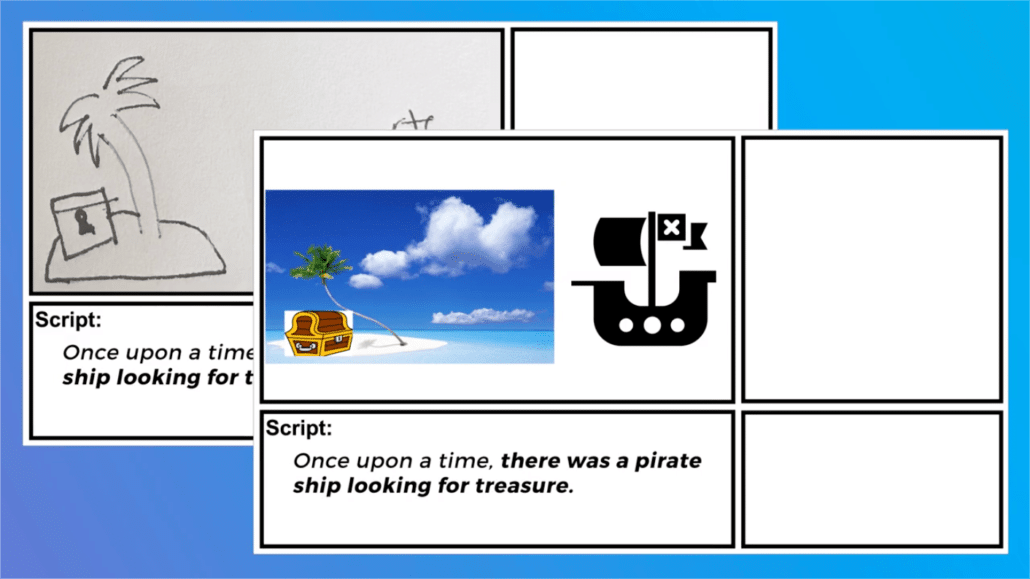
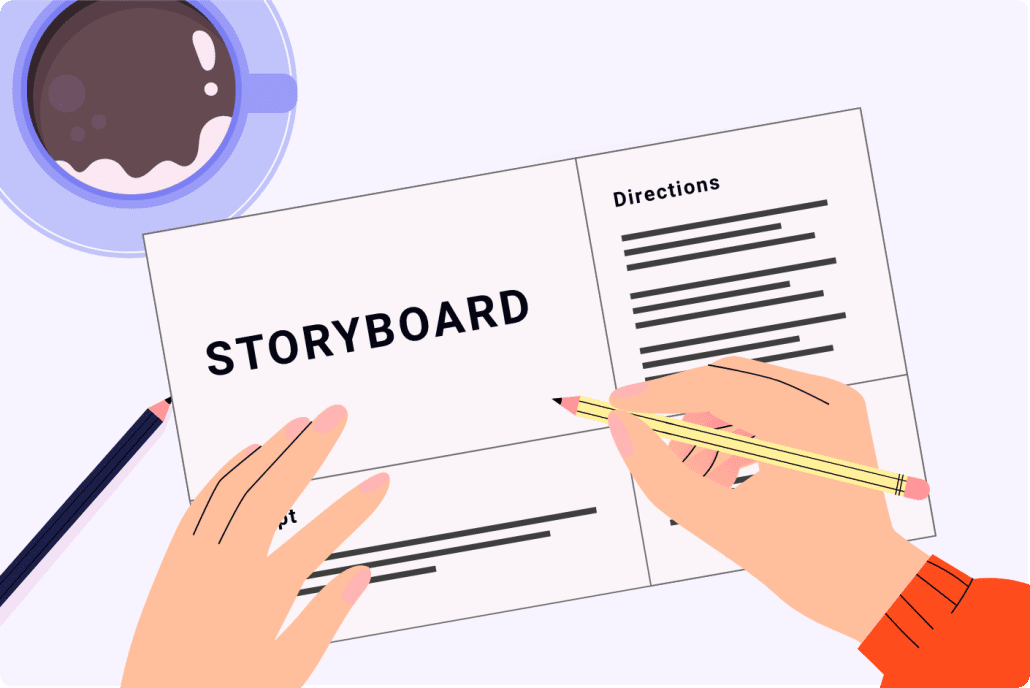
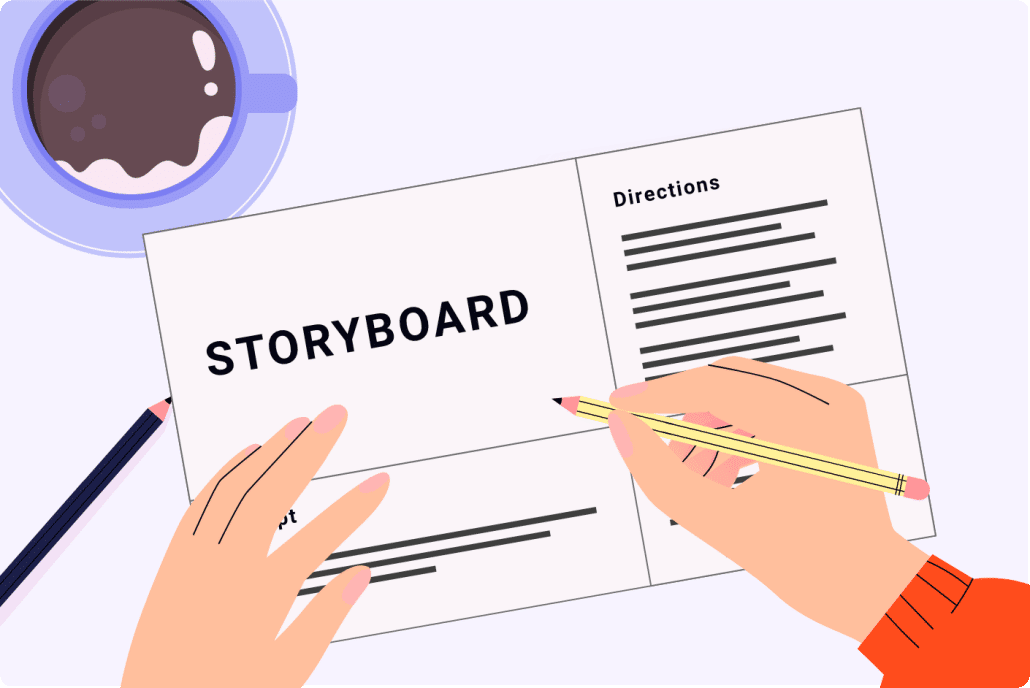
3). Storyboard Creation

Animation Company Storyboard Creation

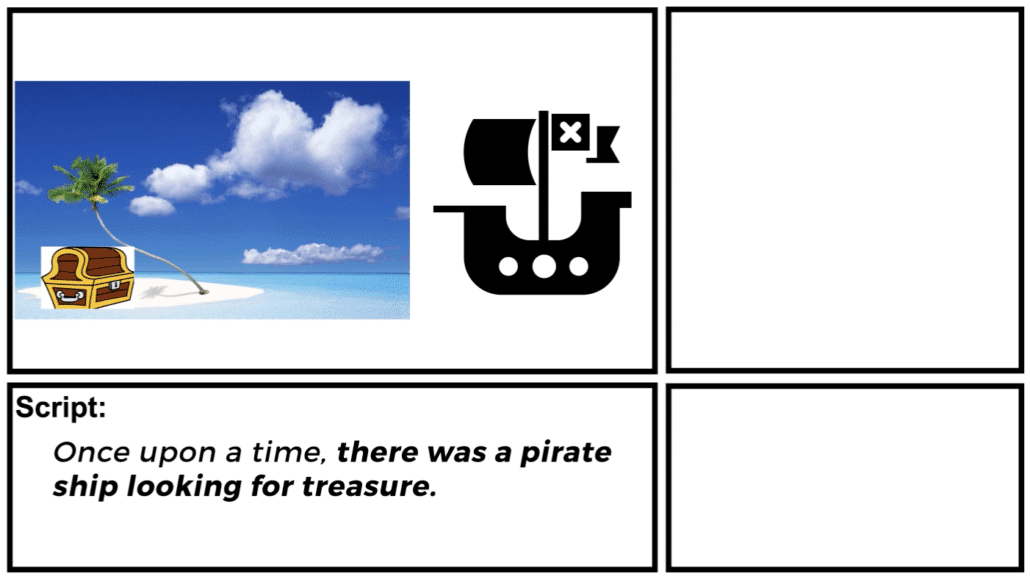
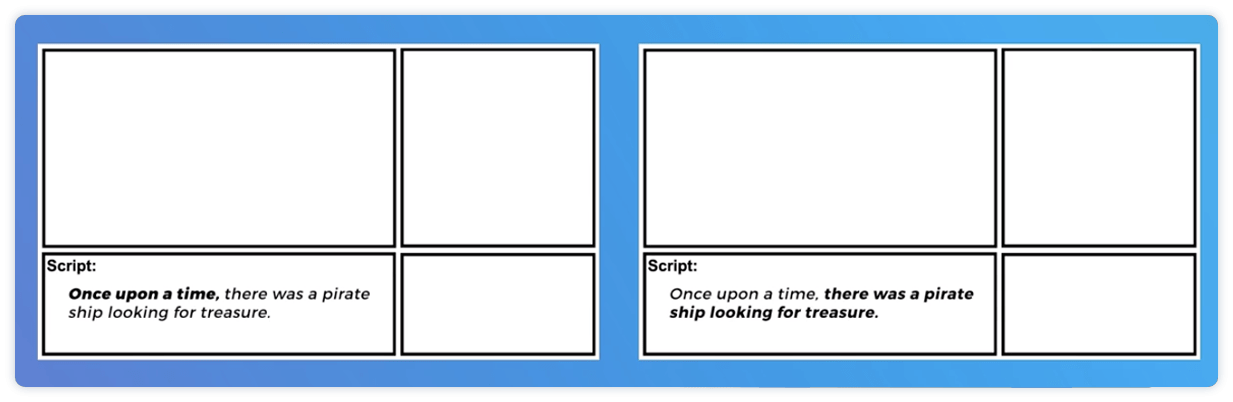
Download Video Igniter’s Free Storyboard Template

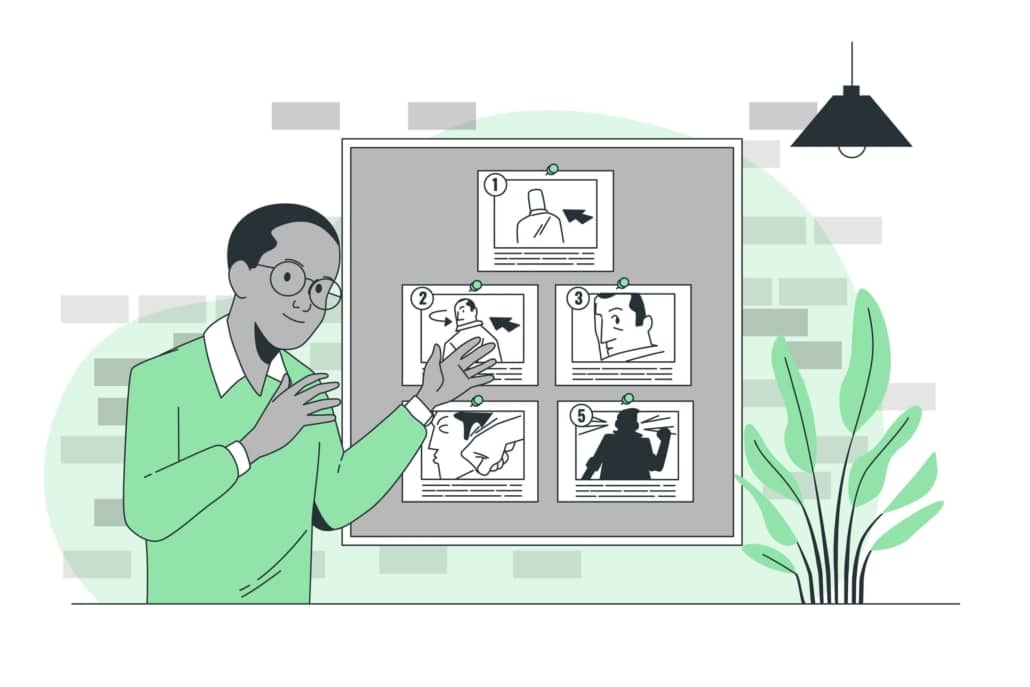
Our team turns your script into a storyboard. This way, we have a set of specific instructions for the illustrators and animators that we all agree on. You get an opportunity to review the storyboard and make sure all of the details are accurate before we move forward with production.

Budget Saving Tip: Create your storyboard yourself using our free downloadable storyboard template.

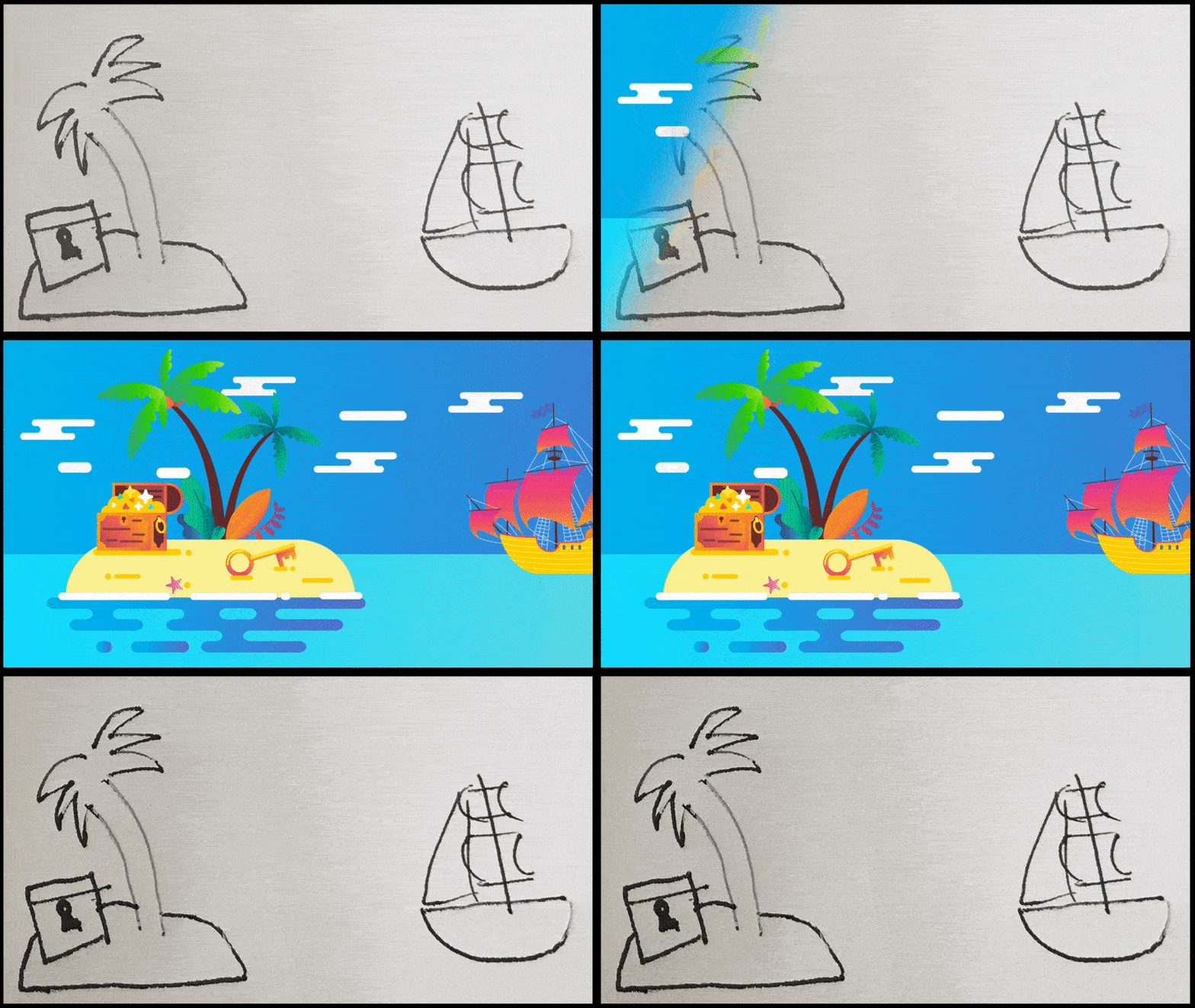
4). Creating Your Art

Animation Company Creating Your Art

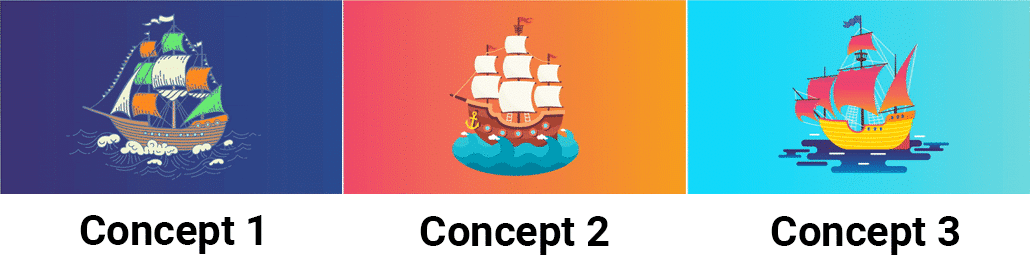
The art director reviews your style preferences, brand guidelines and storyboard. Then, they select a key scene from your storyboard and develop several visual concepts for your video.

Animation Company Concept Art

Tell the art director which visual style you prefer. They will work with you to refine you preferred visual design. Once you’re 100% happy with it, we’ll develop all of the art for your animated video. You get an opportunity to review all of the illustrations and request revisions before approving the art for production.

5). VoiceOver

VoiceOver

You will receive voiceover auditions from one or more voiceover artists. Select your favorite option and we’ll oversee the recording of the full voiceover. If there are any revisions you want to make, let us know and we’ll coach the voiceover artist through the requested edits.

6). Soundtrack & SFX

Animation Company Soundtrack

We’ll select several soundtrack options and sound effects that will help enhance the presentation of your animated video.  Let us know which soundtrack you prefer and we’ll procure the license so that you can legally use the music in your animated video.

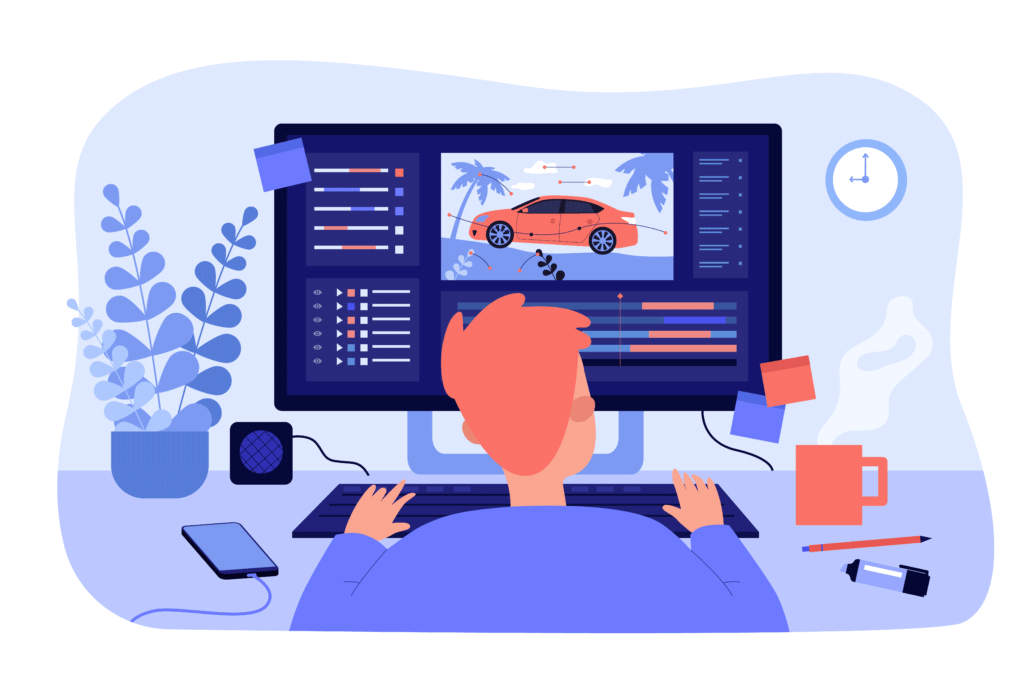
7). Animation

Animation Company Animator

Once everything is approved, our team animates your video. You get an opportunity to review the first draft with your team (and ideally members of your target audience). Collect everyone’s feedback and share it with us. We’ll incorporate your edits and render out the final draft of your video.

Sometimes people need help with additional work after their initial animation is completed. This can include translating your video, promoting your video to your target audience, improving your video’s conversion rate, editing shorter versions for social media posts, and more! Here’s a list of the other kinds of animation services Video Igniter offers.

What does it cost to hire an animation company?

What does it cost to hire an animation company

The cost of hiring an animation company varies depending on the length and complexity of your video. To give you a ballpark estimate, most 2D animated videos cost $1,500-$10,000 for each minute of animation. Note that some forms of 2D animation can cost $20,000-$50,000 or more for each minute of video that’s created. 3D animated videos cost 2-4x more to produce.

Want to figure out how much it will cost to make your animated video?

Check out our pricing page

Get a quote

Fill out this questionnaire about your project and goals

How long does it take an animation company to create an animated video?

How long does it take an animation company to create an animated video

On average, a 60-second, 2D animated video takes about 4-5 weeks to produce. 3D animated videos take 2-3x as much time to produce. If you are making a longer video and want to know how long it will take to make, we recommend or using this form to tell us about your project.

How To Evaluate Whether An Animation Company Will Deliver Results

How To Evaluate Whether An Animation Company Will Deliver Results

Finding an animation company that creates beautiful videos is only part of the decision-making process. The best animation company doesn’t just produce attractive visuals—they create videos that help businesses achieve measurable goals.

Before hiring an animation company, define what success looks like for your project. Different businesses have different objectives, including:

  • Increasing website conversions
  • Generating qualified leads
  • Explaining a complex product
  • Improving customer onboarding
  • Training employees
  • Launching a new product
  • Raising investor funding
  • Increasing social media engagement
  • Building brand awareness

An experienced animation company will ask about these goals early in the discovery process because every creative decision—from scriptwriting to pacing and visual style—should support your business objectives.

For example, a startup creating an animated investor pitch video may prioritize clarity and storytelling, while an ecommerce company may focus on product demonstrations and conversion optimization.

When evaluating an animation company, ask how they tailor creative decisions around business outcomes rather than simply asking what style of animation you want.

Questions To Ask Before Hiring An Animation Company

Questions To Ask Before Hiring An Animation Company

Many businesses compare animation companies by looking at pricing and portfolios alone. While these are important, asking the right questions can reveal much more about how the company operates.

Consider asking:

  • Who will manage my project?
  • How many rounds of revisions are included?
  • What happens if we need additional changes later?
  • Do we own all artwork and animation after completion?
  • Are source files included?
  • Can the animation be updated in the future?
  • How are project timelines managed?
  • What happens if our internal approvals take longer than expected?
  • Can you help with multiple language versions?
  • Do you have experience working in our industry?
  • Can you create shorter edits for social media?
  • What information do you need before production begins?

The answers to these questions often reveal whether an animation company has a mature production workflow capable of handling real-world business projects.

Red Flags To Watch Out For When Choosing An Animation Company

Red Flags To Watch Out For When Choosing An Animation Company

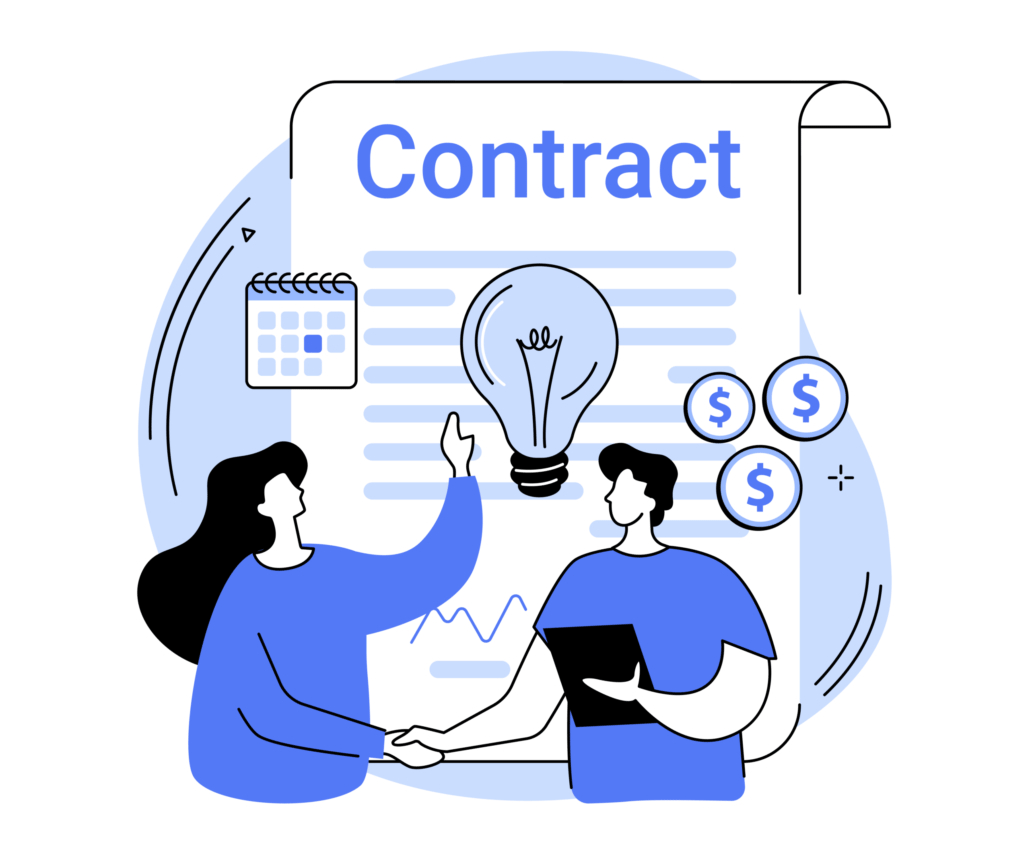
Not every animation company offers the same level of professionalism. Here are several warning signs to watch for before signing a contract.

No Defined Production Process

Professional animation companies follow a structured workflow that includes scripting, storyboarding, illustration, animation, review stages, and final delivery.

If a company can’t clearly explain its production process, projects are more likely to experience delays or unexpected revisions.

Unrealistically Low Prices

Animation is labor-intensive. Extremely low pricing often means:

  • Generic templates
  • Outsourced production with little oversight
  • Limited revisions
  • Poor communication
  • Lower quality artwork

While affordability is important, businesses should compare overall value rather than choosing the cheapest option.

Limited Portfolio Variety

If every video in a company’s portfolio looks nearly identical, they may rely heavily on templates instead of creating custom artwork.

A strong animation company should demonstrate experience with multiple visual styles, industries, and storytelling approaches.

Poor Communication

Long response times during the sales process often become even longer during production.

Communication is one of the biggest predictors of a successful animation project.

Who Owns The Animation After Production?

Who Owns The Animation After Production

One topic many businesses overlook is intellectual property ownership.

Before hiring an animation company, clarify:

  • Who owns the finished video?
  • Who owns the artwork?
  • Can the assets be reused in future marketing materials?
  • Are editable project files available?
  • Are stock assets licensed for commercial use?

Understanding ownership rights early prevents confusion later if your company wants to update or repurpose the animation.

Can An Animation Company Help With Marketing?

Can An Animation Company Help With Marketing

Creating the video is only the beginning.

Many businesses receive significantly more value when an animation company helps optimize the video for multiple marketing channels.

Examples include:

  • YouTube videos
  • Website hero videos
  • Landing pages
  • Paid advertising
  • LinkedIn campaigns
  • Instagram Reels
  • TikTok
  • Facebook ads
  • Email marketing
  • Trade show presentations
  • Sales presentations

Instead of producing one video, experienced animation companies often create multiple versions optimized for different platforms and aspect ratios.

This allows businesses to maximize the return on their animation investment.

Why Accessibility Matters In Animated Videos

Why Accessibility Matters In Animated Videos

Modern businesses increasingly prioritize accessibility.

An experienced animation company can help make videos easier for everyone to understand by incorporating accessibility best practices such as:

  • Closed captions
  • High-contrast visuals
  • Easy-to-read typography
  • Clear voiceover narration
  • Color choices that accommodate color blindness
  • Slower pacing for educational content

Accessible videos improve the viewer experience while helping organizations reach broader audiences.

Planning For Future Updates

Planning For Future Updates

Many businesses assume an animated video is a one-time project.

In reality, products evolve, pricing changes, features get added, and branding gets refreshed.

Ask your animation company how easy it will be to update your animation six months or two years later.

Planning ahead can save significant money because existing artwork and animation assets can often be reused rather than recreated from scratch.

This is especially valuable for:

  • SaaS companies
  • Healthcare organizations
  • Technology companies
  • Financial services
  • Educational institutions

Businesses with frequently changing products benefit from animation systems that are designed with future edits in mind.

Should You Choose A Specialized Animation Company?

Should You Choose A Specialized Animation Company

Some animation companies work across every industry, while others specialize in specific markets.

Depending on your project, industry expertise can provide advantages.

Examples include:

  • Healthcare animation companies familiar with medical terminology
  • SaaS animation companies experienced with software demonstrations
  • Manufacturing animation companies capable of illustrating technical equipment
  • Nonprofit animation companies focused on fundraising storytelling
  • Educational animation companies experienced with e-learning

Industry knowledge often reduces onboarding time because the production team already understands your audience and messaging challenges.

Measuring The ROI Of An Animated Video

Measuring The ROI Of An Animated Video

One of the biggest advantages of animation is that its performance can be measured over time.

After launching your video, monitor metrics such as:

  • Video completion rate
  • Click-through rate
  • Website conversion rate
  • Time spent on page
  • Social shares
  • Engagement rate
  • Lead generation
  • Sales conversions
  • Customer support ticket reduction
  • Employee training completion rates

Tracking these metrics helps determine whether your animation is delivering meaningful business value.

Many companies discover that a single animated video continues generating leads, educating customers, and supporting sales teams for years after production is complete.

Rather than thinking of animation as an expense, successful organizations view it as a long-term marketing asset that can be repurposed across websites, presentations, advertisements, email campaigns, trade shows, social media, and sales materials.

Animation Company Production Resources

Animation Company Production Resources

These resources and guides are popular among people researching and reading about animation companies:

How To Turn Your Script Into An Animation

How To Hire And Work With An Animation Video Company

List of Animation Production Companies

Video Igniter – The Animated Video Production Service Of The Future

Additional Services and Support

Many animation companies offer additional animation services including scriptwriting, voiceover, sound design, translation, video promotion, video syndication and more. These services can enhance your animation and provide a more comprehensive solution. Post-production support and revisions are also crucial, as they ensure your final product meets your expectations. When assessing an animation company, consider these additional services and their commitment to customer satisfaction.

Why do People Love Video Igniter

Video Igniter, a leading animation company, is known for its custom 2D and 3D animated videos. Clients prefer Video Igniter because of our creative expertise, attention to detail, excellent client service, unlimited revisions, and commitment to delivering high-quality animations. Our extensive portfolio showcases our ability to create engaging animations for a wide range of industries and project types.


Conclusion

Choosing the right animation company is crucial to the success of your animation project. By considering factors like expertise, portfolio, client reviews, communication, technical capabilities, pricing, and additional services, you can find a company that aligns with your project needs and budget. Remember, thorough research and evaluation are key to making an informed decision.

Still have questions about animation companies?

Do you have a question about animation companies that wasn’t addressed in this FAQ? Use this form to send us your question and we’ll follow up with an answer. We’ll also post the question and answer to this page so other people can benefit from the knowledge.

Still have questions?

What is Video Igniter Animation?

Video Igniter Animation is an online animated video production service. By working with our team online, you can get your custom animated video produced faster and for less than hiring a brick and mortar animation studio.

We can help you create any kind of 2D animated video or 3D animation you can imagine. Check out our animated video portfolio.

Watch our explainer video on our home page to learn more about how we can help you create an animated video. For examples of the kinds of animation our team can produce, check out the demo reel below:


Looking For An Animation Company In The U.S.?

Video Igniter is headquartered in Seattle, Washington.

Animation Company Success Stories & Testimonials

Don’t just take our word for it – these testimonials highlight Video Igniter’s reliability, creativity, flexibility and ability to deliver animations that exceed expectations. When you choose Video Igniter Animation, you can rest assured that you are working with a trusted and reputable studio.

“Video Igniter were very easy to work with and the entire process for creating and suggesting edits was seamless and stress-free. I would work with them again and would recommend to others looking to create a modern and stylish explainer video.”

Clair Simpson – VP Marketing, Repool.com

“I run a video production company and outsource animation. The team at Video Igniter did a great job in taking the concept I very crudely drew out and making it into a beautiful animation. The review process was easy and their turnaround time was very quick. I’d def recommend them if you’re looking for an animation project.”

Pat Henderson – Founder, Path8 Productions

“Video Igniter offered us the critical combination of creative value, clear communication, and patience with stakeholder feedback. We ended up with truly high-quality design assets for our video series largely due to the extra level of commitment — and the right balance of efficiencies with flexibility in the process when called for.”

Larry Schlessinger – Sr. Creative Program Manager, Amazon Web Services

“Video Igniter came to us with a number of creative and engaging ideas and were able to create an exciting, impactful video in a short period of time. And the best part was that it cost much less than other options of similar quality. The video they made is a great marketing tool for us.”

Alex Raymond – Founder, Kapta Systems


Success Stories And Testimonials

Ready to hire an animation company? Get in touch!

Schedule a call to discuss your animated video project.

Get a quote for us to create your animated video.

Request access to our newest price sheet.

Create your Video Igniter account, fill out a creative brief for your video and we’ll begin production as soon as we receive your production deposit.

contact us

3D Animation Maker

Looking for a 3D animation maker to help you create a custom animated video? Video Igniter‘s FAQ about 3D animation makers explains:

✅ The pros and cons of different types of 3D animation makers

✅ How to make 3D animations

✅ How much they cost to make (ballpark range)

✅ Tips to save $ on your production budget

✅ And more!

3D Animation Video Maker

Examples Of 3D Animated Videos You Can Get From Video Igniter

Video Igniter can create any kind of 2D or 3D animated video for you. Check out our animation portfolio and request access to our price sheet.

Contact us or schedule a call to start making your video.

Photorealistic 3D Animation


3D Character Animation


Product Animation With 3D Rendering


3D Commercial


Are you looking for an example of a different style of animation? Send us a message to let us know what kind of animation example you want to see and we will follow up with relevant production samples.

What is a 3D animation maker?

Well, that depends what you mean – because there are a few different types of “3D animation makers.”

There are freelance animators that can make 3D animated videos….

Animation studios that create 3d animations….

… and there are new software and hardware-based ways to make 3D animations.

Pros and Cons of Hiring A Freelance 3D Cartoon Maker

There are many talented freelance animators on the Internet who can help you make 3D animations. Be sure to review their portfolio to see if they produce the style and quality of animation you are looking for.

Freelance 3D Animation Makers

Freelance 3D Animation Makers

Pros:

Freelancers can offer 3D animated video production services on demand and cost a lot less than hiring a full animation studio.

Cons:

3D animations take a long time to create; freelancers working by themselves will require more time to make your 3D animation.

Pros and Cons of Hiring A 3D Animation Studio

3D animation studios are fully equipped to help create specific styles of 3D animations. Their large teams are capable of collaborating to create long, detailed intricate 3D models, scenes, animations and full length movies.

Pros:

Large animation teams can take on long, complex projects.

Cons:

Hiring a brick and mortar animation studio is the most expensive way to make a 3D animated video.

Pros and Cons of Using A Technology-Based 3D Animation Creator

A new wave of hardware and software based 3D animation makers are coming on the market. Some, like Dream Fusion can generate custom 3D models from text prompts alone. Others use text to generate short custom 3D animated clips. 3D scanners, lidar and smartphone apps now have the ability to scan physical objects, turn them into digital 3D models and make them available for use within 3D animated environments.

Pros:

Low cost and fast!

Cons:

Low quality, can’t always get exactly what you want? Pixelated, small images that don’t get the details exactly right.

Pros and Cons of Hiring Video Igniter For 3D Animation Online

Video Igniter is a 2D and 3D animated video production service. We can help you make any kind of 2D or 3D animation you can imagine. All you have to do is describe the animation you want and we take care of everything for you. You get regular check ins during the production process so you can provide feedback and ensure the 3D animation is still on track.

Pros:

Less expensive than hiring a brick and mortar animation studio. Our production team has the ability to produce all types of 3D animated videos.

Cons:

If you want to work with our team in-person, this is is only possible in Washington state. Most of our animated video projects are produced remotely for clients around the world.

How do I find and hire someone to create 3D animation?

hire a 3D animation maker

If you’re interested in hiring a studio , a freelancer or Video Igniter to make a 3D animation for you, we recommend you:

  • Take a look at their video portfolio to see if they can create the level of quality you expect for your video.
  • Ask about their design process
  • Figure out their pricing structure
  • And make sure you check to see how many revisions you get when working with them (some will charge you extra for more revisions).

Additional resources to help you find and hire a 3D animation maker online:

How To Make A 3D Animation With An Online 3D Animation Maker

how to make a 3D animation

Creating a 3D animated video is a collaborative process. You will provide information to the 3D animation maker. They will create part of your video (script, storyboard/animatic, voiceover, soundtrack, illustrations, & animation). You will get a chance to review it and ask for revisions. The 3D animation maker will address your revision requests and send the file(s) back to you to review and approve so that production can move to the next stage of the production process.

Questionnaire / Phone Call

Production for a 3D animation starts with an online questionnaire and or a to learn about what you want to communicate in your video. It also gives the 3D animator an opportunity to learn about what kind of visual style you want to use in the video.

Schedule a call with our production team do discuss your 3d animation.

Script

The 3D animation maker will review the information from the call/questionnaire and use it to develop the first draft of your video script. Sometimes, they will include notes [in brackets like this] to suggest what visuals will be on screen during each part of the script.

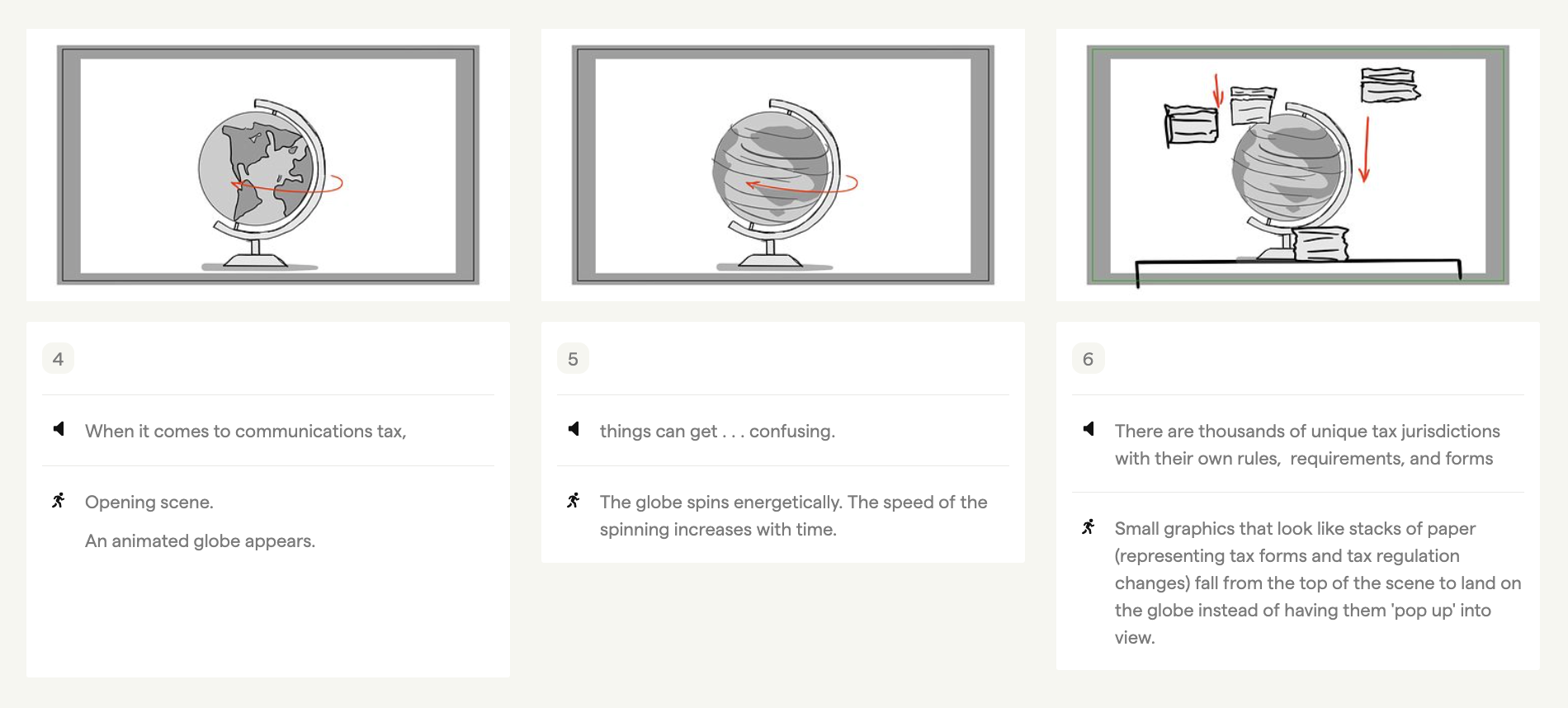
Example Of A Written Storyboard For A 2D Animated Video

Example Of A Written Storyboard For A 2D Animated Video

As you review your script, pay attention to the content that is being presented. Does the script cover all the main talking points? Does it communicate things in a way that will resonate with your target audience?

3d animation maker script

Download Video Igniter’s Free Script Writing Template

If you want any revisions, send your requests to the 3D animation maker and they will incorporate your edits. Otherwise, let them know it’s approved and production can move forward.

Storyboard / Animatic

Now that your script is ready for production, the 3D animation team will develop your storyboard – and maybe an animatic. The storyboard is the blueprint for your 3D animated video. It tells the illustrators what to create. It also tells the animators how to make the visuals move.

3d animation maker storyboard

Download Video Igniter’s Free Storyboard Template

Sometimes, the 3D animation producer will also create an animatic after your storyboard is approved. The animatic is detailed version of the storyboard that focuses on the timing of the motion design so that the animators know what pace things should move at.

Reviewing your storyboard

When you review your storyboard, your feedback should focus on the visuals that are going to be created in each scene. Make sure each one makes sense. Ensure enough detail is included in the description so that the 3D animation makers know what to create. If certain details need to be shown a specific way, say so. Otherwise, you are providing space for the production team to create their own execution. Consider including images of specific things that need to be modeled accurately.

If you love the storyboard as-is, let the production team know it’s approved. Otherwise, send them your feedback so they can incorporate your edits.

Reviewing your animatic

The purpose of the animatic is to refine the timing of animated sequences in your video. This helps the animated video production company get accurate timing for key details before they dive in to animating your video. The animatic helps them properly time the animation for details like mouth movements, dramatic effects and comedic moments. In the long run, this extra step helps save time and money on production by ensuring the animators know exactly what to create.

VoiceOver

voiceover

After your storyboard is approved, the 3D animation maker will help audition voiceover artists for your video. You will receive sample recordings from one or more artists. Let your production team know which audition(s) you like best. They will hire the VO artists to record the full voiceovers. If you aren’t satisfied with any of the auditions, let the production team know why. Then, they can source new options for you to review.

You will get an opportunity to review the full voiceover and request revisions before you approve it for production.

Soundtrack

soundtrack

Your 3D producer will also select some soundtracks to enhance your animation. (Note, not all 3D animations include music or sound effects.) If you love one of the soundtrack options, let the 3D animation maker know.

What if you’re not a fan of any of the options? Let them know why so they can select new options for you to review.

Can’t decide which soundtrack you like best? Tell the production team and they can help you preview your favorite options when the first draft of your animation is ready to watch.

Illustrations

Creation of the illustrations creation once your storyboard is approved. The art director will review your style references and brand guidelines. Then, they will select a key scene from your storyboard and design it using one or more unique visual styles. For 3D animated videos, this usually starts with pencil concepts which are refined with your feedback.

Hand Drawn Concept Art

Hand Drawn Concept Art

After the concept art for all the characters, objects and scenes are approved, the 3D animation maker will turn them into 3D models for the animation.

The 3D models are created from the sketches and typically start as wireframes with no color or textures within the 3D animation program.

3d animation maker art example

The models are refined with your feedback.

Then color, lighting, shading and textures are added. You get another opportunity to review everything before approving the assets for production.

Animation

3d animation maker animation

Now that your assets are approved, animation can begin. Animation for 3D projects takes time and shouldn’t be rushed. It can take several weeks to animate a single minute of 3D content.

When the first draft is ready, review the animation with your internal team and members of your target audience (if available).

Collect everyone’s feedback and send it to the 3D animation maker so they can incorporate the last edits and render the final draft.

How long does it take a 3D animation maker to create a video?

Depends on the size of the team, the amount of time available for production and the complexity and length of the animation. For context, a 60 second 3D animated video takes about 6-10+ weeks to produce. Longer content (+20 min TV episodes) can take several months to produce. To figure out how long it will take to make your 3D animated video, get in touch with our team. Let us know what your deadline is (if any) and we’ll work with you to figure out a production schedule for your timeline.

3d animation maker production schedule

I need my animation fast! Is it possible to get my video faster?

Yes, rush delivery animation is possible. If you need to make your 3D animation quickly for an upcoming launch date, fill out this form to get a custom quote. Let us know you are interested in rush delivery for your 3D animation. We’ll prepare an accelerated production schedule and rush delivery production quote to get your animation made on time.

3d animation maker rush delivery

What does it cost to make 3D animation?

This depends on on the length and complexity of the 3D animated video you want to make. 3D computer animated videos cost $3,000-$50,000+ to create a 30 second animated video. For context, animated TV shows cost $10,000-$200,000+ for every 60 seconds of animation they create.  The truth is there are many factors that go into the cost of making a 3D animated video so it isn’t possible to provide a dialed in quote without knowing more information. If you are looking for pricing information for your project, contact us to get a custom quote. We’ll ask some follow up questions so that we understand the full scope of your project and send you a custom quote.

3d animation maker cost

How can I save on my production budget while making a 3D animated video?

Write your script

You can save hundreds-thousands of dollars off your production budget by writing your own script. Check out all our scriptwriting resources here.

3d animation maker video script template

Create your storyboard

Same story for your storyboard. Lots of budget saving to be had if you create your own storyboard. Check out our storyboard template and storyboard creation guide here.

3d animation maker video storyboard template

Record your own voiceover

Check out 1:31 in this video to learn how you can record your own professional sounding voiceover for free without having to buy any fancy equipment or special software.

Use stock 3D models

Not every part of your animation needs to be custom made. Consider asking your animator if it’s possible to decrease your budget by buying pre-created 3D models of common objects – instead of paying your video animator to make them from scratch.

Use free (legal) music for your 3D animation

Incompetech

Facebook Sound Collection

When To Create a 2D vs 3D Animation?

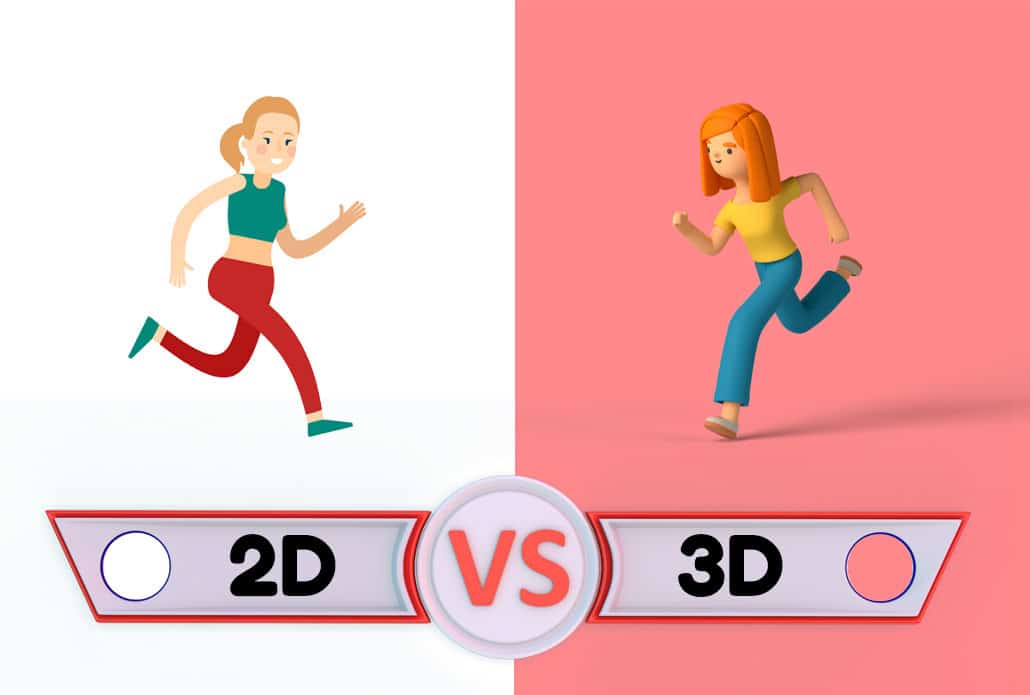
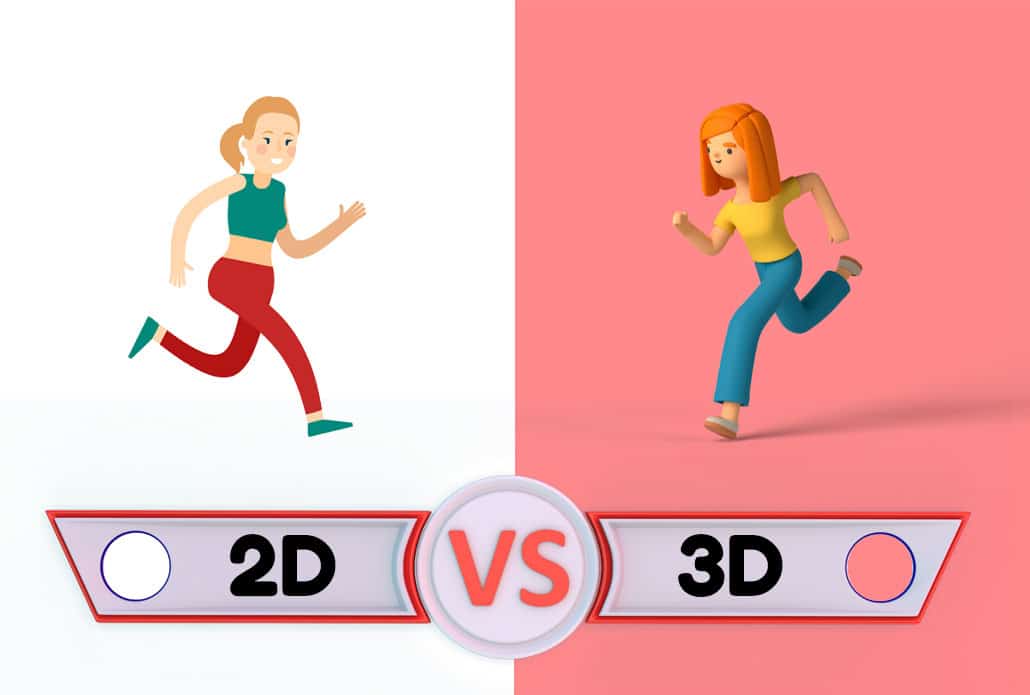
3D animated videos are able to show extra details that can’t be shown in 2D animated videos. It’s like the difference between looking at a picture of something vs having a model of that thing (or the real thing itself) to understand it. Sure, the picture shows you what something looks like, but a 3D animation shows you how something is. You can look inside it, you can go around it. It can be manipulated and changed to show how it evolves under certain conditions. These details can be abstractly represented in 2D animation with different techniques but it’s far from seeing what’s actually going on.

When To Create a 2D vs 3D Animation

3D Animation For Manufacturing & Architecture

When it really matters – when you need to see the details of what is going on, 3D animation is the best way to visualize what you want to show or communicate to people. This is particularly useful for mechanical and technical companies that want to show off how their physical creations function.

Marketers Stand Out with 3D Animations

The Internet is becoming an ocean of videos – and very few of those videos are 3D. If you want your message to stand out, investing a little more time and money in a 3D animated video can help your message rise above the noise.

3D Animation For Science & Medical Procedures

Want to demonstrate how a medical procedure works? How about demonstrating how brain neurons fire? Even if you were to get up close with a video camera, you wouldn’t be able to see all the fine details that are going on. By using 3D animation, it’s possible to visually show what’s happening at a microscopic level.

3D Entertainment

The best kind of 3D animation is the good ol’ Pixar Animated video! These animations used to require budgets in the 10’s or 100’s of millions of dollars. Now, thanks to modern animation software and virtual animation teams, the cost to produce 3D animated videos for entertainment purposes is coming down. More organizations can now afford to create entertaining 3D animated videos to extend their brand.

Avoiding Common Pitfalls When Using a 3D Animation Maker

Avoiding Common Pitfalls When Using a 3D Animation Maker

While 3D animation makers are powerful tools, they come with their own set of challenges. One common pitfall is overcomplicating designs, which can lead to unnecessary complexity and increased rendering times. It’s essential to simplify your models and focus on the core elements that will convey the message effectively. Another mistake is neglecting the importance of lighting, which can make or break the realism of your animation. Ensuring that lighting is properly set up can dramatically improve the visual quality of your work.

Additionally, many creators underestimate the hardware requirements of 3D animation software, which can lead to frustration with slow rendering speeds and system crashes. To avoid these pitfalls, always keep your hardware in mind, stay organized, and seek feedback throughout the creation process to ensure that your animation project is both effective,  high-quality, and on track with client expectations.

The Evolution of 3D Animation Makers: From Simple Tools to Advanced Software

Evolution of 3D Animation Makers From Simple Tools to Advanced Software

The journey of 3D animation makers has been an exciting evolution, from simple graphics tools to advanced software that powers high-quality animations today. Early 3D animation making software programs like Anim8or and Blender, were quite basic, offering rudimentary modeling tools and limited rendering capabilities. These early programs laid the foundation for more sophisticated tools by enabling creators to explore three-dimensional design and movement.

Over time, 3D animation makers like Maya, 3DS Max, and Cinema 4D introduced groundbreaking features including realistic textures, lighting, and advanced physics simulations. Today, modern tools not only offer intuitive user interfaces for beginners but also advanced functionalities like AI-assisted rendering and real-time feedback for professionals. As a result, 3D animation makers have become accessible for hobbyists while still providing powerful capabilities for industry experts. The future of 3D animation tools promises even more integration with virtual reality (VR) and augmented reality (AR), opening up exciting new creative possibilities.

How a 3D Animation Maker Enhances Storytelling in Digital Media

How a 3D Animation Maker Enhances Storytelling in Digital Media

A 3D animation maker is a powerful tool for enhancing storytelling, enabling creators to bring their narratives to life in visually compelling ways. Unlike traditional animation, which can be limited by physical media or time constraints, 3D animation gives storytellers the ability to create detailed worlds and characters that feel real and immersive. Whether you’re creating content for films, games, or advertisements, 3D animation enables creators to convey emotions through the movement of characters and the environment, establishing a deep connection with audiences. The intricate details of lighting, textures, and camera angles in 3D animation help craft a more dynamic and engaging story.

3D animation makers also enable interactive storytelling, allowing viewers to manipulate environments and characters for a personalized narrative experience. This versatility makes 3D animation an ideal medium for visualizing complex concepts, enhancing both entertaining and educational content.

Using a 3D Animation Maker in Advertising Campaigns

using a 3d animation maker in advertising campaigns

In today’s digital marketing landscape, 3D animation makers have become indispensable tools for crafting eye-catching and effective advertising campaigns. By using 3D animation, brands can create memorable experiences that captivate audiences and communicate their message in innovative ways. 3D animation allows marketers to visualize products in motion, highlighting their features and benefits in a way that static images or text alone cannot achieve. For example, a 3D animation can demonstrate how a product works, show its various uses, or create dynamic, cinematic advertisements that evoke emotions.

These animations are especially effective in social media campaigns, where engagement and shareability are crucial. Brands can leverage 3D animation to create a unique identity, foster consumer loyalty, and drive sales. The visual appeal of 3D animation also helps your message stand out in a crowded market, where compelling content is key to capturing the attention of potential customers.

How to Choose the Right 3D Animation Maker for Your Brand

How to Choose the Right 3D Animation Maker for Your Brand

Choosing the right 3D animation maker is a critical decision for any brand looking to create high-quality animation. The first step is to assess your project’s scope—do you need simple animations for animated social media posts, or are you working on a more complex commercial animation or film? If you’re just starting, it’s often best to begin with an intuitive 3D animation maker like Blender or Tinkercad that offers accessible learning resources. If you’re a larger brand with the need for advanced features and more control over the animation process, professional tools such as Maya or 3DS Max may be more suitable. You could also consider hiring Video Igniter to create your 3D animation for you.

When selecting your 3D animation maker, consider factors such as budget, the complexity of your animation, and the skill level of your team. Additionally, some tools are designed for specific industries, such as healthcare or gaming, so it’s important to choose a 3D animation maker that aligns with your brand’s goals and creative direction.

Overcoming Common Challenges with a 3D Animation Maker

Overcoming Common Challenges

While 3D animation makers offer powerful tools for creating stunning visuals, there are common challenges that creators often face. One of the biggest hurdles is the steep learning curve, especially for beginners. Many 3D animation makers feature complex interfaces and require a solid understanding of design principles, modeling, and rendering techniques.

Another common challenge is technical issues – including slow rendering times or compatibility problems with hardware. Ensuring that your computer meets the software’s system requirements is key to avoiding performance bottlenecks.

Additionally, animating realistic movements and interactions in a 3D space can be difficult, because small errors can disrupt the flow of the animation. The key to overcoming these challenges is practice, patience, and a willingness to learn. Taking advantage of online tutorials, user communities, and troubleshooting resources can help smooth the learning process and improve your final output.

Creating Social Media Content with a 3D Animation Maker

Creating Social Media Content

In the competitive world of social media video marketing, using a 3D animation maker can help your brand stand out with eye-catching, engaging content. Animated posts, such as 3D-rendered product demos or explainer videos, are more likely to capture attention than static images or text.

By leveraging a 3D animation maker, you can create dynamic, interactive posts that encourage users to engage with your brand. Animations can simplify complex concepts, tell a compelling brand story, and build a deeper emotional connection with your audience.

Additionally, 3D animations can be easily adapted for various platforms, from Instagram and Facebook to YouTube and TikTok. The versatility of 3D animation allows for creativity and experimentation, ensuring that your content resonates with your target audience while maintaining a professional look.

Integrating 3D Animation Maker Creations with Live Action Footage

Integrating 3D Animation Maker Creations with Live Action Footage

Combining 3D animation with live-action footage is a powerful technique that brings incredible realism and creativity to your projects. Many 3D animation makers now feature robust compositing tools that enable you to seamlessly blend computer-generated animations with real-world video.

For example, you can create 3D models of products, environments, or characters and insert them into live-action scenes to produce realistic results. The key to successful integration is careful attention to details like lighting, shadows, and camera angles to ensure the 3D elements match the live-action footage.

Professional tools like Adobe After Effects and Blender are equipped with advanced tracking and compositing features that simplify this process. By mastering these techniques, you can create visually stunning videos that combine the best of both worlds—animation and live action—perfect for commercials, films, and branded content.

Deep Dive: How to add animation to a video

Simplifying Complex Concepts Using a 3D Animation Maker

Simplifying Complex Concepts

3D animation makers are invaluable tools when it comes to simplifying complex ideas and making them more digestible for audiences. Whether you’re explaining a scientific process, demonstrating how a product works, or breaking down an abstract concept, 3D animation allows you to visualize ideas in ways that text or 2D images cannot.

For example, in the medical field, 3D animation makers are used to model human anatomy or surgical procedures, making them easier for students and patients to understand. In education, animations can bring abstract subjects like physics or chemistry to life, showing how molecules interact or how forces affect objects in motion.

By using 3D animation, you can communicate even the most complicated concepts in a simple and engaging way, improving comprehension and retention for your audience.

The Environmental Impact of Using a 3D Animation Maker

The Environmental Impact of 3D

As with any digital tool, there is an environmental impact associated with using a 3D animation maker, primarily due to the high energy consumption of rendering processes. Creating 3D models, textures, and animations requires significant computing power, and rendering complex scenes can take hours or even days on high-performance hardware. This energy usage contributes to carbon emissions, especially if the electricity comes from non-renewable sources. However, there are ways to mitigate this impact. Many 3D animation makers now offer cloud-based rendering, which allows you to offload processing to data centers that use energy-efficient technologies. Additionally, choosing software that supports energy-efficient workflows or using sustainable practices, such as optimizing your models for faster rendering, can help reduce your project’s environmental footprint.

Understanding the Costs of Using a 3D Animation Maker for Your Projects

Understanding the Costs of Your Projects

The cost of using a 3D animation maker can vary greatly depending on the software, project scope, and team size. Free programs like Blender are excellent for beginners or small-scale projects, while professional tools like Maya and Cinema 4D come with a higher price tag, often requiring a subscription or license purchase. In addition to software costs, there are expenses related to hardware, especially if you’re working on complex animations that require high-performance computing. Other hidden costs include rendering time, outsourcing, and the need for skilled animators or designers. However, understanding these costs upfront and planning your budget accordingly can help you achieve the desired results without overspending.

Looking for help estimating the cost for your 3D animation?

Using a 3D Animation Maker in Healthcare and Medical Visualizations

Healthcare and Medical Visualizations

The healthcare industry has increasingly adopted 3D animation makers for medical animation visualizations. These tools enable the creation of realistic, interactive representations of medical processes, such as surgical procedures or the human body’s internal systems.

With 3D animation, complex medical concepts are simplified and made more accessible, which is especially beneficial in educational settings. Medical professionals can use animations to better explain diagnoses and treatment options to patients. 3D animation also plays a vital role in the design and marketing of medical devices, where accurate representations of products in use can help with both user education and sales presentations. As technology continues to evolve, the role of 3D animation in healthcare is expected to expand, providing even more opportunities for educational, research, and clinical applications.

How to Collaborate with 3D Animators When Using a 3D Animation Maker

How to Collaborate with 3D Animators

Effective collaboration is essential when working with a team on a 3D animation project. A 3D animation maker allows multiple team members to work together by enabling features like version control, real-time updates, and project sharing. Platforms like Blender and Maya support collaborative workflows, where animators, modelers, and designers can all contribute to a project simultaneously.

To ensure smooth collaboration, it’s crucial to establish clear communication channels, set project milestones, and define roles within the team. Regular feedback sessions and revision cycles are important for refining the animation and ensuring that the final product meets expectations. By utilizing the full potential of a 3D animation maker, you can streamline the creative process and produce high-quality content more efficiently.

What Goes Into Making a 3D Animation?

What Goes Into Making a 3D Animation

A professional 3D animation is made up of much more than moving a three-dimensional object around a screen. A finished animation is the result of several interconnected disciplines, including 3D modeling, rigging, texturing, materials, lighting, camera work, animation, rendering, compositing, and post-production.

Understanding these components can help you communicate more effectively with a 3D animation maker and make better decisions about the type of animation you need.

3D Modeling

3D Modeling

3D modeling is the process of creating the digital objects that appear in an animation.

A model can represent virtually anything: a person, machine, building, vehicle, product, piece of anatomy, environment, or completely imaginary object.

The amount of modeling required depends on how prominently an object appears and how closely the camera will examine it. A simple object viewed from a distance may require relatively little geometric detail. A product shown in a close-up, however, may need highly accurate dimensions, curves, edges, and surface details.

For product visualization, accurate modeling can be particularly important. If the animation is intended to demonstrate an actual product, the 3D model may need to correspond closely to engineering drawings, CAD files, photographs, or physical reference materials.

Businesses that already have CAD models should ask whether those files can be incorporated into the production process. Existing technical assets can sometimes provide useful starting points for creating animation-ready models.

Rigging: Preparing 3D Characters and Objects for Movement

Rigging Preparing 3D Characters and Objects for Movement

A 3D model does not automatically know how to move.

Characters and other articulated objects generally need to be rigged before they can be animated efficiently. Rigging involves creating an internal digital skeleton or control system that allows an animator to manipulate the model.

For a human character, this might include controls for the spine, arms, hands, legs, feet, neck, and facial features.

A well-designed rig gives the animator intuitive controls while helping the character move naturally. A poorly constructed rig can make even a talented animator’s job considerably more difficult.

Rigging is especially important when a project contains recurring characters. If the same character appears across multiple videos, a reusable rig can allow the production team to maintain consistency from one animation to the next.

Texturing and Materials

Texturing and Materials

A 3D model provides the shape of an object, but geometry alone does not determine what that object looks like.

Texturing and material creation add visual characteristics such as color, roughness, reflectivity, transparency, metallic properties, patterns, and surface imperfections.

Consider the difference between a plain 3D model of a metal component and a finished version that actually looks like brushed aluminum, polished steel, painted metal, or plastic.

The material determines how the object’s surface responds to light.

This is one reason two 3D animations can use similarly shaped models but have dramatically different visual appearances. The modeling establishes the physical form, while materials and textures help establish the object’s visual identity.

For branded products, textures can also reproduce logos, labels, packaging, screens, buttons, and other visual details.

Lighting Is a Creative Tool

Lighting in 3D animation does much more than make objects visible.

A 3D animation maker can use lighting to establish mood, draw attention toward a particular object, create depth, separate foreground and background elements, or make a scene feel realistic.

A brightly lit product demonstration might use clean, controlled lighting to emphasize the product’s form. A cinematic commercial might use dramatic shadows and directional lighting to create atmosphere.

Lighting can also communicate information.

For example, a technical animation might illuminate the internal components of a machine while keeping its exterior partially transparent. A medical visualization might use carefully controlled lighting to distinguish different structures.

The lighting approach should therefore be considered part of the visual design rather than something added at the very end of production.

Character Animation and Facial Performance

Character Animation and Facial Performance

Character animation introduces another layer of complexity because audiences are extremely sensitive to unnatural human movement.

A character’s performance may involve body mechanics, facial expressions, eye movement, hand gestures, posture, walking, running, lip synchronization, and interaction with other characters or objects.

Even small movements can influence whether a character feels believable.

For dialogue-heavy animation, facial animation and lip synchronization become particularly important. The animator must coordinate the character’s mouth and facial expressions with the recorded voiceover while also making the performance feel natural.

Character animation can be created manually through keyframing, with motion capture, or through combinations of different techniques.

The appropriate approach depends on the project’s desired visual style and performance requirements.

How 3D Cameras Affect the Finished Animation

One of the advantages of working in three dimensions is the ability to create virtual camera movements that would be difficult, expensive, or impossible to capture with a physical camera.

A 3D camera can move around an object, travel through an environment, zoom between extreme distances, or transition from an exterior view into an internal component.

Camera placement also affects how viewers understand the subject.

A wide shot can establish the overall environment. A close-up can emphasize an important component. A camera traveling through a product can reveal internal mechanisms that would normally be hidden.

When planning a 3D animation, think about the camera as part of the storytelling process.

Rather than asking only, “What should the object look like?” consider:

“Where should the viewer be positioned to understand this object?”

That distinction can have a major impact on the effectiveness of a 3D animation.

Physics and Simulation in 3D Animation

Physics and Simulation in 3D Animation

Some 3D animations require objects to behave according to simulated physical forces.

Physics simulations can be used for things such as:

  • Water
  • Smoke
  • Fire
  • Explosions
  • Cloth
  • Hair
  • Falling objects
  • Particles
  • Destruction
  • Rigid-body collisions
  • Soft materials

For example, if a 3D animation shows a product falling onto a surface, a physics simulation can help create a convincing collision. If a scene involves smoke emerging from a machine, simulation can create movement that would be extremely difficult to animate manually.

Simulations can add significant realism, but they can also increase production and rendering complexity. They should therefore be used because they contribute something meaningful to the scene rather than simply because the software makes them possible.

What Is Rendering in 3D Animation?

What Is Rendering in 3D Animation

Rendering is the process of converting the 3D scene into the final images that viewers see.

The animation software contains information about the models, materials, cameras, lighting, animation, and other scene elements. The renderer calculates how those elements should appear and produces the individual frames that eventually become the finished video.

Rendering can be computationally intensive.

A simple scene may render relatively quickly, while a highly detailed scene with complex lighting, reflections, shadows, transparency, particle effects, and other simulations can require considerably more processing.

3D animation makers may use different rendering approaches depending on the project.

Real-Time Rendering

Real-time rendering is designed to produce images extremely quickly. It is commonly associated with interactive applications, games, virtual production, and workflows where creators need to see results immediately.

This approach can also be useful for certain marketing and commercial animation projects because it allows artists to preview scenes and make creative decisions more rapidly.

Offline Rendering

Offline rendering prioritizes the quality of the final image rather than immediate playback.

A renderer can spend substantially more processing time calculating lighting, reflections, shadows, materials, and other visual effects.

For cinematic projects, product visualization, and photorealistic animation, this approach can produce highly detailed results.

The choice between rendering approaches depends on the desired visual quality, project requirements, available computing resources, and deadline.

What Is Compositing in 3D Animation?

What Is Compositing in 3D Animation

After a scene has been rendered, the production process may continue in compositing.

Compositing involves combining and adjusting different visual elements to create the final image.

A compositor might adjust color, contrast, depth, lighting effects, atmospheric effects, glows, shadows, or other visual elements. They may also combine separately rendered elements so that individual parts of the scene can be adjusted independently.

For example, a 3D animation might render the character, background, shadows, reflections, and atmospheric effects as separate layers. This gives the post-production team greater control over the final image.

Compositing is particularly useful when an animation needs to match live-action footage or when a production requires extensive visual effects.

Choosing Between Stylized and Photorealistic 3D

Choosing Between Stylized and Photorealistic 3D

Not every 3D animation needs to look realistic.

A 3D animation maker can create everything from highly photorealistic imagery to deliberately stylized worlds with exaggerated proportions, simplified materials, unusual colors, and cartoon-like movement.

Photorealism can be useful when the goal is to demonstrate what a real product, environment, medical structure, or physical process looks like.

Stylized 3D can be more appropriate when the goal is branding, entertainment, humor, storytelling, or creating a distinctive visual identity.

The most technically realistic option is not necessarily the best option.

A stylized animation may communicate an idea more effectively because it allows the production team to exaggerate important details and remove distracting information.

How Existing 3D Assets Can Accelerate Production

How Existing 3D Assets Can Accelerate Production

Companies sometimes already have digital assets that can be useful for animation.

These might include CAD files, product models, architectural models, game assets, character models, or digital twins.

However, an existing 3D model is not necessarily ready to be animated.

A model created for engineering, manufacturing, architecture, or another application may contain extremely detailed geometry that is unnecessary for video production. It may also have materials, topology, scale, naming conventions, or file structures that need to be modified before an animator can use it efficiently.

Before assuming that an existing asset will eliminate modeling work, provide it to the production team and ask them to evaluate it.

In some cases, an existing model can save substantial production time. In others, rebuilding or optimizing the model may be the more efficient approach.

What Makes a 3D Animation Look Professional?

What Makes a 3D Animation Look Professional

High-quality 3D animation is not determined by a single technical feature.

Professional results usually come from the combination of several elements working together:

  • Strong composition
  • Appropriate camera movement
  • Believable motion
  • Consistent modeling
  • Convincing materials
  • Effective lighting
  • Appropriate depth and scale
  • Good timing
  • Clean rendering
  • Purposeful visual effects
  • Effective sound and editing

This is important when evaluating a 3D animation maker because impressive individual effects do not necessarily indicate strong overall production ability.

A portfolio may contain spectacular simulations or photorealistic renders, but what matters is whether the creator can combine technical capabilities with effective visual communication.

How to Prepare Your Assets for a 3D Animation Maker

How to Prepare Your Assets for a 3D Animation Maker

If you already have materials for your project, organize them before production begins.

Useful assets might include:

  • CAD files
  • Product photographs
  • Engineering drawings
  • Brand guidelines
  • Logos
  • Existing 3D models
  • Character designs
  • Product specifications
  • Reference videos
  • Architectural plans
  • Packaging artwork
  • Technical diagrams

Give the production team enough information to understand which assets are authoritative.

For example, if you provide multiple product photographs showing slightly different versions of a device, identify which version should appear in the final animation.

Clear asset organization reduces unnecessary back-and-forth and helps the 3D animation maker build the project around accurate source material.

Building a Reusable 3D Asset Library

Building a Reusable 3D Asset Library

If your organization expects to produce multiple 3D animations, consider creating a reusable asset library.

A library might contain approved models of products, characters, environments, logos, materials, props, and other recurring elements.

Once these assets have been created and approved, they can potentially be reused in future animations.

This is particularly valuable for companies that regularly release new marketing videos, product demonstrations, training materials, or advertising campaigns.

Instead of starting from an empty 3D scene every time, the production team can build new content from an established collection of assets.

Over time, this can create a recognizable visual language while reducing the amount of repetitive production work required for each new animation.

Questions to Ask a 3D Animation Maker About Their Technical Capabilities

Questions to Ask a 3D Animation Maker About Their Technical Capabilities

Before starting a complex project, it can be useful to ask a prospective 3D animation maker a few technical questions:

  • Can you work from CAD or existing 3D models?
  • Can you create custom 3D models from photographs or drawings?
  • Do you provide character rigging and character animation?
  • Can you create realistic materials and textures?
  • What rendering approach do you typically use?
  • Can you create simulations such as smoke, water, particles, or destruction?
  • Can you produce photorealistic renders?
  • Can you create stylized 3D animation?
  • Can you integrate 3D assets with live-action footage?
  • Can you provide separate render passes or source assets if needed?
  • Can you create multiple camera angles or versions from the same 3D scene?
  • Can existing 3D assets be reused for future videos?

These questions are particularly useful for projects involving technical products, complex environments, recurring characters, or multiple pieces of content.

The goal is not to determine whether a 3D animation maker knows every piece of software or technique. Instead, you want to understand whether their technical pipeline is appropriate for the specific demands of your project.

Why the 3D Production Pipeline Matters

Why the 3D Production Pipeline Matters

The biggest advantage of understanding the 3D animation pipeline is that it allows you to make better decisions before production begins.

A request that sounds simple—such as “make a camera fly through this machine”—may involve modeling, optimization, materials, lighting, camera animation, internal components, rendering, and compositing.

Likewise, “make this character walk and talk” may require modeling, rigging, facial controls, character animation, lip synchronization, lighting, and rendering.

The more clearly you understand what happens behind the finished image, the easier it becomes to evaluate proposals, communicate your requirements, and understand why certain creative decisions affect production.

A good 3D animation maker does not simply create moving 3D objects. They combine modeling, animation, cinematography, lighting, materials, rendering, and post-production into a single visual communication system.

That combination of technical and creative disciplines is what allows 3D animation to move beyond simply showing an object and instead demonstrate how it works, how it moves, what is happening inside it, and why the viewer should care.

Do you have any questions about hiring or working with a 3D animation maker?

We’re constantly updating our FAQs. If you have any questions about 3D animation makers, use our get a quote+contact form to send us your question. We’ll send you an answer and add the response to this FAQ.

testimonials

What is Video Igniter?

what is video igniter

Video Igniter offers animated 2D and 3D animated video production services online. We modernized the experience of making 3D animated videos so you can create content faster and save money on your production budget. Video Igniter streamlines the complex process of making a custom animated video and does 99% of the work for you. All you need to do is tell us what you want us to create and review the assets we create for your video.

If you’re looking for a website to create an animated video online, Video Igniter’s custom animated video production service enables you to create any kind of animated video you can imagine. Our talented staff collaborates behind the scenes to create custom 2D and 3D animated videos so you don’t have to figure out if you have the right animator for the job. We handle all the technical and creative aspects of production including your video script and storyboard – if you haven’t already created them yourself!

Why is Video Igniter better than hiring an animation studio?

World class animation and design talent at prices startups can afford.

We can make any kind of 2D animation or 3D animated video you can imagine. Check out our animated video portfolio!

+20 reasons companies love hiring us to create animated videos.

2D & 3D Animation Demo Reel


Animation Success Stories and Testimonials

“I run a video production company and outsource animation. The team at Video Igniter did a great job in taking the concept I very crudely drew out and made it into a beautiful animation. The review process was easy and their turnaround time was very quick. I’d def recommend them if you’re looking for an animation project.”

Pat Henderson – Founder, Path8 Productions

“Video Igniter came to us with a number of creative and engaging ideas and were able to create an exciting, impactful video in a short period of time. And the best part was that it cost much less than other options of similar quality. The video they made is a great marketing tool for us.”

Alex Raymond – Founder, Kapta Systems

“I found exactly what I needed: custom animated production with lots of options, fair price and fast communication. I loved working with the Video Igniter Team. Million thanks.”

Antonina Rome, MD – Bioresona

testimonials

Get In Touch About Making Your 3D Animation

Get a quote for your video.

Schedule a call with our production team to discuss your 3D animation.

Request access to our newest price sheet.

Create your Video Igniter account.

Fill out a creative brief for your 3D animation project.

contact us

Animated Video Production Resources

Over the last few years, Video Igniter has developed an extensive list of animated video production resources to help you produce high quality content, quicker and at the lowest budget possible. We’ve also developed a bunch of content to help you market and promote your business with your custom animated video. This page contains a list of all these resources. If there’s a resource you’d like us to create that you don’t see here, use this form to let us know!

animated video production resources

The Complete Animated Video Production Workflow

Whether you’re creating a 30-second social media advertisement or a two-minute explainer video, nearly every successful animation project follows a structured production process. Understanding each phase helps businesses plan more effectively, reduce revisions, and keep projects on schedule.

Below is a high-level overview of the complete animated video production workflow.

The Complete Animated Video Production Workflow

1. Discovery and Creative Brief

Every project begins with gathering information about the business, audience, and objectives.

A creative brief typically answers questions like:

  • Who is the target audience?
  • What problem does the video solve?
  • What action should viewers take?
  • Where will the video be published?
  • What animation style best represents the brand?
  • What is the desired timeline?
  • What budget has been allocated?

A thorough creative brief reduces misunderstandings and gives the production team a clear direction before work begins.

2. Script Writing

The script is the foundation of every animated video.

A well-written script should:

  • Capture attention quickly
  • Identify the audience’s problem
  • Present a clear solution
  • Explain benefits rather than just features
  • End with a compelling call-to-action

Most 60-second explainer videos contain approximately 125-150 spoken words.

Since every visual is built around the narration, investing time in script development often has the biggest impact on the final video’s success.

3. Storyboarding

Once the script is approved, the production team develops a storyboard.

Each storyboard panel typically includes:

  • A sentence from the script
  • A rough sketch of the scene
  • Animation notes
  • Asset requirements

Storyboards allow everyone to visualize the finished animation before expensive illustration and animation work begins.

4. Visual Development

After the storyboard is approved, artists establish the visual style.

This stage may include:

  • Character design
  • Color palette selection
  • Illustration style exploration
  • Typography choices
  • Icon development
  • Environmental design

Approving the visual direction early keeps the entire project visually consistent.

5. Asset Creation

Illustrators then create every visual asset required for production.

Depending on the project, assets might include:

  • Characters
  • Backgrounds
  • Product illustrations
  • Infographics
  • User interface mockups
  • Icons
  • Logos
  • Charts
  • Visual effects

Once approved, these assets move into animation.

6. Animation

This is where everything comes to life.

Animators add:

  • Character movement
  • Camera motion
  • Scene transitions
  • Motion graphics
  • Text animation
  • Visual effects
  • Timing adjustments

Animation often represents the most labor-intensive phase of production, especially for custom 2D and 3D projects.

7. Audio Production

Great animation deserves equally strong audio.

Audio production may include:

  • Professional voiceover recording
  • Music licensing
  • Sound effects
  • Audio cleanup
  • Final mixing

High-quality sound dramatically improves viewer engagement and perceived production value.

8. Final Delivery

After revisions are completed, the project is exported into the required formats.

Deliverables may include:

  • 4K video
  • HD video
  • Vertical social media versions
  • Square videos
  • Captioned versions
  • GIFs
  • Short teaser clips

Preparing multiple versions during production often saves time compared to recreating them later.

Essential Animated Video Production Resources for Every Stage

Essential Animated Video Production Resources for Every Stage

Creating a successful animated video requires more than animation software. The right resources can improve quality, accelerate production, and reduce unnecessary revisions.

Consider organizing your production resources into the following categories.

Creative Planning Resources

These help define your strategy before production begins.

Useful resources include:

  • Creative brief templates
  • Audience persona worksheets
  • Brand messaging documents
  • Marketing campaign plans
  • Competitive analysis

Visual Planning Resources

These help translate ideas into visuals.

Examples include:

  • Storyboard templates
  • Mood boards
  • Color palette references
  • Illustration examples
  • Character design inspiration

Production Management Resources

Larger animation projects benefit from organized project management.

Helpful tools include:

  • Revision trackers
  • Approval checklists
  • Asset libraries
  • Production calendars
  • Feedback documents

Keeping everyone organized helps projects stay on schedule.

How to Stay Organized During Animated Video Production

How to Stay Organized During Animated Video Production

One of the biggest reasons animation projects fall behind schedule is poor organization.

Before production begins, create a central location for all project assets.

This folder might include:

  • Brand guidelines
  • Logos
  • Fonts
  • Product screenshots
  • Scripts
  • Storyboards
  • Reference videos
  • Music preferences
  • Voiceover notes

Providing everything upfront helps your animation team begin work immediately without waiting for missing assets.

Animated Video Production Checklist

Animated Video Production Checklist

Before approving your animation project, review this checklist.

Strategy

Defined target audience

Clear marketing objective

Single primary call-to-action

Approved creative brief

Script

Finalized script

Brand messaging included

Runtime appropriate

Call-to-action confirmed

Storyboard

Every scene reviewed

Visual instructions included

Stakeholder approval completed

Transitions explained

Artwork

Character designs approved

Branding consistent

Product screenshots current

Color palette finalized

Animation

Motion feels natural

Timing matches narration

Scene transitions polished

Text remains readable

Audio

Voiceover approved

Music licensed

Sound effects balanced

Audio mixed correctly

Delivery

Correct resolution

Correct aspect ratios

Captions included if needed

Final quality review completed

Using a checklist like this dramatically reduces the likelihood of overlooked issues before launch.

How to Get More Value from Your Animated Video Production Investment

How to Get More Value from Your Animated Video Production Investment

One of the most overlooked animated video production resources is planning how the finished animation will be reused.

Instead of creating a single video, consider requesting additional deliverables such as:

  • 15-second social media ads
  • 30-second promotional clips
  • GIF animations
  • Website hero animations
  • Trade show loops
  • Email marketing videos
  • LinkedIn video snippets
  • Vertical versions for Instagram Reels, TikTok, and YouTube Shorts
  • Presentation assets for sales teams

Repurposing a single animation into multiple marketing assets significantly increases your return on investment.

Common Challenges During Animated Video Production (And How to Avoid Them)

Common Challenges During Animated Video Production

Nearly every animation project encounters obstacles, but many are preventable with proper planning.

Some of the most common challenges include:

Unclear Project Goals

Without clearly defined objectives, it’s difficult to determine whether the finished video is successful.

Define success before production begins.

Too Many Revision Requests

Collect feedback from all stakeholders before submitting revisions.

Multiple rounds of conflicting feedback often create unnecessary delays.

Last-Minute Script Changes

Changing the script after illustration or animation has begun often requires extensive rework.

Finalize messaging before production starts whenever possible.

Unrealistic Timelines

High-quality animation takes time.

Planning production several weeks—or even months—ahead of your launch date provides room for thoughtful revisions and quality assurance.

Why Building a Library of Animated Video Production Resources Saves Time

Why Building a Library of Animated Video Production Resources Saves Time

The most efficient marketing teams don’t start every animation project from scratch. Instead, they build a reusable library of animated video production resources that can be leveraged across future projects. This library may include brand guidelines, approved logos, fonts, icon sets, color palettes, voiceover preferences, storyboard templates, creative briefs, production checklists, and examples of previous successful videos.

Over time, these resources reduce onboarding time, improve consistency across campaigns, and make collaboration with animation studios significantly more efficient. Whether you’re producing one animated explainer video each year or dozens of product demos, training videos, and marketing campaigns, maintaining a well-organized collection of production resources helps every future project move faster while maintaining a consistently high level of quality. By investing in reusable workflows and documentation today, you’ll streamline future productions, reduce revision cycles, and maximize the value of every animated video your organization creates.

Resources For The Animated Video Production Process

Resources For The Animated Video Production Process

Script Writing Resources

storyboard creation resources

Storyboard Creation Resources

hire animator resources

Resources To Help You Pick An Animation Producer For Your Project

Animated Video Pre-Production Resources

Animated Video Pre-Production Resources

Budget Saving Video Production Resources

Pricing and Budgeting Resources

Explainer Video Production Resources

Animated Explainer Video Production Resources

Animation Production Resources

Animation Production Resources

Audio

Audio Resources

Post Production Resources

Post Production Video Resources

Sales and Marketing Animated Video Production Resources

Miscellaneous Production Resources

Animated Video Production Resource Questions?

Do you have a question or are you looking for an animated video production resource that’s not listed here? Use this form to contact us with your question.

You can also check out our updated list of +160 free resources to help you create animated videos.

Questions

What is Video Igniter Animation?

Video Igniter Animation is an online animated video production service. By working with our team online, you can get your custom animated video produced faster and for less than hiring a brick and mortar animation studio. We can help you create any kind of 2D animation or 3D animated video you can imagine.

Check out our animated video portfolio! Need help syndicating your animated video? Ask us about video promotion.

Watch our explainer video to learn more about how we can help you create an animated video for your business or check out our demo reel below.


Looking For Animated Video Production Company In The U.S.?

Video Igniter is headquartered in Seattle, Washington.

Animated Video Success Stories & Testimonials

“Video Igniter offered us the critical combination of creative value, clear communication, and patience with stakeholder feedback. We ended up with truly high-quality design assets for our video series largely due to the extra level of commitment — and the right balance of efficiencies with flexibility in the process when called for.”

Larry Schlessinger – Sr. Creative Program Manager, Amazon Web Services

“Video Igniter came to us with a number of creative and engaging ideas and were able to create an exciting, impactful video in a short period of time. And the best part was that it cost much less than other options of similar quality. The video they made is a great marketing tool for us.”

Alex Raymond – Founder, Kapta Systems

“I am beyond satisfied with my experience with Video Igniter. The first drafts of the work were almost exactly what I had in my head when developing the concept. After that each step along the way was seamless until arriving at a perfect finished product. And all this at a tremendous value. Anyone who has considered creating a marketing video should check out Video Igniter.”

Anonymous Customer Feedback

Testimonials

Get in touch!

Schedule a call to discuss your animated video project.

Get a quote for us to create your animation.

Request access to our newest price sheet.

Create your Video Igniter account, fill out a creative brief and we’ll start making your custom animation.

Contact Us

Discover the Best Animated Video Maker: Video Igniter Animation

Creating engaging and dynamic animations has never been easier. With a myriad of online animated video makers available, you can bring your ideas to life and captivate your audience like never before. Let’s explore the world of animated video makers and uncover which kind of animated video maker is best for you, your project and your budget.

Animated Video Maker

Examples of Custom Animations Video Igniter Can Make For You

Video Igniter can create any kind of 2D or 3D animated video for you. You can request access to our demo reels and price sheet here.

To start your project contact us or schedule a call with our production team.


Are you looking for an example of a different style of animation? Send us a message to let us know what kind of animation example you want to see and we will follow up with relevant production samples.


What are the different types of online animated video makers?

There are various types of online animated video makers available, each serving a unique purpose and catering to different skill levels. Some enable you to make animations using pre-made images (characters, scenes, objects, animals, etc). Others online animated video makers (including Video Igniter) enable you to create completely custom animated videos by telling animators what you want and having them create it for you.

Let’s take a look at the different types of online animated video makers:

Whiteboard Animation Makers

Whiteboard animations are still quite popular because they’re cheap to produce and do a great job explaining information. Some whiteboard animation makers are created by real animators and artists that will turn your script into a whiteboard animation and film themselves creating the entire video.

Others animation makers are software based. Video Scribe is an example of a software-based animation maker that provides pre-created images and text designed to look like they were drawn on a whiteboard. They even have an automatic hand animation that looks like it’s drawing all the visuals that you lay out in each scene.

Youtube video


Stock Library Animation Makers

Canva, PowToon, & Wideo are 3 of the biggest stock library animation makers on the internet. If you’re looking for an online animation maker with thousands of pre-created stock images, characters, scenes, objects and special effects, these are probably the right kind of animation maker for you. With just a few hours of your time, you can lay out how you want each scene to look, add a voiceover and drag and drop animation effects to make characters walk across the scene and make the text come in and out of view.

Custom Animated Video Makers

Video Igniter, Fiverr and Freelancer offer custom animated video making services online. All you need to do is describe the animation you want to create, pick your budget level (high quality, medium quality or low cost design) and sit back as our team creates everything for your custom animated video. You receive notifications when it’s time to review the script, storyboard, voiceover, illustrations, soundtrack and animation. All you have to do is tell us what you want to change and our team of professional animators handles everything for you. Video Igniter’s professional animation team can help you make any kind of 2D or 3D animated video you can imagine!

Animated Video Maker Custom Animated Video Makers

2D Animation Makers

Some 2D animation makers like Canva, PowToon & Wideo enable you to create your own 2D animations using their pre-created stock assets. If you have a few hours available to make videos yourself, this is the way to go! If you’re looking for someone else to make the 2D animation for you, check out Video Igniter or look for freelancers on Fiverr or Freelancer.com.

3D Animation Makers

3D animation makers are complex and usually aren’t recommended for people interested in figuring out how it all works. That being said, progress is being made with the integration of new 3D generation A.I.s that are being added to 3D programs like Blender. Instead of spending hours creating a 3D model of a hand or a tree, it’s now possible to speak to the AI and ask it to generate models and textures on your behalf.

Animated Video Maker 3D Animation Makers

Stop motion animation makers

A stop motion animation maker is an application that helps you turn a series of images into a stop motion video. You take all the photos with your camera and add them into the app. The app turns each photo into a frame in your video and exports the playable video file for you.

Typography and motion graphics makers

Prezi is a popular animated typography and presentation software designed to make it easy for you to create highly engaging animated presentations. Great for making your own animated trade show videos.

Animated Video Maker Prezi

How do you use an animated video maker online?

We’re going to break this explanation down into two categories: how to use an online animated video maker with stock assets to create your own video and how to work with real animators via an online animated video making service (if you want to have them create a custom animated video for you).

How to make a stock animation video online?

Using an online animated video maker typically involves the following steps:

Figure Out What You Want To Make

Animated Video Maker How To Make A Video Online

The first thing you need to do is determine exactly what you want to create. If you don’t spend some time initially figuring out what you want your video to look like and what you want it to communicate, you won’t be able to make a good decision about which animated video maker is right for you.

Find A Platform Or Template That Lines Up With What You Want To Create

Now that you know what you want to make, explore the different online animated video makers to see which one offers pre-created visuals that have the right visual style for your video

Draft Your Script (And Include Notes For The Visuals)

Next, develop the script for your video. This provides the skeleton for your whole project. Once you know what you are going to say, you’ll be able to figure out what you want to show for each scene.

Animated Video Maker Draft Your Script

Download Video Igniter’s Free Script Writing Template

We also recommend including some notes to help you figure out what you’re going to show on screen during each sentence of the voiceover. This helps you keep things organized before you start producing your animation.

Animated Video Maker Example Of A Written Storyboard

Record Your Voiceover

After your script is approved, record the voiceover for your video or hire someone to record it for you.

Lay Out Your Scenes

Add your voiceover into the animation maker so that you have a reference for how long each scene in your video will be. Then, use the animation maker’s stock library of images to lay out each scene. Pick out the background, add some characters and objects for each part of your voiceover.

Customize Characters, Objects, And Backgrounds

Spend some time customizing the characters, objects and backgrounds so that the overall look of the video is consistent.

Add And Edit Text, If Necessary

If your video includes animated text displays on screen, add those at this time.

Add Animations

Animate the elements in each scene using pre-built animations or keyframes. Make sure to time the start and end of each animation so that it lines up with the timing of your voiceover.

Animated Video Maker Animator

Add Music And Sound Effects

Adding music and sound effects gives more life to your animated video and enhances the overall presentation of key moments in your video.

Preview And Make Any Necessary Adjustments

Export the video file and give it a detailed review. Generate a list of notes of things you want to polish and revise, and then go through and make the final edits.

Export To Your Desired Format And Resolution And Post It Online

Export the final draft of your video and start sharing it with people! Check out this articles for tips on how and where to syndicate your animated video.

Animated Video Maker Share Your Video Online


How to use an animated video maker to create a custom animated video?

Determine What You Want To Produce

Before you look for an animated video maker, you should spend some time figuring out who your target audience is, what you want to say to them and what you want to show them.

Pick A Producer

Now that you have an idea of what kind of visual style you want to use in your video, look through Video Igniter’s portfolio and other animators portfolios on Fiverr and Freelancer. Look for someone who produces the same quality of work you want for your video that also works within your budget range.

Animated Video Maker Pick A Producer

Develop The Script

You or your producer can now begin work on the script for your animated video. Need help creating the script? Download our free script writing template.

Create The Storyboard

After the script is approved, it’s time to create a storyboard so that the illustrators and animators know what you want them to create. You can create the storyboard yourself or have your animation maker to create it for you.

Animated Video Maker Create The Storyboard

Download Video Igniter’s Free Storyboard Template

Review Concept Art

Our art team will develop concept art for your animation.

Animated Video Maker Review Concept Art

Let us know which style you prefer and collaborate with our art director to polish and fine tune the visual style until you love it!

Review Illustrations

After the concept art is approved, we’ll develop all of the illustrations for your animated video. You get an opportunity to review them and request revisions before we use them in your video.

Listen to VoiceOver Auditions & Soundtrack Options

Our team will select voiceover and soundtrack options for your video. Let us know which options you like best and we’ll get the audio prepped and ready for production.

Audio

Review Your Animation

After everything is approved, we animate your video. When the first draft is ready, give it a detailed review with your team (and ideally members of your target audience). Collect everyone’s feedback and send it to us. We’ll integrate your revisions and send you the final draft of your animated video.

What does it cost to hire a professional animated video maker?

The cost of hiring a professional animated video maker can vary significantly based on factors like the complexity of the project, the duration of the video, and the experience of the animator. Prices can range from a few hundred dollars for simple animations to tens of thousands of dollars for high-quality, complex projects. Get a quote for your animated video.

What does it cost to hire a professional animated video maker

How long does it take to make custom animated videos?

The time it takes to create an animated video depends on the complexity of the animation, the skill level of the animator, and the resources available. Simple animations can take a few hours to a few days, while more intricate projects may require weeks or even months. Send our team a message or to figure out how long it will take to make your animated video.

Animated Video Maker How long does it take to make custom animated videos

How do I find an easy animated video maker?

If by ‘easy animated video maker’ you mean an animated video maker where you don’t really have to spend hours doing the work animating yourself, you’re going to want to find an animated video maker on Fiverr, Freelancer or Video Igniter who can make your video for you. Here’s what to look for when evaluating your options on these sites:

1). Review their portfolio to see if they produce the level of quality you want for your animation

2). Ask to see their pricing and get a quote for your specific project needs

3). Review their testimonials and don’t be afraid to ask for references.

What is the best animated training video maker?

For animated training content, check out Canva if you want to make your own simple animated training videos. If you want custom designed animated training videos, look for someone on Freelancer or get in touch with us, VideoIgniter.com.

What is the best animated training video maker Canva

What is the best animated marketing video maker?

For animated marketing videos, take a look at Canva or PowToon. Their vast libraries of stock content include templates with animated characters, scenes and objects to tell your story. If you want to make a custom animated marketing video, get in touch with us, VideoIgniter.com.

What is the best animated marketing video maker Powtoon

What are the best animated cartoon video makers?

To make your own 2d cartoon animation, check out Vyond, GoAnimate and PowToon. These sites tend to have more cartoon-looking visuals that you can use to lay out all of the scenes for your animated cartoon. On the flip side, if you want to make a custom made animated cartoon,  our team at Video Igniter can help you make any kind of 2D or 3D animated video you can imagine.

What are the best animated cartoon video makers Vyond

What is the best animated business video maker?

All of the examples we mentioned in this article are great candidates for making animated business videos. Canva, PowToon, Go Animate, Vyond and Wideo are all great for creating templated animated videos and Video Igniter Animation is the go-to platform for professional animated business videos.

What is the best animated business video maker

How to Choose the Best Animated Video Maker for Your Project

If you search online for an animated video maker, you’ll quickly discover hundreds of options. Some platforms are built for beginners who want to create videos themselves using templates, while others connect you with professional animators who create completely custom animations.

The best animated video maker isn’t necessarily the one with the most features—it’s the one that matches your goals, timeline, budget, and desired production quality.

Before choosing an animation platform or production company, consider the following questions:

  • Do you need a completely custom video or will templates work?
  • Will your video represent your company’s brand publicly?
  • How much time can you dedicate to learning animation software?
  • Do you need voiceover, script writing, and storyboard assistance?
  • Will the video need future updates?
  • Do you require commercial licensing?
  • Is your goal marketing, education, training, or entertainment?

Answering these questions will make it much easier to choose the right animated video maker.

Template-Based Animated Video Makers vs. Custom Animated Video Makers

Template-Based Animated Video Makers vs. Custom Animated Video Makers

One of the biggest decisions you’ll make is whether to use a template-based platform or hire professionals to create a custom animation.

Template Animation Platforms

Template-based animation makers typically provide:

  • Pre-made characters
  • Stock backgrounds
  • Icons
  • Motion presets
  • Text animations
  • Music libraries

Advantages include:

  • Lower cost
  • Faster production
  • Easy editing
  • No illustration skills required

Potential drawbacks include:

  • Generic visuals
  • Limited customization
  • Brand consistency challenges
  • Videos that may resemble competitors using the same templates

These platforms are ideal for internal presentations, simple social media videos, or projects with limited budgets.

Custom Animated Video Makers

Custom animation studios create every aspect of your video specifically for your business.

This includes:

  • Original scripts
  • Storyboards
  • Character design
  • Custom illustrations
  • Voiceover casting
  • Sound design
  • Motion graphics
  • Animation

Advantages include:

  • Completely unique visuals
  • Stronger branding
  • Greater creative flexibility
  • Higher production value
  • Better differentiation from competitors

Custom animation is often the preferred choice for:

What Features Should You Look for in an Animated Video Maker?

What Features Should You Look for in an Animated Video Maker

Whether you’re creating the animation yourself or hiring professionals, several features can dramatically improve the final result.

Script Development

Many people focus entirely on animation quality while overlooking the importance of storytelling.

The best animated video makers either provide script writing assistance or allow you to easily organize your script before production begins.

A strong script usually contributes more to the video’s success than flashy animation alone.

Storyboarding Tools

Storyboards help transform ideas into visuals before animation begins.

Look for animation makers that allow you to:

  • Plan scenes
  • Organize visual ideas
  • Leave animation notes
  • Review concepts before production

Storyboards reduce revisions and improve communication throughout production.

Branding Options

Professional videos should reflect your company’s visual identity.

Look for the ability to incorporate:

  • Logos
  • Brand colors
  • Typography
  • Custom icons
  • Product screenshots
  • Company illustrations

Consistent branding builds trust and creates a more polished viewing experience.

Voiceover Support

Great animation deserves great narration.

Some animated video makers include:

  • AI voice generation
  • Professional voice actors
  • Multi-language voiceovers
  • Voice direction
  • Audio editing

Having these services integrated into production simplifies the entire process.

Commercial Licensing

Before publishing your animation, verify that you own the rights to use:

  • Music
  • Sound effects
  • Stock assets
  • Illustrations
  • Voiceovers

Professional animation companies typically include commercial usage rights in their production agreements.

Who Should Use an Animated Video Maker?

Who Should Use an Animated Video Maker

Animated videos are useful across nearly every industry.

Here are a few examples.

Small Businesses

Animated videos help explain products and services quickly while building credibility.

Common uses include:

SaaS Companies

Software companies frequently use animated videos to demonstrate:

  • User interfaces
  • Product features
  • Customer workflows
  • Automation
  • Integrations

Animation simplifies complex software concepts that would otherwise require lengthy explanations.

Healthcare Organizations

Medical topics are often difficult to explain using live-action video alone.

Animation makes it easier to visualize:

  • Surgical procedures
  • Medical devices
  • Biological processes
  • Treatment plans
  • Patient education

Educational Organizations

Schools, universities, and online learning companies often use animation for:

  • Course introductions
  • Educational modules
  • Safety training
  • Employee onboarding
  • E-learning content

Animation improves engagement and helps learners retain information.

Questions to Ask Before Hiring an Animated Video Maker

Questions to Ask Before Hiring an Animated Video Maker

Before selecting a production partner, ask these questions.

  • Can I see examples similar to my project?
  • Who owns the artwork after production?
  • How many revision rounds are included?
  • Will I receive source files?
  • How long does production usually take?
  • Can you help write the script?
  • Do you provide storyboard creation?
  • Are voiceover services included?
  • What happens if I need future updates?

The answers often reveal far more about an animation company than their portfolio alone.

Common Mistakes When Choosing an Animated Video Maker

Common Mistakes When Choosing an Animated Video Maker

Many buyers focus almost entirely on price.

Unfortunately, this can lead to disappointing results.

Here are several mistakes to avoid.

Choosing Based Solely on Cost

The cheapest option isn’t always the best value.

A professionally produced video can continue generating leads, educating customers, and supporting sales teams for years.

Low-quality videos often need to be remade much sooner.

Ignoring the Portfolio

Every animation company has strengths.

Some specialize in:

  • Motion graphics
  • Character animation
  • Medical illustration
  • Product visualization
  • 3D animation

Always review examples that closely resemble your desired style. You can view Video Igniter’s portfolio here.

Skipping the Planning Phase

Even the best animated video maker can’t compensate for an unclear message.

Invest time in defining:

  • Your audience
  • Your objective
  • Your key message
  • Your call-to-action

Clear planning almost always leads to a stronger finished video.

Why Businesses Continue Investing in Animated Videos

Why Businesses Continue Investing in Animated Videos

Animation remains one of the most versatile marketing formats because it combines storytelling, branding, education, and visual communication into a single asset.

Unlike live-action videos, animated videos can easily explain abstract ideas, visualize products that don’t yet exist, simplify technical concepts, and maintain complete brand consistency. They’re also easier to update than many live-action productions since individual scenes can often be revised without reshooting an entire video.

Businesses commonly reuse a single animated video across:

  • Company websites
  • Landing pages
  • Email campaigns
  • Social media
  • Trade shows
  • Sales presentations
  • Customer onboarding
  • Investor meetings
  • Internal training
  • Paid advertising

This versatility often makes animated video one of the highest-value marketing investments a company can make.

The Best Animated Video Maker Depends on Your Goals

The Best Animated Video Maker Depends on Your Goals

There is no single best animated video maker for every project. Template-based platforms are excellent for creating quick, low-cost videos using stock assets, while professional animation studios are better suited for organizations that need original artwork, strategic storytelling, and premium production quality.

If your goal is simply to create an internal presentation, a drag-and-drop animation platform may be the perfect solution. However, if you’re producing a product launch, brand campaign, fundraising video, SaaS explainer video, or animated commercial that represents your business to customers, investing in a custom animated video maker can provide a stronger return on investment through higher production quality, better brand differentiation, and more effective communication. By choosing the animated video maker that aligns with your objectives, budget, and timeline, you’ll be much more likely to create a video that captures attention, communicates your message clearly, and delivers measurable business results.

Is there a free animated video maker?

While free animated video makers exist, they often come with limitations, including: watermarks, fewer features, minimal customization and lower-quality animations. For the most comprehensive and professional results, consider investing in your production quality and collaborating with a premium animated video maker like Video Igniter Animation.

Is there a free animated video maker

Conclusion

Video Igniter Animation is your one-stop solution for all your animation needs. We make it easy to create any kind of animated video you can imagine and do all the work for you. If you have 5-20 hours to learn how to use the animation maker software to create videos yourself, Powtoon, GoAnimate, Vyond and Wideo provide libraries of pre-created images that you can use to assemble your own stock animated video.

Still have questions about animated video makers?

Do you have a question about animated video makers that wasn’t addressed in this FAQ? Use this form to send us your question and we’ll follow up with an answer. We’ll also post the question and answer to this page so other people can benefit from the knowledge.

Still have questions?

What is Video Igniter Animation?

Video Igniter Animation is an online animated video production service. By working with our team online, you can get your custom animated video produced faster and for less than hiring a brick and mortar animation studio.

We can help you create any kind of 2D animated video or 3D animation you can imagine. Check out our animated video portfolio.

If you’re looking for an explainer video company to make an explainer video, we make those too!

Need help syndicating your animated video? Ask us about video promotion.

Watch our explainer video on our home page to learn more about how we can help you create an animated video. For examples of the kinds of animation our team can produce, check out the demo reel below:


Looking For An Animated Video Company In The U.S.?

Video Igniter is headquartered in Seattle, Washington.

Success Stories & Testimonials

“Video Igniter offered us the critical combination of creative value, clear communication, and patience with stakeholder feedback. We ended up with truly high-quality design assets for our video series largely due to the extra level of commitment — and the right balance of efficiencies with flexibility in the process when called for.”

Larry Schlessinger – Sr. Creative Program Manager, Amazon Web Services

“Video Igniter came to us with a number of creative and engaging ideas and were able to create an exciting, impactful video in a short period of time. And the best part was that it cost much less than other options of similar quality. The video they made is a great marketing tool for us.”

Alex Raymond – Founder, Kapta Systems

“I am beyond satisfied with my experience with Video Igniter. The first drafts of the work were almost exactly what I had in my head when developing the concept. After that each step along the way was seamless until arriving at a perfect finished product. And all this at a tremendous value. Anyone who has considered creating a marketing video should check out Video Igniter.”

Anonymous Customer Feedback

Success Stories & Testimonials

Get in touch!

Schedule a call to discuss your animated video project.

Get a quote for us to create your animated video.

Request access to our newest price sheet.

Create your Video Igniter account, fill out a creative brief for your video and we’ll begin production as soon as we receive your production deposit.

contact us

How Long Does Explainer Video Production Take?

If you’re wondering how long does it take to make an animated explainer video, you’re in the right place!

Each stage of the production process takes a different amount of time. The length of your video and complexity of the illustrations and motion design also factors in.  This outline presents a breakdown of what to expect during the explainer video production process. You’ll also learn how long each stage of the production process takes.

Explainer Video Production Process Timeline

  1. Pre-Production
  2. Script
  3. Storyboard
  4. Voiceover + Auditions
  5. Soundtrack
  6. Concept Art
  7. Illustrations
  8. Animation

If you have a question about the animated explainer video production process that isn’t answered in this article, you can use our contact form to ask your question or click the image below to with a member of our production team:

contact us

Pre-Production

Before you start looking for an animation studio or freelancer to make your custom animated video, spend some time getting clear about what kind of animation you want to create. We created a guide to help you think through the important details. Once you’ve spent some time identifying the important criteria, you’ll be better prepared to pick out a video animator that can produce the video you want, within your desired budget and timeline.

After you’ve hired a 2D animation studio or Video Igniter to produce your video, we will send you a questionnaire to learn more about your video.

Questionnaire for an animated video project.

While you’re in the pre-production stage, you should also spend some time organizing files like fonts, logos, icons, branding documents and more.

Not sure which animation style is right for your video?  Read out our pros and cons list to learn what’s involved with producing different styles of animated videos:

Animation Style Guide Different Types Of Animated Explainer Videos Video Igniter

Script

Under a normal production timeline, the script writing phase takes about 1 week for an animated video that’s 1 minute long. After the animator learns about your video idea, they will take 1-3 days to create the first draft of the script.

Writing the script for an animated video.

Download Video Igniter’s Free Script Writing Template

When the first draft is ready, take a day or two to review the script and organize your feedback for the production team. Once the writer receives your feedback, they can typically turn around a revised script in 24 hrs or less. Scripts typically take 1-3 rounds of edits to get to the final draft.

If you are writing the script yourself, allow 1-2 weeks for your team to review it and contribute their feedback. Ensure everyone has approved the script before you share it with your production team.

how to write a script for an explainer video

Storyboard

The next step of the explainer video production process is to turn the script into a storyboard. A storyboard is a document that explains what visuals and what motion design needs to happen during every sentence of your script. It’s essentially a blueprint for the design and animation teams so that they know what to create. 

animation storyboard

Download Video Igniter’s Free Storyboard Template

A storyboard for a 1-2 minute video typically takes 1-4 days to produce. Then, it takes about 2-3 days to review the storyboard with the client and incorporate their edits.

You can save money on your production budget by creating your own storyboard. To learn how to create your own storyboard, check out this companion article.  We also have a free storyboard template and storyboard creation guide which you can access here:

Download Our Free Storyboard Creation Guide And PDF Template For Your Animated Explainer Video Project

VoiceOver + Auditions

Once your storyboard is approved, the next step of the animated explainer video production process is to get voiceover auditions for you to review. It takes about 1-3 business days to get voiceover auditions recorded and delivered from multiple artists. You should take a day or two to review the options with your team. Then, notify your animator about which audition is your favorite option. Tell your animation team if you want the voiceover artist to modify their tone when recording the full voiceover.

Your animation team will then get the full voiceover recorded in 1-3 business days. When the VO is ready to review, give it a detailed listen with your team. If you love the voiceover as is, let your animation team know. Otherwise, send them detailed feedback so that the voiceover artist will know which parts to rerecord. Provide specific instructions about how you want them to change the timing, energy or inflection used. It is also helpful to list what time in the recording the changes need to be made.

Recording a voiceover for an animated video.

If you want to save time and a little money on your production budget, check out this video we made with tips on how to record your own professional sounding voiceover – even if you don’t have a studio or a professional microphone.

Soundtrack

Your animation team will also help select soundtracks that will enhance the presentation of your animated video. If you love one of the options, we’ll purchase the broadcast rights. Otherwise, we can select new options or wait until the first draft of your animated video is ready to view. That way, you can preview the video while listening to the different soundtrack options to feel which one is best.

Soundtrack for an animated video

Check out this guide to learn more about where to find soundtracks for your animated video.

Concept Art

After your storyboard is approved, the next phase of the explainer video production process is to create the concept art for your video. Depending on the size of your budget, you can expect to receive 1-5 different visual concepts showing how one scene of your animated video can be designed. This typically takes 2-5 days depending on the # of samples being created and the level of detail used in your animation.  

Animated Video Concept Art

Once you receive your concept art, take a day or two to review the concepts with your team. Let your design team know which style you prefer. If you want to make visual refinements to the styleframe, now’s the time to speak up.  If you like design elements from multiple concepts, tell your design team. They can combine the best design elements into a single visual concept for you to review and approve. This typically takes another day or two for the designers to create and then run by you for approval.

Illustrations

Illustrator for a custom animated video

Now that your concept art is approved, the designers will create the rest of the art for your video. It takes about one week to create all of the art for a one minute animated video. Give your illustrations a thorough and detailed review. It’s important you are happy with the art before animation begins. If you love it as-is, let them you know you approve the art. Otherwise, submit your feedback to the design team and wait 1-3 days for the update. It’s not uncommon to do a 2nd round of edits on the illustrations for an additional layer of polish.

Animation

When the art, soundtrack and voiceover are approved, the animation team will start animating your video. One animator can animate about one minute of 2D animated content in one week. Revisions can typically be turned around in 1-2 days after the animator receives your feedback.

Hiring an animation studio

When you receive the first draft of their video, circulate the first draft among your stakeholders. It’s a good idea to get different people’s impressions and feedback. This way, when you come back with your list of edits, all the ideas are consolidated and can be addressed at once. Going through multiple rounds of revisions at this stage will likely increase your final production cost and the amount of time it takes to get your animation completed.

Post-Production

The final stage of the animated explainer video production process is called, “Post-Production.”  Post-Production includes adding little details like sound effects, or rendering out multiple versions of the video with slight variations (perhaps you want to show a different business location’s address at the end of each video). These kinds of edits are typically simple and take 1-2 days to process after the final draft draft is approved.

Client Expectations and How to Set Realistic Timelines

Client Expectations and How to Set Realistic Timelines

Setting clear and realistic timelines for animated explainer videos is crucial to ensure the project progresses smoothly and meets both the client’s and the production team’s expectations. Often, clients may not be aware of the time commitment required for each stage of the process, from initial scriptwriting to final animation tweaks.

To avoid delays, it’s important to communicate the different phases of the project clearly. For example, the time spent on feedback rounds and revisions should be factored in early on. Be transparent about potential delays and set clear milestones so that both parties are on the same page.

By establishing a realistic production schedule upfront, both the animation studio and the client can ensure a smooth workflow and a timely delivery, reducing the risk of rushed decisions that could compromise quality.

The Impact of Animation Style on Production Time

The Impact of Animation Style on Production Time

The animation style chosen for an explainer video can significantly impact the production timeline. Simple 2D animations often take less time to produce compared to more complex 3D or motion graphics. A simple character animation might require fewer frames and less detailed design work, while a high-quality 3D animation requires detailed modeling, texturing, lighting, and rendering, which takes more time. Additionally, motion graphics with advanced visual effects may involve intricate sequencing and rendering, adding extra production time.

When deciding on the animation style, it’s essential for clients to understand that more elaborate animation styles typically require more time to complete. For businesses looking to meet tight deadlines, opting for a simpler style can help keep the production time shorter while still delivering a high-quality video.

VoiceOver and Audio Considerations

Explainer Video VoiceOver and Audio Considerations

VoiceOvers and sound design are integral components of any animated explainer video, and they play a crucial role in setting the tone of your video. The process of selecting a voice actor, recording the voiceover, and synchronizing it with the animation can add a significant amount of time to the production timeline. Additionally, clients may need to be involved in reviewing and approving the voiceover before finalizing the audio.

Factors like accent, tone, and pacing can all affect the time spent in this phase. Furthermore, sound design, which includes background music, sound effects, and audio mixing, also takes time to perfect. Clients should be prepared for the time it takes to incorporate these elements and ensure that all audio elements align perfectly with the visuals for a seamless final product.

Time for Iterations and Explainer Video Revisions

An animated explainer video typically goes through several iterations and rounds of revisions. After the initial draft is created, the client will usually provide feedback on elements such as animation, pacing, and overall messaging.

The number of revision rounds can greatly impact the overall timeline, so it’s important for both the animation team and the client to agree on the expected number of revisions beforehand. To ensure a quicker turnaround, clients should provide clear, constructive feedback rather than vague or general comments. This allows the animation team to make precise adjustments, rather than spending time trying to interpret unclear instructions. By planning for at least two or three rounds of revisions and setting realistic expectations about feedback time, clients can avoid unnecessary delays.

Pre-Production Time and Its Importance

explainer video pre-production time

Pre-production is a crucial phase in the creation of an animated explainer video, and it can often be the most time-consuming. During this phase, the script is written, the storyboard is developed, and the overall concept for the video is fleshed out.

Clients should understand that skipping or rushing through pre-production can lead to inefficiencies later on in the process. A well-developed script, storyboard, and plan will help ensure that the animation is aligned with the desired message and tone, reducing the likelihood of major revisions later.

Furthermore, the pre-production phase allows the animation team to establish a clear timeline and budget, which sets expectations for the remainder of the project. Clients who invest the necessary time in this phase can enjoy a smoother production process and a more effective final video.

Hiring Freelancers vs. Agencies For Your Explainer Video

Hiring Freelancers vs. Agencies For Your Explainer Video

When choosing between freelancers and agencies for animated explainer video production, it’s important to understand how each option affects the project timeline. Freelancers often have a more flexible schedule and may be able to start and complete a project faster than a larger agency.

However, agencies typically offer a more structured process, with specialized teams handling different parts of the production. This can lead to a higher-quality final product, but it may take longer, as the agency may need more time to coordinate various departments (e.g., animation, sound design, voiceovers).

For clients working with tight deadlines, freelancers may be an attractive option, but for more complex projects requiring specialized skills, an agency might be worth the additional time and investment.

The Role of Feedback in Speeding Up Production

The Role of Feedback in Speeding Up Production

Providing structured and timely feedback is one of the best ways to speed up the production process of an animated explainer video. Delays in receiving feedback or unclear instructions can cause the animation team to spend valuable time revising work that doesn’t meet the client’s expectations.

To avoid unnecessary back-and-forth, clients should provide specific feedback on each aspect of the video, from visuals to pacing to messaging. The more precise and prompt the feedback, the faster the production team can implement the changes, resulting in a quicker turnaround for the final video.

Cultural and Linguistic Considerations in Global Projects

Cultural and Linguistic Considerations in Global Projects

For businesses creating animated explainer videos for a global audience, cultural and linguistic considerations can add additional time to the production process. Localization involves translating the video script, adapting the animation for different cultural contexts, and sometimes even adjusting the voiceover to reflect different accents or dialects.

This process ensures that the video resonates with audiences in different regions while maintaining the integrity of the original message. Clients should factor in the time it takes to localize content when planning their production timeline. Depending on the number of languages and regions involved, localization can add a few weeks to the project timeline, so it’s essential to plan accordingly.

Tracking Progress and Managing Timelines with Project Management Software

Tracking Progress and Managing Timelines with Project Management Software

Using project management software can greatly improve communication and help track the progress of an animated explainer video project. Tools like Trello, Asana, or Monday.com allow both clients and the animation team to set deadlines, track milestones, and communicate in real-time. This helps ensure that everyone is on the same page throughout the production process.

Project management software can also help identify potential delays early on, allowing teams to make adjustments to the schedule before they become bigger issues. Clients who use these tools are more likely to stay informed about their project’s progress and can quickly address any roadblocks that arise.

Finalizing and Distributing the Video

Finalizing and Distributing the Video

Once the animation is completed, there are still a few crucial steps before the video is ready for distribution. The final steps include exporting the video in different formats (such as MP4, MOV, or AVI) for different platforms, performing a quality check to ensure there are no errors, and optimizing the video for web usage. Depending on the platforms where the video will be distributed (e.g., YouTube, social media, website embedding), certain adjustments might be necessary, such as adjusting the video size, aspect ratio, or adding captions. Clients should factor in time for these final steps when planning the project timeline. Having a clear plan for distribution ensures that the video will be properly optimized for the audience and platforms, leading to a successful launch.

Explainer Video Production Timeline by Project Type

Explainer Video Production Timeline by Project Type

When businesses ask, “How long does it take to make an animated explainer video?”, they’re often surprised to learn there isn’t a universal answer. The production timeline depends heavily on the type of video you’re creating, the complexity of the visuals, and how many people are involved in reviewing the project.

Below are some general production timelines for different types of animated videos.

Simple Motion Graphics Videos

These projects typically include:

  • Animated icons
  • Text animations
  • Basic transitions
  • Limited custom illustrations

Average timeline:

2-4 weeks

These projects are ideal for startups, product announcements, and internal communications because they require fewer custom assets.

2D Character Explainer Videos

Most marketing explainer videos fall into this category.

Production usually includes:

  • Script writing
  • Storyboarding
  • Character design
  • Custom illustrations
  • Voiceover
  • Animation
  • Sound design

Average timeline:

4-8 weeks

This allows enough time for revisions throughout each production milestone while maintaining high visual quality.

3D Animated Explainer Videos

3D production introduces several additional stages including:

  • 3D modeling
  • Rigging
  • Lighting
  • Texturing
  • Rendering
  • Simulation

Average timeline:

8-16+ weeks

Highly detailed product visualizations, medical animations, and architectural animations often require even longer production schedules.

Whiteboard Animation

Whiteboard videos generally involve fewer design decisions than fully illustrated animations.

Average timeline:

2-5 weeks

Because the illustration style is relatively simple, production can often move faster.

Training & Educational Videos

Training videos are frequently longer than marketing videos.

Although the animation style may be simple, longer runtimes naturally increase production time.

Average timeline:

6-12 weeks

Large employee onboarding projects may be delivered in phases rather than all at once.

What Causes Delays During Explainer Video Production?

What Causes Delays During Explainer Video Production

Most production delays don’t happen because animation is slow.

Instead, delays usually occur during communication and approvals.

Here are the most common reasons production timelines expand.

Delayed Client Feedback

Animation teams often cannot begin the next stage until the current stage has been approved.

For example:

  • Storyboard approval
  • Concept art approval
  • Voiceover approval
  • Illustration approval
  • Animation approval

If feedback takes several days—or several weeks—to arrive after each milestone, the project timeline can grow considerably.

Whenever possible, gather feedback from all stakeholders before sending revision requests to your animation studio.

Too Many Decision Makers

Projects involving multiple departments often take longer.

Marketing may want one thing.

Sales may request another.

Leadership may have additional revisions.

Legal may require compliance updates.

Consolidating everyone’s comments into one revision request saves significant time throughout production.

Scope Changes

One of the biggest production delays occurs when the project changes after work has already begun.

Examples include:

  • Rewriting the script
  • Adding new scenes
  • Changing animation styles
  • Updating branding
  • Introducing new products
  • Replacing screenshots

Even small changes can affect multiple production stages.

For example, adding one sentence to the script may require:

  • Storyboard updates
  • New illustrations
  • Additional voiceover recording
  • Extra animation
  • Updated sound effects

Finalizing your messaging before production starts helps prevent these delays.

How to Speed Up Explainer Video Production

How to Speed Up Explainer Video Production

If your business has an important launch date approaching, there are several ways to shorten the production schedule.

Prepare Your Brand Assets Early

Before production begins, gather everything your animation team will need.

Examples include:

  • Logo files
  • Brand guidelines
  • Fonts
  • Product screenshots
  • UI mockups
  • Company colors
  • Existing illustrations
  • Photography

Having these assets ready eliminates unnecessary waiting later.

Finalize the Script First

The script influences nearly every stage of production.

Illustrations, voiceover, animation, and timing all depend on having an approved script.

Resist the temptation to continue editing the script after production begins.

Assign One Project Owner

Rather than having multiple people communicate directly with the animation team, designate one person to:

  • Collect internal feedback
  • Resolve conflicting opinions
  • Submit consolidated revisions
  • Approve milestones

This greatly improves communication efficiency.

Schedule Review Meetings in Advance

Many projects lose days simply waiting for stakeholders to schedule review meetings.

Instead, schedule milestone reviews before production begins.

For example:

  • Script review
  • Storyboard review
  • Concept art review
  • Illustration review
  • Animation review

Having review dates already on everyone’s calendar keeps the project moving.

Why Rushing an Explainer Video Can Increase Costs

Why Rushing an Explainer Video Can Increase Costs

Businesses occasionally ask whether an animation can be completed in just a week or two.

While rush production is sometimes possible, it often increases production costs.

Rush projects may require:

  • Multiple designers working simultaneously
  • Evening or weekend production
  • Expedited voiceover recording
  • Priority rendering
  • Overtime for animators

More resources are needed to compress the schedule without sacrificing quality.

Whenever possible, begin production several months before your planned launch.

To learn more about rush delivery, you can read Video Igniter’s companion article about rush delivery animation.

Questions to Ask Before Starting Your Animation Project

Questions to Ask Before Starting Your Animation Project

Before hiring an animation studio, ask these questions to better estimate your timeline.

  • How many revision rounds are included?
  • How quickly should we provide feedback?
  • What happens if our deadline changes?
  • Will one project manager oversee production?
  • How frequently will we receive progress updates?
  • What files should we prepare before kickoff?
  • Can multiple production stages happen simultaneously?
  • Is there a rush production option if needed?

Understanding these expectations early helps prevent scheduling surprises later.

Sample Timeline for a 60-Second Animated Explainer Video

Sample Timeline for a 60-Second Animated Explainer Video

While every project is unique, a typical production schedule might look something like this:

Week 1

  • Creative brief
  • Discovery meeting
  • Script writing

Week 2

  • Script revisions
  • Storyboard creation

Week 3

  • Storyboard approval
  • Voiceover auditions
  • Concept art

Week 4

  • Final voice recording
  • Illustration production

Week 5

  • Illustration review
  • Animation begins

Week 6

  • First animation draft
  • Client revisions

Week 7

  • Final animation polish
  • Sound effects
  • Music mixing
  • Exporting final deliverables

Projects with longer runtimes or more sophisticated animation styles naturally require additional time.

Planning Ahead Leads to Faster, Better Explainer Videos

Planning Ahead Leads to Faster, Better Explainer Videos

The answer to “How long does it take to make an animated explainer video?” depends on far more than the length of the finished video. Factors like animation style, project complexity, stakeholder feedback, revision cycles, asset preparation, and production scheduling all influence the timeline.

The most successful projects are typically the ones that begin with careful planning. Businesses that finalize their messaging early, organize their brand assets, provide prompt feedback, and work collaboratively with their animation studio often experience a smoother production process and faster delivery. Rather than focusing solely on speed, aim for a production schedule that provides enough time for thoughtful creative development and quality assurance. A well-planned explainer video not only launches on time but also delivers stronger messaging, better viewer engagement, and a higher return on investment for years after it’s published.

Animated Explainer Video Production Resources

Animated Explainer Video Production Resources

Now that you can answer the question, “how long does it take to make an animated explainer video,” here are some additional resources that will help you turn your idea into a custom animated explainer video:

What is Video Igniter Animation?

Video Igniter is an animated video production company that creates 2D and 3D videos. Check out our animated video portfolio to see our latest and greatest creations!

Interested in learning about pricing for your video project? Request access to our pricing page here.


Animated Video Demo Reel

How To Improve Your Video Conversion Rate

In this episode of The Video Igniter Show, we’re teaching sales and marketing teams how to improve their video conversion rate.

If you have a question about improving your video conversion rate that isn’t answered in this article, you can use our contact form to ask your question or click the image below to with a member of our production team:

contact us

Episode 3 Transcript

How To Improve The Conversion Rate Of Your Marketing Video

Lots of marketers use A/B testing to improve their website and conversion rates. But rarely do people think about A/B testing the main video on their homepage.

Optimize Your Animated Explainer Video

The three most beneficial things you can A/B test in your video to improve its overall conversion rate are: Testing different thumbnails to see what gets more people to click play. You can test different introductions to see what hooks people into watching longer. And you can test different calls to action at the end of your video that people can click on like: ‘download our app’ or ‘sign up for a free account.’

Split Testing AB Testing Improve Custom Animated Marketing Video Conversion Rate

I’ll start by showing you how to A/B test different thumbnails for your video. Then, I’ll explain how the same method can be used to A/B test other parts of your video.

Increase Your Video’s Play Rate

Another way you increase your video’s conversion rate is by increasing the number of people who click play on your video by testing different thumbnails.

To test your video thumbnail you’ll need two different thumbnails for your video that entice people to click play. You’ll also need two copies of your video uploaded to a video hosting site.

I recommend using Wistia because you can start using it for free. More importantly, their stats and analytics enable you to see what percentage of people who visit your site are clicking play on your video. They also tell you how long people are watching your video.

How to A:B Test Your Video to Improve Your Video Conversion Rate


How to get more people to click play to watch your animated explainer video?

After you upload two copies of the video to Wistia, go to the customize section and upload Thumbnail A to the first copy of the video and Thumbnail B for the second copy.

Once that’s done, grab the embed code for Version A and Version B of your video because you’re going to need those in a second.

Embed code to improve online video conversion rate

You’re also going to need to copy a small piece of code that randomly displays Version A to 50% of the people who visit your website and Version B to the other 50% of the people who visit your site.

Improve your video conversion rate with this split testing code

Use this code to split test variations of your video to see which version converts more viewers.

To set this up copy and paste the code into a document. In the first section of the code where it says delete this line replace with embed code for Video A delete that line and then paste in the embed code for Version A of your video. Then repeat this in the second section with the embed code for Version B. Finally take the whole piece of code and copy and paste it into your website in the place where your video is currently embedded.

Analyzing Your Video Optimization Data

That’s it now you can sit back and let your video run for a few days so it can collect some data. When you’re ready to review the stats and analytics to see which version gets more people to click play on your video search for a stat called, “Play Rate.” That’s the percentage of people who visit your website and click play on that version of your video.

Whichever version has a higher percentage of plays should become the default version of your video. When you’re confident you have a winner you could remove the code I had you add earlier and simply embed whichever version of your video has the higher play rate.

Check out our portfolio of animated explainer videos

Improve Your Video’s Engagement Rate

Now, if you’re interested in A/B testing different intros for your video repeat the same steps however instead of uploading different thumbnails you’re going to upload two different versions of your video with different intros. Paste their embed codes into the special code like I showed in the first example. Then paste the whole thing onto your website. When you want to figure out which version keeps people watching your video longer, take a look at the stat called, “Average Engagement.” This tells you how much of the video your average viewer watches. Whichever version has the highest average engagement should become the default version of your video.

Increasing Your Video Conversion Rate

If you want to test different calls to action at the end of your video, upload two versions of your video that have different endings. You could test different ways to ask the viewer to sign up for a free account. Or maybe you want to test two completely different things like click here to download our app versus click here to watch another video and learn more.

Improve Marketing Conversions With Custom Animated Videos And Split Testing

In order to figure out which one people click on more, get the link for people to click on to download your app and the link for the page where people can watch the other version of your video to learn more and paste those links into a site called Bit.ly. That will shorten a link for you and it’s going to enable you to see how many times people click on that link. Next go into Wistia and in the customize section for each video add a clickable call-to-action at the end of each video. Then, paste in the appropriate Bit.ly link for your viewers to click on.

After your video has run for a few weeks take each of your Bit.ly links and add a plus sign (+) in front of them. Then, paste each link into your browser. These modified links will take you to pages that show how many times each link has been clicked. This way, you can determine which call-to-action is more effective.

Split Testing Animated Video Marketing Optimization Link Tracking To Improve Your Video's Conversion Rate.

That’s all for this episode. Thank you for watching. We hope you learned some new ways to improve your video conversion rate. If you want to support the show share it with someone who will find this useful and you can subscribe or like the content on any of these channels.

<End transcript>

Common Mistakes to Avoid with Video Conversion Optimization

Creating videos that drive conversions is a fine art. Small mistakes can negatively impact the performance of your video content. In this section, we’ll highlight the most common pitfalls animation studios face and how to avoid them.

video conversion rate mistakes to avoid

Mistake 1: Poor Video Quality

  • Why It Matters: Low-resolution animations or poor editing can turn viewers away quickly. With high expectations around visual quality, delivering anything less than HD can hurt your credibility.
  • Solution: Always prioritize high-definition videos and ensure the animations are polished and seamless. Use professional-grade animation software and invest time in the editing process to maintain a smooth flow and high visual appeal.

Mistake 2: Misleading Thumbnails

  • Why It Matters: Thumbnails are the first impression viewers get of your video. If they don’t align with the content or are too generic, they might create unrealistic expectations, leading to lower engagement.
  • Solution: Create custom thumbnails that are vibrant, eye-catching, and directly representative of your video’s content. Avoid clickbait—your thumbnail should reflect the value of the animation inside.

Mistake 3: Weak Calls-to-Action (CTAs)

video conversion rate ctas

  • Why It Matters: If your video ends without prompting viewers to take the next step, you’re missing an opportunity to convert them into leads or customers.
  • Solution: Place clear, direct CTAs within your video and at the end. Whether it’s subscribing to a newsletter, watching another video, or contacting your company, make the CTA actionable and easy to follow.

Mistake 4: Overloading Videos with Information

  • Why It Matters: Animation videos are engaging, but overstuffing them with too much information can overwhelm the viewer and detract from the message.
  • Solution: Keep your videos focused and concise. Stick to one key message per video, ensuring it remains digestible and impactful.

video conversion rate information

Advanced Strategies for Boosting Video Engagement

In an age where audiences are bombarded with content, making your animated video stand out is crucial. Here are some advanced strategies to maximize engagement and ultimately drive higher conversions.

Strategy 1: Use Interactive Elements

  • What It Is: Interactive videos allow the viewer to click, choose options, or even participate in decisions throughout the video.
  • Why It Works: Interactive features increase engagement by encouraging viewers to actively participate, rather than passively watch.
  • How to Implement: Integrate clickable links, decision points, or quizzes within your animation. This keeps the viewer engaged longer, which can directly improve conversion rates.

video conversion rate interactive elements

Strategy 2: Personalize Your Content

  • What It Is: Personalization involves tailoring the video to a specific audience segment, based on their preferences, behaviors, or demographics.
  • Why It Works: Personalized videos feel more relevant and are more likely to resonate with the viewer, resulting in a higher likelihood of conversion.
  • How to Implement: Utilize data analytics to segment your audience and create videos that speak directly to their needs, showcasing how your animation studio can solve their problems.

Strategy 3: Retarget Viewers with Follow-Up Videos

video conversion rate retarget viewers

  • What It Is: Retargeting uses data from previous video viewers to serve them relevant follow-up content, keeping them engaged with your studio’s offerings.
  • Why It Works: It reinforces your message and increases the chances of conversion by reaching people who have already shown interest.
  • How to Implement: After a viewer watches a specific video, retarget them with additional content related to the same subject or a call-to-action they might find valuable.

Video Conversion Rate Analytics: Tools & Metrics

Understanding how your animated videos are performing is key to improving your strategy. Here are the best tools and metrics to track the effectiveness of your videos and optimize for higher conversions.

Tool 1: Wistia

Wistia Video Conversion Rate

  • Why It’s Useful: Wistia offers in-depth analytics on how viewers engage with your videos, including heat maps that show which parts of the video people are re-watching.
  • Key Metrics to Track: Play rate, completion rate, average watch time, and conversion rate (e.g., how many viewers took the desired action after watching).

Tool 2: Google Analytics

Google-Analytics-Logo

  • Why It’s Useful: Google Analytics can track user behavior on your website, including video views and interactions.
  • Key Metrics to Track: Bounce rate, exit rate, and goal completions from video views (such as form submissions or purchases).

Tool 3: YouTube Analytics

YouTube Logo

  • Why It’s Useful: If you’re using YouTube as a platform, YouTube Analytics provides a comprehensive breakdown of audience demographics and engagement metrics.
  • Key Metrics to Track: View duration, click-through rate (CTR), and subscriber growth after watching specific videos.

Metrics to Focus On:

video conversion rate metrics

  • Engagement Rate: Measures how much of your video people are watching.
  • Conversion Rate: Tracks how many viewers take the desired action (e.g., fill out a form, sign up for a newsletter).
  • Click-Through Rate (CTR): If you have links or CTAs in the video, CTR tells you how many people clicked on them.

Why Video Length Matters for Conversion Rates

Video length plays a pivotal role in engagement and conversions. You may be wondering: how long should my video be? Let’s dive into how video length impacts viewer behavior and conversion rates.

why video length matters for conversion rates

Why Length Matters:

  • Attention Span: Shorter videos tend to perform better in retaining attention, especially for mobile audiences.
  • Conversion Correlation: For certain industries, like e-commerce or SaaS, short, to-the-point videos may yield better results, while in-depth animated educational videos may require more length for context.

Optimal Video Length:

  • For Explainers/Promos: Aim for 30 to 90 seconds for most promotional or animated explainer videos. This is enough time to deliver the core message without losing interest.
  • For Educational/Training: If you’re offering deeper value, 5-10 minutes might be more suitable. Make sure the content justifies the length.

Testing Video Length: A/B testing is a great way to determine what video length works best for your audience. Try running different versions of a video with varying lengths and track conversion rates.

test video conversion length

Video Conversion Rate Benchmarks: What Is Considered Good?

Video Conversion Rate Benchmarks: What Is Considered Good

One of the most common questions marketers ask after launching a video is, “Is my video conversion rate actually good?”

The answer depends on several factors, including your industry, audience, traffic source, and the action you’re asking viewers to take. A video promoting a free newsletter signup will typically have a much higher conversion rate than one asking viewers to schedule a product demo or purchase enterprise software.

Instead of comparing your video against every other marketing video online, compare it against videos with similar goals.

Here are a few useful benchmarks to monitor:

  • Play Rate: What percentage of page visitors click play?
  • Engagement Rate: How much of the video does the average viewer watch?
  • Completion Rate: How many viewers finish the video?
  • Click-Through Rate (CTR): How many viewers click your call-to-action?
  • Conversion Rate: How many viewers ultimately complete your desired action?

Rather than chasing industry averages, focus on improving your own numbers over time through continuous testing and optimization.

Where You Place Your Video Can Dramatically Affect Conversion Rate

Where You Place Your Video Can Dramatically Affect Conversion Rate

Many companies spend months perfecting their marketing video but never experiment with where it’s displayed.

Placement often has just as much impact on conversions as the video itself.

Consider testing your video in different locations such as:

  • Homepage hero section
  • Product pages
  • Pricing page
  • Landing pages
  • Sales pages
  • Blog posts
  • Knowledge base articles
  • Email campaigns
  • Webinar registration pages
  • Thank-you pages

A homepage visitor may still be researching your company, while someone visiting your pricing page is often much closer to making a purchase. Showing different videos to different audiences throughout the buyer’s journey can significantly improve overall conversion rates.

How to Increase Video Conversion Rate Throughout the Customer Journey

How to Increase Video Conversion Rate Throughout the Customer Journey

Not every video needs to convince someone to buy immediately.

The highest-performing video marketing strategies often use multiple videos throughout the sales funnel.

Top of Funnel

The goal here is awareness.

Create videos that:

  • Explain a common problem
  • Introduce your company
  • Educate your audience
  • Build trust
  • Generate curiosity

Calls-to-action might include:

  • Read another article
  • Subscribe
  • Download a guide
  • Join your email list

Middle of Funnel

Prospective customers now understand they have a problem and are comparing solutions.

Videos at this stage might include:

  • Product demonstrations
  • Explainer videos
  • Customer success stories
  • FAQ videos
  • Industry education
  • Feature walkthroughs

The goal is helping buyers understand why your solution is the right fit.

Bottom of Funnel

These viewers are close to making a decision.

High-converting videos often include:

  • Testimonials
  • Case studies
  • Product comparisons
  • Personalized sales videos
  • Implementation walkthroughs
  • Pricing explanations

The call-to-action becomes much stronger:

  • Schedule a demo
  • Start a free trial
  • Request a quote
  • Buy now

Using different videos throughout the customer journey often produces significantly better conversion rates than relying on a single marketing video for every audience.

Psychological Principles That Improve Video Conversion Rates

Psychological Principles That Improve Video Conversion Rates

Successful marketing videos aren’t just visually appealing—they use proven psychological principles that encourage viewers to take action.

Build Trust Quickly

People decide within seconds whether they trust a company.

Ways to establish credibility include:

  • Display customer logos
  • Include industry certifications
  • Show awards
  • Feature recognizable clients
  • Use authentic customer testimonials

Trust reduces friction before asking viewers to convert.

Reduce Uncertainty

People hesitate when they don’t understand what happens next.

Your video should clearly explain:

  • What your product does
  • How it works
  • What happens after someone signs up
  • How long implementation takes
  • What support they’ll receive

Removing uncertainty often increases conversions.

Focus on Benefits Instead of Features

Many videos spend too much time discussing product features.

Instead of saying:

“Our software has automated reporting.”

Show the benefit:

“Your team saves five hours every week because reports generate automatically.”

Benefits connect emotionally while features explain functionality.

End With One Clear Next Step

A surprisingly common reason for low video conversion rates is presenting too many options.

Avoid ending your video with several competing calls-to-action such as:

  • Subscribe
  • Follow us
  • Read our blog
  • Watch another video
  • Contact sales
  • Download an ebook

Instead, guide viewers toward one primary action that aligns with your campaign goals.

How to Optimize Videos for Mobile Viewers

How to Optimize Videos for Mobile Viewers

Mobile devices now account for a large percentage of online video consumption.

If your video isn’t designed for mobile viewing, your conversion rate may suffer.

Here are several best practices:

  • Use large readable text.
  • Keep scenes visually simple.
  • Make calls-to-action easy to understand.
  • Ensure buttons and interactive elements are mobile-friendly.
  • Design thumbnails that remain recognizable on smaller screens.
  • Avoid tiny interface details that disappear on phones.

Testing your videos across desktop, tablet, and mobile devices helps identify usability issues before launching a campaign.

Why the First 10 Seconds Matter Most

Viewer drop-off is highest during the opening moments of a video.

If the introduction fails to capture attention, viewers may never hear your value proposition or see your call-to-action.

Strong openings typically accomplish three things quickly:

Identify the Problem

Show viewers you understand the challenge they’re facing.

Create Curiosity

Introduce an interesting statistic, surprising fact, or compelling question that encourages viewers to continue watching.

Promise a Solution

Let viewers know they’ll receive valuable information if they stay engaged.

A strong opening improves audience retention, which frequently leads to higher conversion rates later in the video.

Video Conversion Rate Optimization Checklist

Video Conversion Rate Optimization Checklist

Before publishing your next marketing video, use this checklist to maximize your chances of success.

The thumbnail encourages clicks.

The opening captures attention within the first few seconds.

The video focuses on one primary message.

The pacing keeps viewers engaged.

Branding is present without overwhelming the content.

Text is readable on desktop and mobile devices.

The value proposition is explained clearly.

Customer benefits receive more attention than product features.

The call-to-action is obvious.

The landing page matches the messaging in the video.

Analytics are configured to measure performance.

Multiple versions are available for A/B testing.

Reviewing this checklist before launch helps identify opportunities to improve your video conversion rate before spending money driving traffic to the page.

Improving Your Video Conversion Rate Is an Ongoing Process

Improving Your Video Conversion Rate Is an Ongoing Process

Many marketers expect a new video to perform perfectly on launch day. In reality, the highest-converting videos are usually the result of continuous optimization.

Small improvements can compound over time. A slightly stronger thumbnail may increase play rate. A better opening may improve audience retention. A more compelling call-to-action can boost click-through rates. Together, these incremental gains can significantly increase your overall video conversion rate without increasing your advertising budget.

The most successful organizations treat every marketing video as an opportunity to learn. They monitor viewer behavior, identify where audiences lose interest, test new creative approaches, and continually refine their messaging. Whether you’re creating an animated explainer video, SaaS product demo, customer testimonial, nonprofit video for a fundraising campaign, or product launch video, ongoing testing and data-driven optimization are the keys to turning more viewers into qualified leads and loyal customers.

Video Conversion Rate Conclusion

By addressing these essential factors—avoiding common mistakes, analyzing case studies, using advanced strategies, tracking analytics, and perfecting your video length—you can significantly improve your animation video conversion rates. Don’t forget, every audience is unique, so continuously test and optimize your video content for the best results!

More ways you can improve your video:

more ways to improve your video conversion rate


– 7 Tips to help you write a great script.

– Pick the right visual style for your promo video.

– 6 Tips To Increase Viewer Engagement.

– Review the Do’s and Don’ts of Promotional Explainer Videos.

– 7 Tips For Using and Improving Your Businesses’s Video.

– Learn how to interpret your video’s viewer data to see if it needs improvement.

Hire Video Igniter to Help You Get More Conversions From Your Videos

World class design talent at prices small businesses can afford.

We can make any kind of 2D or 3D animated explainer video you can imagine.

Check out our portfolio!

+20 reasons companies love hiring us to create animated videos.

Do you want to create an animated cryptocurrency video or an animated blockchain explainer video that explains how your technology works? We can help with that too.

Examples of Videos You Can Create With Video Igniter

Video Igniter can create any kind of 2D or 3D animated video for you. Check out our animation portfolio here. Request access to our demo reels and price sheet here. Contact us or to start making your video.


Success Stories & Testimonials

“Video Igniter came to us with a number of creative and engaging ideas and were able to create an exciting, impactful video in a short period of time. And the best part was that it cost much less than other options of similar quality. The video they made is a great marketing tool for us.”

Alex Raymond – Founder, Kapta Systems

“Video Igniter offered us the critical combination of creative value, clear communication, and patience with stakeholder feedback. We ended up with truly high-quality design assets for our video series largely due to the extra level of commitment — and the right balance of efficiencies with flexibility in the process when called for.”

Larry Schlessinger – Sr. Creative Program Manager, Amazon Web Services

“My whole family and everyone on Facebook thinks you are amazing. My whole office is freaking out.”

Patricia Shields – Real Estate Agent

“I am beyond satisfied with my experience with Video Igniter. The first drafts of the work were almost exactly what I had in my head when developing the concept. After that each step along the way was seamless until arriving at a perfect finished product. And all this at a tremendous value. Anyone who has considered creating a marketing video should check out Video Igniter.”

Anonymous Customer Feedback

Success Stories & Testimonials

Get in touch

Schedule a call to discuss your animated video and optimization goals.

Get a quote for your animated video.

Request access to our newest price sheet.

Create your Video Igniter account, fill out a creative brief, and then we’ll start making your animated video.

contact us


What is Video Igniter Animation?


Video Conversion Rate Bonus Resources

Looking for more tips to help you improve your video conversion rate? These free resources will help you create and optimize your video to help you generate more awareness, leads and sales!

Get More Eyeballs On Your Animation With Video SEO

Create An Animated Sales Video That Helps You Close More Sales

What Is The Explainer Video Production Process Like?

How Much Are Explainer Video Rates To Create A Video?

Explainer Video Storyboard Examples

Ready to make a storyboard for your explainer video but aren’t sure how to get started? We thought it might be helpful to share some explainer video storyboard examples from past projects so that you can see what a completed storyboard looks like. We’ll also show you the video that resulted from the storyboard so you can see how the storyboard gets translated into a custom animated video.

Content:

1). The Importance of Creating A Storyboard

2). Explainer Video Storyboard Examples

3). How to Create A Storyboard For an Explainer Video

4). Animated Explainer Video Storyboard Template

5). Explainer Video Storyboard Creation FAQ

1). The Importance Of Creating A Storyboard

The storyboard is like the blueprint for your explainer video. It provides instructions to the illustrators and animators so that they understand what you want them to create. Otherwise, you’re leaving too much up for interpretation and it may require expensive rework to fix the video and make it look the way you want.

Each page of a storyboard includes four parts:

  1. A sentence from your script
  2. A mockup or rough sketch of the scene
  3. A bullet point list of the animation instructions
  4. A list of assets needed to create the scene

Here’s an example of what that looks like:

explainer video storyboard examples


Want to save $ on your production budget? Download our free storyboard template to create your explainer video storyboard right on your computer. Creating your storyboard can save you hundreds or thousands of dollars off the cost of your explainer video.

explainer video storyboard

Download Video Igniter’s Free Storyboard Template

2). Explainer Video Storyboard Example

If you’re wondering “what does a good explainer video storyboard look like…” – we started digging up some examples for you to check out. We also included the video that was created from the storyboard so you can see what it looks like after it’s turned into a custom animated video.

Explainer Video Storyboard Example:

Resulting Video:


3). How to Create A Storyboard For an Explainer Video

Once the script for your explainer video is approved, you can use it to create your storyboard.

First, download our free storyboard creation template and paste it into Google Slides, Keynote or Powerpoint.

Then, duplicate that page one time for every sentence in your script. Paste one sentence on each slide of the storyboard.

Use clip art to create a mockup of each scene. Or, create a rough sketch on paper, take a photo with your phone and paste it into your storyboard.

Create Storyboard For Explainer Video

Create a list of instructions for the animators so they understand how everything is supposed to move in the scene.

Finally, include a list of assets that are needed to create the scene. This is where you should provide specific detailed instructions for what assets are needed to create the scene. For example: Main character should be female with red hair. She is holding a kayak paddle in her left hand and wearing river rafting gear, including a helmet. Water SFX. Mountain river scene in the background.
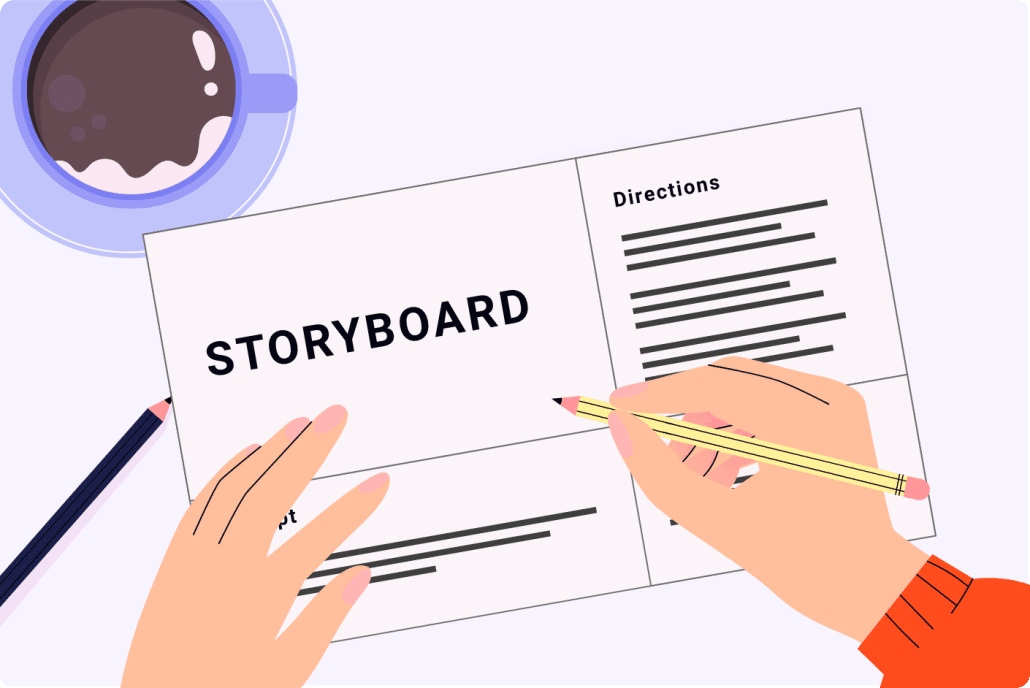
Creating an explainer video storyboard

Extra resources to help you create the storyboard for your explainer video

4). Animated Explainer Video Storyboard Template

We created an explainer video storyboard template you can download to create your own storyboard on your computer so you can save money on your production budget. Creating your own storyboard can help you save hundreds or thousands of dollars off your explainer video cost.

Animated Explainer Video Storyboard Template

5). Explainer Video Storyboard Creation FAQ

How long should my storyboard be?

Typically, a storyboard has one page for each sentence in the script. If there is a more detailed sequence you are trying to explain in your storyboard, it makes sense to break a sentence up into multiple pages to make it easier to explain and visualize what is supposed to happen during each part of your explainer video script.

Explainer video scripts typically have 125-150 words for each 60 seconds of content. This ends up being about 8-12 sentences or 8-12+ pages for your storyboard.

explainer video storyboard script word count

Each 60 seconds of an explainer video is about 125-150 words long

What does it cost to create a storyboard for an animated explainer video?

Animation studios typically charge a few hundred dollars up to tens of thousands of dollars to create a storyboard for an explainer video.  Most studios don’t charge on the high end and rely on information you provide them to inform the creation of the storyboard. High end storyboard creation services include detailed research programs to understand the target audience and test which visual messages resonate with them to ensure the message is understandable and memorable.

Deep Dive: Want to know what else goes into the cost of an explainer video?

How long does it take to create a storyboard?

Storyboard creation can be a fast process if your timeline is tight and your team is nimble. Usually the storyboard creation process takes 1-2 weeks. After the client approves the script, the storyboard artists will create the first draft in 2-3 days. Then, you get an opportunity to review the storyboard and request revisions. The animated video production company will review your notes, incorporate the revisions and send back an updated version of the storyboard within a few business days.

storyboard creation timeline

Common Storyboard Mistakes That Make Explainer Videos Less Effective

Even experienced marketers sometimes create storyboards that look great on paper but don’t translate into engaging animated videos. A storyboard isn’t just a collection of sketches—it’s a communication tool that helps everyone involved in production understand exactly what should happen in each scene. Avoiding these common mistakes will save time, reduce revision requests, and improve the effectiveness of your final explainer video.

1. Trying to Show Too Much in One Scene

Trying to Show Too Much in One Scene

One of the biggest mistakes is attempting to communicate multiple ideas simultaneously.

For example, a single frame might include:

  • A product dashboard
  • Three characters
  • Several text callouts
  • Background graphics
  • Animated arrows
  • Statistics
  • Company branding

Instead of helping viewers understand your message, overcrowded scenes overwhelm them.

A better approach is to simplify each storyboard panel so it communicates one primary idea. If a concept requires multiple visual steps, split it into several storyboard pages. This makes the animation easier to follow and often improves viewer retention.

2. Matching Every Spoken Word With a Visual

Matching Every Spoken Word With a Visual

Many first-time storyboard creators try to literally illustrate every word in the script.

Instead, think visually.

For example, if the narrator says:

“Our software helps businesses save time.”

Rather than drawing a clock beside a computer, you might show:

  • A growing stack of paperwork disappearing
  • Employees leaving work earlier
  • Tasks completing automatically
  • A progress bar finishing instantly

Visual metaphors often create stronger emotional impact than literal illustrations.

3. Forgetting About Scene Transitions

Forgetting About Scene Transitions

A storyboard shouldn’t only show individual scenes—it should explain how one scene flows into the next.

Consider transition ideas such as:

  • Camera zooms
  • Morphing objects
  • Swipe transitions
  • Character movement
  • Object transformations
  • Animated UI expanding into full-screen graphics

Planning transitions during storyboarding creates a much smoother finished animation and helps animators estimate production effort more accurately.

4. Not Considering Screen Size

Not Considering Screen Size

Many explainer videos are watched on smartphones.

When creating your storyboard, ask yourself:

  • Can viewers easily read this text on a phone?
  • Are icons large enough?
  • Is the composition clean?
  • Is there enough contrast?

If a storyboard relies on tiny labels or complicated diagrams, viewers may miss the most important information.

5. Leaving Too Much Open to Interpretation

Leaving Too Much Open to Interpretation

A rough sketch is perfectly acceptable.

Vague instructions are not.

Instead of writing:

“Character walks.”

Try something like:

“Character confidently walks toward camera while smiling. Background gradually transforms from a messy office into an organized workspace.”

The more specific your storyboard instructions, the easier it becomes for illustrators and animators to deliver exactly what you envisioned.

Different Types of Explainer Video Storyboards

Different Types of Explainer Video Storyboards

Not every storyboard looks the same. The best storyboard format depends on the type of video you’re producing.

Product Demo Storyboards

Product demos usually focus on:

  • Screen recordings
  • User interface animations
  • Cursor movement
  • Feature highlights
  • Before-and-after workflows

These storyboards often include detailed notes explaining exactly which buttons users click and how the interface should animate.

SaaS Explainer Video Storyboards

Software companies frequently use storyboards that alternate between:

  • Customer pain points
  • Product demonstrations
  • Animated data visualizations
  • Dashboard mockups
  • Call-to-action screens

The storyboard should clearly indicate where the software interface appears versus when custom illustrations are used.

Healthcare Explainer Storyboards

Medical animation storyboards often require greater technical accuracy.

These projects may include:

  • Human anatomy
  • Medical devices
  • Treatment processes
  • Biological systems
  • Scientific diagrams

Because accuracy is critical, storyboard approval is often completed by both marketing teams and subject matter experts before animation begins.

Corporate Training Storyboards

Internal training videos typically focus on education rather than marketing.

Storyboard panels often include:

  • Employee interactions
  • Workplace scenarios
  • Compliance procedures
  • Safety demonstrations
  • Process walkthroughs

Since these videos prioritize clarity, storyboard notes are usually more detailed than the sketches themselves.

Commercial Advertisement Storyboards

Commercial storyboards often resemble movie storyboards.

They include additional information such as:

  • Camera angles
  • Dramatic lighting
  • Emotional expressions
  • Music cues
  • Sound effects
  • Timing between cuts

These storyboards are designed to maximize emotional impact while telling a concise story.

How Storyboards Speed Up the Animation Process

How Storyboards Speed Up the Animation Process

Many clients wonder whether creating a storyboard is worth the extra effort.

In reality, storyboarding is one of the biggest time-saving steps in the entire animation pipeline.

Without a storyboard, illustrators and animators are forced to make creative assumptions.

Those assumptions often lead to:

  • Additional revisions
  • New artwork
  • Re-animated scenes
  • Missed deadlines
  • Higher production costs

With an approved storyboard, every department knows exactly what needs to be created before production begins.

The storyboard becomes a shared blueprint that guides:

  • Illustrators
  • Character designers
  • Motion designers
  • Voice directors
  • Editors
  • Sound designers
  • Producers

This dramatically reduces misunderstandings throughout production.

Storyboard Checklist Before You Approve Production

Storyboard Checklist Before You Approve Production

Before moving into illustration and animation, review your storyboard using this checklist.

Ask yourself:

✅ Does every scene communicate one clear idea?

✅ Does each visual support the narration?

✅ Is the call-to-action obvious?

✅ Are scene transitions clearly explained?

✅ Have unnecessary scenes been removed?

✅ Is branding used consistently?

✅ Are product screenshots current?

✅ Are all character descriptions included?

✅ Have animation instructions been added to every panel?

✅ Have all stakeholders reviewed and approved the storyboard?

Completing this checklist before production begins can prevent expensive revisions later in the project.

Why Great Storyboards Lead to Better Explainer Videos

Why Great Storyboards Lead to Better Explainer Videos

The best explainer video storyboard examples don’t just contain sketches—they communicate a complete visual strategy.

A great storyboard helps answer questions like:

  • What should viewers see while the narrator is speaking?
  • Which information deserves the most visual emphasis?
  • Where should motion naturally draw the viewer’s attention?
  • How can complex concepts be simplified into memorable visuals?
  • What emotions should viewers experience throughout the video?

When these questions are answered during storyboarding, the animation process becomes faster, smoother, and more predictable.

Perhaps most importantly, a thoughtful storyboard helps ensure the finished explainer video achieves its primary goal: helping viewers quickly understand your message and motivating them to take action. Whether you’re creating a product demo, SaaS explainer video, nonprofit fundraising video, healthcare animation, or animated commercial, investing time in the storyboard stage almost always results in a stronger final video, fewer revisions, and a better return on your video production investment.

Hire Video Igniter To Create Your Storyboard And Produce Your Explainer Video!

Hire Video Igniter To Create Your Storyboard And Produce Your Explainer Video

We write scripts and make custom explainer videos for world-class brands like T-Mobile, Amazon Web Services and Linkedin @ video production prices startups can afford.

Check out our portfolio.

Interested in getting some pricing info? Get yourself a copy of our latest rate sheet.

+20 reasons companies love hiring Video Igniter to create animated videos.

Explainer Video Demo Reel


Explainer Video Success Stories & Testimonials

“I run a video production company and outsource animation. The team at Video Igniter did a great job in taking the concept I very crudely drew out and made it into a beautiful animation. The review process was easy and their turnaround time was very quick. I’d def recommend them if you’re looking for an animation project.”

Pat Henderson – Founder, Path8 Productions

“Video Igniter came to us with a number of creative and engaging ideas and were able to create an exciting, impactful video in a short period of time. And the best part was that it cost much less than other options of similar quality. The video they made is a great marketing tool for us.”

Alex Raymond – Founder, Kapta Systems

“I found exactly what I needed: custom animated production with lots of options, fair price and fast communication. I loved working with the Video Igniter Team. Million thanks.”

Antonina Rome, MD – Bioresona

Success Stories & Testimonials

Get An Animated Explainer Video For Your Business!

Schedule a call to discuss creating a storyboard for your animated video.

Get a quote for your explainer video & storyboard.

Request access to our newest price sheet.

Check out our animated video portfolio to see our latest and greatest creations.
contact us


What is Video Igniter Animation?

How Much Does Animation Cost?

If you want to make a custom animated explainer video, you’re probably shopping around to figure out how much does animation cost?

TL;DR: $500-$250,000+/min & you get what you pay for.

Scoping out the production cost of an animated video is often one of the largest deciding factors when choosing an animation studio or freelancer to produce your animation. If you’re looking into making an animated video and wondering how much does animation cost, you will need to include all of the following aspects of production:

1). Script Writing ($0-$5,000+)

2). Storyboard Creation ($0-$5,000+)

3). Soundtrack License ($0-$1,000+)

4). VoiceOver ($0-$350)

5). Custom Art ($300-$10,000+)

6). Animation ($250-$15,000+)


If you have a question about how much animation costs that isn’t answered in this article, you can use our contact form to ask your question or click the image below to with a member of our production team:

contact us

Animation Cost Breakdown:

1). Script Writing ($0-$5,000+)

You can write the script for your animated video and save a good chunk of change on your production budget. Hiring a studio or freelance animator to write or collaborate on your script is a good idea because they can help you think about the visual aspects of storytelling while you figure out the script to hold it all together.

Writing a script for an animated video.

A freelance animator will typically help write your script for a few hundred dollars. An animation studio is likely to charge at least a thousand dollars. When you hire a marketing agency ($5,000+), you’re paying extra for experienced commercial storytellers and people who can run focus groups and studies to learn more about your target audience and craft the story to their unique tastes.

2). Storyboard Creation ($0-$5,000+)

You can also save money by creating the storyboard yourself. Even if you have no artistic ability, you can create a storyboard. Check out our article that teaches you how to create your own storyboard. A freelance animator can help you create your storyboard for a few hundred dollars. A studio is likely going to charge $1,000 or more and they’re going to help you come up with amazing visual ideas to line up with your script. Marketing agencies will probably charge more for this service but they have less experience than the animation studios do.


Creating a storyboard for an animated video.

Free Download: Download our free storyboard creation template.

3). Soundtrack License ($0-$1,000+)

Stock soundtracks are available on a multitude of websites. Some are even available for free if you credit the artist. Licenses to use commercially available soundtracks online and in broadcast media start at just $5 (but are likely over $100). Custom soundtrack production for an animated short starts at around a few hundred dollars but is likely to cost well over $1,000.

Check out this video if you want to learn how to select the perfect soundtrack for your animated video!

Soundtrack for an animated video

4). VoiceOver ($0-$350)

VoiceOvers are another aspect of production you can save money on by producing it yourself. Check out our video that teaches how you can produce pro quality voiceovers at home, even if you don’t have a studio or professional microphone. Voices.com and VoiceBunny.com are great marketplaces for connecting with any kind of voiceover artist you can imagine. Expect to pay at least $50 for a quality voiceover and potentially more if the voice artist charges extra for the commercial usage of their voiceover.

Recording a voiceover for an animated video.

5). Custom Art ($250-$10,000+)

If your animation is simple and you don’t care much about quality, it’s possible for an outsourced designer to scrounge together some stock images and brush them up for a few hundred dollars. The quality of the visuals is going to set the stage for your first impression with viewers so don’t cut corners here. For 2D animation, expect to pay $500-$5,000 for 60 seconds of custom art. If you go through a marketing agency, expect to pay at least double for the same quality. High end 2D animations and 3D animations will cost north of $10,000 per 60 seconds of animation.

Illustrator for a custom animated video

Making 3D animations typically requires you get an animatic produced before creating the 3D art. An animatic is halfway between a storyboard and an animation. The sketches are more detailed and synced to a voiceover. Price ranges for an animatic are wide and are sometimes built into the storyboarding cost. In general, expect to pay more for the animatic than you did for the storyboard.

6). Animation ($250-$15,000+)

The animation cost for a video can vary widely and depends on the level of detail happening in the motion design. Simple animations with icons sliding around can be animated for as little as a few hundred dollars. 2D animations with scenes and custom animated characters will cost over $1,000 for a 60 second animation. Fancy 2D animation costs between $5,000-$15,000/min. 3D animation starts around $5,000/ 60 seconds and goes up from there… waaay up!

Deep Dive: How To Make A Video Animation

What do you get when you spent more on your video?

A better storytelling team: people with more experience crafting stories that resonate uniquely with your target audience.

Better visual ideas: not all storyboard artists are the same. Some will read your script and provide simple ideas for visuals. Others will figure out how to string together visual ideas that make your message uniquely memorable, easy to understand, and something your audience will enjoy paying attention to.

Better customer service: with a higher budget, you can afford a more professional team that responds to your requests quickly while creating high quality work as fast as possible.

Customer service for your animated video.

Better voiceovers: the energy and presentation that a professional voice over artist can bring exceeds the dull mediocre vibe that a $5 voiceover artist will bring. It also means they have a better recording studio setup so their voice will sound clean without distracting background ambient noises.

Music: custom music is great but expensive, especially when there is already a lot of great stock soundtracks you can license for less.

Better art: If you spend $500 on an animated video, only $100-200 goes to the artist. What kind of quality do you expect to get if someone is making 60 seconds worth of art for $100-200? Now imagine if you add a zero behind the equation. Much better art = better perception of your brand.

Check out our portfolio of animated explainer videos

Animation: Higher budgets means animators can do more detailed motion design. Overall movements will be smoother and more natural looking than cheap animation. Having a higher animation budget also opens the potential for 3D animation.

To learn what kind of animation you can get produced for your budget, whether it’s $1,000 or over $10,000+, schedule a call with our production team.

How Much Does It Cost To Make A Cartoon?

How do these costs compare to what it costs to produce popular 2D animated cartoon shows? Here are some stats to digest:


How much does it cost to produce an animated episode of The Simpsons?

According to several sources (source 1, source 2), episodes of The Simpsons cost at least $5,000,000 per episode. And that was back in 2011. Most of the production budget goes towards paying the world famous voice actors that have been working with the show for over 3 decades.

How much does it cost to produce an animated episode of The Simpsons?

What does it cost to produce an episode of the cartoon show Family Guy?

Family Guy is rumored to cost $2,000,000 per episode. Family Guy doesn’t use as many famous voice actors as The Simpsons; this could account for the lower production cost.

What does it cost to produce an episode of the cartoon show Family Guy?

How much does animation cost for Rick and Morty?

It’s estimated that each episode of Rick and Morty costs between $1.2 and $1.5 million dollars. Rick and Morty does not use famous voice actors so most of their production budget goes into design and animation.

How much does animation cost for Rick and Morty?

Do you still have questions about how much does animation cost?

If so, use this page to get in touch with our team or click the image below to schedule a call with our production team.

Tips for Reducing Animation Costs

how much does animation cost tips for reducing costs

While it’s tempting to cut costs at every opportunity, the quality of your animation shouldn’t suffer. However, there are smart ways to lower costs without compromising the final product. One effective strategy is to use pre-designed templates or animation assets. Many animation studios offer customizable templates that can reduce the design time, especially for simple explainer videos. Reusing animation elements, like backgrounds, character models, or motion sequences, across multiple videos can also lower costs for ongoing projects. Additionally, sticking to simpler animation styles like 2D or motion graphics rather than 3D animation can significantly cut down on production time and expenses.

Deep Dive: For more tips on ways to save money on your production budget, check out this companion article: How To Make Affordable Animation.

Impact of Animation Quality on ROI

animation cost animation quality roi

Investing in high-quality animation can have a direct impact on your return on investment (ROI). High-quality animation, especially when done with attention to detail and a compelling story, can increase audience engagement and improve conversion rates. For example, a well-crafted explainer video might boost conversions on your website, helping to justify a larger budget. While it’s tempting to choose the most cost-effective option, a premium-quality animation that speaks to your audience’s needs can often pay for itself in terms of higher viewer retention, brand recognition, and customer acquisition. Remember, a quality animation is an asset that can be used repeatedly across marketing channels, creating long-term value.

Animation Styles and Cost Variations

Animation Styles and Cost Variations

Not all animation styles come with the same price tag. The type of animation you choose can dramatically influence the final cost. For example, 2D animation, often characterized by flat illustrations and simple movements, tends to be more affordable. It’s a popular choice for explainer videos and educational content. 3D animation, however, involves more complex modeling and rendering, which makes it more time-consuming and expensive. Other styles like motion graphics or stop-motion also vary in terms of cost depending on their complexity. It’s essential to understand the nuances of each animation style to determine which one aligns with your budget and project goals. Additionally, specific animation techniques like character animation or cinematic visual effects will raise the price due to the detailed work involved in crafting each movement.

Timeframe for Animation Projects

Timeframe for Animation Projects Animation Cost

The timeline of an animation project can significantly affect its cost. Tight deadlines often require studios to allocate more resources, leading to higher prices. For example, a rush job where the animation needs to be delivered in a few weeks may incur an expedited rush delivery animation service fee. On the other hand, longer timelines allow for more flexibility, making the project more cost-effective. For instance, an animation project that takes around 1-2 months will likely cost less than a similar one completed in just a few weeks. It’s important to plan ahead and communicate your preferred delivery schedule with our animation team we can allocate resources accordingly. The more time we have to complete your video, the more cost-efficient it will be.

Animation Software and Tools

Animation Software and Tools

Animation software plays an essential role in determining both the quality and cost of your project. Popular tools like Adobe After Effects, Blender, and Toon Boom come with their own learning curves, time requirements, and associated costs. The choice of software can influence how quickly our animators can work and the complexity of the animation itself. For instance, 3D animation created with Blender might take longer and require specialized knowledge, which could increase production time and costs. In contrast, simpler 2D animation made using tools like Adobe Animate or After Effects might be quicker to produce. While premium software may provide more features and flexibility, it often comes with higher licensing fees and longer production timelines.

Frequently Asked Questions About Animation Costs

Frequently Asked Questions About Animation Costs

One of the biggest reasons people search “How much does animation cost?” is because they want a quick answer. Unfortunately, there isn’t a single price that applies to every project. The cost of animation depends on dozens of variables that influence the amount of work required from writers, illustrators, animators, voice actors, editors, and producers.

Below are some of the most common questions people ask before hiring an animation studio.

What Factors Have the Biggest Impact on Animation Cost?

What Factors Have the Biggest Impact on Animation Cost

While video length certainly affects price, it’s only one piece of the equation. These factors typically have the greatest impact on the overall animation budget:

Number of Unique Scenes

A video with fifteen unique locations costs more than one that takes place in three environments.

Every new location often requires:

  • New illustrations
  • New backgrounds
  • Additional storyboard work
  • Extra animation

Keeping environments consistent throughout the video can reduce production costs while maintaining a polished look.

Animation Style

Cost of Animation Style

Different animation styles require different levels of labor.

Examples include:

A simple motion graphics video likely requires far fewer production hours than a fully animated 3D commercial featuring multiple custom characters and environments.

Number of Characters

Character animation is often one of the most time-consuming aspects of production.

Costs increase when you need:

  • Multiple unique characters
  • Character turnarounds
  • Facial expressions
  • Lip syncing
  • Hand gestures
  • Complex body movement
  • Crowd scenes

If your project focuses primarily on icons, text, and interface animations, production can often move much faster.

Level of Detail

Highly detailed illustrations naturally require more time to create.

For example:

A flat-design corporate explainer video may use clean vector graphics with minimal shading.

A premium commercial might require:

  • Detailed textures
  • Lighting effects
  • Cinematic backgrounds
  • Dynamic camera movement
  • Complex visual effects

More detail generally equals more production hours.

Number of Revisions

Number of Revisions Cost

Revision rounds are often included within an animation quote.

However, frequent changes after artwork or animation has been approved can significantly increase costs.

Changing a script after animation begins often means:

  • Updating storyboards
  • Redrawing artwork
  • Re-recording voiceover
  • Re-animating scenes
  • Editing timing

The earlier revisions happen, the less expensive they typically are.

How Much Does Animation Cost Per Minute?

Many companies advertise pricing “per minute.”

While this provides a rough estimate, it isn’t always the most accurate pricing method.

For example:

A 60-second product commercial featuring cinematic animation may cost substantially more than a 2-minute internal training video with simple motion graphics.

Instead of focusing exclusively on cost per minute, many studios evaluate:

  • Complexity
  • Style
  • Assets required
  • Production schedule
  • Animation difficulty

These factors usually determine pricing more accurately than runtime alone.

Is 2D Animation Cheaper Than 3D Animation?

Is 2D Animation Cheaper Than 3D Animation

Generally speaking, yes.

2D animation is often more affordable because it doesn’t require:

  • 3D modeling
  • Texturing
  • Rigging
  • Lighting
  • Rendering
  • Simulation

However, there are exceptions.

Highly detailed frame-by-frame 2D animation can actually cost more than simple 3D animation.

Likewise, minimalist 3D graphics may sometimes be comparable in cost to premium 2D work.

Rather than asking whether 2D or 3D is cheaper, ask which style best supports your message and budget.

Why Do Quotes From Animation Studios Vary So Much?

It’s common to receive estimates that differ by several thousand dollars—even for projects that appear similar.

Some reasons include:

Experience

Studios with experienced writers, creative directors, illustrators, and animators generally charge more because they’ve refined efficient production workflows and consistently produce higher-quality work.

Team Size

Freelancers often have lower overhead than full-service animation studios.

However, larger studios frequently provide:

  • Dedicated project managers
  • Creative directors
  • Quality assurance
  • Faster turnaround
  • Backup production capacity

Included Services

One quote might include:

Another quote may only include animation itself.

Always compare exactly what’s included before choosing the lowest price.

Does Video Length Double the Cost?

Does Video Length Double the Cost

Not necessarily.

A two-minute animation doesn’t automatically cost twice as much as a one-minute animation.

Many production tasks happen only once, including:

  • Project kickoff
  • Creative planning
  • Style development
  • Character design
  • Asset creation

Once these assets exist, extending the video may be less expensive than expected.

For example, adding another 30 seconds using existing artwork is usually more affordable than creating an entirely new visual style from scratch.

Can Existing Brand Assets Reduce Animation Costs?

Absolutely.

Providing existing assets can save considerable time.

Helpful assets include:

  • Brand guidelines
  • Logo files
  • Fonts
  • Product screenshots
  • UI mockups
  • Existing illustrations
  • Product photography
  • Character artwork

The fewer assets your animation team has to create from scratch, the more efficiently production can move.

What Costs Extra During Production?

What Costs Extra During Production

Many clients ask, “What isn’t included?”

While every studio is different, additional charges commonly arise from:

  • Rush delivery animation
  • Major script rewrites
  • Additional revision rounds
  • New scenes added mid-project
  • Additional language versions
  • Multiple aspect ratios
  • Extra deliverables for social media
  • Broadcast formatting
  • Source files
  • 3D asset creation
  • Advanced visual effects

Discussing these possibilities before production begins helps eliminate surprises later.

How Can You Get the Best Value for Your Animation Budget?

The cheapest animation isn’t always the least expensive in the long run.

A poorly produced video that fails to generate leads or explain your product effectively often needs to be replaced.

Instead, focus on maximizing value.

Some ways to stretch your budget include:

  • Finalize your script before production starts.
  • Provide brand assets upfront.
  • Consolidate feedback from all stakeholders before revision rounds.
  • Choose an animation style that fits your goals instead of chasing the most elaborate option.
  • Plan your timeline early to avoid rush fees.
  • Creating multiple versions of the video during the same production cycle for your website, social media, paid ads, and sales presentations.

These strategies can significantly improve your return on investment while keeping production costs under control.

Animation Is an Investment, Not Just an Expense

Animation Is an Investment, Not Just an Expense

When businesses search “How much does animation cost?”, they’re often trying to determine whether animation is worth the investment.

Instead of evaluating price alone, consider the lifetime value of a professionally produced animated video.

Unlike many forms of advertising that disappear once a campaign ends, an animated video can continue generating value for years by supporting:

  • Website conversions
  • Sales presentations
  • Product launches
  • Investor pitches
  • Customer onboarding
  • Employee training
  • Trade show displays
  • Email marketing
  • Social media campaigns
  • Digital advertising

A single high-quality animation often serves dozens of purposes across multiple departments, making it one of the most versatile marketing assets a business can own.

Ultimately, the answer to “How much does animation cost?” depends on your project’s goals, complexity, timeline, and desired production quality. The best approach is to clearly define your objectives first, then work with an experienced animation studio to build a solution that fits both your creative vision and your budget.

Examples of Videos You Can Create With Video Igniter

Video Igniter can create any kind of 2D or 3D animated video for you.

Check out our animation portfolio and request access to our demo reels and price sheet.

Contact us or schedule a call to start making your video.


Video Production Resources

Now that you know how much it costs to make an animation, you might be looking for some additional resources to help you create your animated video. These popular articles will help you go from idea to custom animated video:

What is the video production process like?

Where can I find a 2D animation artist to create my video?

What explainer video services does Video Igniter offer?

How do I work with an animated explainer video company to create my video?

What is Video Igniter Animation?

We’re an animation studio that you work with online. Our team of professional animators works behind the scenes to turn your idea into the next great animated video, animated ad or explainer video!


Online Animation Maker: Learn How Video Igniter Makes Animations For You Online

Are you looking for an online animation maker to create a custom animated video for you? If so, you’re in the right place. In this article, we’ll explain the pros and cons of different types of online animation makers and explain how to use them to make animated videos.

We’ll also explain how Video Igniter’s online animation maker can be used to create custom animated videos on your behalf. Explore production examples and get a quote for your animation.

Online Animation Maker

Examples of Videos That Video Igniter Can Make For You Online

Video Igniter can create any kind of 2D or 3D animated video for you. Check out our animation portfolio here.

Request access to our demo reels and price sheet here. Contact us or schedule a call to start making your video.


Are you looking for an example of a different style of animation? Send us a message to let us know what kind of animation example you want to see and we will follow up with relevant production samples.

How To Make A Video With Video Igniter’s Online Animation Maker?

Here’s a brief overview of the production process so that you know what to expect while your video is being created for you.

1). Contact Us

How To Make A Video With Video Igniter’s Online Animation Maker

To start making your animation, contact us or schedule a call with our production team. We’ll work with you to create a production plan to create your dream video that works for your budget and due date. We’ll also get some important background information from you like:

✅ Who is the target audience for your animation?

✅ What do you want to communicate in your animation?

✅ What do you want to show in your animation?

✅ What visual style do you want us to use for your animation?

2). Script Development

Online Animation Maker Script Development

Download Video Igniter’s Free Script Writing Template

We’ll turn that information into a script that communicates your talking points to your target audience in a way that resonates with them. You get an opportunity to review the script and request revisions until you love the script.

3). Storyboard Creation

Online Animation Maker Storyboard Creation

Download Video Igniter’s Free Storyboard Template

We turn your script into a storyboard so that our production team knows exactly what to create during each part of your script. You get to review and request revisions before approving the storyboard for production.

4). Record VoiceOver

VoiceOver

You will receive voiceover auditions for each voice that’s used in your animation. After you select your favorites, we’ll get the full voiceovers recorded and give you an chance to review them and request edits.

5). Soundtrack Selection

Soundtrack

Music is used to enhance key moments in your animation. We’ll send you several soundtrack options to choose from. Select your favorite(s) and then we’ll procure the broadcast license to use the music in your animation.

6). Illustrations

Online Animation Maker Illustrations

Our art director will send you concept art for your video. Let them know which option you like best. You can also collaborate with our art director to refine and polish the details of your preferred visual concept until you love it! Then, we create all of the rest of the art for your video and give you a chance to review them and request edits before we animate.

7). Animation

Online Animation Maker Animator

Now that everything is approved, it’s time for us to animate your video! Review the first draft of your animation with your target audience. Then, send us your feedback. We’ll incorporate your edits and render out the final draft of your animation.

What is an online animation maker?

An online animation maker is a service that can be used to create animated videos. These services often include video templates you can customize to create your own animated video. They also include pre-created characters, scenes and objects you can add into your video. Other online animation makers enable you to create custom animated videos from scratch – and the best part is, you don’t have to do any of the work!

Read on to learn more about the differences between the Internet’s most popular ways to make a animation online.

Types of Online Animation Makers

DIY Online Animation Makers

Types of Online Animation Makers

Most online animation makers are designed to make it easy for people to create animated videos using pre-created characters, objects, scenes and templates. It’s up to you to pick out the images you want to show in each scene. You lay them out to compose each scene and then use the timeline below the video to specify when and how you want different objects to move and animate in the scene.

Here are some examples of the quality you can expect when you use a DIY online animation maker to create your animated video:

Youtube video


Youtube video

Custom Designed Online Animation Makers

If you are interested in getting a custom animated video made for your project, you’re going to want to look at a service like Video Igniter. Unlike other online animation makers where you have to do all the work and end up with a video that’s basically a customized template, Video Igniter enables you to get a 100% custom designed animated video, even if you have zero video production experience.

Use Video Igniter’s online production dashboard to describe the video you want and sit back while Video Igniter’s team of professional animators creates your script, storyboard, illustrations, voiceover and music for you. You get an opportunity to review all the pieces of your animation and request revisions. Once you’re happy with everything, Video Igniter animates your 2D or 3D video for you.

Custom Designed Online Animation Makers

Popular Online Animation Makers

Top DIY Online Animation Makers


Online Animation Maker Vyond

Vyond

Pros:

✅ Vyond offers a wide range of pre-built templates and characters, making it easy to create professional-looking animations quickly.

✅ The platform provides a robust set of features, including lip-syncing & facial animations, allowing for more dynamic and engaging animations.

Cons:

❌ Vyond can be relatively expensive compared to other online animation makers, especially for those on a tight budget or individuals creating videos on a smaller scale.

❌ The learning curve for mastering Vyond’s advanced features may be steep for beginners, requiring some time and practice to fully utilize the platform’s capabilities.

Online Animation Maker Wideo

Wideo

Pros:

✅ Wideo offers a simple and intuitive interface, making it beginner-friendly and allowing users to create professional-looking animations with ease.

✅ The platform provides a vast library of pre-designed templates, characters, and objects, making it convenient for users who want to quickly create videos without starting from scratch.

Cons:

❌ Some users have reported occasional glitches or performance issues when working with more complex animations or larger projects.

Online Animation Maker PowToon

PowToon

Pros:

✅ PowToon is known for its user-friendly interface and drag-and-drop functionality, making it suitable for beginners and those without prior animation experience.

✅ PowToon offers seamless integration with popular presentation software like PowerPoint, making it a handy tool for creating animated presentations.

Cons:

❌ PowToon’s free plan has significant limitations, including watermarked videos and limited access to premium features, which may be a drawback for users on a tight budget.

❌ While PowToon offers a good range of customization options, more advanced users may find the platform’s capabilities somewhat limited compared to other animation makers.

Online Animation Maker Animaker

Animaker

Pros:

✅ Animaker offers a feature-rich platform with a wide range of templates, characters, and assets, allowing users to create diverse and visually appealing animations.

✅ The platform provides a comprehensive set of animation tools, including options for text effects, transitions, and audio synchronization, enabling users to create professional-grade videos.

Cons:

❌ Some users have reported occasional performance issues or slow rendering times when working with more complex animations or longer videos.

❌ While Animaker offers a considerable range of features, the learning curve may be steeper compared to other online animation makers, particularly for beginners or those new to animation.

Top Online Animation Makers for Custom Animated Videos

Online Animation Maker Video Igniter Animation

Video Igniter Animation

Pros:

✅ Video Igniter can be used to create any kind of 2D or 3D animated video you can imagine.

✅ Zero video production experience is necessary. If you can describe the video you want, Video Igniter’s production team can create it for you.

✅ Video Igniter’s online production dashboard makes it easy for you to see where your video is in the production process and provide feedback as needed.

Cons:

❌ Video Igniter takes more time and cost more than a DIY online animation maker because real humans are creating your animated video from scratch.

How much does an online animation maker cost?

How much does an online animation maker cost

Most DIY online animation makers charge a monthly subscription fee of $19-$149/month. Beyond that, the cost of production includes the cost of your time to create the script, voiceover and the overall animation.

If you want to use an online animation maker like Video Igniter to create a custom animated video for you, the price will be higher but the quality will be substantially better because Video Igniter uses real professional illustrators and animators to create your video from scratch. You can check out our current prices here.

How long does it take to make a video using an online animation maker?

How long does it take to make a video using an online animation maker

This depends on the length of the video and the type of animation you want. DIY online animation makers like Vyond, Wideo and Powtoon can be used to make an animated video in a few hours or days. Just create an account, look through their templates and customize the animation to your liking using their online animation editing platform.

On the flip side, if you’re interested in making a custom animated video, we recommend using a service like Video Igniter to create the animation for you. Production timelines for a 2D custom animated video range from 3-6 weeks for most video projects. Custom 3D animated videos take 2-4x more time to create.

How To Choose The Best Online Animation Maker For Your Project

How To Choose The Best Online Animation Maker For Your Project

With dozens of online animation makers available today, it can be difficult to determine which platform is the best fit for your project. While many services advertise similar features, the right choice depends on your goals, your budget, and the type of video you need to produce.

Before choosing an online animation maker, ask yourself a few important questions:

  • Do you want to create custom animations or are templates acceptable?
  • Will you be creating one video or multiple videos throughout the year?
  • Do you have the time to learn animation software?
  • Does your team have experience writing scripts and designing storyboards?
  • Do you need commercial usage rights for your video?
  • Will your animation need to match your company’s branding guidelines?

Answering these questions will help narrow your options and prevent you from investing time in a platform that isn’t designed for your needs.

Features To Look For In An Online Animation Maker

Features To Look For In An Online Animation Maker

Not every online animation maker offers the same capabilities. Some are designed for beginners, while others are better suited for experienced marketers, educators, and creative professionals.

Here are some of the most valuable features to look for:

Easy-To-Use Interface

If you’re creating your own video, the platform should have an intuitive interface that makes it easy to arrange scenes, edit text, add graphics, and animate objects without requiring extensive training.

Brand Customization

Businesses often need videos that match their visual identity. Look for an online animation maker that allows you to customize:

  • Brand colors
  • Fonts
  • Logos
  • Icons
  • Character designs
  • Backgrounds
  • Motion styles

Maintaining visual consistency across all of your marketing materials helps strengthen brand recognition.

Large Asset Library

Many online animation makers include libraries containing thousands of illustrations, characters, icons, music tracks, and sound effects.

A larger library gives you more creative flexibility and reduces the need to purchase additional design assets elsewhere.

Collaboration Tools

If multiple people will review your animation, collaborative features can save a significant amount of time.

Helpful collaboration tools include:

  • Commenting directly on scenes
  • Version history
  • Approval workflows
  • Cloud storage
  • Shared workspaces

These features are especially valuable for marketing teams, agencies, and enterprise organizations.

Common Uses For An Online Animation Maker

Common Uses For An Online Animation Maker

Online animation makers are used across virtually every industry. While animated explainer videos remain one of the most popular applications, animated videos are now used for many different purposes.

Some of the most common projects include:

Because animated videos can simplify complex topics while keeping viewers engaged, they continue to grow in popularity across both B2B and B2C marketing.

DIY Animation Maker Or Professional Animation Studio?

DIY Animation Maker Or Professional Animation Studio

One of the biggest decisions you’ll make is whether to use a DIY online animation maker or hire professional animators.

DIY animation platforms work well when:

  • You need a simple presentation
  • Speed is more important than originality
  • Your budget is limited
  • Template-based visuals are acceptable

A professional animation studio is often the better choice when:

  • Your brand needs a unique visual identity
  • You want custom illustrations
  • You need advanced motion graphics
  • You’re producing television commercials
  • Your animation represents a major product launch
  • Multiple stakeholders require revisions
  • Your company has strict brand guidelines

While hiring professionals typically costs more, custom animation often produces a stronger first impression and can continue generating value for years after it’s created.

Why Custom Animation Often Delivers Better Results

Why Custom Animation Often Delivers Better Results

Template-based videos can look polished, but they frequently resemble hundreds of other videos created using the same software.

Custom animation offers several advantages:

  • Original artwork created specifically for your business
  • Unique characters and environments
  • Tailored visual storytelling
  • Greater flexibility during production
  • Better alignment with your brand identity
  • More memorable viewer experiences

For companies competing in crowded industries, standing out visually can significantly improve audience engagement and brand recall.

Video Formats Produced By Online Animation Makers

Video Formats Produced By Online Animation Makers

Depending on the platform, an online animation maker may export videos in several different formats.

Popular export options include:

  • MP4
  • MOV
  • GIF
  • WebM
  • Transparent video files
  • High-definition (HD)
  • Full HD (1080p)
  • 4K video

Choosing the appropriate format depends on where your animation will be published, whether that’s YouTube, LinkedIn, Facebook, Instagram, your website, a trade show display, or an internal presentation.

Accessibility Considerations For Animated Videos

Accessibility Considerations For Animated Videos

An effective animation should be accessible to as many viewers as possible.

Consider including:

  • Closed captions
  • High-contrast visuals
  • Readable font sizes
  • Clear narration
  • Descriptive on-screen text
  • Color combinations that remain legible for viewers with color vision deficiencies

Making your animated videos accessible improves the viewing experience while helping your content reach a wider audience.

Can AI Replace An Online Animation Maker?

Can AI Replace An Online Animation Maker

Artificial intelligence has introduced new tools that can automatically generate scripts, voiceovers, images, and even simple animations.

While AI can accelerate portions of the production process, it still has limitations.

AI-generated animations may struggle with:

  • Consistent branding
  • Character continuity
  • Complex storytelling
  • Emotional performances
  • Highly customized visuals
  • Precise motion design

For businesses that need polished marketing videos or premium brand content, human designers and animators continue to play an essential role in producing professional-quality work.

Many animation studios now combine AI-assisted workflows with experienced artists to improve efficiency while maintaining creative quality.

Measuring The Success Of Your Animated Video

Measuring The Success Of Your Animated Video

After publishing your animation, it’s important to evaluate its performance.

Useful metrics include:

  • Total video views
  • Average watch time
  • Audience retention
  • Click-through rate
  • Conversion rate
  • Lead generation
  • Social shares
  • Comments
  • Sales influenced by the video

Reviewing these metrics helps determine whether your animation achieved its objectives and provides valuable insights for future productions.

Tips For Getting Better Results From An Online Animation Maker

Tips For Getting Better Results From An Online Animation Maker

Whether you’re creating the animation yourself or working with a professional production team, following a few best practices can dramatically improve the final video.

Start by focusing on one primary message rather than trying to explain everything at once.

Keep your script concise and conversational.

Use visuals to reinforce your narration instead of simply repeating what viewers already hear.

Include a clear call-to-action that tells viewers exactly what to do next, whether that’s scheduling a demo, requesting a quote, signing up for a newsletter, or purchasing your product.

Finally, remember that animation is an investment. A professionally produced animated video can be repurposed across your website, social media channels, email campaigns, sales presentations, digital advertising, trade shows, and customer onboarding materials, allowing you to maximize its value long after production is complete.

Online Animation Maker Production Resources

Online Animation Maker Production Resources

These guides and resources are popular among people researching and reading about online animation makers:

What Is A 2D Video Maker?

How To Use An Animation Maker Production Service?

How To Make Animated Videos For Free

How To Use An Explainer Video Maker

Still have questions about online animation makers?

Do you have a question about online animation makers that wasn’t addressed in this FAQ? Use this form to send us your question and we’ll follow up with an answer. We’ll also post the question and answer to this page so other people can benefit from the knowledge.

Still have questions?

What is Video Igniter Animation?

Video Igniter Animation is an online animated video production service. By working with our team online, you can get your custom animated video produced faster and for less than hiring a brick and mortar animation studio.

We can help you create any kind of 2D animated video or 3D animation you can imagine. Check out our animated video portfolio.

Watch our explainer video on our home page to learn more about how we can help you create an animated video. For examples of the kinds of animation our team can produce, check out the demo reel below:


Looking For An Animated Video Company In The U.S.?

Video Igniter is headquartered in Seattle, Washington.

Success Stories & Testimonials

Don’t just take our word for it – these testimonials highlight Video Igniter’s reliability, creativity, flexibility and ability to deliver animations that exceed expectations. When you choose Video Igniter Animation, you can rest assured that you are working with a trusted and reputable studio.

“Video Igniter were very easy to work with and the entire process for creating and suggesting edits was seamless and stress-free. I would work with them again and would recommend to others looking to create a modern and stylish explainer video.”

Clair Simpson – VP Marketing, Repool

“I run a video production company and outsource animation. The team at Video Igniter did a great job in taking the concept I very crudely drew out and making it into a beautiful animation. The review process was easy and their turnaround time was very quick. I’d def recommend them if you’re looking for an animation project.”

Pat Henderson – Founder, Path8 Productions

“Video Igniter came to us with a number of creative and engaging ideas and were able to create an exciting, impactful video in a short period of time. And the best part was that it cost much less than other options of similar quality. The video they made is a great marketing tool for us.”

Alex Raymond – Founder, Kapta Systems

“Video Igniter offered us the critical combination of creative value, clear communication, and patience with stakeholder feedback. We ended up with truly high-quality design assets for our video series largely due to the extra level of commitment — and the right balance of efficiencies with flexibility in the process when called for.”

Larry Schlessinger – Sr. Creative Program Manager, Amazon Web Services


Success Stories And Testimonials

Get in touch!

Schedule a call to discuss your animated video project.

Get a quote for us to create your animated video.

Request access to our newest price sheet.

Create your Video Igniter account, fill out a creative brief for your video and we’ll begin production as soon as we receive your production deposit.

contact us

How To Make An Animated NFT With Video Igniter

Do you want to create an animated NFT but aren’t sure where to get started? Video Igniter’s FAQ about animated NFTs has answers to all the questions we’ve received from people asking about how to make animated NFTs, including:

  • How do you make an animated NFT?
  • What does it cost to make an animated NFT?
  • How long does it take to make an animated NFT?
  • …and more!

animated nft

But first, to get the ball rolling, some of you might be wondering…

What is an animated NFT?

.. or what is an NFT? “N.F.T.” stands for “Non Fungible Token.” It’s a digital technology that enables you create rarity, scarcity and prove authenticity of digital objects and assets. If you’ve ever heard of Bitcoin or blockchain technology, NFTs leverage this same technology to prove authenticity of digital assets (like money and art).

An NFT can be a digital deed to your house, it could be a digital drivers license, proof that you own a piece of digital art or rights to a song. Therefore, an animated NFT is a piece of animated digital art that you can buy, sell and prove you are the owner of. Even though people may try and copy the image of your NFT, you still have the digital proof that you are the authentic owner of the official version of that NFT.

How do you make an animated NFT?

To create an animated NFT, first, you must create the animation. Then you add the art to the blockchain to register its authenticity.

1). Develop The Concept

animated nft concept

To get production started, you need to be able to describe in detail what you want the animated NFT to show and what it should look like. If you can provide visual references to help explain what you want to show, it can be a big help! Describe the animation in enough detail that someone would be able to draft some sketches.

2). Create a Storyboard

animated nft storyboard

Download Video Igniter’s Free Storyboard Template

Our team will review your notes and develop a storyboard for your animated NFT. We’ll expand on your directions and develop specific instructions for the illustration and animation teams. This includes sketches or mockups of the visuals to help ensure we’re on the same page. We want to get your sign off on everything before the illustrators and animators get to work.

We’ll send you the first draft of the storyboard and give you an opportunity to review your storyboard and request revisions before approving it for production.

3). Develop The Art

animated nft illustrations

Now that the storyboard is approved, our team will develop the initial concept art for your animated NFT. Our art director will review your notes, storyboard and style references. Then, they will oversee the creation of the concept art for your animated NFT.

Give it a detailed review and send us your notes if you’d like us to revise the art. We’ll make the updates and send it back to you to review and approve before we move forward with animation.

After the concept art is approved, we’ll develop the rest of the assets needed to animate your NFT. If you want us to make a 3D animated NFT, we’ll develop 3D models and or an animatic for you to review and approve before we animate.

5). Animate

animate my nft

Once all the art is approved for production, our team will animate your NFT and send it to you to review. Send us your revision requests and we’ll render out the final draft of your animated NFT.

6). Add Your NFT Animation To The Blockchain

animated nft blockchain

In order to add your animation to a blockchain and turn it into an NFT, follow these steps:

  1. Buy some crypto from a reputable crypto exchange. Most NFTs are minted with ETH or Solana.
  2. Transfer the crypto to your personal crypto wallet.
  3. Sign up for an NFT marketplace like OpenSea or Rarible.
  4. Follow the instructions the NFT marketplace provides to add your animation to the blockchain and turn it into an animated NFT. You will need to connect your personal crypto wallet to the marketplace in order to pay the “minting” or “gas” fees associated with publishing your digital asset on your blockchain of choice.

Where do you find animators to create animated NFTs?

Video Igniter is an animated video production company that creates custom 2D animated videos and 3D animations. We also helped some organizations design custom animated NFTs. You can learn more about us here.

Other places you can find artists for animated NFTs include:

  • Behance
  • Instagram
  • NFT marketplaces like OpenSea and Rarible.

What does it cost to make an animated NFT?

animated nft cost

Depends on the level of detail in the design. Some animated NFTs are very simple and can be made in minutes with no artistic or technical ability. Other animated NFTs use advanced animation techniques like frame by frame illustrations or 3D animation. These types of professionally designed animated NFTs can cost hundreds or thousands of dollars to produce.

Want to get a quote for your animated NFT? Reach out and let us know what you want to create.

How long does it take to make an animated NFT?

animated nft production timeline

This one also depends on the complexity of the design. Some animated NFTs can be made in just a few hours but you still may need a few days to discuss the project with your animator in order to figure out exactly what they are going to create. Other animated NFTs are more detailed and may take days or weeks to produce.

Best Practices For Creating An Animated NFT Collection

Best Practices For Creating An Animated NFT Collection

Creating a single animated NFT is one thing. Designing an entire NFT collection that people want to collect, trade, and share requires much more planning. The strongest NFT projects combine high-quality animation with thoughtful branding, technical planning, and long-term community engagement.

Before production begins, consider these important factors.

Design A Recognizable Visual Style

Successful animated NFT collections typically have a consistent artistic identity. While every NFT may be unique, they often share:

  • A common character design
  • Consistent colour palettes
  • Similar animation styles
  • Matching backgrounds
  • Shared visual themes

This consistency makes your collection instantly recognizable across NFT marketplaces and social media platforms.

For example, you might create hundreds of animated characters that all share the same base design while featuring different clothing, accessories, expressions, backgrounds, and animation loops.

Plan Animation Loops Carefully

Most animated NFTs use seamless looping animations rather than lengthy videos.

Looping animations offer several advantages:

  • Smaller file sizes
  • Faster loading on NFT marketplaces
  • Easier viewing on mobile devices
  • Continuous motion without noticeable interruptions

When designing your animation, pay special attention to the first and last frames so they blend together naturally. A smooth loop creates a more polished and professional-looking animated NFT.

Choose The Right Animation Style

Choose The Right Animation Style For Your NFT

There isn’t one “correct” animation style for NFTs. The best approach depends on your goals, budget, and target audience.

Popular animated NFT styles include:

Simple looping effects such as blinking eyes, floating objects, glowing lights, smoke, particles, or moving backgrounds can dramatically increase the visual appeal of an NFT without significantly increasing production costs.

Select The Best File Format For Your Animated NFT

Different NFT marketplaces support different file types and maximum file sizes.

Common animated NFT file formats include:

  • MP4
  • GIF
  • WEBM
  • MOV
  • GLB (for interactive 3D assets)

Before creating your animation, review the technical requirements of the marketplace where you plan to mint your NFT. Optimizing your animation for those specifications can reduce upload issues and improve playback quality.

Optimize File Size Without Sacrificing Quality

Large animation files can create a poor user experience.

Compressing your animation while maintaining visual quality helps ensure:

  • Faster page loads
  • Better marketplace compatibility
  • Improved mobile viewing
  • Lower storage requirements

Professional animators know how to balance frame rate, resolution, compression settings, and animation complexity to create efficient files that still look fantastic.

Add Utility Beyond The Artwork

Many of today’s most successful NFT projects provide value beyond the artwork itself.

Examples of NFT utility include:

  • Membership access
  • Event tickets
  • Exclusive Discord communities
  • Digital collectibles
  • Future NFT airdrops
  • Commercial licensing rights
  • Merchandise discounts
  • Voting rights within a community
  • Access to educational content

While beautiful animation may initially attract collectors, additional utility often helps sustain long-term interest in a project.

Understand NFT Metadata

Understand NFT Metadata

Every NFT contains metadata that helps identify the asset on the blockchain.

Metadata often includes:

  • NFT title
  • Description
  • Creator information
  • Traits and attributes
  • Collection information
  • External links
  • Animation file location

Well-written metadata makes your collection easier to discover while providing collectors with useful information about each NFT.

If you’re creating a large animated NFT collection with hundreds or thousands of pieces, planning your metadata early can save a significant amount of time later.

Generative Animated NFT Collections

Some NFT collections are created using generative art techniques.

Instead of manually designing every NFT individually, artists create:

  • Character bases
  • Accessories
  • Backgrounds
  • Colour palettes
  • Animation variations
  • Visual effects

Software then combines these elements according to predetermined rarity rules to generate hundreds or even thousands of unique NFTs.

Even with generative collections, professionally designed artwork and animation assets remain essential because every generated NFT relies on those original creative components.

Should Every NFT Be Animated?

Should Every NFT Be Animated

Not necessarily.

Animation adds visual interest, but it also increases production time and cost.

Some projects reserve animation for:

  • Rare NFTs
  • Legendary collectibles
  • Special editions
  • Promotional releases
  • Reward NFTs

This strategy can make premium NFTs feel even more valuable while reducing overall production expenses.

Copyright And Commercial Rights

Copyright And Commercial Rights

Before launching an animated NFT project, make sure you own the rights to every asset used in the artwork.

This includes:

  • Illustrations
  • Animations
  • Music
  • Sound effects
  • Fonts
  • Stock assets
  • 3D models

If multiple artists contribute to your project, clarify ownership and licensing terms before minting NFTs. Clear intellectual property rights help protect both creators and collectors.

How To Market An Animated NFT

How To Market An Animated NFT

Even beautifully designed NFTs rarely sell without effective marketing.

Many successful creators begin promoting their projects long before minting.

Common promotional strategies include:

  • Sharing animation previews on social media
  • Posting behind-the-scenes artwork
  • Publishing teaser videos
  • Building an email list
  • Creating a Discord community
  • Collaborating with other artists
  • Appearing on podcasts
  • Hosting live streams
  • Launching countdown campaigns

Animated content naturally attracts more attention than static images, making short teaser clips an excellent way to generate excitement before your collection launches.

Common Mistakes To Avoid

Common NFT Mistakes To Avoid

If you’re creating your first animated NFT, try to avoid these common mistakes:

  • Beginning production without a clear creative direction
  • Ignoring marketplace file requirements
  • Using inconsistent artwork throughout the collection
  • Making animation files unnecessarily large
  • Forgetting to optimize metadata
  • Overcomplicating the animation
  • Launching without a marketing strategy
  • Waiting until after minting to build a community

Taking time to plan your project before production begins can save money, reduce revisions, and lead to a more successful NFT launch.

Why Work With A Professional Animated NFT Studio?

Why Work With A Professional Animated NFT Studio

While DIY animation tools exist, many creators choose to work with experienced animation studios to produce polished NFT artwork.

A professional animation team can help with:

Working with experienced animators also helps ensure your animated NFT looks professional, meets marketplace requirements, and reflects the quality of your brand or creative vision.

Whether you’re producing a one-of-a-kind collectible, an entire generative NFT collection, promotional videos for your launch, or animated assets for Web3 marketing campaigns, investing in professional animation can help your project stand out in an increasingly competitive marketplace.

Still have questions about animated NFTs?

Do you have a question about NFTs that wasn’t addressed in this FAQ? Use this form to send us your question and we’ll follow up with an answer. We’ll also post the question and answer to this page so other people can benefit from the knowledge.

questions

What is Video Igniter Animation?

Video Igniter Animation is an online animated video production service. By working with our team online, you can get your custom animated video produced faster and for less than hiring a brick and mortar animation studio.

We can help you create any kind of 2D animation or 3D animated video you can imagine. Check out our animated video portfolio!

Watch our explainer video to learn more about how we can help you create an animated video for your business or check out our demo reel below.


Looking For An Animated NFT Production Company In The U.S.?

Video Igniter is headquartered in Seattle, Washington.

Success Stories & Testimonials

“Video Igniter offered us the critical combination of creative value, clear communication, and patience with stakeholder feedback. We ended up with truly high-quality design assets for our video series largely due to the extra level of commitment — and the right balance of efficiencies with flexibility in the process when called for.”

Larry Schlessinger – Sr. Creative Program Manager, Amazon Web Services

“Video Igniter came to us with a number of creative and engaging ideas and were able to create an exciting, impactful video in a short period of time. And the best part was that it cost much less than other options of similar quality. The video they made is a great marketing tool for us.”

Alex Raymond – Founder, Kapta Systems

“I am beyond satisfied with my experience with Video Igniter. The first drafts of the work were almost exactly what I had in my head when developing the concept. After that each step along the way was seamless until arriving at a perfect finished product. And all this at a tremendous value. Anyone who has considered creating a marketing video should check out Video Igniter.”

Anonymous Customer Feedback

testimonials

Get in touch!

Schedule a call to discuss your animated NFT.

Get a quote for us to create your animation.

Request access to our newest price sheet.

Create your Video Igniter account, fill out a creative brief and we’ll start making your NFT.

contact us